REBLOG: Nguyễn Thị Phương Trâm’s Translation


Every now and then, a poem comes along that feels like it was written in a language your heart already understood. This one is exactly that—a quiet confession of the ways we love when we’re not sure the world is safe enough to love openly. And reading it through the Vietnamese translation by Nguyễn Thị Phương Trâm adds a different kind of weight. Her rendering doesn’t dilute Rumi’s longing; it sharpens it. The phrasing feels more intimate, more exposed, almost like a truth whispered in the dark rather than something meant for daylight. It carries the tremor of someone choosing their words carefully—not to hide the feeling, but to keep it from breaking.

I recognize myself in these lines—not because they’re romantic, but because they’re honest in the way only the wounded can be honest. The choices Rumi names—silence, loneliness, distance, wind, dreams—aren’t just poetic gestures; they’re survival strategies we adopt long before we ever learn to name them. Before I step into the analysis, I want to be clear about the feeling underneath all of this: this is a poem about longing, but it’s also a poem about what fear teaches us to call love.


Rumi’s Poem (Full Examination)

“I choose to love you in silence…
Because in silence there is no rejection,”

Silence becomes a controlled environment. No exposure, no risk. It’s the heart refusing to let someone’s “no” dismantle what feels sacred. There’s tenderness here, but also deep self-protection.

“I choose to love you in loneliness…
Because in loneliness you do not belong to anyone but me,”

Loneliness becomes ownership. Not of the person, but of the fantasy. It’s that quiet admission that imagined intimacy feels safer than shared intimacy—because reality involves other people, other choices, other ways to be hurt.

“I choose to cherish you from afar…
Because distance will shield me from pain,”

Distance is anesthetic. Keep the feeling alive, but keep it far enough away that it can’t burn you. There’s longing here rooted in past wounds—love held at arm’s length because closeness has teeth.

“I choose to kiss you in the wind…
Because the wind is softer than my lips,”

The wind becomes a surrogate for touch—the gentler, safer stand-in. This speaks to someone who has learned that physical connection can wound as easily as it heals. Gentleness outsourced to nature because the body remembers hurt.

“I choose to hold you in my dreams…
Because in my dreams, you will be forever.”

Dreams are the only place where love doesn’t die, change, betray, or disappear. Permanence becomes a fantasy because impermanence has already carved its mark.


Personal Reflection:

Rumi’s poem reads like someone tracing the outline of their own heart without daring to fill it in. Every choice—silence, loneliness, distance, dreams—feels less like surrender and more like survival. Anyone who’s lived through love that left bruises knows this pattern: protect the feeling by protecting yourself. Sometimes the safest place to love someone is the one where you never have to test whether they love you back.

But there’s a heavier truth humming beneath these lines. Loving in silence isn’t just reverence—it’s fear wearing poetry as armor. We tell ourselves we’re choosing distance when what we’re really choosing is control.

Silence keeps us from being shattered. Loneliness gives us a version of them we never have to share. Dreams let us rewrite the ending.

The thing is, these choices don’t just shield us from pain—they shield us from possibility. And that’s the part Rumi doesn’t say but implies: sometimes unspoken love is a sanctuary, and sometimes it’s a cell. The heart learns to ration hope after it’s been broken enough times. We call it wisdom, but it’s also scar tissue deciding what stories we’re allowed to tell.

Still, there’s something profoundly human in this poem—this instinct to hold what feels sacred in the quiet. Not every love needs to be confessed to be real. Some loves are meant to teach us, soften us, remind us we’re still capable of feeling deeply even after the world has taken its swings.

Maybe the point isn’t to stay hidden. Maybe it’s to understand the terrain of our own tenderness before we risk crossing it with someone else. Silence can be a starting point, not a resignation. Distance can be a breath, not a retreat.

And dreams… well, sometimes dreams hold our truest selves until we’re ready to step into the light and admit what we want out loud.


Late Night Grooves #129

Tonight on LNG, I figured we would go with the “last Monday of the year” theme. I found this little gem in some notes about music tucked away in one of my many notebooks. I swear I need to make some sort of resolution to organize these notes. I’m shaking my head. This is the equivalent of a vow to lose weight, exercise more, or quit smoking, and my all-time favorite, focus on me. This is my year. Anyway, I digress.

“Thank God It’s Monday” is a unique punk rock anthem released by NOFX in 2000 on their album “Pump Up the Valuum.” The song, written by Mike Burkett (Fat Mike), offers an ironic twist on the typical Monday blues sentiment. The track presents a contrarian view of weekdays, celebrating Mondays while criticizing traditional weekend activities. The lyrics express a preference for Mondays over Fridays, pointing out how weekends are filled with crowded, smoky bars and packed restaurants. The song’s protagonist lives a “5-day weekend” and a “year-long holiday,” embracing Mondays when most people are at work. Each day is compared to a holiday—Tuesdays are like Christmas, Wednesdays like Hanukkah, and Thursdays like Thanksgiving.


Mixed Music Bag – Week 51

ARTICLE – TUNAGE – MINI BIO – MMB

The Yellowjackets 

In several previous posts, you’ve heard me yammer on about my musical journey and how different things in my life helped establish my evolving musical tastes. During the 1980s, I became a fan of jazz and the sub-genre of jazz fusion. This was spurred by my introduction to Al Dimeola, legendary guitarist of the Jazz Fusion trio Romantic Warrior. As I drove deeper into jazz fusion, I discovered “The Yellowjackets.” 

The Yellowjackets are a highly influential American jazz fusion band formed in 1977 in Los Angeles. Assembled initially as a backup band for guitarist Robben Ford, they evolved into one of jazz’s most respected groups. Ford left the band to pursue a different musical direction after recording their first album. The track Rush Hour on their 1981 self-titled release is often considered Robben Ford’s best work. 

Original Lineup: 

  • Robben Ford (Guitar)
  • Russell Ferrante (Keyboards)
  • Jimmy Haslip (Bass)
  • Ricky Lawson (Drums)

After Ford’s departure, the band continued as a trio. Despite Ford’s departure, the band maintained the sound band established with Ford. Mirage a Trois (1983) marked the transition of the band’s sound into a direction. They added saxophonist Marc Russo to add in the transition. Their album Shades (1986) cemented their sound, unique to their previous sound. 

Critical Acclaim

  • Shades (1986) reached No. 4 on the Billboard jazz album chart, featuring the Grammy-winning single “And You Know That”
  • Greenhouse (1991) reached No. 1 on the Billboard Contemporary Jazz Album chart.
  • Yellowjackets (1981) – Their debut album reached No. 16 on the Billboard Jazz Albums chart and made serious waves in jazz radio

Grammy Recognition

Their most acclaimed albums include:

  • Politics (1988) – Won Grammy for Jazz Fusion Performance
  • Jackets XL (2020) – Nominated for Best Large Jazz Ensemble Album
  • Parallel Motion (2022) – Their latest Grammy-nominated album

Current Lineup

The band currently consists of:

  • Russell Ferrante (Piano & Synthesizers) – founding member
  • Bob Mintzer (Woodwinds & EWI)
  • Will Kennedy (Drums)
  • Dane Alderson (Bass)

Musical Legacy

Throughout their 43-year history, the Yellowjackets have recorded 25 albums and received 17 Grammy nominations, winning two. Modern rhythms, strong melodies, and innovative jazz fusion compositions characterize their music.


Mixed Music Bag – Week 23 – Not an Addict

TUNAGE ARTICLE – MMB

Here’s my response to Glyn’s Mixed Music Bag. It’s been awhile since I have participated, so let’s jump right into it. I was stuck in traffic a few years ago, a song on the radio caught my attention. I had never heard before, but it stuck with me. I assumed it was going to be another time where you here a song and don’t hear the artist, but I got lucky. The artist was K’s Choice and the track was Not an Addict

Sarah and Gert Bettens

K’s Choice, a Belgian rock band formed in the early 1990s, has captivated audiences worldwide with their deeply emotional lyrics and haunting melodies. Founded by siblings Sarah and Gert Bettens, the band has navigated the complexities of the music industry with a unique sound that blends rock, folk, and alternative elements.

K’s Choice originated in Antwerp, Belgium, with the Bettens siblings at its core. Their musical journey began in the local music scene, where they quickly gained attention for their distinctive sound and lyrical depth. The band’s breakthrough came with releasing their second album, “Paradise in Me,” in 1995. The album featured the hit single “Not an Addict,” which brought them international recognition. With its powerful lyrics and compelling melody, this song became an anthem for many and solidified K’s Choice as a formidable presence in the alternative rock genre.


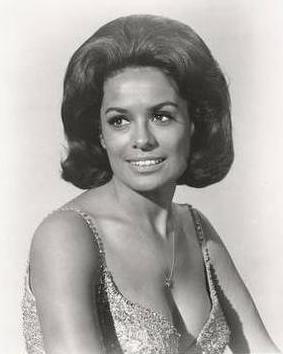
Barbara McNair

ARTICLE – MINI BIOGRAPHY

Barbara McNair was an American singer, actress, and television personality who impacted the entertainment industry with her multifaceted career. Born on March 4, 1934, in Chicago, Illinois, McNair’s journey into the limelight began with her passion for music, nurtured in the choir of her local church. Her pursuit of an entertainment career led her to study at the American Conservatory of Music in Chicago and, later, the prestigious UCLA.

Early Career and Rise to Fame

Barbara McNair’s career took off in the late 1950s when she started recording for the Coral Records label, releasing a series of singles that showcased her versatile vocal range. However, her move to Motown Records in the mid-1960s catapulted her into the spotlight. McNair’s smooth voice and elegant presence made her a favorite among audiences, and she quickly became known for hits like “You’re Gonna Love My Baby.”

Parallel to her singing career, McNair ventured into acting, demonstrating her talent on both the stage and screen. She made notable appearances on Broadway, including roles in “No Strings” and “The Body Beautiful,” showcasing her ability to captivate audiences beyond her music.

Television and Film Success

In the late 1960s, Barbara McNair made significant strides in television, becoming one of the first African American women to host her own variety show, “The Barbara McNair Show” (1969-1972). The show was groundbreaking, featuring a mix of performances and interviews with celebrities, and broke new ground for African American women in entertainment.

McNair’s film career was equally impressive, with roles in films like “If He Hollers, Let Him Go!” (1968), “They Call Me Mister Tibbs!” (1970), and “The Organization” (1971), where she starred alongside Sidney Poitier. Her performances in these films were praised for their depth and demonstrated her versatility as an actress.

Legacy and Later Years

Barbara McNair was a trailblazer who broke racial barriers in the entertainment industry throughout her career. She used her platform to advocate for civil rights and actively participated in charity work, contributing to the betterment of her community.

In her later years, McNair continued to perform, touring the United States and abroad, and remained a beloved figure in the entertainment world. Barbara McNair passed away on February 4, 2007, but her legacy endures. She is remembered for her contributions to music, television, and film and her pioneering role as a woman of color in the entertainment industry.

Barbara McNair’s journey from a church choir in Chicago to the heights of Hollywood is a testament to her talent, determination, and the barriers she broke down along the way. Her life and career continue to inspire aspiring artists around the world.

Late Night Grooves #53

It was 1993, and my wife had returned home from the exchange for a bit of bargain shopping. I frequently would shake my head at her purchases on a great many things, but that woman had a knack of finding the jam in the bargain CD bin. This feat was shocking to me because she couldn’t name five music artists correctly if the world depended on it. That day, she introduced me to Lucky Peterson and Albert King.

So, tonight on Late Night Grooves, we are doing a dual tribute to my late wife and senior editor, who just happen to be huge Blues fans. So, its Saturday Night Blues with your host Mangus. Tonight, featuring some of my favorites from Lucky Peterson and Albert King.

I wasn’t ready!

This album played through the first time, and I tapped my foot during the entire album. My late wife, a brilliant woman, noticed this a started sliding gadgets that have needing repairs for a long time. With my foot tapping in time with music, I made quick work of my honey do list.

Next thing I knew the music changed and I was introduced to Albert King, who later became one of my favorite Blues guitarists. But our love affair started here with this cut:

No discussion about Albert King’s music can be held without the mentioning of King’s live album; Wednesday Night in San Franscisco. In my opinion, one the most important albums of the live recording genre. It’s certainly one of my favorite Blues albums of all-time. Here is a track from that album.


Mixed Music Bag: Week 2 – Tori Amos

ARTICLE – MINI BIOGRAPHY – MMB

During most of Tori Amos’ rise to stardom, my face was buried in the used record stacks, looking for classic jazz and blues. Though I collected many treasures, it wreaked havoc on my sinuses. I’m not sure if I ever fully recovered. Despite my obsession, I remember some of the women ranting about the excellent music of Tori Amos. I’m telling you, if it wasn’t Davis, Monk, Parker, Wolf, or Waters, I wasn’t trying to hear it.

As it turned out, I had three female soldiers assigned to my section. Although I had worked with female soldiers before in various limited capacities, I had never had any assigned to my section. Although they were from different backgrounds and musical tastes, they were all fans of Tori Amos. Finally, they talked me into listening. Here’s the particulars. Let’s get started:


Tori Amos, an American singer-songwriter and pianist, has captivated audiences worldwide with her distinctive voice and profound lyrical content. Known for her emotionally intense songs that blend classical music influences with alternative rock, Amos has carved a unique niche in the music industry. This blog post delves into her life, music, activism, and enduring legacy, offering a comprehensive look at one of the most influential artists of her generation.

Early Life and Musical Beginnings

Born Myra Ellen Amos on August 22, 1963, in North Carolina, Tori Amos demonstrated prodigious musical talent from a young age. Encouraged by her Methodist minister father and her mother of Eastern Cherokee descent, Amos began playing the piano at two and composing by age five. Her early exposure to gospel music and classical compositions profoundly influenced her musical style.

Amos’ prodigious talent earned her a scholarship to the prestigious Peabody Institute at Johns Hopkins University when she was five. However, her inclination towards rock and popular music led to her dismissal at 11. Undeterred, she played in bars and clubs in the Washington D.C. area during her teenage years, honing her skills and developing her distinctive style.

Her first professional music endeavor was as the lead singer of the 1980s synth-pop band Y Kant Tori Read, which was not a commercial success. This setback paved the way for Amos to establish her solo career, leading to her breakthrough debut solo album, “Little Earthquakes,” in 1992.

Breakthrough and Mainstream Success

“Little Earthquakes” marked a significant turning point in Amos’ career. The album’s raw, emotional intensity and unconventional songwriting resonated with listeners and critics, establishing her as a unique voice in the music industry. With hit singles like “Silent All These Years” and “Crucify,” Amos gained a devoted following and critical acclaim.

Her subsequent albums, including “Under the Pink” (1994) and “Boys for Pele” (1996), continued to explore complex emotional and social themes while showcasing her virtuosic piano skills and innovative arrangements. Amos’ ability to blend classical music elements with contemporary styles helped her maintain a distinctive identity in the evolving music scene of the 1990s.

Amos has received numerous accolades throughout her career, including multiple Grammy Award nominations. Her fearless approach to addressing personal and societal issues through her music has cemented her status as an influential figure in the industry.

Artistry and Musical Style

Tori Amos’ music defies easy categorization, blending classical, rock, electronica, and folk elements. Her classically trained piano skills are at the forefront of her compositions, often complemented by intricate arrangements and a wide range of instrumentation. Her lyrics are known for their depth, exploring themes such as religion, sexuality, feminism, and personal trauma.

Amos draws inspiration from various sources, including mythology, literature, and personal experiences. Her storytelling ability is evident in her songwriting, where she creates vivid, emotionally charged narratives. Her voice, with its distinctive timbre and dynamic range, adds an additional layer of expressiveness to her music.

Her musical influences are as eclectic as her style, ranging from classical composers like Debussy and Rachmaninoff to rock and folk artists like Led Zeppelin and Joni Mitchell. This blend of influences has helped Amos create a sound that is uniquely her own, resonating with fans across different genres and generations.

Notable Works and Albums

Throughout her career, Tori Amos has released a multitude of albums that have garnered critical and commercial success. “Little Earthquakes” and “Under the Pink” are often cited as her most impactful works, featuring songs that address complex emotions and personal struggles. “Boys for Pele” showcased her experimental side, incorporating harpsichord and brass instruments into her music.

Other significant albums include “From the Choirgirl Hotel” (1998) and “Scarlet’s Walk” (2002), each demonstrating Amos’ evolution as an artist and storyteller. Her ability to adapt and explore different musical landscapes while maintaining her core artistic identity is a testament to her talent and versatility.

Activism and Impact

Beyond her music, Tori Amos is a passionate advocate for various causes, including women’s rights, sexual assault awareness, and LGBTQ+ rights. She co-founded the RAINN (Rape, Abuse & Incest National Network), which has become the largest anti-sexual violence organization in the United States.

Amos’ activism is reflected in her music, where she often tackles challenging and taboo subjects, offering support and solidarity to those who have experienced trauma. Her dedication to these causes has inspired her fans and fellow artists, amplifying her impact beyond the music industry.

Legacy and Influence

Tori Amos’ influence extends far beyond her discography. As a pioneering female artist in the alternative rock and singer-songwriter genres, she has inspired countless musicians with her authenticity, musical innovation, and lyrical depth. Her contributions to music and activism have earned her a dedicated fanbase and a lasting legacy as an influential and respected figure in the industry.


Butterfly Lyrics :

[Verse 1]
Stinky soul, get a little lost in my own
Hey General, need a little love in that hole of yours
So one way’s now and Saturday’s now
And our kittens all wrapped in cement
From cradle to gumdrops got me running girl as fast as I can

[Chorus]
And is it right, Butterfly
They like you better framed and dried?

[Verse 2]
Daddy, dear, if I can kill one man why not two?
Well, nurses smile when you’ve got iron veins
You can’t stain their pretty shoes
And pompoms and cherry blondes
And the kittens still wrapped in cement
From God’s saviors to gumdrops got me running girl as fast as I can

[Chorus]
And is it right, Butterfly
They like you better framed and dried?

[Outro]
Got a pretty pretty garden; pretty garden, yes
You’ll be a pretty pretty garden; pretty garden


A remarkable cover of an REM classic

Percival Prattis: Breaking Barriers as the First Black Reporter in the U.S. Congressional Press Gallery

ARTICLE – MINI BIOGRAPHY – HISTORICAL EVENT

In the annals of American journalism, Percival Prattis stands as a trailblazer, a visionary journalist who shattered racial barriers and paved the way for greater diversity in the press. Born in Trinidad in 1895, Prattis would become a distinguished reporter and the first Black journalist to gain access to the prestigious U.S. Congressional Press Gallery, leaving an indelible mark on the history of American journalism.

Prattis’s journey into journalism began with his early career at the Pittsburgh Courier, a prominent African American newspaper. His exceptional investigative reporting talent and unwavering commitment to social justice quickly garnered attention. In 1925, Prattis made history when he became the first African American Associated Press member (AP) member.

His role at the AP was not just a personal triumph but a significant stride toward breaking down racial barriers in mainstream media. Prattis’s journalistic prowess and determination to challenge systemic racism and inequality positioned him as a pivotal figure in the African American press during a crucial period in American history.

The pinnacle of Prattis’s groundbreaking career occurred when he secured a coveted spot in the U.S. Congressional Press Gallery, making history as the first Black reporter to achieve this milestone. The Congressional Press Gallery, located in the United States Capitol, is a prestigious enclave for journalists covering Congress’s proceedings. Prattis’s presence in this historically exclusive space marked a profound moment in the ongoing struggle for racial equality.

His groundbreaking achievement took place on February 3, 1947, when the United States was grappling with the challenges of post-World War II reconstruction and the burgeoning civil rights movement. Prattis’s reporting from Capitol Hill provided insight into legislative affairs and served as a powerful testament to the capacity of African American journalists to excel in arenas traditionally dominated by their white counterparts.

Prattis’s work in the Congressional Press Gallery was characterized by a commitment to unbiased reporting and a dedication to shedding light on the issues affecting the African American community. He used his platform to advocate for civil rights, using the power of his pen to challenge discriminatory practices and contribute to the ongoing dialogue about racial justice in America.

Beyond his achievements in journalism, Prattis was actively involved in civil rights organizations, including the National Urban League. His multifaceted approach to advocacy exemplified a holistic understanding of the interconnectedness of media, legislation, and societal change.

Percival Prattis’s groundbreaking journey as the first Black reporter in the U.S. Congressional Press Gallery serves as an enduring inspiration for journalists today. His legacy underscores the importance of diverse voices in shaping a nation’s narrative and highlights the transformative power of journalism as a force for social progress. As we celebrate the achievements of pioneers like Prattis, we honor their personal triumphs and their enduring contributions to the evolution of a more inclusive and equitable media landscape.