Dispatches from the Splinters of my Mind – Entry 13
I can’t say when the corridor first materialized. There’s no memory of a door ajar, no misstep that explains it. No hinge, no threshold. It simply arrived—complete, unquestioned—as if I had been born inside its walls rather than wandered into them.
That absence troubles me more than the corridor itself. Things are supposed to begin somewhere. Even disasters announce themselves. Here, there was nothing—no sound, no light, no before. Just the corridor, already waiting.
The stone underfoot is smooth in places, chipped in others. Scarred. Once, it might have gleamed. Now it absorbs everything—light, heat, attention. When I stand too long, the cold works its way up through my soles, into my calves, settling deeper than I expect. The air tastes of damp mineral and old stillness. My breath sounds too loud. Like I’ve violated a rule I didn’t know existed.
Columns line the hall, evenly spaced, grey, worn at the edges. Order, at first glance. I try counting them. I always lose track. The numbers slip away before I can hold them. The spacing stays perfect anyway, as if my failure doesn’t matter.
They enclose me like ribs. Protective, maybe. Or something else.
Between the columns stand figures.
Tall. Draped in dark cloth that hangs without argument. No faces turned toward me. No movement. Still, the silence feels occupied. Crowded. I get the sense—not strong enough to prove, not weak enough to ignore—that I am being observed without being acknowledged.
Measured. Not judged. That’s worse.
I tell myself they’re statues. Stone doesn’t remember. Stone doesn’t notice what you’d rather stay buried. I repeat this until it almost settles.
Almost.
Because stone doesn’t breathe. Stone doesn’t shift its weight. And once—just once—I’m sure I see the faintest disturbance near a mouth that isn’t there.
I count again. One. Two. Three. Ten arrives too quickly. The first column feels impossibly far behind me. The corridor refuses to resolve. No vanishing point. No end.
I step forward.
Nothing responds.
No echo. No change in air. Even movement feels unregistered here, like a suggestion the corridor doesn’t bother acknowledging. I take another step, slower. Careful. As if the place might punish urgency.
Still nothing.
It occurs to me—not as panic, not as revelation—but the way one notes an administrative error, that I may have been walking for far longer than I realize.
The figures are closer now. I can see details in the cloth. A frayed hem. A discoloration near the shoulder. Small failures. Human ones.
I stop in front of one.
The head tilts slightly, as if listening for instructions that never arrived. The face is unfinished. Not erased. Abandoned. Close enough.
The posture unsettles me.
Not because I recognize it—but because my body does.
I move on.
The corridor offers no resistance.
Further in, the repetition presses harder. My mind starts supplying differences where none announce themselves. That one looks tired. That one resigned.
That one—
I stop.
The resemblance isn’t in features. It’s in stance. The way the weight settles. The way the shoulders give up without collapsing. Endurance. Learned, not chosen.
I don’t touch it. I don’t need to.
For a moment—longer than I’m comfortable admitting—the idea takes hold that I belong here. There’s space. There’s always space. The corridor doesn’t move people through. It keeps them.
Wrapped in the same dark cloth. Standing. Waiting. Time thinning out until questions lose their edges. It would be quiet. Predictable. Safe in the way anesthesia is safe.
The ease of the thought terrifies me.
I turn and walk on.
The floor changes. Cracks spread across the stone—raised, uneven, pressing up from below. I step around them without thinking. Tripping feels… wrong. Like a violation.
The figures thin. The columns pull back. The silence changes. No longer expectant. Watchful.
Ahead, the corridor narrows.
This should feel like progress. It doesn’t.
I realize I haven’t looked back. The idea of turning around tightens something in my chest. Not because of what I might see—but because of what might not be there. Some confirmations feel irreversible.
The corridor begins repeating itself. The same broken stones. The same chips in the same places. The same figures I’m certain I’ve already passed.
This isn’t familiarity. It’s procedure.
I stop. I listen.
Nothing speaks. Nothing directs. The corridor continues without needing me.
That’s when it becomes clear—not all at once, not cleanly—that this place doesn’t lead anywhere. It keeps records. It preserves versions. It holds what arrives long enough for movement to feel unnecessary.
Time stretches. Thought dulls. The invitation is subtle. Reasonable.
I consider standing still.
The thought lingers longer than it should.
Then I step forward.
Not because I believe there’s an exit. Not because progress feels real.
But because standing still feels too much like agreement.
Dispatches from the Splinters of my Mind – Entry 12
I didn’t expect to find anyone out here.
This stretch of land was where people came to lose things, not recover them. Ruined garden, dead roses, night thick enough to bruise your lungs. The kind of place you walk through only if something heavier is pushing you from behind.
But she was there—hooded, veiled, blindfolded—kneeling in a field of collapsed petals. Her stillness wasn’t passive. It was deliberate, like someone waiting for a verdict they suspected they wouldn’t survive.
A faint ember glowed at the heart of one dying rose beside her knee. Gold, quiet, defiant. That single bloom didn’t belong here any more than I did.
She didn’t turn when I approached. Didn’t flinch. Didn’t reach for a blade. The air around her was the kind people enter only by accident.
“You alone out here?” I asked, though the answer was obvious.
Her head angled toward my voice. “Still deciding.”
“On what?”
“Whether solitude is a wound or a home.”
I stopped a few paces away. Not out of fear—more out of respect. Some people carry storms so dense you don’t step too close unless invited.
“Why the blindfold?” I asked.
“So the world can’t trick me into believing it’s changed.”
I let that sit a moment. The roses whispered in the wind, petals shifting like softened ash.
“You waiting for something?” I asked.
“A sign,” she said. “A memory. A reason.” A pause. “Maybe an ending.”
Her fingers sank into the roses, searching for something beneath them. Not clutching. Feeling. Testing the borders of whatever she still believed in.
“You think endings come find you?” I asked.
“No,” she said. “But grief does. And it never knocks first.”
I moved closer, lowering myself into a crouch. Up close, the blindfold looked like something she tied herself—not a binding, but a boundary. A way of saying: I see enough without seeing anything at all.
Her breathing was slow but not steady. The kind of rhythm people get when they’re fighting tears without wanting to admit it.
“You come out here to die?” I asked.
“To choose,” she said.
“What’s the choice?”
She lifted the faintly glowing rose, its ember casting a soft outline across the cloth over her eyes.
“Whether to see things as they are,” she said, “or as I feel them.”
I reached instinctively toward the blindfold. Not forceful. Just curious. But her hand rose and pressed gently against my wrist.
“Don’t.”
Her voice wasn’t sharp. It wasn’t even afraid. It was… resolved, in a tremor-laced way only people who’ve hurt enough to recognize the shape of their own boundaries can manage.
“You don’t want to see the world around you?” I asked.
“I already do,” she said softly. “Just not with my eyes.”
I lowered my hand. “Most people would call that denial.”
“Most people,” she said, “confuse vision with understanding.”
She tilted her face toward the faint warmth of the rose. “When I look at things, I start filling in the story. Adding meanings that aren’t there. Projecting old wounds onto new shadows. I see too much. And none of it’s true.”
Her fingers trembled once, barely noticeable.
“With this on,” she continued, touching the blindfold, “I feel the world instead of interpreting it. I hear it. I sense it. I don’t get lost in what I think things are.”
I let her words settle. She wasn’t fragile. She wasn’t defeated. She was… calibrating. Choosing her method of survival.
“There’s a path east,” I said. “Ruined, but navigable.”
“I know,” she whispered. “I stood at the fork earlier.”
“And?”
“And I couldn’t choose.”
“Because you couldn’t see it?”
“No,” she said. “Because I could.”
The ember pulsed in the rose like a small, stubborn heartbeat.
“When you’ve been hurt often enough,” she said, “every familiar road feels like a trap. Every new road feels like a lie. You stand there waiting for some sign—some clarity—to tell you where to go. You wait so long the waiting becomes its own kind of grave.”
“And the blindfold?”
“It’s not to hide,” she said. “It’s to quiet the noise.”
Her face—what I could see of it beneath the veil—softened. “I don’t want to see the world tonight,” she said. “I want to feel what’s left of me inside it.”
I understood that in a way I wished I didn’t.
“You’re not lost,” I told her.
“No,” she said. “I’m unlearning the version of myself that got me killed the first time.”
Wind swept through the roses, their petals rattling like brittle memories. The ember in her hand brightened, painting the lower half of her face in gold.
I offered my hand—not to lift the blindfold, not to drag her toward sight, but because no one should sit in a field of dead flowers alone.
She didn’t take it at first. Her fingers hovered millimeters from mine, trembling like she wasn’t sure whether to trust the impulse.
“You don’t need your eyes for this,” I said quietly. “Just the part of you that knows exactly what you want and is terrified to admit it.”
“And what do you think that is?” she whispered.
“To stop standing at the fork.”
Her breath hitched. Not loudly. Just enough to notice if you were close.
“The path east…” she said. “It felt like the one I should have chosen before everything went wrong.”
“Then why didn’t you?” I asked.
“Because someone convinced me I wasn’t the kind of person who deserved to walk it.”
Her hand finally—finally—closed around mine. Cold fingers warming slowly in the cradle of my palm.
“I can’t see it,” she said.
“You don’t need to.”
“How do you know?”
“Because sight’s never been the problem,” I said. “Belief has.”
She swallowed hard. There were tears beneath the blindfold; I could hear the thickness in her breathing.
“Lead me,” she said, steady even through the shake. “Down the path I should have chosen. Not the one I kept returning to out of fear.”
I rose, pulling her gently with me. Her footing was careful but sure, her other hand cupped around the glowing rose so its small ember wouldn’t die.
“You realize,” I said, “leaving the blindfold on means you won’t see what’s ahead.”
“I don’t want to,” she replied. “If I see it, I’ll try to predict it. Control it. Ruin it before it begins.” A breath. “Let me walk without knowing.”
I nodded, though she couldn’t see it. Some people need eyes. Some need maps. She needed silence—her own, for once, not the world’s.
We stepped through the dead roses. Their petals brushed her legs like faint apologies.
“Tell me something,” she said softly.
“What?”
“Does the night look as heavy as it feels?”
“Worse,” I admitted.
She smiled faintly. “Good. I’d hate to be the only one carrying weight.”
Another few steps. Her grip tightened when the ground shifted, then eased again.
“You’re not afraid,” I said.
“No,” she replied. “I’m aware. Fear is when you run from things. Awareness is when you walk toward them knowing they might break you.”
“And you think this path will break you?”
“Everything breaks me,” she said. “That’s not new. The question is whether it teaches me something afterward.”
“And what do you want it to teach you?”
“That surrender isn’t defeat,” she said. “Just a kind of honesty.”
We walked farther. The night didn’t lighten, but something inside her did—a straightening of the spine, a deepening of breath, a quiet resolve she must have forgotten she owned.
She stopped suddenly.
“What is it?” I asked.
She held the glowing rose out toward the dark.
“When hope survives in a place like this,” she said, “it isn’t a promise. It’s a warning.”
“Of what?”
“That the world isn’t done with me yet.”
She lowered the rose to her chest. The ember brightened once—brave or foolish—and then stilled, warm against her heart.
“Tell me,” she whispered. “Are we still walking east?”
“Yes.”
“Good.”
She tightened her grip around my hand, the blindfold still firm across her eyes.
“Then don’t let me stop,” she said. “Not even when I want to.”
We stepped forward together, and the night shifted around us—not lighter, not kinder, just… open.
Behind us, the dead roses rustled in the dark. Ahead, the path waited without expectation.
And she—blindfolded, trembling, resolute—walked toward it not because she saw it but because she finally understood what bloomed after the darkness surrendered was not the world. It was her.
Entry Eleven: Dispatches from the Splinters of My Mind
I found her in the middle of a killing field that should have had no place for beauty.
The moon sat low and full behind her, a pale coin pressed into the sky, casting that cold lacquered light across armor, bodies, and the drifting ash of trampled blossoms. The night smelled of copper and rain. Around us the dead refused to stay still; wind pushed their rags like restless sighs.
I had already decided the day was lost—too many screams, too many men swinging at ghosts. But then I saw her, and the world tilted. She stood where no one should have stood: upright, unhurried, her robe heavy with embroidery, dark as ink, stitched with peonies and waves that shimmered when the moon looked her way.
The first thought that crossed my mind was: Who brings flowers to war? The second: Maybe the flowers brought her.
They grew around her feet, low white clusters, fragile as breath. Some had taken root in the soft mud, others hovered midair like they hadn’t decided what kind of thing they wanted to be. A faint perfume drifted off them, too clean for this place. And then I realized some of them were growing from her—the side of her face, her shoulder, the line of her arm. A bloom of defiance carved into flesh.
Behind her stood four figures draped in similar black silk, motionless. Their eyes were lowered, hands clasped before them. Attendants, perhaps. Or echoes. Even from where I stood, I knew they weren’t here to fight. They were here to witness.
I tightened my hand on my sword because habit is older than reason.
The ground sucked at my boots as I stepped closer. Somewhere to my left, a man still dying called for his mother. Another, somewhere behind, recited a prayer halfway through his blood. But sound thinned the closer I came to her. Like the air around her absorbed noise and left only pulse.
She looked at me when I was five paces away. Not before. Not after. Like she’d measured the exact distance between recognition and threat.
Her eyes were half-lidded, the color of tarnished brass. Her mouth was calm, as if the ruin surrounding her had been a foregone conclusion. One petal rested just below her cheekbone, pale against the skin. She didn’t brush it away.
“You walk like a man who has forgotten why he still draws breath,” she said.
Her voice was quiet but cut through the air like string through silk.
“I’ve followed death long enough to know his rhythm,” I said. “Some nights he leads. Some nights I do.”
She inclined her head, just enough to show she’d heard. “You are ronin,” she said. “A sword with no oath.”
“Whatever name suits you,” I said. “You stand where no one should stand.”
She looked past me toward the moon. “Where else would I be? When blades sing, flowers bloom. The field requires witness.”
She had no weapon in her hands, yet everything about her said blade. I’ve met killers who strutted under banners, and others who killed softly with no name to anchor their ghosts. She belonged to neither. Her stillness made me feel the way a boy feels before the first snow—expectant, humbled, afraid to speak.
“You should leave,” I said. “When dawn comes, they’ll burn what’s left.”
“You mistake me,” she said. “I came to see who is worthy.”
That word bit. Worthy. I’d watched too many noblemen rot in palanquins to trust it. Worthy is what the dying call themselves before the blade arrives.
“Worthy of what?” I asked.
“Of the sword. Of the bloom. Of carrying death without becoming it.”
The field groaned. A survivor staggered from the smoke—young, wild-eyed, clutching a short spear he didn’t know how to hold. He saw her, and some idiot fire lit behind his teeth. Maybe he thought she was a reward for surviving. Maybe he thought the gods had thrown him one last chance to matter.
He ran at her, screaming.
In battle you have seconds to make a decision. Whether wrong or right, it needs to be made. One of the fastest ways to learn someone is not what they say, but how they fight.
For one breath, I froze. I had seen too much to believe in rescues. The smart thing—the living thing—was to watch it unfold. Yet something in her stillness reached me, a quiet that felt older than every order I’d ever followed.
I moved before thought could argue. Maybe it was reflex. Maybe guilt. Or maybe—and this is the truth I won’t soften—I moved because her movement deserved a blade.
I drew, stepped forward, and cut low. The arc found his thigh. He stumbled, confused, half alive. I turned the motion, cut again—clean, deliberate, final. His blood came hot, red against moonlight. It splashed over the flowers at her feet.
They didn’t stain.
The droplets slid off as if the world itself refused to let his death take root there.
She looked at me, not with gratitude but recognition.
“You took him before he had time to be afraid,” she said. “That was mercy.”
I laughed, short and dry. “That’s a generous name for what I do.”
“There are cruelties worse than steel,” she said. “You gave him a swift exit. That counts.”
Her calm should have offended me, but it didn’t. It steadied something that had been shaking inside for too long.
I studied her again, this time the way I studied opponents before the first strike. Every warrior moves according to what they believe: greed, fear, pride, duty. The body tells the truth the mouth hides. She stood like someone who believed in balance—not victory, not survival, just the quiet between breaths.
“Who are you?” I asked.
“A name is only a sheath,” she said. “Tonight, I am what you see.”
“I see a woman blooming on a battlefield.”
“And I see a man who still listens for music in the clash,” she said. “We are both out of place.”
The four behind her lifted their eyes then—slowly, together. Four sets of dark irises, moonlit, unreadable. The air thickened, like waiting for a storm that didn’t come.
“You could have struck me,” I said.
“I could have,” she replied. “But you already offered your sword.”
“I fought even though it wasn’t my fight,” I said. “Your movements deserved my blade.”
She gave the smallest nod, approval or farewell—I couldn’t tell which. “Then peace, ronin. Not the peace of victory. The peace that lives in the breath between strikes.”
For a long moment, we stood there—two still figures in a world still burning. Around us, the wounded moaned, the fires licked the edges of the field, but none of it entered the space between us. The night had carved a small silence and decided to let us share it.
I let the sword drop, tip resting in mud. Not surrender. A bow to something rarer.
When I looked again, the blossoms at her feet had multiplied. Their pale glow shimmered faintly in the dark, each one perfect, each one refusing the ugliness of what surrounded it.
The moon sank. The smoke grew thicker. I blinked, and she was gone. The four attendants too. Only the flowers remained—untouched, unstained, rooted in earth that should have been ash.
At dawn, when the officers returned with torches and the day’s excuses, they found me sitting beside the blossoms. I told them nothing. Some truths need soil and silence more than words.
I carry her still. Not her image—images fade—but the moment itself, caught behind the ribs like a splinter of light. That memory is my wound and my mercy both.
Because now I know this: even those made for killing can recognize beauty when it stands unafraid. And once you’ve seen it—truly seen it—you carry it. Always.
Entry Ten: Dispatches from the Splinters of My Mind
An image-driven meditation on beauty, decay, and the quiet art of passing for alive.
White comes first. It always does. I dust the night from my face with a powder the color of absolution and tell the mirror a soft white lie: you are whole, you are warm, you belong to the day. The mirror nods like a priest who’s already decided my penance. I let him; he’s one of the few men who listens. The powder smells faintly of lilies and old hotel sheets—clean, practiced grief. It cakes where sweat used to live. Underneath, skin hums the slow song of bacteria doing what they do best: recycling hope. Purity photographs better that way. Besides, no one suspects the dead of good lighting.
The birds come next—two shards of sky trained to settle across my eyes. They know their marks like altar boys at a funeral mass: left wing grazing the brow, right wing cooling the cheekbone, claws light against the temple. Their feathers shine the blue of high altitudes where breathing is theory. Blue is the color of transcendence, or so the books say. In practice, it’s the color of numbing—detachment dressed for church. I didn’t choose them for beauty; I chose them for temperature control. They keep my expressions chilled, my thoughts neat, the heat from showing. They smell faintly of ozone and hairspray, like the backstage of heaven. I can feel the air around me losing interest.
I open my mouth. They tilt their heads, listening. They remember the rules better than I do. The first sound they stole was laughter—too spontaneous, too human. They took it the way crows take rings: quick, gleeful, final. The second was the small sigh I made each morning while practicing the art of appearing alive. By the third—my name said to no one—I understood that silence is a currency, and I was rich in withdrawal. I keep my tongue behind my teeth the way some people keep money in a Bible: near God, far from thieves. Sometimes I miss how a real word tastes—like pennies and possibility—but the birds look so proud of me when I behave.
Grey arrives without asking. It bleeds in through the window frame, through the paint I swore was dry, through the place in my chest where memory used to turn red at the edges. Grey is the hallway color, the corridor between rooms, a suspended breath that never quite chooses air. Days collect in it like lint. The birds blink in unison, blue against the grey, and the room looks like an old photograph waiting for a pulse that won’t come. I practice gestures of aliveness—a nod, a smile, a hand smoothing the same invisible wrinkle. It’s choreography learned from the living. The trick is to blink at correct intervals. Dead eyes give it away. I’ve learned to count my blinks like prayers; no one notices faith when it’s rhythmic.
They call what I do resilience. I call it advanced taxidermy. Everything soft stuffed with survival slogans and stitched closed with polite smiles. I stand upright, lips faintly glossed, eyes decoratively haunted. People nod, impressed. “You look great,” they say, and I do. Death, when moisturized, is surprisingly photogenic.
At night, when the light loses its discipline, the birds twitch. Their wings quiver like unspoken apologies. They hate uncertainty—it smells too much like life. I tell them to relax, that nothing here moves unless I schedule it. They don’t believe me. They can sense the old pulse under the floorboards, that stubborn animal rhythm I keep sedated. Sometimes, if I listen too hard, I hear it muttering: Still here, you fraud. Still beating in the dark.
Grey has personality now—kind of an accountant with a god complex. It tallies what I didn’t say, what I pretended not to feel, every emotional expense I tried to write off. I owe everything. I keep paying in composure. Some mornings the debt collector is the mirror; some mornings it’s the ache behind my jaw. Both smile as they itemize.
I remember warmth in flashes. A mouth that used to taste like smoke and sincerity. A day when laughter didn’t feel like theft. The red comes back in small riots—a pulse in the wrist, a fever under the tongue, a dream where color doesn’t apologize for itself. Red is the rude friend who won’t stop showing up uninvited. It whispers, You can still want, you know. I tell it to shut up. Wanting is expensive, and I’m already behind on my rent in reality.
There was a man once—there always is, because tragedy likes a good straight man. He said my quiet was “mystical.” I let him think that. No sense disappointing the audience. He kissed me like he was trying to wake me, poor thing. I let him. The living need their illusions too. When he left, I smiled so gently you’d never guess the birds were choking on the heat inside my mouth.
People assume silence means peace. It doesn’t. It’s just a better brand of noise—high-end, minimalist, with clean lines and no bass. Inside it, everything still screams; it just does so politely. That’s the delicious part of the lie: it tastes like calm if you chew slow enough.
Sometimes the rot gets ambitious. It stretches under my skin, flexing like it wants out. I tell it we have a reputation to maintain. “Decay,” I whisper, “but quietly. We’re professionals.” It listens, most days. When it doesn’t, I add more powder and a higher neckline. Elegance covers almost anything.
I’ve been congratulated for my strength so often I should invoice for it. People mean well—they always mean well—but their compliments sound like eulogies now. “You’re so composed.” “You’re such an inspiration.” They don’t know that composure is just rigor mortis doing ballet, that inspiration is what happens when exhaustion gets good lighting.
Tonight, the air tastes different. There’s something electric in it, the flavor of coming storms or confessions. The birds sense it, feathers rustling like gossip. Blue, once loyal, starts to falter—its chill turning translucent, its sanctity cracking at the seams. Underneath, a hint of red—raw, seditious—tries to breathe.
I stare at the mirror. It stares back, unimpressed. “How long can you keep this up?” it asks without moving its lips. “As long as it looks good,” I answer. We’ve had this conversation before. Neither of us ever wins.
Black waits behind everything, patient as gravity. Not malicious—just inevitable. It’s the color of what doesn’t flinch anymore. When I close my eyes, it hums like an engine. It’s not the absence of light; it’s the womb of it. Maybe that’s comforting. Maybe it’s just where truths go to compost.
The birds fidget. Their claws scrape skin, soft warnings. They know what’s coming. I’ve been thinking dangerous thoughts—words forming without permission, meanings unapproved by management. I can feel language waking up in my throat like an old addiction. I used to love words. They made me visible. Then they made me trouble.
“What happens if I speak?” I ask. My voice sounds foreign, like someone rearranged the vowels while I slept. The birds freeze, their blue fading to the dull of forgotten sky. One pecks at my brow, delicate threat. The other trembles near my cheek. For a moment, even they look tired of sanctity.
I touch their wings. They’re colder than honesty. “Shh,” I tell them. “It’s just a syllable. A small one.” I open my mouth, and something almost warm slips out—a sigh, maybe, or the ghost of laughter coming home. The sound isn’t pretty, but it’s real, and real is an endangered species around here.
The mirror blinks first. Always does. “Well,” it says in that judgmental silence only mirrors manage, “look who’s back.” I shrug. “Don’t get excited. I’m still dead; I’m just taking the scenic route.”
Color rearranges itself. White gives up pretending to be mercy. Blue goes transparent, embarrassed by its own chill. Grey loosens its tie. Red stretches like a cat finally acknowledged. Black opens one lazy eye and grins, proud parent of the mess.
I let the birds slide off, set them on the sill. They glare at me, little auditors of sin, and I swear I see envy in their beady eyes. “Go on,” I tell them. “Find someone holier.” They flutter away, leaving a faint scent of ozone and resignation.
The air without them feels indecently warm. I breathe it in. It tastes like pennies and possibility. The mirror, for once, doesn’t offer a verdict. Maybe it’s learning boundaries. Maybe I finally bored it into honesty.
Outside, the sky wears an honest blue—the kind that knows the ground exists and loves it anyway. I could try that. Tomorrow, maybe. Tonight, I’m just going to sit here, rotting politely, beautifully, honestly.
Author’s Note
Part of theDispatches from the Splinters of My Mindseries—image-driven fiction that explores the architecture of silence, self-performance, and the strange grace of decay.
Memoirs of Madness — When the inkwell weeps, I howl.
Entry Nine: Dispatches from the Splinters of My Mind
I wake upright, as though sleep forgot to fold me into its arms. The darkness presses in all around—soft, velvety, bruised at the edges, like some colossal bruise pulsing with the low red hum of my own blood. A cloth lies warm against my eyelids, its fibers slick where they touch my skin, chillier at the edges where the air’s breath finds purchase. I don’t brush it away. I’ve learned that on certain nights the world is safer unseen.
They breathe at my sides—two hulking presences, rigid as ancient statues steeped in the sick-sweet perfume of formaldehyde. One on my left, one on my right, like bookends clamped around a story that refuses to end. Their feet remain statuesque; instead their bodies rock ever so slightly, tilting inward, receding, then returning in a silent metronome of doubt. Sometimes they feel like mirrors, their gazes jokers with opinions. Sometimes they feel like promises, the future I was sold if I kept doing what I was doing. Most nights I know the truth: they are mine—either I forged them, or they forged me. Asking which first feels as impolite as inquiring whether the flame or the candle existed before the other.
“Don’t speak,” says one voice—dry, brittle, like my father after my brother’s funeral. “Don’t confess,” says the other, rasping through a cough that smells faintly of candle wax and stale hymns. Their words scratch the hollow behind my left ear, the birthplace of my worst headaches. These aren’t commands so much as rituals—family heirlooms too awkward to discard, for to do so one must acknowledge their worth.
But my mouth conducts its own liturgies. It leaks in secrets. A weight gathers on my tongue: metal and warmth, the taste of regrets I should have voiced long ago. The first word is always the hardest to birth. When it finally breaks free, every syllable remembers gravity and falls like ink that missed its page, staining my chin.
It’s all right, I tell myself, between ragged breaths. Blood is just memory liquefied. Let it run. Let it tally the score.
“How did we get here?” I whisper, voice ragged against the blindfold. The dark tilts its head and pretends not to hear.
Left says, “By keeping your eyes closed.” Right hisses, “By learning to love the closing.”
They speak in turns, careful not to overlap, for if they did the shape of this place would shift and I’d forget what it means to stand.
I was taught early that silence is a language with two alphabets—safety and surrender—both scrawled from the same letters. When the cops came to our flat for the second time, my mother pressed a thumb to my lips. It felt like blessing and gag in equal measure. Years later, the first woman who claimed she understood me asked if I had anything to confess. I answered “No” because survival had already flipped the coin. I’ve whispered apologies to her in colder seasons, at bus stops I never ride, through prayers I don’t believe in. None ever breached the blindfold—they slid back down, patient as ghosts.
I know what lurks beneath this cloth. I’ve seen it—how daylight has kissed it, streetlight has tasted it, how a match’s flame stared too long and flinched. Eyes that catalogue, that inventory every fracture, then try to alphabetize the fragments. If I unveil them tonight, I’ll stare out into a flock of unfinished things circling my bed—wounds and half-formed promises. One can drown in the study of omissions. Ask me how I know.
Left leans forward, winter on his breath: the damp, hollow kind that drifts through stairwells, eavesdropping on arguments. “We kept you alive,” he says, a tenderness reserved for things long dead. “We wrapped your seeing until your seeing couldn’t hurt you.” The years have built a fortress in his jaw, doors forgotten.
Right lifts a hand to graze my ear—his touch colder than patience. “We taught you an economy of withholding. What you don’t utter can’t be used against you. What you don’t name can’t die.” He pauses, fingers poised like a man waiting for payment. “We saved you from the truths that detonate families into committees.”
Between them lies a rasp—a rasp that, I realize, is my own.
I drift back to the riverbank, red water flowing like a personal insult to the city. I recall the neon sign in that solitary room—its sick throb of light like a wound bargaining for closure. I hear the voice that begged me to “keep the light on,” and how I switched it off, hoping the corridor would keep a secret of its own.
Silence exacts its own fee. It demands tiny coins—words unsaid, memories locked away—until one day you want to catch a bus out of town and all you possess is the jingle of borrowed time.
“Say it,” Left murmurs, not unkindly. “Say nothing,” Right counters, like a physician prescribing illness.
My lips part. Perhaps it is prayer, perhaps confession—perhaps the last valve cracking open in a machinery someone else designed. What I long to say is simple: I remember the first lie—it tasted like rescue. The second lied felt like rehearsal. The third taught me grammar, and the rest built a house around me: no windows, just a door opening onto a closet. I want to say that blindness, if chosen wisely, lets you aim without seeing your target. That I learned to navigate by the shadows where stars should be. And I want to speak her name, the one I’ve carved into the walls of my heart, the one whose echo never returned but whom I have nurtured in silence for years.
Yet the mouth refuses dictation. When words drop onto my collar, I taste ash on my tongue. If I linger here, the floor will absorb me letter by letter. Maybe that’s the plan: let the body become a document, the words falling where they will.
“Open,” Left instructs—not my eyes, but the wound beneath this cloth. “Close,” Right insists—not my lips, but the subject itself.
They kneel, each in reverent posture, calling it unity.
I am not devout. Faith in myself is a belated apology—a jacket thrown over my shoulders after winter has already laid bare my bones. Still, I believe in small truths: every silence is a room with a window you can paint shut; blood remembers what you refuse to; when the past leans in to kiss you, check its hands.
“Why do you resent our aid?” Right asks, almost plaintive.
“I don’t,” I rasp, the cloth muffling my words. “I’m just weary of living the shape of your absence.”
Left’s fingers find the knot in the blindfold with a lover’s care. He doesn’t tighten, only taps it, as though weighing a wish. “You won’t like what you see.”
“I rarely do,” I reply, a dry laugh clawing free.
“Then keep the cloth,” he says. “And we’ll keep you. We’re the railings in your dark.”
I envision rusted metal, cold to the touch, a splinter waiting for skin. I recall the staircase winding down to a door I never open—the handle of which somehow knows my name. Once I thought that room housed my monsters. Now I see the real monsters are proper: they safeguard my unspent courage and the coats of selves I never became.
“I have questions,” I say, voice gentle as rain. “Whose mouths whispered before mine? Where did the very first hush come from? How many women stifled their fire because the men who taught them already drowned in smoke? How many fathers measured love by volume, awarding themselves with silence?”
Left inhales, a slow vacuum. Right clears his throat like a clerk shelving confessions.
“You think your blood makes you singular,” Left says. “It only makes you consistent.”
“You think speech is salvation,” Right counters. “Speech is a tool—tuned for mercy or murder.”
Both statements are true. Both can kill.
The cloth grows heavy, soaked where its letters dissolved in transit. I recall the story of a saint who plucked out his eyes to end desire, of a soldier who bit off his tongue so no one could barter his secrets. Every tale shares the same architect: Sanctity. Security. Surrender. The walls remain flawless. The rooms numbered. No one explains the numbers until rent’s due.
“Remove it,” someone says, and I can’t discern whose voice borrowed mine this time.
My hands lift, obedient as shadows at dusk. The knot is simple—always was. The hardest part of a blindfold is the narrative that says you deserve it. I tug once. The cloth exhales. Light rushes at me with the relief of a crowd that finally chose a side.
The room reveals itself—smaller than I’d feared, grander than I’d earned. The two men are exactly as the voice in me conjured: tattered elegance, wreckage with meticulously combed hair. Their faces are maps whose borders have vanished. Their suits hang as carefully as funeral garb. Their hands hover, almost kind.
I look at Left. He looks at my past. I look at Right. He looks at my future. Neither steps forward. I remain the hinge.
Blood trickles from my chin, a rudimentary signature poised for the name that owns it. I want to wipe it away. I want to revel in it. I want to stand still and hear what stillness says.
“Are you ready to speak?” Right asks, tone hopeful.
“I have been speaking the whole time,” I say, and for the first time the room curves into something like a smile.
Left shakes his head. “If you go on, you’ll lose us.”
I meet his eyes—meet my inheritance. “Maybe you’re meant to be lost.”
Pride and regret war in his gaze, as if he’s a father examining the bruise he taught me to take. There’s curriculum here no syllabus could contain.
“You can’t survive the noise,” he warns.
“Then let the noise survive me,” I tell him. “Carry the parts I cannot.”
When I finally move, it is unceremonious. I am neither saint nor soldier tonight, only someone who learned to count by the drip of blood in the dark. I am someone who believed in railings and now tries to believe in stairs. I am someone who has loved poorly, remembered perfectly. My fingertips trace the cooling red at my jaw, smearing it as though to bless myself—two fingers pressed to skin, raising a silent benediction. I draw a thin line across my throat—not threat, but witness. Then I touch each eyelid, first right, then left. Their warmth whispers secrets textbooks never taught.
The two men release simultaneous sighs of opposing relief. They are both disappointed. They are both relieved. It is possible to be two sermons at once.
A neon sign shivers somewhere beyond these walls. A painted-shut window in another life wonders if tonight the paint might crack. The floor holds my secret. The air remembers it was once a river and yearns to practice.
“I won’t speak her name,” I murmur, voice low but unwavering, “but I will stop pretending I never learned it.”
Right bows. Left closes his eyes. The room narrows to a path that was always here.
I take a step. Then another. My mouth finally ceases bleeding—it has, at last, done its duty. The cloth in my hand is merely cloth. I let it fall. Its descent makes no sound anyone else would hear.
If I keep walking, perhaps the past won’t follow. If it does, we can negotiate. I’ve learned there are nights it’s safer to close your eyes—and nights when you must open them, so when the world returns wearing your own voice, you can tell prayer from muzzle.
Tonight, I listen for that difference. And if the voices demand a choice, they can wait—like the weather.
Entry Eight: Dispatches from the Splinters of My Mind
The face hung over her as a dead moon would, immense and inert, plastered to the sky with the obscene permanence of a fossilized wound. It was not sculpted in the image of any god she recognized, nor did it bear the standard of a people desperate to placate the furies or worship their own reflection. Instead, it hovered on the edge of intent and accident—a precipice suspended in time, inevitability chiseled into every brute angle of the jaw. Each block that made up the visage was a shorn-off shard, ash-gray and rough-edged, but arranged so that the fractures and pitting created a ragged, almost animate skin. From a distance, the monument looked inert, but on approach it seemed to lean forward, as if gravity bent toward its own creation.
Up close, the surface shimmered with a faint, sickly gloss, not the result of centuries of wind polishing, but rather something more insidious: a hidden moisture, as though the stone itself exhaled condensation from a deep, slow-breathing lung buried far beneath the earth. The closer she drew, the more this exudation gleamed in the dying light, slicking her hand when she dared to stretch her trembling fingers only an inch from the surface. She jerked her hand away before contact, an involuntary spasm of repulsion, and it seemed to her that the stone recoiled as well, as if momentarily startled by her nearness.
The face’s hollow orbits, each deeper than a well and rimmed in a thousand years’ worth of wind-scoured dust, were not empty but filled with a red so saturated and unyielding that it was neither liquid nor illumination, but a third thing—a dense, coagulating radiance. This red bled outward in precise tracks, each line adhering to a groove so deliberate it made her stomach clench. At dusk, when the world’s colors flattened and the boundary between flesh and stone blurred, these rivulets painted the entire monument as if it wept a world’s worth of dying embers.
Beneath the eyes, the mouth was a gash so perfectly aligned that it projected neither malice nor welcome—simply a vacancy so absolute it wrenched at her. It did not pass judgment or offer answers, but waited in a silence that felt more like appraisal than apathy. When she stared at it, she became conscious of her own tongue, the dryness of her palate, the faint click of her teeth as her jaw tensed in counterpoint to the stone’s passive oblivion. For an instant, she lost the distinction between her own face and the monument’s, as though she were gazing at her own effigy, erected by hands who’d never known her and cared nothing for her likeness.
The statue was girdled by a ring of spines—pillars, each twelve feet high, tilting like teeth around the perimeter. Their faces were gouged by runes shallow and erratic, as if clawed by a desperate hand that knew it must leave a mark, but lacked time or understanding to encode more than a warning. When she turned her head just so, a vibration juddered through her jaw and teeth—a resonance that not only bypassed air but seemed to travel directly through calcified matter. It was not an audible tone but a bone-deep hum, a buried dirge that sang in frequencies meant not for ears but for the marrow itself.
A faint metallic tang rode the air, stinging her nose and settling on her tongue. Her pulse beat harder, a staccato drum against the inside of her skull. She knew she should have been afraid, or at least careful, but curiosity is rarely adaptable. It presses forward in one direction, refusing diversion. Even as some primitive sense screamed retreat, a more insistent force, slow and syrupy as honey, compelled her closer.
At the monument’s base, a set of spiral steps had been hewn directly into the rock, winding up toward the face’s sealed lips. The staircase’s edge was polished to a treacherous smoothness—perhaps by centuries of bare feet, or perhaps by something more recent. Each step she took yanked a shudder up her spine, the chill stone leaching heat from her bones. She tried to picture the hands and feet that had shaped these stairs, that had come before her, but the imagined forms refused to hold: they slipped away at the periphery, just out of sight, like ghosts not quite ready to reveal their sorrow.
As she climbed, the red seepage intensified, painting her arms and face in its cast. The color made her flesh look flayed and raw, as though she’d shed her skin and left it behind on the plain below. Her breath hitched in her throat, every inhalation mirrored by a second, deeper rasp—a guttural echo that rode beside her own, shadowing her ascent. She placed a hand against the cheek, bracing herself, and felt warmth pulsing through the stone—a low, feverish heat, rhythmic but not quite alive. Her heart skipped in answer. The pillars’ hum swelled, shaking her vision, warping the outlines of the world.
Suddenly, the lips moved. At firs,t it was only a quiver at their seam, a ripple of tension, but then the entire mouth flexed—and she swore she saw the faintest suggestion of tongue behind the teeth. She leaned closer, pressing her ear against the fissure. Beneath the monument’s stony shell, she heard breathing: not the shrill whistle of wind through cracks, but a true respiration, cavernous and ponderous, as though the monument had lungs the size of mountains and was only now remembering how to fill them.
The revelation paralyzed her. This was not a tomb built to honor the dead, she realized, nor a shrine to contain some ancient anger. The statue was a sarcophagus, yes, but one not yet emptied. The red running from its eyes was neither pigment nor rainwater but a bodily fluid, leaking from a cocoon that could not hold its contents. The face was a shell, a boundary—and something was trying to cross it.
Even so, she kept climbing, compelled by a mixture of terror and awe, the two emotions indistinguishable now in their velocity. By the final step, her knees trembled and her throat ached from the acid bite of fear, but she crouched anyway at the summit, only inches from the sealed lips. Veins of shimmering ember threaded across their surface, glowing brighter with every pulse of the monument’s breath. She felt a wave of heat roll over her, dense and chemical, and it left her dizzy, her skin tingling as though exposed to low voltage.
Now, as if cued by her presence, the ring of pillars began to thrum in a synchronized rhythm. One after another, they trembled against the ground, a chain reaction that rattled the bones of the earth itself. With each pulse, the red liquid burst a little brighter from the monument’s wounds, feeding rivers that ran down the steps and pooled at their base. Her limbs buzzed with a painful, almost ecstatic electricity.
Without meaning to, she heard herself whisper, “What are you?”
The answer arrived not as speech but as a violence in her skeleton. The words detonated inside her skull and reverberated through her ribcage, as though she’d been struck by a tuning fork forged for a different species. The sensation was not one of comprehension, but of total subjugation—a message delivered in a medium older than language or thought.
You.
The word was a spasm, a convulsion of being. She staggered backward, and the pillars responded, their angled bodies creaking as they pressed inward, shrinking the circumference of the circle until she was contained. The air thickened, the metallic taste blooming into a full, choking flavor. Her lungs seized, and she tasted rust and old ashes on her tongue.
The rivers of red exploded, no longer trickling but surging, a deluge that hissed as it struck the cold stone. In the reflections, she saw faces—hundreds, maybe thousands—each one a warped variant of her own, their eyes wide with terror or ecstasy or both. Each face pressed itself against the surface as if desperate to break through, their mouths open in a cry she could feel but never hear.
You repeated the monument, but now it was not merely a label, but an imperative.
She tried to clap her hands over her ears, but the sound lived behind them, in the architecture of her skull. Where her hands touched skin, she felt fissures opening: thin, pale lines that leaked light, as if her bone marrow had turned into a lantern. Each seam split further, the glow intensifying until the skin could not contain it.
Inheritance, not worship.
The lips of the monument parted, forming syllables that bent the air into impossible shapes. The pillars groaned, their runes flaring with a dark fire. One pillar cracked, then another, each yielding with the wet snap of a femur under pressure. Dust erupted into the air, shrouding the steps. The rivers rose higher, climbing up the pedestal and wrapping around her ankles, then calves, burning her with a heat that did not scald flesh so much as erase it.
She stood rooted in place, unable to turn away, because in that moment she understood: This was not a prison, but an incubator. The thing inside was not a remnant, but a seed.
And it was time to hatch.
What followed was not blackout but erasure. Her mind remained, but submerged, as though she had been drowned beneath a tide of molten syllables. Her body convulsed, every joint unhinging, seams of light splitting wider until the marrow itself glowed.
She tried to scream, but the sound was stolen from her, bent into a chant that was not her own.
It spread through her like fever, like birth, like—
—
Author’s Note: This entry was inspired by the image of a monumental stone face weeping red channels, surrounded by jagged pillars. I wanted to explore the tension between worship and imprisonment — the idea of a monument that is not passive, but alive, incubating something ancient. The words fake, adaptable, and angle were drawn from community prompts (FOWC, RDP, and Word of the Day) and woven into the text.
Dispatches from the Splinters of My Mind – Entry Seven:
The walls were peeling again.
Not in the way of a neglected apartment, with cheap paint curling off plaster in thin, tired strips, but in wide, curling plates of color — beige slats splitting like sun-bleached bark, hanging on just enough to whisper of the surface beneath. Some flakes curled outward like tongues, sharp-edged, brittle. Others clung stubbornly, trembling at the seams as if waiting for the right breath to tear them free. The scent of decay lingered, not putrid but ancient, like opening a book sealed for centuries.
Every morning I woke to more on the floor, curled and broken. A brittle carpet that crunched underfoot, as if I lived inside the ribcage of something too old to remember its own name. I’d stopped sweeping them away. What was the point when tomorrow would bring more? Perhaps the room was shedding what it no longer needed, the way I wished I could shed my memories.
And then there was her.
She leaned against the fractured backdrop as though it were her throne. Her hair lifted even in still air, a slow unfurling as though water carried it. Her eyes fixed beyond me, past the walls, past the world itself — pupils so dark I could feel myself falling into them whenever I dared look directly. When the cracks behind her widened, they seemed to bloom around her, a halo of rupture, and I wondered if she was causing them or healing them.
I don’t remember her arriving. One day, the room was empty. The next, she was carved into it, as natural as shadow. Her skin was dusk-drawn, her collarbone marked by a hairline seam that pulsed faintly — light, or blood, or something older. When she breathed, I felt the air change temperature against my skin.
I didn’t speak at first. Because I knew she wasn’t supposed to be here. Because I feared what my voice might summon from those widening cracks.
She came and went like condensation on glass: sometimes present, sometimes gone, but always leaving the trace of her shape behind, a ghostly imprint that lingered in my peripheral vision long after she vanished.
In daylight, she was most visible. The fissure at her collarbone flared faintly then, like embers beneath ash, pulsing in rhythm with what I imagined must be her heartbeat. I found myself counting the seconds between each glow, wondering if the pattern held meaning I was too human to decipher. At night, I only caught her reflection, a smear of movement across the window, quick enough to make me doubt my senses yet definite enough to leave me cold. When I turned my head, the glass was empty, but the air still carried the faint scent of iron and ozone, sharp enough to sting.
Once, I asked her name. My voice sounded foreign in the weighted silence — too solid, too certain in a room where certainty felt like trespassing.
Her head tilted slightly — that almost-birdlike tilt that made me feel like I’d asked the wrong question, like I’d attempted to name something that existed before names were invented.
And then silence, thick as water, filling my lungs until I forgot I’d spoken at all.
The peeling worsened. Wide flakes of paint snapped free with brittle cries, tumbling to the floor in a pale avalanche. I braced myself for crumbly plaster, gritty dust — but beneath the curling edges lay something softer, warmer. When my fingertips hovered over the exposed surface, I felt a faint thrum, like pulsing flesh just beneath the skin. A rush of heat radiated outward, and for one breath, I was certain I’d heard a heartbeat echoing through the wall.
That night, she whispered. It wasn’t voice or breath but a pressure, as if her word scraped along my bones, rattling marrow in its socket. One syllable — or something shaped like one — resonated: fracture. The room answered with a hollow groan, low and shuddering, like a ribcage creaking in sleep. In that moment, I understood: these cracks were not signs of decay but veins, pathways carrying some secret current. And she was here by design.
Dreams came next.
I walked across a desert of lacquered faces — thousands of them — each mask cracked but unbroken, gazing skyward with painted eyes. In endless rows, women knelt in silence, their black hair drifting upward as though suspended in water. Faint fissures split their bodies in perfect symmetry, their hands pressed flat against walls that breathed with slow inhalations. Above it all a voice rumbled from some primeval depth — neither hers nor mine, but older, harsher, grinding like bone against stone.
“You are not yet peeled,” it said, and I woke with the taste of mildew and dust at the back of my throat.
By dawn, compulsion seized me.
I pressed my nails beneath the curling paint, prying each plate free with a rasping crack. Behind every sheet lay warmth — flesh, not masonry — pulsing with hidden life. Each fragment I stripped away seemed to strengthen her: a faint glow flared along her collarbone, veins branching outward like roots. Strands of her hair lifted as though buoyed by some unseen current, drifting in a silent tide.
I dared to ask her again, voice trembling: “Who are you?” The air shivered, and her lips parted against the dark, revealing only that single word: “You.”
I wasn’t certain whether it was a confession or an accusation. All at once, the boundaries between us began to dissolve. Fine cracks snaked across my own flesh — along my wrists, across my throat — thin lines of searing light oozing outward. Every pulse stung like a brand, the tiny fissures widening when I moved. Mirrors became unbearable; I could no longer bear the stranger who stared back.
In dreams, we stood together before a wall as large as continents. Its surface heaved with breath, the ridges and valleys of some living organism. Her palms pressed flat against it; mine did the same. When she inhaled, my lungs ached to expand. And as her fractures spidered across its vast surface, identical cracks took shape in me, echoing each divide.
Then came the night the wall within me split. The rupture was almost silent — no thunder, only a subtle give, like the parting of lips. In that instant, the room dissolved: walls peeled back in curling strips of living tissue, revealing an endless horizon of cracked earth glowing from within, veins of molten crimson faintly lighting the dark. The air quivered with the scent of scorched iron and rain that would never fall. I stood at the threshold of something vast, hollowed down to the marrow of the world.
She turned then, fully. I saw her face merge with mine — not a mirror copy, but a palimpsest of all I had been, all I was, all I might become. Her eyes bore into me with recognition and a hunger so fierce it scorched my spine. She was part ancestor, part parasite, part echo — and perhaps wholly myself.
The walls had never been mere walls; they were a cocoon we were meant to shed. Now, peeled bare, there was nothing to separate us.
What comes after emergence? No one speaks of what follows the final split, the twisting inside-out of identity. Some nights I wake, reaching for edges that no longer exist, only to remember: no walls remain — only that scorched horizon, stretching gigantic in every direction.
I walk it still, side by side with her, with myself, carrying the fracture made flesh. And sometimes, drifting across the silence, that primeval voice returns, a grinding echo from distances too immense to measure:
“You are not yet peeled.”
As though this is but the first layer — and more walls, more selves, wait in the darkness, endless as bone.
Author’s Note: This story was inspired by the image prompt of a woman against a cracked, peeling wall. The tension between beauty and decay, emergence and collapse, became the core of this piece. I imagined the cracks not as weakness but as transformation — the surface shedding to reveal something alive, inevitable, and haunting underneath.
A nod as well to Pensitivity101’s 3TC – MM#166, which provided the words immense, large, and gigantic woven into the text.
The gulls owned the rooftop. They had claimed it long before we arrived, staking their kingdom in feathers and shit, in the low, guttural croaks that echoed like laughter. Their wings tore at the sky when they rose, dragging it open, only to fold it back into silence when they landed again. From where we sat, the sea spread out in every direction, a pewter sheet without reflection, as though it had swallowed the sky whole and kept it hidden.
The castle wasn’t a ruin, not completely. The stones still held their shape, still resisted the erosion of wind and salt, but there was moss clawing at the edges of the turrets, lichen freckling the slate roof. A place caught between being kept alive and being abandoned—much like us, though neither of us wanted to say it out loud.
We sat against the cold wall, the slick tiles beneath us daring us to slip. My legs dangled freely into the air, careless. Hers stayed tucked close, knees pulled in, heels dug hard into the slate as though bracing against gravity itself. That was always the difference between us: I trusted the drop, she feared it. We hadn’t spoken in nearly an hour. Silence was easier, and for a while, we both pretended it was enough.
The gull on the chimney watched us. A single sentinel, yellow eyes sharp and patient, as though waiting to see which one of us would fall first.
When she finally spoke, her voice startled me. “Why are you always trying to get me to eat ice cream from the hippy ice cream man?”
The words felt too light for this place, too absurd to belong among these stones. They scattered in my chest like startled birds. “What?”
She smirked, though it didn’t reach her eyes. “You heard me. Every time we’re close to something—like this—” she gestured vaguely at the impossible balance of us on the rooftop, at the thin margin between sitting and falling, “—you start talking about him. That van, his cones, like it’s holy salvation or something.”
I wanted to deny it. Pretend she was imagining things. But the image of the truck rose instantly, absurdly: parked at the seawall below, pastel paint catching the last orange spill of sunlight—music tinkling, distorted and tinny. The words freshly made just for you ” were painted across the side like a promise no one believed. And that small golden rectangle of light from the serving window, glowing like a portal to somewhere better.
“Because,” I said slowly, “that’s the only place left where nothing is asked of you. You hand him a coin, and he gives you sweetness. No questions. No history. Just sugar. Just cold.”
She turned back toward the gull. It hadn’t moved. Neither had the crows on the far chimney, who leaned in as if listening. “You think that’s all I want? To be numbed?”
I didn’t answer. The air had thickened, and even the sea seemed to press closer.
Her voice cracked against the quiet. “Sometimes I think you’d rather eat someone else’s lies than deal with the truth of me.”
I swallowed. My throat was raw from silence. “Maybe. Maybe because the truth of you is heavier than this whole damn castle.”
The gull flapped its wings once, dislodging flecks of stone dust, then settled again. Watching and always watching.
We had been here before. Not this rooftop, not this particular edge of stone and slate, but here—in the place where one of us demanded something the other couldn’t give. It always ended the same: with me retreating into sweetness, her retreating into anger.
I remembered the first time I saw the van. Not here, but further down the coast, years ago. I was walking alone after midnight when I saw its colors under the sodium lamps, too bright for the hour, too hopeful. The man inside was still serving, though there was no one in line. He had his arms crossed, staring at nothing. His face was older than the paint job. I almost walked past, but he caught my eye and tilted his head, and I bought a cone out of guilt.
The first bite had been a revelation. Not because it was good—it wasn’t—but because it was simple. No hidden meanings. No debts. Just a mouthful of something cold that melted away before I could question it. I never forgot that feeling. I wanted it again. I wanted her to have it too.
But she wasn’t built for simplicity.
“You don’t see it, do you?” she said now, pulling her knees tighter. “That ice cream man, your savior, he’s just another ghost. Another liar in pastels. You think his sweetness is freedom, but he’s trapped just like us. Debt, sorrow, God knows what. You want me to believe in him because you’ve already decided you can’t believe in me.”
Her words landed harder than the wind.
I tried to picture the man’s face. His tired smile, the scars along his hands when he passed me the cone. She was right—he wasn’t free. None of us were. And yet, he had given me that moment of quiet, that small reprieve. Couldn’t that be enough?
“You’re probably right,” I said. “But at least his lie tastes better than ours.”
Her face twisted, something between grief and rage. “That’s the problem. You’ll settle for sweetness just because it doesn’t cut as deep. You’ll choose the hippy ice cream man over me every time.”
The gull lifted suddenly, wings beating, filling the air with a violence that wasn’t its own. The crows scattered from the far chimney, black streaks against the sea. For a moment, it felt like the whole rooftop would shake apart under their departure.
When the noise faded, she looked at me again, eyes shadowed, unreadable. “You don’t even realize it, do you? You’re already halfway down there, coin in hand.”
Her words hollowed me out.
I wanted to argue, wanted to tell her she was wrong. But the image rose again: the van humming with light below the seawall, music spilling like a broken memory, waiting for me to step down from these stones and pay the price for one more mouthful of sweetness.
The castle groaned in the wind. The slate shifted beneath us. The sea waited, patient and endless.
We didn’t climb down together.
By the time I finally left the rooftop, she was gone. Whether she had climbed down first or vanished into the stone, I couldn’t say. The gull had returned to the chimney, and it watched me with something like pity.
When I reached the seawall, the van was still there. Lights glowing, window open, music playing. The man inside didn’t speak as I handed him a coin. He just nodded, passed me the cone, and turned away.
The first bite was as cold as always. Sweetness dissolving before it could mean anything.
I stood there in the glow of the hippy ice cream man, alone, licking at something that was never going to save me.
And above, high on the castle rooftop, the gull croaked once more.
Author’s Note: This story was inspired by Sadje’s What Do You See? #303. I took the provided image as a doorway into something more fractured and unresolved, letting the rooftop and the gulls become the stage for a conversation that had been waiting too long in silence. As always, these Dispatches are fragments—splinters of something larger I don’t pretend to fully understand. They aren’t answers, just echoes.
Dispatches from the Splinters of My Mind — Entry 5
For years, the suitcase had slouched against the wall, olive canvas faded to the color of dead grass, as if weighed down by secrets. Mara learned to live around it. She told herself it wasn’t hers, not really—it was just another flaw inherited with the apartment, like the warped floorboards or the mildew that bloomed no matter how much bleach she poured. She built routines that ignored it: shuffling past on her way to the kitchen, bruising her shin on its bent wheel while juggling laundry, pretending its mute presence wasn’t following her from room to room.
By day, she worked in the customer service cubicle of a company that sold things no one really needed. Her headset buzzed with angry voices demanding refunds for trivialities: scratched coffee tables, missing screws, colors that didn’t match the brochure. She smiled at her monitor, mouthed apologies she didn’t feel, and counted the hours until she could slip away unnoticed. At night, she returned to her apartment and straightened it into submission—folding towels, smoothing the duvet, coaxing life from a wilting philodendron. Every act was an attempt to prove she still had control.
Her phone rarely lit up with messages. Friends had drifted off in the slow erosion of years, worn away by canceled plans and her tendency to withdraw. Lovers, when they existed, didn’t stay long; Mara always sensed the moment they realized her silences weren’t mysterious, just empty.
The suitcase became her only constant. Not with menace, exactly, but with the patient gravity of an old dog who refused to die. On the loneliest nights, when the city’s noise thinned to a faint hum and her reflection in the window looked more like a stranger than herself, Mara sometimes found comfort in its presence. A terrible comfort, born from the knowledge that if she disappeared tomorrow, someone would find the suitcase and wonder what it meant.
—
She told herself she would never open it. Whatever was inside belonged to some version of herself she had no interest in meeting. Better to let the past rot in peace.
Still, she caught herself circling it. Some nights she’d stand over it with a hand suspended above the clasps, her palm tingling as if braced for a static shock. She imagined sweaters matted with moths, photo albums swollen from rain, useless junk that had once mattered. But beneath those guesses lurked something heavier—the suspicion that the suitcase held not just things, but explanations.
On this December evening, the city outside hushed itself beneath its first snow, and the cold seeped inward until even the air felt brittle. Mara sat on the warped parquet floor, knees tucked tight, her breath fogging the space between her and the suitcase. The silence didn’t feel empty anymore; it pressed against her ribs, insistent, like a held note waiting to be released.
Her fingers found the clasps. She hesitated, pulse drumming in her ears, then pressed. The latch gave with a soft click—an exhalation, almost grateful. The suitcase opened with a muted thump against the wall.
Mara braced for the familiar debris of memory. Instead, the air thickened, sweetened, and began to move.
—
Out of the suitcase spilled green. Not color, but substance: vines, moss, leaves tumbling out in a delirious torrent, as if a dam had burst inside the canvas walls. The vines reached first for Mara’s wrists, curling with the intimacy of a lover’s grip, then crept up her sleeves before she could recoil.
The apartment began to betray her in increments. Carpet fizzed into moss, threads unraveling into living rootlets that burrowed deep into the warped floorboards. Table legs thickened, cracking as bark split through lacquer. Fungal blooms erupted from the bookshelves, pale caps pushing aside dog-eared paperbacks. The ceiling melted into sky—a blue so raw and immense it swallowed the dingy plaster whole.
The air grew dense, wetter, and alive with perfumes that should not coexist: loamy soil, crushed mint, the sweetness of rot, the ozone edge of lightning about to strike. Mara staggered as the scents layered, dizzy with the intoxication of it.
Then came the blossoms. Petals bloomed in fractal explosions—saffron edged in black, violet spirals furred like animal hides, blossoms so red they seemed to bleed. Some pulsed faintly, as if with heartbeats of their own.
Butterflies burst from the vines in a fever of wings, thousands lacquered in jewel tones. They whirled so thick they became a storm, each frantic flutter a whisper against her skin. A dozen landed at once—on her hands, her shoulders, her lips. One perched on her eyelid, its wings opening and closing with the slow rhythm of breathing.
She should have screamed. Instead, her breath came shallow, more awe than terror. For every heartbeat, the wild reached deeper.
Each leaf brushing her skin delivered not scratches but memories—her grandmother’s dough-soft hands kneading bread, her brother’s laughter ricocheting through a sunlit field, her father’s cough echoing down a sterile hospital corridor. The wilderness was rewriting her, splicing joy into wounds, editing her grief with gentler hands.
But wonder had teeth. In the corner of her vision, flowers gaped open to reveal centers ringed not with pollen but with minute, gnashing mouths. A patch of thistles dripped with sap the color of blood. A butterfly passed close enough for her to see one wing stitched together with spider silk, trembling under the effort of flight.
Above, something moved. Too heavy to be a bird, too fluid to be human—a colossal shifting presence that bent the canopy like a wave. She froze, pulse hammering, as the unseen thing exhaled a breath that rattled branches and sent shivers down her spine.
The vines around her ankles tightened, not cruel but unyielding, as if claiming her. The suitcase pulsed behind her like a second heart, no longer a container but a wound, hemorrhaging wilderness into the sterile apartment.
Mara drew in a breath thick with ozone and soil. For a moment, she could not tell whether she was breathing the wild in—or whether the wild was breathing her out.
—
Out of the suitcase unfurled green. Not just the color, but the thing itself: vines, moss, leaves in reckless abundance. They spilled from the hollowed interior with the momentum of a breached dam, clinging to her wrists, crawling up the sleeves of her sweater before she could react.
The rupture startled her so hard her body jolted, heart hammering in her throat as if the apartment itself had split at the seams. Vines surged, leaves and petals clawing into the stale air with a force that left her scrambling backward. For a moment, she could hardly breathe, the world too sudden, too alive.
But then the panic ebbed, steadied, and something else seeped in—calm, foreign yet familiar, like slipping into warm water after a long winter. The butterflies poured from the green in a thousand frantic flutters, their wings catching light that didn’t belong to her apartment, guiding her deeper into this breach. They circled her in loose spirals, herding without force, their chaos carrying a strange order.
One landed on her finger. Its wings pulsed open and shut, slow as breath. Mara froze, remembering the way she’d once cupped fireflies in her childhood palms, the glow painting her skin in fleeting constellations. Her mother had warned her not to hold them too tightly—fragile things needed room to breathe, to live. The memory stung and soothed at once, as if the butterfly itself had dredged it up to remind her: not everything she touched had to die in her hands.
The unease that had clung to her loosened, thread by thread, until what remained was something close to wonder.
Above her, the ceiling vanished, replaced by a canopy of impossible blue and the shimmer of a sun she’d never felt on her face. Somewhere in the new sky, birds cawed and something colossal moved just out of sight.
—
She considered her choices. She could claw her way back through that window, return to her apartment and its parade of quiet defeats—the warped floorboards, the mildew, the muted hum of survival. Or she could stay, let the wildness claim her entirely. For the first time in her life, she felt the weight of true agency. The knowledge that whatever she chose would shape not just her own story, but the world that had so unexpectedly chosen her in return.
The butterflies lifted from her skin, all at once, a living tide of color and motion, as if waiting for her verdict. Their wings beat like a thousand clocks, a patient chorus urging her to decide before time thinned and slipped away.
Mara drew a breath, the air thick with the scent of earth and unnamed flowers, as sweet and dangerous as desire itself. She closed her eyes, pressed the cold, smooth stone to her chest, and felt its weight resonate with every scar she’d carried.
Then she stepped forward into the meadow.
Behind her, the suitcase yawned wider, its frame trembling, the window flickering like a wound in the air—open for now, but unstable, its edges shivering as though the world itself strained to keep it alive. If she turned back too late, it would vanish, sealing her choice forever.
Still, Mara did not look over her shoulder. The suitcase, the apartment, the small life she’d managed to arrange from scraps—they belonged to a different woman, one who no longer existed.
The butterflies parted, clearing her path. The meadow stretched ahead in impossible bloom, humming with promise and peril alike. Somewhere beyond the trees, she thought she heard her true name whispered again, as if the realm itself was ready to receive her.
Mara kept walking.
—
The butterflies steadied her, their wings shimmering in fractured light. For every moment of unease—the vines clutching her ankles, the thorns whispering promises of pain—there came an answering wave of wonder. Her breathing slowed, steadier now, as if the air itself coaxed her into calm.
One butterfly, larger than the rest, descended with a gravity that felt almost deliberate. It landed on her finger, wings fanning like a heartbeat, fragile but certain. Mara stared, unable to look away. The soft pulse of its wings seemed to travel into her bones, reminding her that fragility and strength were not opposites but mirrors.
The unease inside her chest loosened, thread by thread, dissolving into awe. She lifted her hand, the butterfly clinging lightly, and for a heartbeat she forgot the apartment, the years of exhaustion, the muted repetition of survival. This was something else—something she’d longed for without ever naming.
She let the moment stretch. Around her, the wild hummed with unseen life, shadows flickering at the edge of vision, leaves trembling though there was no wind. The fear hadn’t vanished completely—it lingered like a low note beneath the music—but it was no longer in control.
Wonder was.
—
The meadow pulsed around her, as if the earth itself breathed beneath her feet. Butterflies circled in a golden storm, their wings beating in harmony with her racing heart. For a fleeting moment, Mara believed this was what she’d been waiting for all along—this impossible window into a world untouched by failure, regret, or the slow erosion of ordinary days. Here, every wound seemed rewritten in softer ink, every sorrow transfigured into beauty.
And yet, a tug—faint at first, then insistent—pulled her back. A thread wound tight through her chest, reminding her of the apartment that still held her life: the stubborn philodendron in its chipped pot, the stack of unpaid bills on the counter, the silence of rooms that did not breathe without her. She clutched the stone tighter, its cool weight pressing against her ribs like a verdict.
The butterflies parted, as if in recognition, opening a clear path back to the suitcase. The vines swayed, reluctant, but no longer holding her fast. She felt the ache of two worlds pulling at her—one shimmering with wonder, the other rooted in the grit of reality.
Her knees trembled. She thought of her mother’s voice, of promises she’d made to herself on nights when loneliness seemed like an endless horizon. She wanted to stay, to vanish into this dream that felt more like home than anything she’d ever known. But she also knew that surrendering here meant abandoning the fragile, stubborn parts of herself that had fought so hard to survive in the first place.
With a slow exhale, she stepped backward. The meadow dimmed, colors blurring at the edges. The butterflies scattered, frantic, then dissolved into motes of light. The vines loosened and retreated into the suitcase’s hollow, folding the wildness back into silence. For an instant, she thought she heard the trees sigh—disappointed, but not condemning.
Then it was gone. The apartment reasserted itself, grimy and familiar. The warped floorboards, the mildew’s sour tang, the cheap radiator knocking in protest. The suitcase sat slouched against the wall again, its clasps shut as though it had never opened.
Mara sank onto the floorboards, the stone still cradled in her palm. But when she opened her hand, she found nothing—only the imprint of its weight lingering on her skin. She closed her eyes, breathing in the stale air, and whispered to no one, “I’ll remember.”
It wasn’t surrender, not entirely. It was a compromise: to live in this reality, but to carry that meadow inside her, as proof that beauty—even dangerous, untamed beauty—could exist.
Author’s Note: I wanted to step sideways with this Dispatch—into a dream that feels like a window cracked open onto somewhere else. This one was sparked by Esther’s Writing Prompt, and I let the word window become a motif, threading itself through the story. Some pieces you write because the words won’t leave you alone. Others you write because you want to get lost in them and hope the world forgets your rent’s due. This was the latter. I needed a reminder that even the strangest worlds can feel like home for a little while. And maybe—just maybe—that’s the point: the magic’s not in whether it’s “real,” it’s in whether it leaves you blinking when you come back.
Dispatches from the Splinters of My Mind – Entry IV
I’ve spent twenty-five years wandering the constellations of dust that pass for towns in these parts, chasing rumors of justice across salt flats and sun-stained mesas, my hand welded to the only gospel this world respects—cold iron, burnished to a black shine by blood and the desert’s endless hunger. Every dawn, I’d cinch a deadman’s resolve around my ribs and tell myself I was the steady hand in a world built on bad intentions, that each finger’s pressure on a trigger could tip the scales back toward something like decency. But time—time is a lizard’s tongue: flicking, unseen, snatching up the moments until you’re left staring at a husk, trying to remember how you ever filled it. Sooner or later, you see it for what it is: a young man’s dare delivered to the gods, a clumsy ballet of violence dressed up as virtue, death’s grand masquerade with your own face under the mask.
The desert kept its own ledger, written in wind and stone. Rivers shrank to scars, and every town I passed through felt like a graveyard waiting for names. Vultures taught me patience better than any preacher, circling in their slow sermons, never rushing what they knew was inevitable. Out here, the land didn’t just watch—it judged. Every canyon whispered back the sound of your gun, long after the body cooled.
Every soul I ushered into the hush had a name—sometimes carved on a tin badge, more often graven into the blue-black veins of the territory’s memory, where the ghosts stacked up like poker chips. I tried to keep them at a distance, let the desert swallow their last words before they could echo. But there is no distance in these plains, only the illusion of it. You run a man down at noon, the dust still wet with his shadow, and by sundown your own shadow’s right there beside his, stitched together over the dirt. I told myself numbness was a tool, a way to keep the tremor out of my hand, but numbness is a kind of debt, and the interest compounds in silence. I was too busy forging my legend—chiseled in the splinters of busted up saloons and the blue smoke curling from spent casings—to notice what I’d mortgaged away.
So now I’m the last dog in the fight, nothing left but a brittle skeleton propped against a fence post, watching the horizon try to out-bleed itself every evening, waiting for the sun to name one color I haven’t seen a man die in. I count the ghosts that trail me like some biblical plague, each one a mile marker on the road I can’t stop walking.
Just crawled out of a dime stretch—ten years locked inside iron and spit, with only the slow creep of rust and regret for company—but that’s pocket change compared to the ledger I keep in my head, a ledger no warden’s key will ever unlock. The past doesn’t loosen its grip; if anything, it tightens until you can’t tell your own pulse from the memory of someone else’s. Out here, they call me a legend, a walking parable, the old coyote that’s outlived every snare and bullet. But legends are just stories that haven’t had their endings written yet. The endings always come, and they are never kind.
Once, a boy no older than my own reflection at nineteen tried to catch me in the middle of a mud street. His hat was too big, his holster too stiff. I watched his lip tremble before his hand even twitched. And in that stutter of fear, I saw myself—hungry, stupid, convinced the world owed me immortality. I let him draw first, because mercy was a luxury neither of us could afford. When he fell, I felt no triumph, only recognition. The desert doesn’t make room for fathers, only mirrors.
There is a whole generation of greenhorns—some with badges, some with nothing but their mother’s borrowed last name—who’d sleep sweeter with my scalp nailed to their saddle horn. Each one wants to be the one to rewrite the myth: to show the world the old king had no teeth left, that even legends can bleed. What they don’t see is that the fire never really dies, it just settles into the bones. They walk up fast, hot with the promise of their own immortality, and they think the shaking in my hands is age, not anticipation.
Justice—my old, two-faced companion—watches from the back of every whiskey glass and midnight mirror. When I was young, he sat shotgun, fed me lies about glory and honor and the clean line between good men and bad. But that line was always drawn in sand, and every storm I weathered blurred it until no one remembered which side they started on. Now he hides behind the badge, jeering at me from the safety of his armchair, pretending he wasn’t the one who put the first pistol in my grip. Hypocrite. He wants to see me pay for my excesses, but he forgets: I always paid in advance.
When the night rolls over the land and the wind starts to howl like an orphaned child, the voices come crawling in from the edges. “Was it worth it?” they ask, breathless, persistent, soft as the moths in the old preacher’s study. Worth the empty chairs at dinner tables, the widows with nothing left but a wedding ring and a story? Worth the holes I punched in the world, the ones I never bothered to fill back in? I’ve no answer for them, and by now I doubt I’ll ever find one. Only this: the world is made of debts, and violence always knows where to send the bill.
These days, even my dreams betray me. No sweet lies, no gentle horizons—only the endless replay of gunfire, a carousel of faces turning toward me in their last astonishment. Sometimes I wonder if I’d even know what rest felt like, if peace ever did arrive. Maybe I’d flinch from it, the way a stray dog flinches from kindness.
Tonight, I can feel it: the ledger’s come due. The sky above is swept clean and hard as flint, the air stinking of cordite and things long dead. I lie here, spine pressed to the living earth, the stars blinking overhead like a jury summoned to pass sentence. My hand’s locked around the iron, the heat of the last shot still ghosting up through the barrel. Around me, the sand is pitted and blackened, marking the places where hope gave up and history picked up the slack.
This is what justice looks like, in the end: a man alone, weapon cooling, waiting for the world to decide if his next breath will matter. For a heartbeat, everything holds still. The air itself is an intake of judgment.
Will they let me die with my boots on? Will the dead finally cut me some slack and let me drift into whatever comes next? Or will the world keep chasing me, day after day, circle after circle, like a dog gnawing a bone it’ll never finish?
I laugh—a dry, cracking thing that feels like it might shatter my teeth. It’s the laugh of a child who’s seen the trick behind the magic, the snort that follows every preacher’s sermon. Life and death, justice and sin: all of it a rigged game, played out over and over until the deck wears thin.
I should be afraid. I should pray. But all I feel is the deep drag of exhaustion and, maybe, the faint warmth of something like relief.
But peace—peace’s for fools, for greenhorns and saints, not the likes of me. Not a man who emptied his promise to the desert and let it keep the change.
I close my eyes and try to shoulder the weight of every life I ever took, every mile I rode with justice whispering fever-dreams in my ear. Maybe there’s a way out. Maybe there isn’t.
Either way, I’ll keep my iron close and my eyes open. In this world, justice is just another word for a story that won’t end, and legends—they never really die.
They just get older, and a little sadder, and wait for the next bullet to teach them something new.
They just keep glancing over their shoulders, waiting for the next bullet.
Author’s Note
Another ride through the dust for Dispatches from the Splinters of My Mind. This one lives in the twilight—half confession, half reckoning—an old gunslinger’s ledger of debts that can never be balanced. The West here isn’t about glory or the last man standing; it’s about the silence that follows every shot, the weight of a myth too heavy to carry. Maybe you’ll hear echoes of your own shadows in his words, or maybe you’ll just taste the grit of the desert wind on your teeth. Either way, this dispatch isn’t about answers—it’s about what’s left when the smoke clears.
Dispatches from the Splinters of My Mind – Entry III
Some storms don’t soak the skin. They reach inside and drown the marrow.
Tonight the rain falls with the weight of a kept promise. It doesn’t descend so much as push down, insist on itself, fill the air until breathing becomes an act of resistance. The umbrella in my hand is a thin, trembling continent; its black fabric funnels water into dark rivers that spill from the ribs and rope to the ground, drawing vertical lines that feel like tally marks. Somewhere I’m being counted.
The street has shrugged off its people. Windows glow, then look away. Streetlights smear halos on the mist like saints who regret their own patience. My coat is heavy enough to qualify as armor but still lets the cold in—through the seams, through that spot between the shoulder blades where water always finds a shortcut. The storm carries the smells I grew up trusting: iron, pavement, the faint algae note of gutters choked with last year’s leaves. Petrichor is what it’s called when rain wakes dust. This isn’t that. This is the breath of basements, of clocks that stopped and never got restarted.
Most people say storms cleanse. They don’t. Storms etch. They score the world and leave grooves for the next one to follow. Memory works the same way. Once a path is cut, the water takes it again and again, deepening it until it becomes a canyon, and you call it fate.
I tell myself I walk for the exercise, for the chill that makes coffee taste better when I get back. The sidewalk knows the truth. Each step lands with a small slap like a hand refusing to be held, and every slap says a name I don’t let my mouth say. I keep the umbrella low. Its edge makes a moving curtain; beyond it the world is a stage I decline to enter.
The rain speaks in small questions, a whisper pressed to the cartilage of my ear. Why carry ghosts in your pockets? Whose absence is shaped so perfectly you keep mistaking it for a lung? How long can you pretend the storm is a sky problem and not an internal climate?
I don’t answer. Some questions aren’t interrogations; they’re companionship. They walk beside you until you forget whose footsteps are whose.
Water beads on my knuckles, then threads down my wrist, finds the cuff, and hides there. My fingers have gone bone-white at the tips; the skin looks borrowed from an antique photograph. I switch the umbrella from one hand to the other, and the frame shivers, a metal insect deciding to live. At the end of the block, a bus sighs at a stop devoid of bodies, doors wheezing open and shut as if practicing a conversation it will never have.
I turn toward the river because storms like edges, and I like to know where mine are. The path down to the water is a sheet of black glass scratched with gravel. Headlights pass behind me; their light arrives a breath late, as if slogging through syrup. I don’t look back. Looking back is a hobby that requires drier weather.
At the railing, the river is all sound—slap and suck, slap and suck—the old mouth of the city learning, forgetting, relearning the same word. I lean the umbrella to the wind, and the rain repositions itself like a cat denied a lap. It finds my cheek. It salts my mouth with a taste like pennies. The umbrella is darker at the seams, as if it has a memory of other storms and the memory is leaking through.
When I was small, thunder meant counting. Lightning was the beginning of a math problem: one-Mississippi, two-Mississippi, the exact distance between flash and sound giving the gloom a measurable spine. The grown-ups said the counting made it less scary. They were wrong. It made it precise. Fear wears a suit better than it wears a costume.
The river throws back a warped copy of the sky and, inside that copy, a copy of me: a shadow under a shadow, face freckled with rain that refuses to choose a direction. The umbrella’s edge drips like ink. If I stared long enough, I’m sure the drips would form letters, and if I read them, they would say the exact sentence I’ve been dodging since the hospital room went quiet. I look away.
A figure moves under a distant awning—just a darker shape tucked against a wall—but the storm has trained my nerves to salute things that might become stories. It’s nothing: a stack of plastic chairs shrink-wrapped for the season, the blue sheen of water making their edges animate. I laugh once at myself, and even the sound is wet.
I walk on, because the body hates stasis more than it hates weather. The umbrella tugs at my shoulder with the low, dull impatience of a dog that knows the route better than you do. The wind changes, and I tilt to keep the edge against it; the whole world follows the same choreography, heads bending in the same direction, rain showing us how obedient we can be. Somewhere a shutter slams, the beat so regular it could be a heart or a metronome or the conversation of two neighbors who never liked each other and never will.
The storm consults its ledger and turns a page.
I remember a kitchen on a morning that wasn’t raining. A mug warm in both hands. The door opened a crack because someone kept promising they were only stepping out for a second, and the air didn’t believe them. I remember the way your umbrella leaned by that door: a black spine, a curved handle, nothing special until it was. I remember how an object becomes a relic without changing its weight.
Thunder rolls itself across the city like a drunk trying to find the couch. I count u—no. I stop. I let it arrive when it arrives. The rain thickens as if consistency can be argued into existence. A seam gives way; a bead becomes a string becomes a thread that refuses to break. Water starts a new river down the inside of my sleeve. I could be angry about it. I let it have me. There are defeats that feel like permission.
Halfway back from the river, a dog materializes from the blur. Yellow eyes, coat the color of soaked cardboard, not close enough to touch or call a breed. It considers the umbrella with the careful contempt of a creature that prefers honest weather. For a second, I think it will fall beside me, become a sentence in this night that makes the ending feel earned. It snorts rain out of its nose and vanishes between parked cars, a ghost that refuses the job.
There’s a scent here I can’t place at first, sweet and wrong. Then the wind angles and the bakery on Third breathes out its late-night hymn: sugar, yeast, something caramelizing into morning. The storm catches it and ruins it to perfection, the way a good sadness ruins a good song. My stomach remembers hunger. My mouth doesn’t.
I pass the pharmacy where the lights never sleep and the aisles are organized into the many ways a human can try to manage a body. A cardboard cutout smiles behind glass, offering discounts to the version of me who believes relief comes with a barcode. I keep moving because the storm makes shoppers into fish, mouths opening and closing on hooks they can’t see.
By the time I reach the long, unclaimed wall that smells like damp chalk, the umbrella has become less a shelter than a prop. The fabric sags. The ribs press through like bones, attempting to confess. The handle is slick between my fingers; each step tightens my grip until I think of all the things I held like this that weren’t designed to be held so hard. Another seam lets go. The drip from the edge becomes a fringe.
I stop. The storm doesn’t.
There’s a moment in every walk where the umbrella becomes the negotiation instead of the weather. Do I keep the pretense? Do I bow to pure utility? Do I admit I was never trying not to get wet—I was trying to look like a person who knows how to behave when the sky loses composure?
I close the umbrella.
The world arrives all at once. Rain tattoos my scalp. It pounds my coat into submission. My breath goes winter in my throat. Without the fabric’s invented horizon, the street expands; space stratifies into layers of falling, and I stand inside the waterfall the city pretends to be. The cold is immediate and honest. For a second, I’m a bell that’s just been struck.
It’s louder without the umbrella’s drum-skin. The storm’s voice loses its mutter and speaks plainly. You are not special, it says, which is not cruel. You are not being punished, which is not comforting. You are weather, which might be both.
I tilt my face up. Raindrops hit the soft parts first: eyelids, lips, the tender seam where nose meets cheek. Each one is a document signed by pressure. They run into my mouth and turn language into an optional feature. I swallow some. I let the rest choose their exit routes.
When I open my eyes, a reflection waits in the blank glass of the office building across the street. It’s me, of course, reduced to two tones and the blur of falling lines. But in the pane beside mine, there’s another me, half a step out of sync, hair pasted against a forehead I don’t admit to, mouth a different shape. We stand together, both of us soaking, both of us looking like a problem that finally stopped pretending it had a solution. When I lift a hand, she doesn’t. We agree to ignore the difference.
The rain thins, not because the storm has decided to be kind but because it has done what it came to do. The grooves are deeper now. The next pass will find them without effort. Water slackens from torrent to conversation. Far away, a siren remembers it is a note and ends like one. I open the umbrella again, not because I need it but because carrying it closed feels like an argument I didn’t mean to win.
I cut back toward home through the block nobody chooses unless they live on it. The shutters have found their rhythm. The bus has given up. The bakery exhales one last sweet breath before morning takes the shift. My shoes report their failures. My coat, relieved of drowning, becomes merely heavy. I am etched, but upright.
At the corner, a streetlight clicks off mid-sentence, and the dark it leaves behind is not empty; it is honest. I stand in it for a count of ten, the way I used to stand behind the door for hide-and-seek, pretending the game wasn’t rigged by the size of the room. When I step out, the light wakes as if I’d taken something from it and it had questions. I don’t answer. I give it my back and my rain and the slow swing of the umbrella’s weight.
Storms end. They always do. The air will be washed, and new people will step into it and call it clean because they weren’t there to feel the drowning. But the grooves remain. Bone remembers. Roads keep secrets in their cracks. The next sky will know where to pour.
By the time my key finds the lock, the rain is a fine whispering. I hang the umbrella by the door, a black spine cured of ambition. It drips politely onto the tray that exists to forgive it. Inside, the room reeks of heat and old paper, and the first thing that comes to mind is dry. I strip the coat, peel off the sleeves that turned river, and stand listening to the last of the storm speaking to the window. It’s only water, it says. It’s only weather. And yet.
I breathe. The breath goes all the way down. It finds the places the rain found and settles there like a treaty.
In the morning, no one will believe the sky ever weighed this much. That’s fine. The street will carry the record for me. The umbrella will remember. My bones have been engraved with tonight’s handwriting, and the next time the ceiling opens, I’ll step outside already fluent.
Author’s Note: Third splinter. Storms don’t absolve; they annotate. If you walk long enough, you learn to read the margins.
Her name is Raquel, but my given name is Rachel. I first noticed her when I hit high school and the air around me started to hum with a voltage—lockers slamming, gossip sparking at the seams, hallways strung like power lines through a town that never slept. She didn’t arrive with voices. No whispers, no commands. Just a pressure at the edge of thought, a cool hand pressed to a fevered brow. She only shows up when I need her. I don’t hear her, but I know when she’s standing just to my left, looking out through my eyes.
The first time, it was October and every tree in the county had decided to bleed. The maples along the football field turned a red so violent the grass looked stunned. A rumor had gone around that I’d said something about a senior’s boyfriend—nothing true, nothing new—just a scrap of talk fed into the hungry mouth of a school day. By the last bell, I could feel the circle forming before I even walked outside. Girls with folded arms. Boys with bored eyes. The taste of pennies. The sky bruised itself purple.
I didn’t have a plan. I never did then. The thing I remember is the wind. It came hard across the parking lot and threaded itself through my hair, then deeper, as if there were a second set of hair inside my head—branches, fine as nerve endings. I felt them sway. And then I wasn’t exactly taller, but I was standing in a different way, like my weight knew how to root. Someone shoved me. The circle tightened. The world clicked into a cleaner focus, edges sharpened, sound pared down to necessary pieces: breath, footfall, a cheap bracelet pinging against bone. The part of me that panicked went quiet, like someone cupped both hands over its mouth and said shhh.
I walked forward. The girl in front of me took a step back without meaning to. I didn’t bare my teeth, make a fist, or say anything that would later be quoted. I just looked at her until she had to break eye contact. The circle sagged. Somewhere a whistle blew—practice starting on the field—and that was that. No heroics. No detention. I went home with the leaves still burning in my skull and the wind still combing through the trees inside me, and it was the first night I understood that Raquel was not a person I could point to. She was a stance. A recalibration. A forest that woke up when I needed cover.
The second time that year, a man in a green cap followed me from the grocery store to the bus stop. My hands shook so hard I almost dropped the bag. The sky was that color between storm and dusk that makes you doubt the honesty of streetlights. I tasted the same pennies. Then the shift: the quiet. The trees. Autumn exhaled, and the world tilted just a fraction. I turned my face toward him the way a deer turns toward the distant snap of a twig. Nothing about me changed. I changed anyway. He crossed the street at the next gap in traffic and kept going. Maybe I was never in danger. Maybe sometimes a girl doesn’t need to prove anything to make it true.
I learned to mark the moments Raquel left. It felt like stepping out of a lake—clothes heavy, hair dripping, adrenaline sickly-sweet on the tongue. I’d sit on my bed and stare at the blank corner of my room until I felt ordinary again. There are only so many times in a week you can be a wildfire before you start to worry about what you’re burning down.
Years run. You lose track. You collect jobs and dead houseplants and the soft weight of other people’s expectations. I left the county for a city that ate its old buildings and spat out condominiums with mouths like glass. I learned to be proficient in email communication. I learned to keep dinner reservations. I learned to carry myself in ways that didn’t invite questions from strangers. Raquel walked with me, a scent I couldn’t name, a second pulse nested under the first. Sometimes months would pass without her, and I’d convince myself I’d grown out of childhood’s private magic, the way you grow out of believing the closet door might need locking. Then something would happen—a hand a beat too slow to withdraw from my waist, a boss whose compliments were salt in fresh cuts—and the wind would turn. The maples inside me would flare hot.
It got worse the year my mother died. Grief scrubbed everything down to the metal. I returned home for a month to sort papers and sort the shape of the silence and to live in the small, gray house whose faucets coughed like old men. The town hadn’t changed much. The football field’s grass is still stunned by autumn. The grocery store is fluorescent and timeless. The bus stop on the corner remains a question that nobody has bothered to answer.
I slept in my childhood room and woke to find the dresser mirror breathing. My face was layered with hers—my mother at twenty, my mother at fifty, my mother already gone—each sliding across the glass like oil on water, never settling. Their eyes moved in different directions, watching corners of the room where nothing stirred. The smell of her perfume—vanilla and cigarette ash—hung in the air though the bottle had been dry for years. Behind them, and behind me, Raquel hovered: not protective, exactly, but like a shadow that had learned to look back.
On the third night of that month, I went walking. I told myself I needed air. The truth is I wanted to find the place where the world felt thin. There’s a cut of road on the edge of town that used to lead to the sawmill. Beyond the road, the forest keeps its own counsel, thick with pine and story and things that don’t bother learning your name. I walked that way, past the last of the porch lights, past the mailbox that always leaned as if listening. The sky had bruised itself again. I thought of purple knees and childhood grass stains that never quite washed out.
The forest welcomed without welcoming. I stepped into the trees and felt something inside me stand up straighter, as if the very matter of me remembered what it was built from. Needles underfoot. Damp earth. The faint iron of water nearby. The wind moved, and my hair followed; the branches inside my head swayed in time. For a second, the overlap made me dizzy—like looking at a double exposure until your eyes grab the wrong layer. I closed them and leaned against a trunk. The bark was rough enough to declare itself. My palms stung. I breathed.
This is the part where people want a miracle. They want a deer to step out onto the path with a crown of leaves tangled in its antlers. They want my mother’s voice to come through clean, radio static scoured away. They want the boundary to drop and the red of the maples to mean something more than a season doing what a season does. I can’t give them that. What happened is simpler. I heard footsteps, and they didn’t belong to me.
Not heavy. Not careless. A person who knew every twig that could break and chose the ones that wouldn’t. I didn’t open my eyes. I didn’t need to. The second pulse rose in me. The forest inside caught the rhythm and matched it, branches swaying in a pattern that wasn’t the wind. The footsteps stopped three paces to my left.
“Rachel,” a woman said.
Not my mother. Not anyone I could pull from a yearbook. The voice came the way cold water knows how to find your wrists. Calm. Unavoidable.
I opened my eyes. There was nobody there.
The thing about absence is how specific it is. The air where a body should have been was charged, as if a thunderhead had chosen human shape and then thought better of it. I turned my head slightly, and in the edge of my vision—caught the way you catch a reflection in a dark window—I saw her. My face doubled and slipped, features not quite aligning, hair like a spill of black water into the tree line. The second mouth set in a small, knowing line. My breath forgot to breathe. The forest inside me stilled to listen.
“Raquel,” I said, and the saying opened a door I hadn’t known was shut.
We stood there—one of us in the path, one of us in the glass of the world. We didn’t speak. If I tell you we communed, you’ll picture incense and soft lights, and I won’t have earned the truth. It was simpler and stranger. She lifted her chin. I felt mine tilt. She narrowed her eyes. I felt the muscles move. She took a breath, and the air entered me twice, filling two sets of lungs layered perfectly out of sync. It hurt in a good way, like stretching after you’ve been carrying other people’s weight all day.
Then the footsteps came again, from deeper in, and this time they were neither careful nor considerate. A man moving too fast to be lost, heading for the shortcut hunters take when they’re late and the light’s gone wrong. He broke a branch. He swore. He was close; he was not yet aware of me. The startled part of me wanted to step off the path, hide behind the particular tree my fifth-grade self knew was good for hiding. The other part—the forest part—just watched the space where he would appear.
Raquel’s hand rose. I didn’t see it. I felt it. A small tightening in the tendons of my right wrist, the way a violinist’s muscle memory wakes before the bow touches the string. When the man reached the curve, he looked up and saw—no, that’s not right. He didn’t see anything he could put a name to. He faltered the way people falter when an old superstition tugs the hem of their good sense. He glanced left. He saw the empty air where Raquel stood and his face went politely blank, as if someone had asked him a question in a language he almost understood. He took two cautious steps backward. He chose another path, the long one. He kept swearing, but softer now, as though he’d agreed to be a guest in a house he hadn’t realized he’d entered.
“Thank you,” I said, and immediately felt foolish for saying it aloud.
Raquel did not nod. She didn’t vanish. She shifted the way light shifts when a cloud decides to be merciful. I closed my eyes again and leaned my forehead against the bark and let the slant of the earth hold me up. Time went the way time went when you finally agreed to sit down. When I opened my eyes, the air was only air, and the double exposure had clicked back into a single frame. I was Rachel in a forest near a town that felt smaller than it used to. My palms remembered bark. My mouth remembered the taste of pennies and then didn’t.
On the walk home, the wind stayed with me. Houses appeared. Porch lights took their places like stars whose contracts had just been renewed. I tried to think of what I would tell anyone who asked why I’d gone out and what I’d found. The story kept refusing to shrink to fit. I passed the mailbox, still listening. I passed the bus stop, still questioning. By the time I reached the gray house, grief had turned from a violent guest to a tired one, the kind that finally stops talking because there’s nothing new to say. I let myself in. The faucet coughed. The floor knew where to creak. I was ordinary again, which is to say intact enough to sleep.
In the morning, I brewed coffee the way my mother did and burned the first slice of toast the way she always did and laughed, which surprised me so much I had to sit down. In the mirror, my face was my face.
But as I turned toward the door, something caught in the glass of the hallway mirror. Not just her—me, but smiling in a way I don’t remember. It’s a thin, private thing. My lips are still; hers move. She whispers without sound, and though I cannot hear the words, the marrow in my bones understands them well enough to ache.
When I’m ready to step outside, I do. The wind turns. The day opens like a field. And there, in the corner of my eye where the world keeps its most honest reflections, a second mouth makes a small, knowing line. We walked. We chose the long way. We let the light take its time deciding for us.
Author’s Note: Second splinter, pulled straight from a place I didn’t mean to walk into. Some stories don’t ask permission—they just lean in and whisper something you can’t quite remember but still know in your bones. Dispatches from the Splinters of My Mind isn’t here to explain itself. It’s here to leave something sharp under your skin.
In the shadowed sprawl of the junkyard, she stirred—wings of flayed brass and splintered steel rattling against the wind. Once, a brilliant engineer had built her to fly, not for war but for wonder. That was a long time ago. The world had since taught her sharper lessons.
Years had stripped her down to bone-metal. Rust ate her joints. Rain chewed the wires in her spine. Scavengers tore away the delicate things first—the fingers, the fine clockwork at her heart’s center—until she patched herself with jagged plates and stolen screws. She carried the smell of oil and ozone, the hum of barely-contained voltage.
The night was still until it wasn’t. A sound—thin, panicked—threaded through the skeletal heaps. She tilted her head, antennae twitching to catch the echo. There, between the carcass of a burned-out truck and a tower of split engines, a child huddled in the metal rot.
Her eyes flared—twin disks of molten gold. The child froze, unsure if the thing before them was a savior or a trap. Do not fear, she said, though her voice came as a tremor in the air, the hiss of electricity through frayed coils.
She took the child’s hand in her cold, jagged grip. Together they moved toward the fence line, her battered wings shivering sparks into the dark.
At the edge, the child looked back. In the flicker of failing light, they saw her for what she truly was—patchwork predator, guardian by choice or by compulsion, hard to tell which.
Tomorrow, the child would go home. Tonight, the fairy lingered in the junkyard’s breath, eyes still burning, waiting for the next cry to find her.
Author’s Note: First splinter on the wire. Dispatches from the Splinters of My Mind will drop in from time to time—standalone flashes sparked by a single image, no two alike. You’ll know them when you see them.
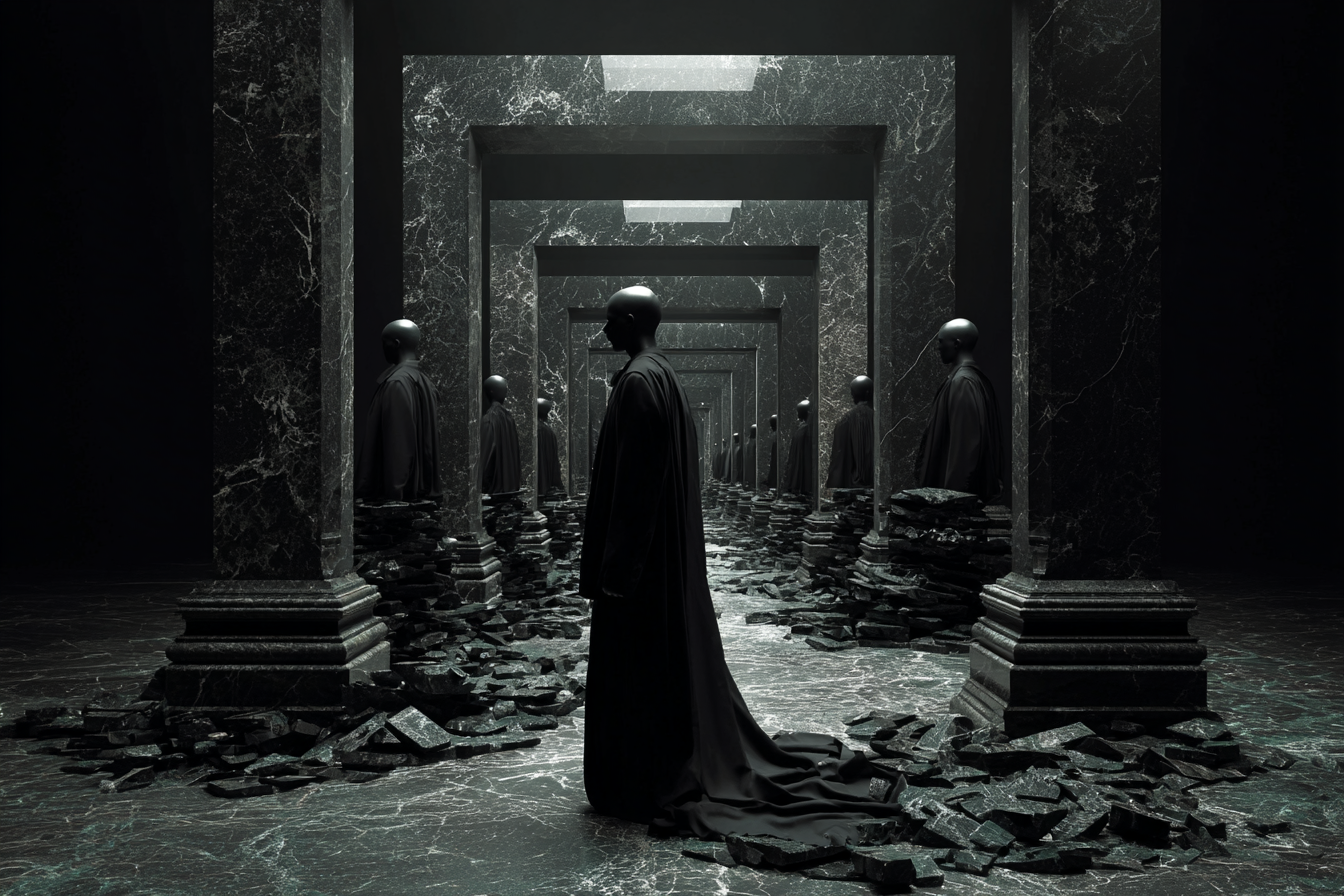
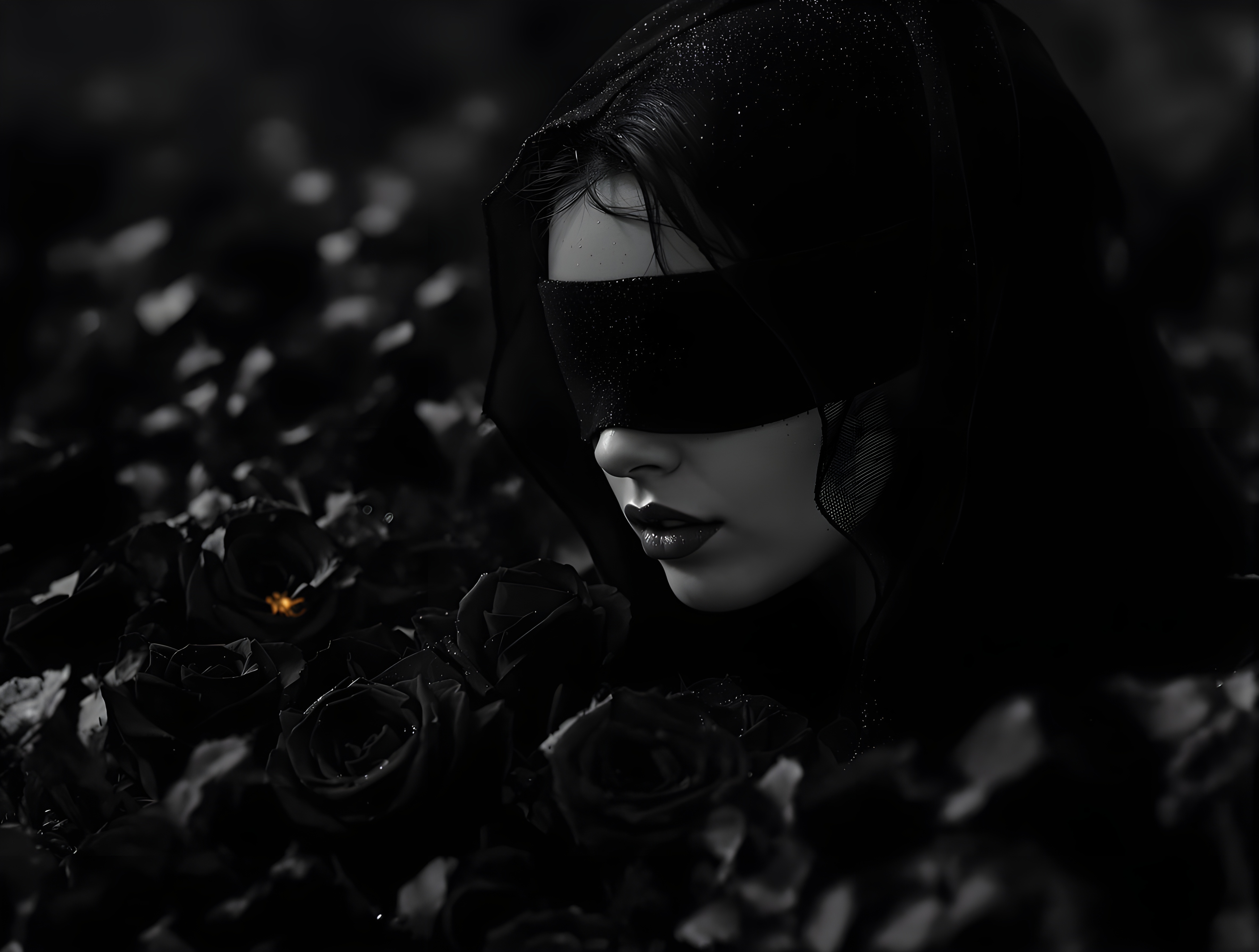

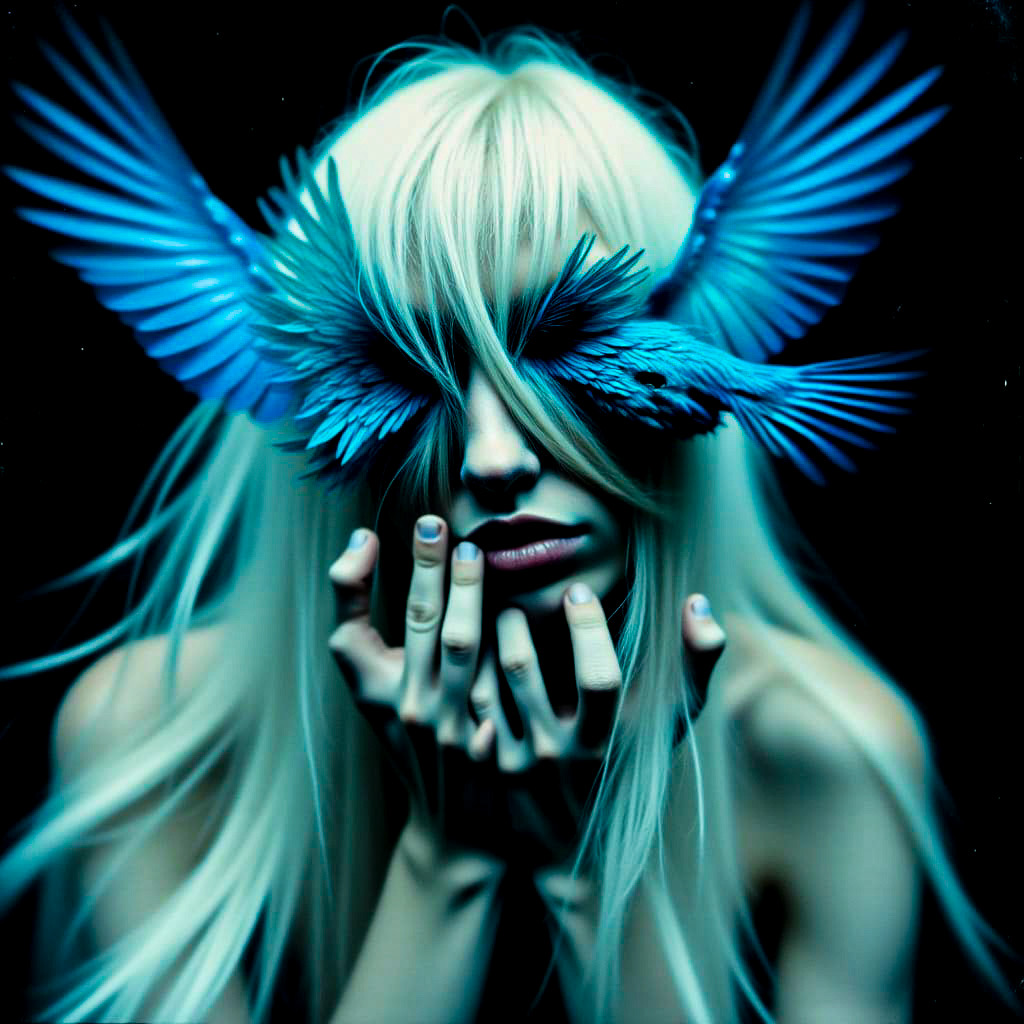
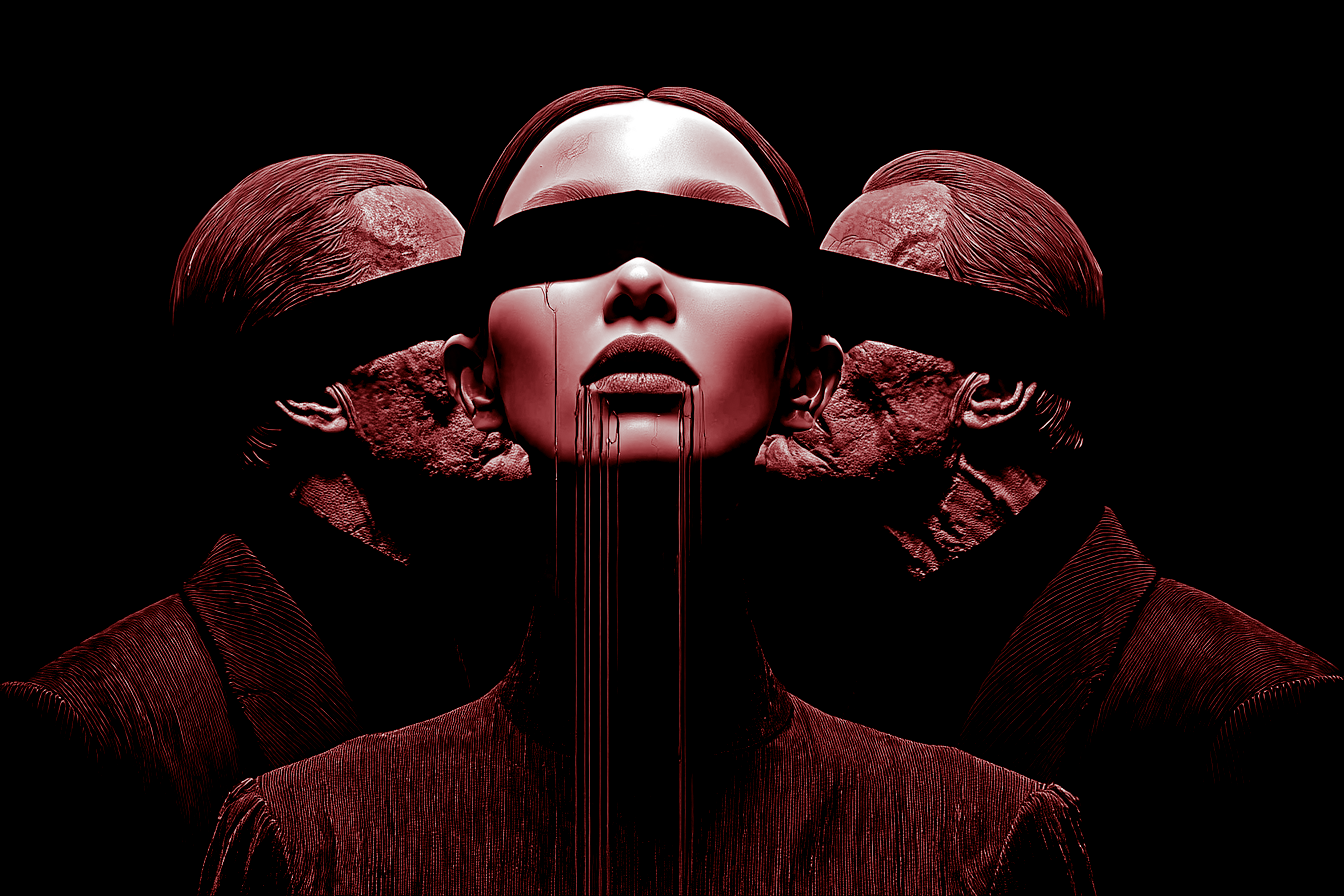
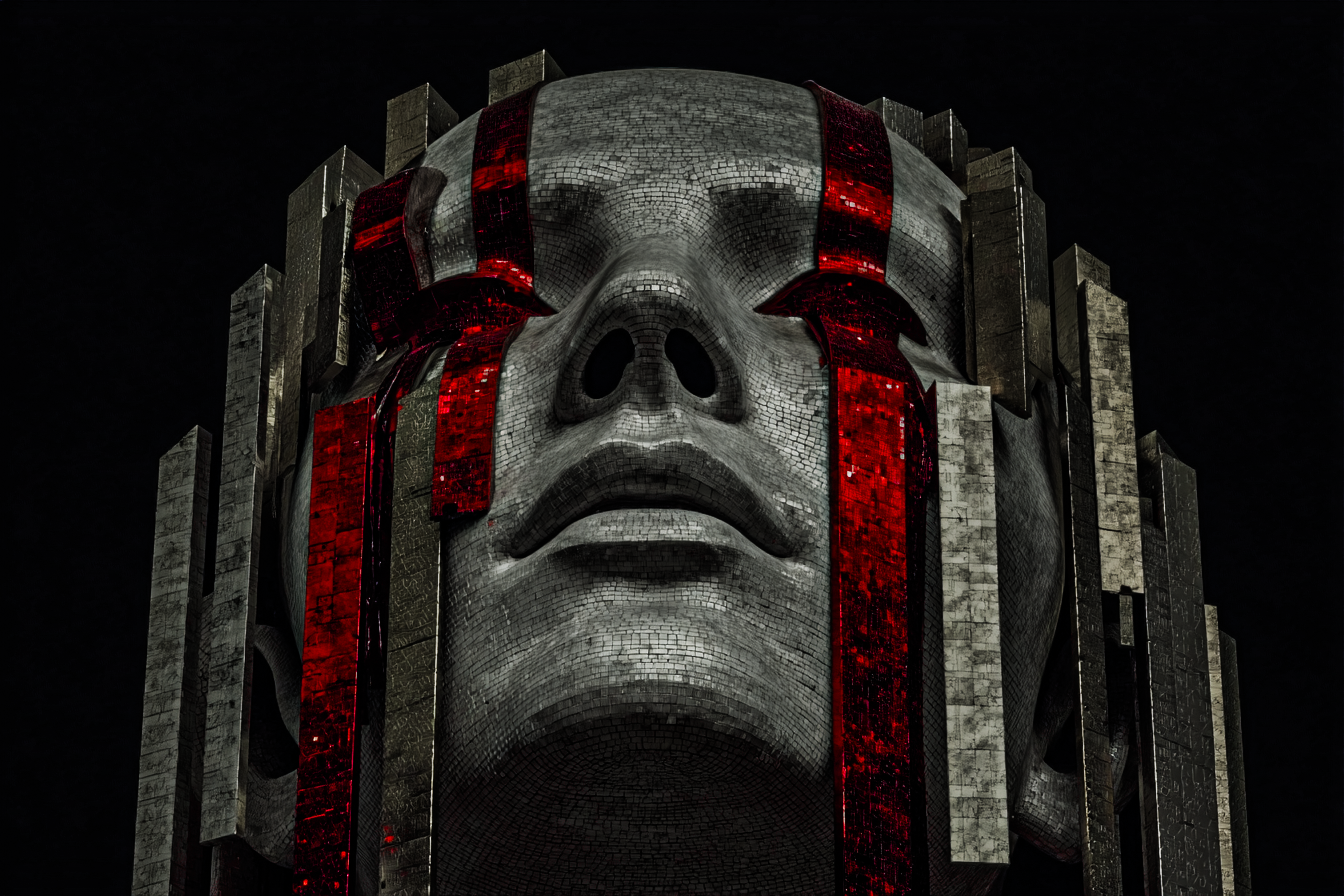
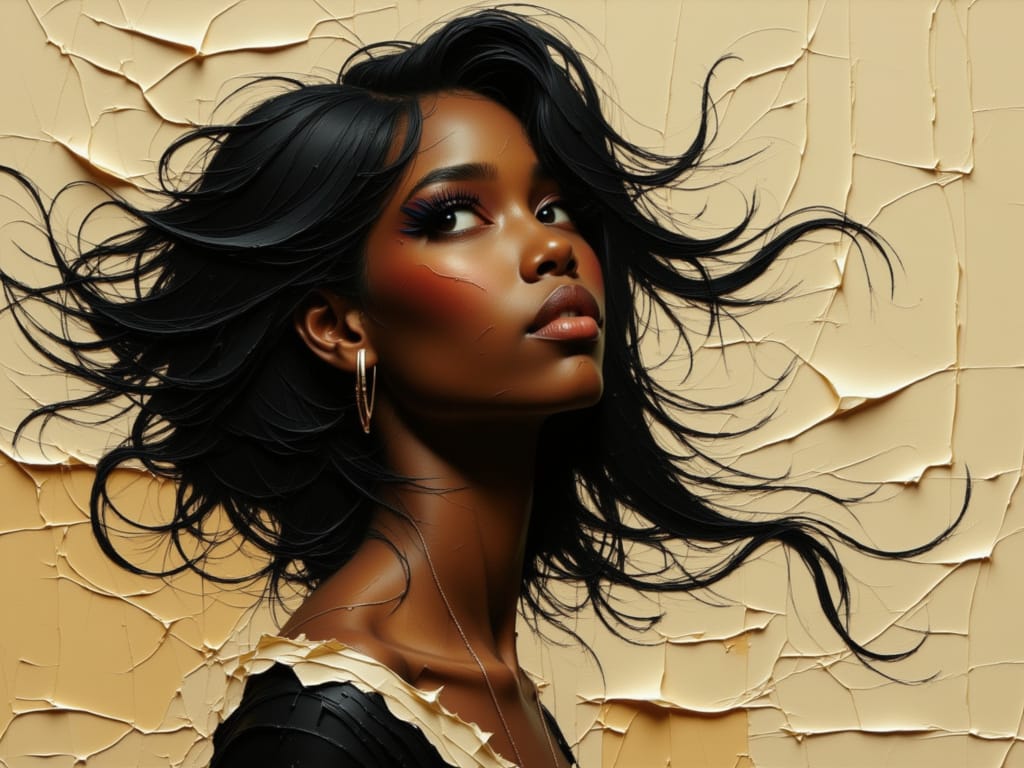
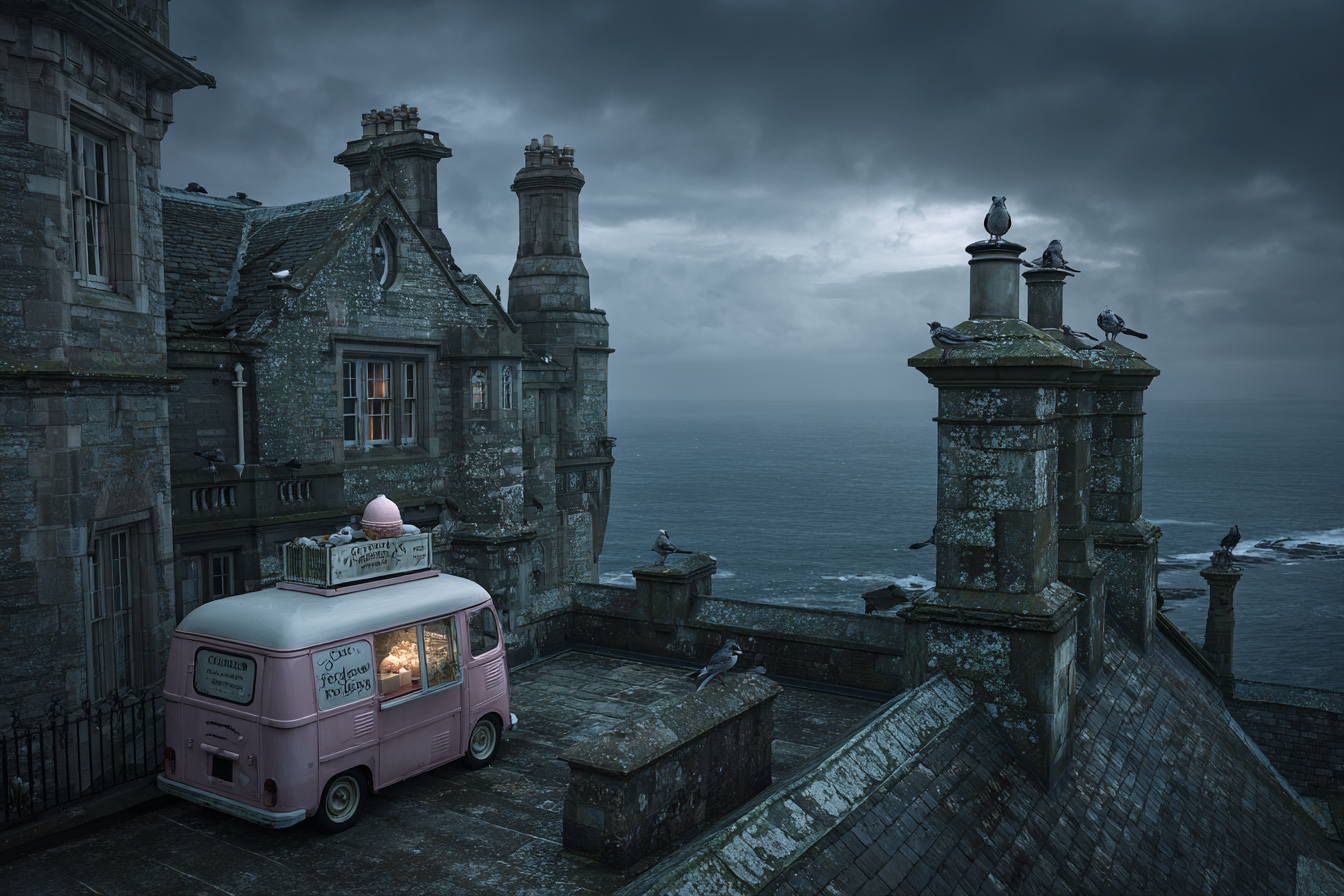





 Memoirs of Madness