
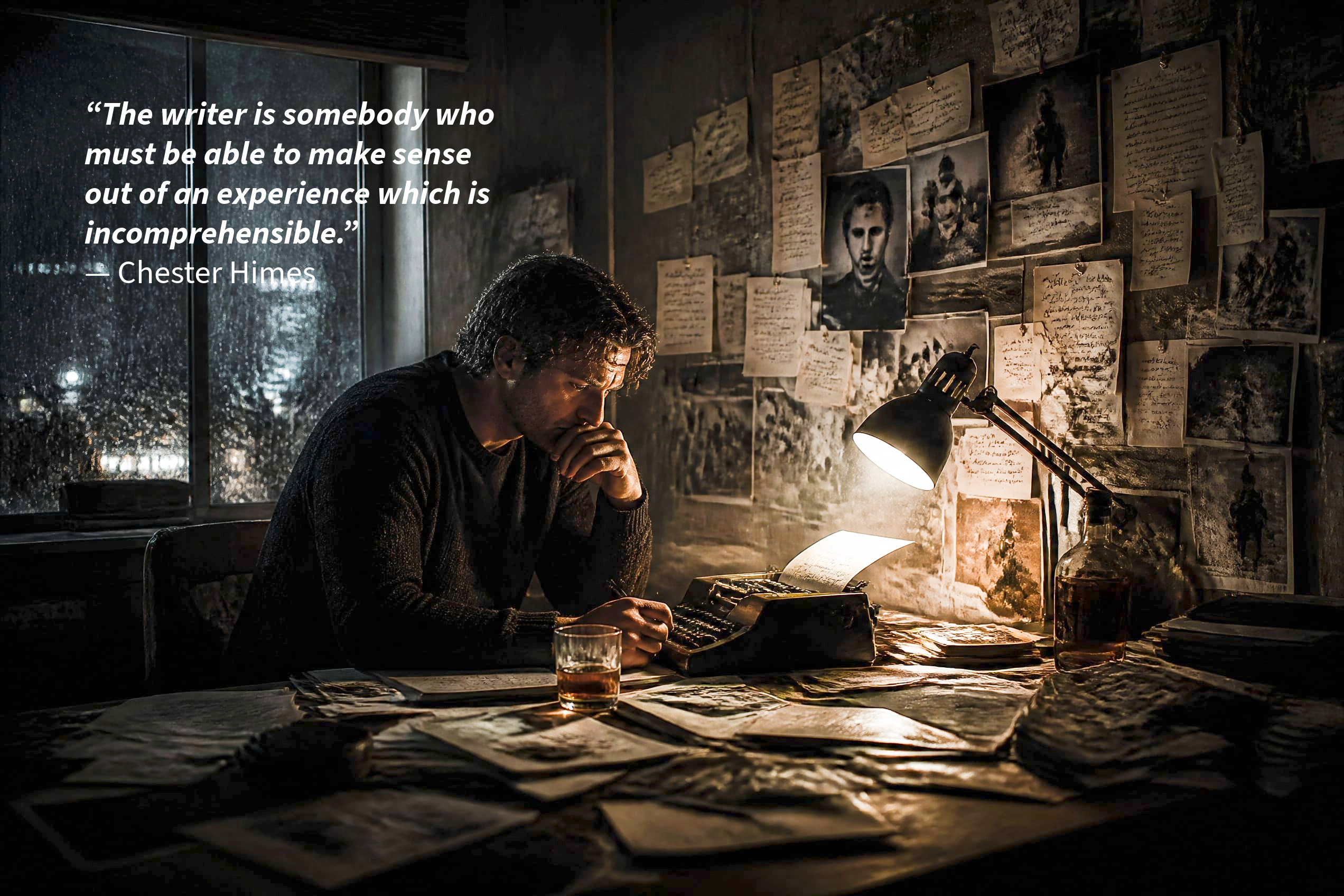
Personal Reflection
Most writing begins with something unresolved.
Not clarity. Not wisdom. Not some polished life lesson wrapped neatly in metaphor.
Usually it starts with confusion lingering like cigarette smoke in a closed room.
A conversation you can’t stop replaying. A betrayal that still feels unfinished years later. A moment that looked ordinary at the time until memory returned carrying sharper teeth. You try to move on, but the experience keeps tapping at the inside of your skull like a loose pipe in an old apartment building.
So you write.
Not because you fully understand what happened.
Because you don’t.
That’s the uncomfortable truth buried beneath a lot of creative work: writing is often an attempt to translate emotional chaos into something survivable.
Not everything in life arrives with meaning attached to it. Sometimes terrible things happen without revelation. Sometimes people leave without explanation. Sometimes grief just sits in the corner eating quietly long after everyone else has gone home.
And the mind hates unfinished things.
Writers especially.
We keep circling certain memories because part of us believes if we describe them accurately enough, honestly enough, we might finally reduce their power. Like naming a wound somehow changes its shape.
Sometimes it does.
Sometimes it only teaches you how deep it really goes.
That’s why authentic writing often feels dangerous. The page becomes a crime scene where denial slowly runs out of places to hide. Every sentence asks the same question in a different voice:
What really happened here?
Not the public version. Not the edited anecdote polished smooth enough for company. The real version. The one with contradiction and shame and silence still attached to it.
And maybe that’s why readers connect so deeply with work that tells the truth plainly. Not because they want perfection.
Because they recognize themselves in the fracture lines.
Still, there’s something hopeful hidden inside the process.
Writing may not fully solve confusion, but it can transform isolation.
The moment experience becomes language, it stops being trapped entirely inside one person. A stranger reads a sentence and suddenly realizes their private ache isn’t entirely private after all.
That matters.
Especially now.
Maybe making sense of life was never about finding clean answers. Maybe it’s about creating enough honesty to build a bridge between wounded people standing in separate rooms.
One sentence at a time.
Reflective Prompt
What experience in your life still feels unresolved enough that it keeps returning in different forms?
Discover more from Memoirs of Madness
Subscribe to get the latest posts sent to your email.


Always so thought-filled that we wonder of your insights. Thanks Mangus!
LikeLike
That’s the uncomfortable truth buried beneath a lot of creative work: writing is often an attempt to translate emotional chaos into something survivable.
That definitely resonates 🙂
LikeLike