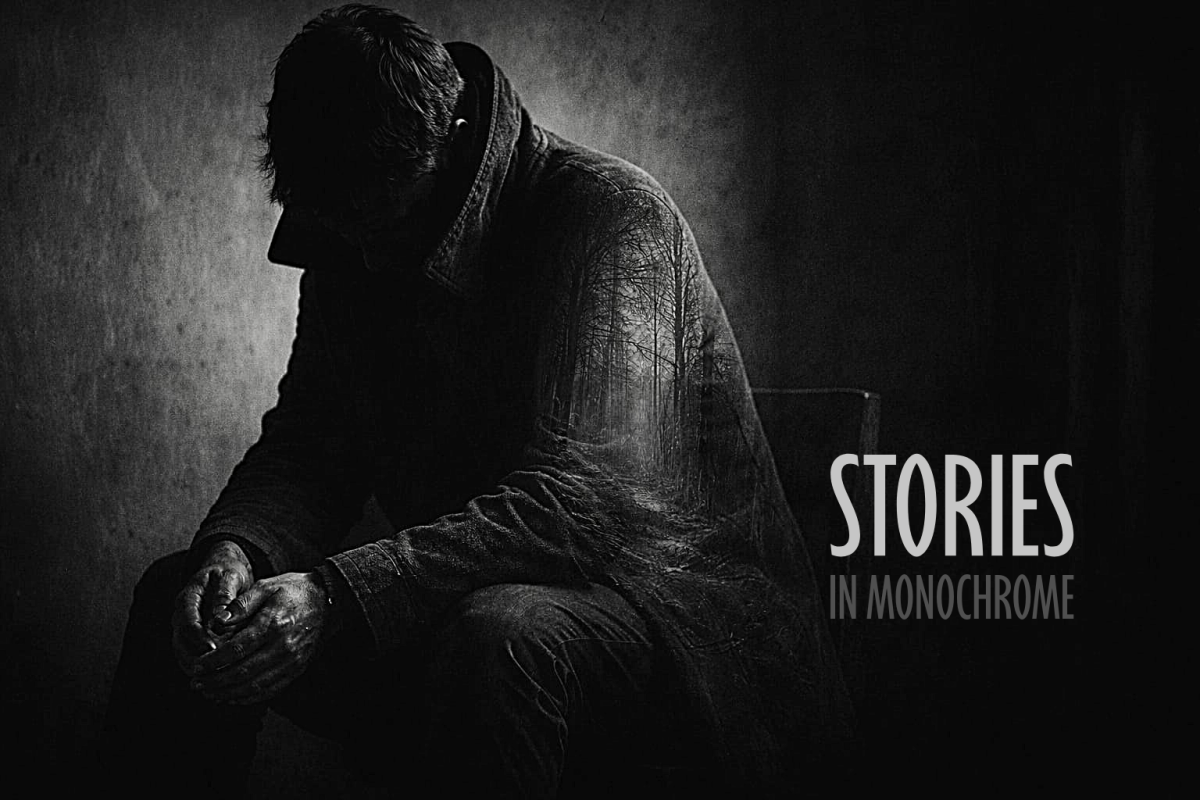

Stories in Monochrome
The storm started before sundown and never bothered to stop. Snow slid sideways across the window like the world was being erased one line at a time. Out here, the weather didn’t arrive politely. It came the way bad news comes — sudden, cold, and without asking if you were ready.
I had been alone in the station since noon.
Most days were like that.
Just me, the wires, and whatever passed through them.
People think telegraph work is exciting because messages travel fast. Truth is, the faster the message moves, the less it has to do with you. You just sit there, tapping out words that belong to other people, lives that never once stop to wonder who carried their news across the miles.
I used to imagine the wires as tethers stretched across the country.
Thin lines tying one lonely place to another.
After a few winters out here, you stop feeling tethered.
You start feeling like the knot nobody checks anymore.
The lamp hissed beside me, throwing a weak circle of light across the desk. The rest of the room sat in shadow, the corners dark enough to swallow a man whole if he leaned back too far. The stove had gone low, and I hadn’t bothered to feed it. Coal was for nights when someone might come through.
No one was coming through tonight.
The key clicked once under my fingers, just to make sure the line was still alive. A habit more than anything. When the storm got bad, the wires sometimes went quiet, and the silence could make a man start hearing things he shouldn’t.
Click.
Nothing back.
Good.
I reached for the paper roll and fed it through the register, listening to the small mechanical chatter that meant the machine still remembered its job, even if nobody else did.
For a while, that was all there was.
Wind.
Lamp.
The soft tick of metal.
Then the register started moving.
Not fast. Not urgent. Just steady.
I frowned and leaned closer, watching the strip of paper curl out across the desk, the punched dots marching along in neat little lines.
No call sign first.
No operator on the line.
Just the message.
I waited for the signal to stop, thinking maybe some fool down the line had bumped his key. It happened sometimes when the weather got bad. Loose hands, tired eyes, a man tapping nonsense because he didn’t feel like going home to whatever waited there.
But the tapping didn’t sound like nonsense.
It sounded careful.
Deliberate.
I pulled the tape free and held it closer to the lamp, squinting at the pattern, letting my fingers run along the holes the way a blind man reads a page.
It took a minute for the words to settle in my head.
STATION 14 WILL CLOSE AFTER FIRE
NO SURVIVORS INSIDE
DO NOT REMAIN
My first thought wasn’t ghosts.
It was the railroad.
Everything out here came down to the railroad.
If the line held, the town held.
If the line broke, the town dried up like a creek in August.
I’d seen it before.
Not here, but back east, when I was still green enough to think grown men knew what they were doing. The summer of the strike, when the yards filled with shouting and smoke and men who hadn’t been paid in weeks. Engines sitting cold on the tracks while soldiers stood guard like the trains were prisoners instead of iron.
We barely held the line together then.
Some towns never did.
I rubbed my thumb along the edge of the tape, feeling the thin paper curl under my hand.
Ten years, the message said.
Ten years from now.
Could the railroad survive another hit like that?
Could this place?
I looked around the station, at the stove, the desk, the little clock the company sent when they built the line through here. Nothing fancy. Nothing worth much to anyone but the men who worked it.
This job was the first thing I’d ever done that didn’t belong to my father.
He’d sent me west with two shirts, a watch that didn’t keep proper time, and a letter of introduction that opened just enough doors to get me out of his house. Said a man ought to learn how to stand on his own legs where nobody knew his name.
Most folks out here still didn’t take me serious.
To them I was the boy shipped west by a railroad man with friends in the company office, another soft-handed son sent out where nobody cared if he failed.
Truth was, I didn’t know if I believed in myself either, not at first.
But the wires made sense.
Dots.
Lines.
Signals that meant the same thing no matter who sent them.
Out here, the machine didn’t care whose son I was.
It only cared if I got the message right.
And this one…
This one I wished I hadn’t.
STATION 14 WILL CLOSE AFTER FIRE
NO SURVIVORS INSIDE
DO NOT REMAIN
I wanted to tell someone.
Supervisor.
Dispatcher.
Anybody.
But the storm had the line half dead already, and even if I got through, what would I say?
A message from ten years ahead says the railroad’s going to fall apart?
Out here in the middle of nowhere, a man could shout the truth into the wires all night long and still sound like a fool on the other end.
The lamp flickered, and the shadows shifted across the wall like the room itself wasn’t sure it believed me either.
Then the tape started moving again.
Slow.
Steady.
No sound from the key this time.
Just the paper sliding forward like something inside the machine had decided it wasn’t finished talking.
I didn’t touch it right away.
Didn’t breathe either.
When the strip finally stopped, I leaned in and pulled it free, holding it up where the lamp could reach it.
This time the message was shorter.
Only one line.
The holes looked clean, sharp, like they’d been punched by a careful hand.
I read it once.
Then again.
Then I looked at the clock on the wall.
January 14.
I lowered my eyes back to the tape.
MESSAGE SENT JANUARY 14
TEN YEARS FROM NOW
The wind hit the side of the station hard enough to rattle the glass, and for a second I thought the whole place might tear loose from the ground and go sliding off into the dark.
I could leave.
The thought came quick.
Just put on my coat.
Walk out.
Let the station sit empty.
Nobody would know until morning.
Nobody would care until later.
I looked at the key.
Looked at the stove.
Looked at the lamp burning low beside the window where the snow kept falling the same way it had all night.
I sat back down.
Fed the tape through again.
Set my fingers on the key.
If the message was coming from ten years ahead, then maybe the line still ran both ways.
Maybe the wires didn’t care what year it was.
My hand hovered before I pressed the lever.
STATION 14 RECEIVED
WHO SENT THIS
WHAT HAPPENS
The machine sat quiet.
The wind howled.
The lamp flickered low enough to make the shadows crawl.
For a moment I thought that was the end of it.
Then the register started again.
Not fast.
Not slow.
Just steady.
I watched the tape roll out across the desk, my hands flat against the wood, afraid if I moved the whole thing might stop.
When it finished, I didn’t want to read it.
But a man alone in a place like this doesn’t get the luxury of not knowing.
I picked up the strip.
Held it to the light.
YOU SENT IT
The lamp sputtered once, then steadied.
Outside, the wires kept singing in the storm, stretched tight across the miles, holding one lonely station to another, same as always.
Only now I couldn’t tell if they were keeping me tethered to the world…
or keeping something else from letting go.
Discover more from Memoirs of Madness
Subscribe to get the latest posts sent to your email.
 Memoirs of Madness