Isaiah Booker learned early that stillness could be a kind of resistance.
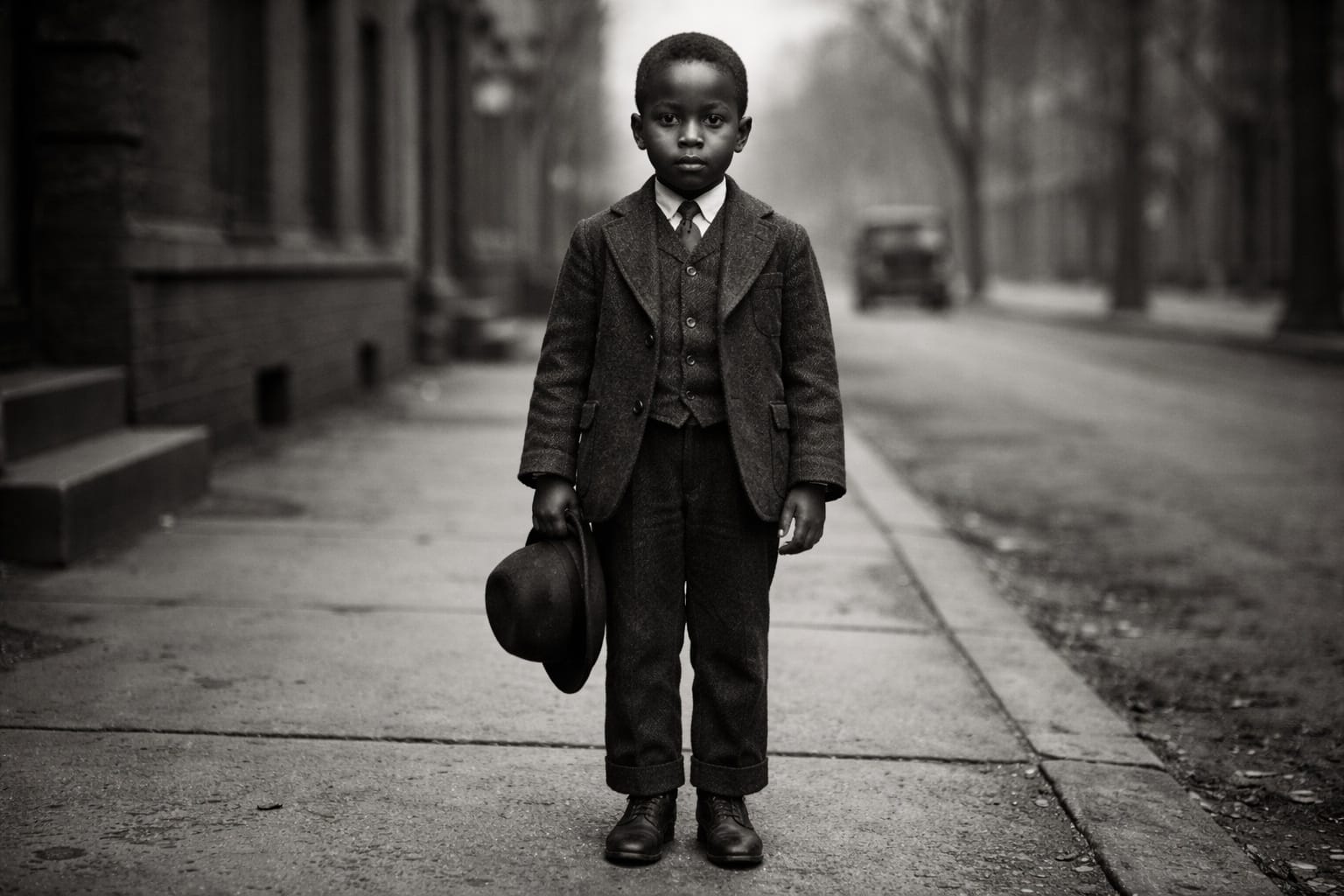
The cold pressed up from the pavement and settled into his bones, sharp and patient. It crept through the thin leather of his shoes, climbed his ankles, and lingered there like a question he wasn’t ready to answer. The suit on his back held the chill too, wool stiff with age and discipline, carrying the faint scent of old cologne and ironed mornings. It belonged to another life once. Isaiah wore it anyway. Hand-me-downs had a way of teaching you how to adapt without complaint.
He stood on the sidewalk with his hat in his hand, fingers tracing the worn edge of the brim. The felt was smooth in places, rough in others, softened by years of use. Touch grounded him. The street smelled of damp concrete, exhaust, and something metallic—like rain that never quite arrived. A bus groaned somewhere down the block, brakes sighing as if the city itself were tired of stopping.
Isaiah’s breath fogged faintly in the air. He watched it disappear and thought about how easy it was for things to vanish. Words. Chances. People. He had learned that silence could be safer than speaking, that listening often revealed more than asking. Adults said things when they thought children weren’t paying attention. Isaiah always was. Tone mattered more than words. So did what wasn’t said at all.
His mother used to tell him he carried himself like someone older. She said it gently, brushing his collar straight, smoothing the lapel as if she could iron the weight out of him. Isaiah felt it anyway—the pull of responsibility, the unspoken expectation to be steady, to not make things harder than they already were. He didn’t resent it. Resentment took energy. He saved his for observing, for remembering.
The buildings around him rose in quiet judgment, brick and stone stacked with indifference. Windows reflected him back in fragments: a sleeve here, a shoulder there. He studied those reflections, piecing himself together the way he’d learned to do with everything else. He stood straight because slouching made you smaller. He kept his gaze level because looking down invited erasure. These weren’t lessons taught out loud. They were absorbed, the way cold seeps in when you’re not paying attention.
A sudden laugh cut through the air—a boy running past, shoes slapping the pavement, joy unburdened and fast. Isaiah felt it in his chest, not as longing but as acknowledgment. Childhood hadn’t left him yet. It had just stepped back, hands in its pockets, watching to see what he’d do next.
Isaiah Booker didn’t know where the day would lead. He only knew this moment mattered. The way the hat rested in his hand. The way the street waited. The way he occupied space without asking permission. He stood there, breathing in the weight of the world and breathing out resolve, understanding that some lives begin not with movement, but with the decision to remain visible.
Discover more from Memoirs of Madness
Subscribe to get the latest posts sent to your email.


Ooooo this was wonderful!
LikeLiked by 1 person
thanks, Violet
LikeLike
The picture of Isaiah spoke volumes. I loved that story!
LikeLiked by 1 person
thanks, Betty
LikeLiked by 1 person
Welcome!
LikeLike