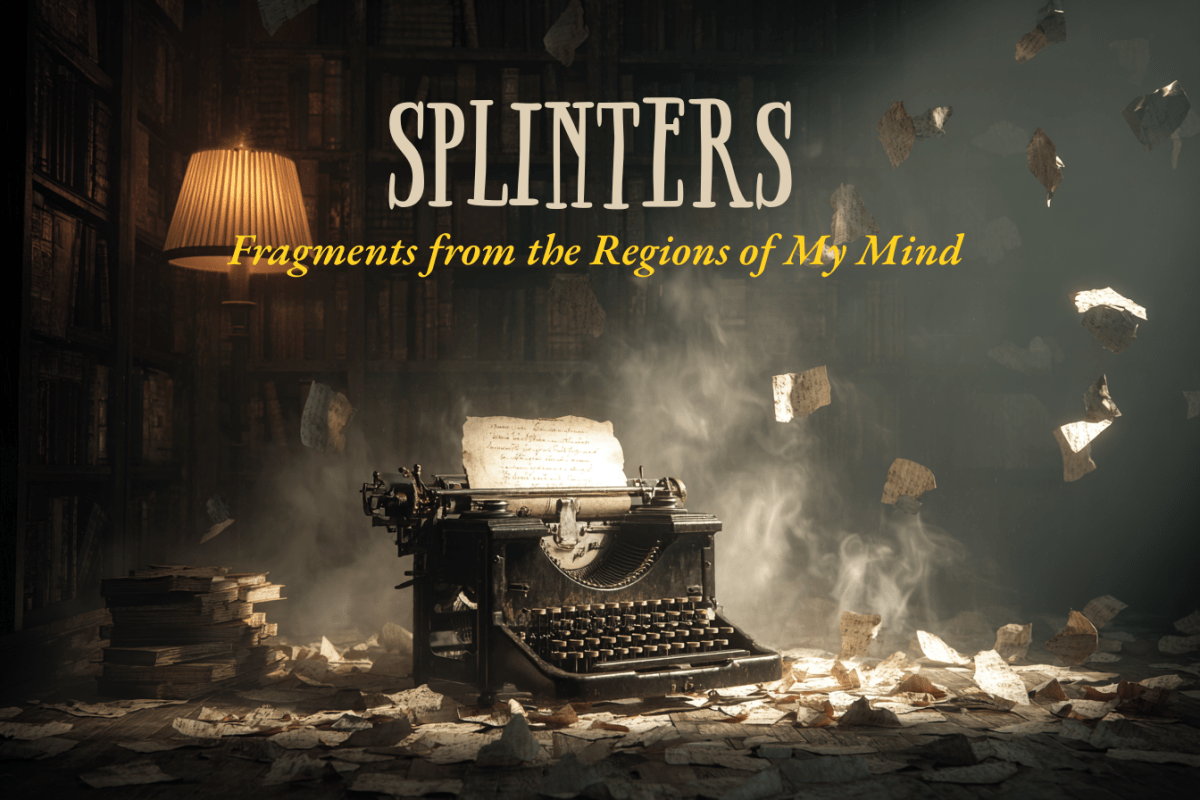

Rain glazed the neon crescent above Second Moon Books until it gleamed like a razor’s edge slicing through the night. Elias Moreau’s fingers trembled as he flipped the weathered placard to CLOSED. The paint on the letters bled, fading faster every September—as though some unseen smart-ass on the other side of the door was trying to erase the word before last call.
Inside, the air carried the sour bite of old glue and the metallic tang that seeped up from the subway grates. A crooked chalkboard behind the register wore last week’s proclamation in smudged white chalk:
BIRTHDAY BLOWOUT – A FULL WEEK OF HORROR & HOPEFUL DREAD
A Tribute to Stephen King
Eli’s pulse ticked in time with the neon strobe outside. Every year he staged this seven-day ritual for King, the undisputed monarch of macabre wonder. King’s uncanny magic felt almost domestic, like discovering an old friend hiding in the crawlspace. But Gordon Weaver—now that was a different kind of haunt. Weaver carved the American family like a butcher who’d gone to seminary, exposing grudges and betrayals with a quiet precision that left scar tissue. Friends nodded politely at Eli’s King obsession but flinched at Weaver’s hushed horrors, as if the silence of a fractured household couldn’t follow them home harder than a demon ever could.
Counting bills at the till, Eli listened to the upstairs dehumidifier hum and a distant patrol siren wail. The shop was empty—until the door chime rang.
One polite jingle.
He froze, chest tightening, waiting for the echo that never came.
A damp breath rose from the basement stairs. Twelve years of half-formed chapters and midnight revisions leaned against a dented Underwood down there, sulking. He’d promised himself an extra hour—maybe two—before trudging home. Perhaps he’d finally finish the scene about a stranger who knocks after hours, demanding a book that doesn’t exist.
The bell chimed again, louder this time.
He jerked his head toward the door. Beyond the glass, a wet silhouette lingered: coat collar turned up, hat brim low—someone who moved like yesterday’s regret. A third jangle, brittle and hollow, and the lock clicked itself open. A gust of rain-scented air swept in, carrying a soft undercurrent of cedar. Then she stepped across the threshold.
She was impeccable, as if traced by a meticulous pen. Mid-forties maybe, but she wore her age like a tailored alibi—each line on her face an elegant footnote. Dark hair, slick with rain, clung to the sharp planes of her cheeks. Her long coat shimmered under the flickering fluorescents. But it was her eyes—gray, or green, the light shifting like a flame—that snagged him and refused to let go.
A needle-sharp ache blossomed beneath his sternum, radiating into his left arm. Heart attack, his mind hissed. He slammed a hand on the counter, breathing ragged, every inhale a serrated blade.
She paused just inside the door, lips curving in a small, almost tender smile. He didn’t know her—he was sure of that—but some buried page of his past fluttered to life. Familiar and impossible in the same breath.
“You okay?” Her voice was low, calm—the kind you’d use to coax a frightened animal out of traffic.
He nodded too fast. “ I-I’m fine. Long day. Sale week.” The words tasted like he’d chewed them wrong.
Her smile deepened, unreadable. She turned toward the chalkboard, fingertips trailing through the chalk dust. BIRTHDAY BLOWOUT – A FULL WEEK OF HORROR & HOPEFUL DREAD…
“Do you still read Gordon Weaver?” she asked, voice soft as velvet smoke.
The name hit him like a dropped stone. Weaver wasn’t on the board. He hadn’t said that name aloud in months.
“How… how do you know about Weaver?” he stammered.
Her eyes glinted with something not quite amusement. “Oh, Eli,” she breathed. “You always did love a good story.”
Weaver: Count a Lonely Cadence, the battered paperback he’d rescued at a college sale, pages yellowed and reeking of cigarettes. Weaver peeled back the American family like skin from bone—quiet betrayals, unsaid resentments, love rotting in plain sight. Then Such Waltzing Was Not Easy dragged him deeper, mapping small domestic wars in brutal intimacy. No demons, no ghosts, just everyday hauntings that never left his marrow.
Now this rain-soaked stranger spoke Weaver’s name as though she’d plucked it from the private margins of his soul.
“Have we… met?” he asked, voice smaller than he felt.
“Not in the way you mean.” She stepped closer, eyes roving the shop’s towers of paperbacks and the narrow aisles of hardcovers balanced like drunk skyscrapers. “You look familiar.”
He swallowed. “Or maybe you’re a character I’ve been writing for years.”
Her smile flickered—a blade wrapped in silk. His chest flared, nerves taut with something like fear or longing or the first line of a story he couldn’t put down.
An echo of his own unfinished draft whispered through his mind: She enters like a paragraph he rewrote a hundred times and could never perfect. Named only by his yearning for her to hurt him.
The shop inhaled. Somewhere beneath their feet, the basement typewriter began to tap—slow, deliberate keystrokes spelling out a narrative Eli no longer commanded.
She gestured toward the narrow stairwell. “Shall we?”
The basement smelled of damp brick and stubborn paper. She eased into the swivel chair beside his desk and crossed one elegant leg over the other. From some unseen pocket, she produced a long cigarette holder—old Hollywood glamour in a room that smelled like busted neon dreams. She slid a thin cigarette into the mouthpiece, fingers steady, and lit it with a soft gesture. Smoke curled around her like a velvet sermon.
Above them, the Underwood sprang to life, keys clattering in a jagged, confident rhythm. Each strike was a heartbeat in steel. The carriage dinged, bright and final. With every mechanical echo, the vise around Eli’s ribcage loosened, the stabbing ache receding to a dull throb. He inhaled freely at last.
“Iris Devine,” he whispered—the name he’d once given a character who refused to stay on the page.
She watched through the smoke, eyes glimmering with triumph. “Have you figured it out yet?”
The typing slowed. A new line appeared:
The writer clutched his chest as the pain returned, sharp as a rusted nail. Would the story kill him before the final word?
Eli’s breath caught. His knees trembled. Darkness edged in.
“Oh, Eli… darling, you can stop this. You know,” Iris whispered, leaning close, breath a warm brush against his ear.
Keys clattered again—then the ding of the carriage returned, harsh as a gavel.
“Eli,” she said, voice closer still, “I know who you are.”
The typewriter fell silent.
“Who am I?” she asked, tilting her head.
“You’re… a character. You can’t be real. This must be a delusion—right?”
Her smile sharpened, sudden and fierce. “Then why are you bleeding inside one?”
She pressed a soft kiss to his cheek, then a slow, deliberate lick that left warm proof on his skin.
“You feel that? Real enough for you, darling? Be a dear and fetch me something to drink—bourbon, if you have it.”
He stumbled toward the stairs—and above him, glass shattered.
He wheeled around. The chair was empty. In its place, a ghost of smoke curled where she’d sat.
“Darling, you need to come upstairs—hurry,” her voice drifted down from the shop above.
He climbed into the main room to find broken glass strewn across the floor. A lone policeman stood by the register, uniform soaked, cap pulled low.
“Elias Moreau?” The officer’s voice was soft, almost uncertain.
“Can I help you, officer?” Eli’s hand dove beneath the counter, grasping the cold comfort of an old revolver. He cleared his throat, voice steady. “Step back.”
The man froze, rain dripping from his shoulders. Eli’s finger curled on the trigger—then he exhaled and let the gun clatter onto the countertop. Instead, his hand found something heavier: the knowledge that stories kill cleaner than bullets.
The shop flickered—
And when he blinked, everything was normal.
No broken glass.
No officer.
Only a dark, wet outline on the floorboards where the stranger had stood.
A single ding drifted up from below.
Eli descended again.
Iris sat beside the desk, sipping bourbon, a neat stack of crisp pages at her elbow. A half-empty tumbler caught the amber light. She raised it in a silent toast.
“Welcome back, darling.”
He slid a fresh sheet into the typewriter. The carriage clicked forward, awaiting his command. His fingers hovered—then struck, each letter unfolding with deliberate clarity.
CHAPTER 1
Writing has always been bigger than the writer and the story.
A kind of theology.
The religion between the writer and the story is a spell cast upon them.
The reader sits back and deciphers this literary kung fu.
Writing is a living theology.
A way of life, not just an ideal misunderstood by its practitioners.
Something real, and genuine. Something absolute.
The page is a pulpit, the keys a busted rosary, each prayer hammered out like it owes you rent.
Iris placed her hand on Eli’s arm, warm and insistent.
“Do you know,” she said softly, “that a marmot will chew through its own trap rather than stay caged? Writers should do the same.”
Her thumb traced a slow circle on his sleeve.
“Don’t be the marmot that gnaws in silence. Write until the steel bends for you.”
The typewriter answered with a single, eager ding.
Eli exhaled, a small, resolute smile breaking through the shadows on his face.
“This is where I belong.”
She rose with unhurried grace, smoke trailing like a benediction.
“I’ll put on the coffee,” she said.
The Underwood offered one final, gentle ding—a promise, not an ending.
Author’s Note
Today is Stephen King’s birthday, so I decided to play around with the supernatural and other weird stuff.
The prompt words used today were theology, marmot, and literacy.
Again, as always, thank you, FOWC, RDP, and Word of the Day for your inspiration.
 Memoirs of Madness
Good piece Mangus. Loved it!
LikeLiked by 1 person
thanks, Di
LikeLiked by 1 person
WOW! This had me on the edge of my seat.
LikeLiked by 1 person
thank you
LikeLike
Very atmospheric, with visuals irresistibly noir. Well done!
LikeLiked by 1 person
thank you
LikeLike