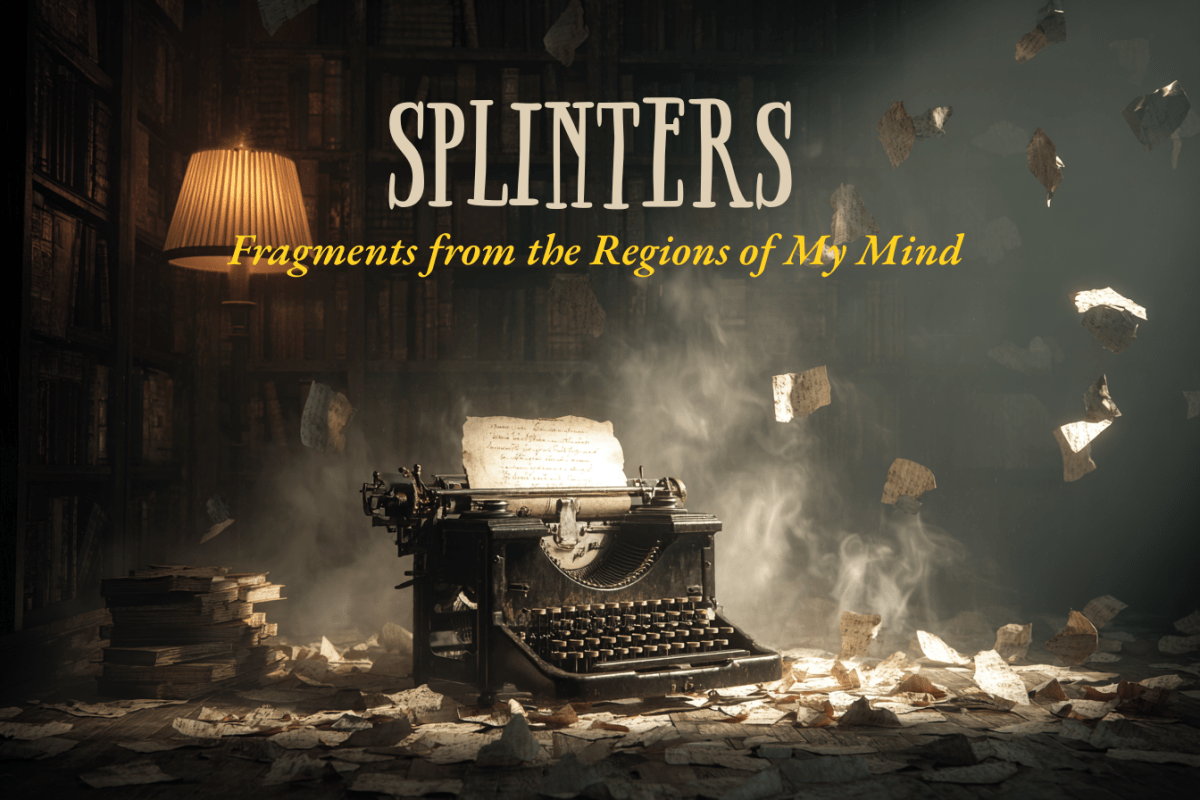
The first thing Tova noticed wasn’t the woman.
It was the silence.
Not ordinary silence—the kind found in abandoned houses or forgotten churches—but something denser, as though the room had swallowed every sound that had ever entered it and refused to give them back. Even her breathing seemed reluctant to exist there. The floorboards accepted her weight without complaint, and the old house settled around her with the slow patience of something that had been waiting far longer than she cared to imagine.
Only then did she notice the wall.
It stretched from floor to ceiling beneath a sprawling tapestry of yellowed newspaper clippings, handwritten notes, faded photographs, brittle maps, pressed flowers, and scraps of paper whose edges had curled with age. Hundreds—perhaps thousands—of crimson threads stitched everything together, weaving impossible paths across the plaster. Some strands looped lazily while others intersected at sharp angles before disappearing beneath photographs or vanishing behind pinned pages. At first glance the arrangement appeared chaotic. The longer she stared, however, the more the disorder felt intentional.
Not organized.
Alive.
Her eyes followed one strand until another interrupted it, then another, then five more, each demanding attention before surrendering it. She couldn’t have said how long she stood there, only that the growing pressure behind her eyes made her feel as though the wall were studying her just as carefully.
The air carried the scent of old paper softened by time. Dust drifted lazily through shafts of afternoon light. Beneath it lingered dried lavender, damp cedar, and the faint metallic smell that follows a thunderstorm before the first drop of rain ever falls. It reminded her of forgotten libraries where books outlived the people who once loved them.
Only after the wall had claimed her attention did she realize someone else occupied the room.
The woman stood perfectly still before the web of crimson thread. She neither welcomed Tova nor acknowledged the old floorboards beneath her feet. Instead, she rested two fingertips against a faded photograph near the center of the wall as gently as someone greeting an old friend.
“I’ve been expecting you.”
The words drifted across the room without urgency.
People always said things like that in strange places. It was the sort of sentence designed to quash questions before they ever reached someone’s lips.
Tova almost laughed.
“I’m pretty sure you haven’t.”
The woman smiled without turning around.
“No,” she said quietly. “You only believe that because you’re still counting time the normal way.”
A slow knot tightened in Tova’s stomach.
She had spent three sleepless nights trying to convince herself someone was playing an elaborate prank. A forgotten friend. A cruel joke. A reader who had somehow crossed a line. Every explanation collapsed beneath one impossible fact.
The envelope had been addressed in her own handwriting.
Not handwriting that merely resembled hers.
Her handwriting.
The peculiar hook beneath every y. The narrow loops of her g. The heavier pressure whenever she hesitated over a word. Tiny imperfections she’d carried since high school without ever realizing they had become part of her.
Inside the envelope had been only three things.
A dried willow leaf.
A Polaroid of a quiet lakeshore she had never visited.
And a single sentence.
Don’t let me remember.
Outside, somewhere beyond the rain-streaked windows, a forgotten ceiling fan squeaked with each slow revolution. The sound arrived at uneven intervals, never quite settling into a rhythm. It reminded Tova of an old clock that had grown tired of measuring time.
The woman stepped toward an antique desk where dozens of worn journals sat stacked in careful towers.
“Memory isn’t a collection,” she said as she rested her hand upon the nearest notebook. “People think forgetting happens all at once. It doesn’t. It happens grain by grain until one morning you can’t remember why a certain song makes you cry.”
She opened the journal.
Every page was blank except for dates.
Thousands of them.
Some belonged to years that had already passed.
Others belonged to years that had not yet arrived.
Tova frowned.
“You expect me to believe this?”
“I expect you to recognize it.”
Something in the woman’s voice unsettled her more than the room itself.
There was no attempt to convince.
No desperation.
Only certainty.
The certainty frightened her because it felt strangely familiar.
Drawn by instinct she stepped closer to the wall.
One photograph captured four people laughing beneath the broad canopy of an ancient willow tree during a summer picnic. Sunlight danced across the nearby river. Blankets were scattered over fresh grass. Mason jars caught the afternoon light while someone’s hand reached toward a basket overflowing with peaches.
It should have been an ordinary memory.
Except every face had been carefully scratched away.
Not gouged.
Not vandalized.
Removed with extraordinary patience.
Everything remained.
The laughter.
The sunlight.
The embrace.
Only identity had been erased.
“Who are they?”
“You.”
Tova shook her head.
“No.”
“Different versions.”
A chill slipped through the room so gradually she couldn’t identify the moment it arrived. One heartbeat she felt comfortably warm beneath her jacket. The next, the tiny hairs along her arms stood upright. The smell of rain deepened although every window remained closed.
Somewhere inside the house old wood settled with a soft crack.
It sounded disturbingly like footsteps deciding not to continue.
The woman joined her before the photograph.
“Most people spend their lives chasing quantity,” she said softly. “More birthdays. More photographs. More keepsakes. More proof they existed.”
Her fingers brushed lightly across the faded image.
“But memory has never cared about accumulation.”
She paused.
“It only respects quality.”
Tova leaned closer.
At first she thought exhaustion was playing tricks on her eyes.
Then she realized the crimson threads weren’t pinned into the wall.
They disappeared into the photographs themselves.
She blinked.
The people inside the lakeside picnic photograph moved.
Only slightly.
One woman lifted her glass.
Leaves rustled above them.
Ripples spread across the water.
A child laughed somewhere beyond the frame.
Tova’s breath caught in her throat.
The movement was subtle enough to deny if she looked away.
Then every figure stopped.
Together they turned toward her.
Not their faces.
The empty places where faces should have been.
A whisper escaped the photograph.
“Don’t make the same choice again.”
Tova stumbled backward, striking the desk hard enough to send the journals tumbling onto the wooden floor.
The books burst open.
Blank pages fluttered wildly despite the still air.
Across every page black ink began spreading.
Not being written.
Remembered.
Names appeared.
Dates.
Fragments of conversations.
Places she’d never visited.
Promises she’d never made.
Somehow she knew every word before she read it.
“What is this place?” she whispered.
The woman watched the pages fill with quiet sadness.
“It’s where unfinished lives wait.”
“I’m leaving.”
“You’ve already tried.”
The woman crossed the room and opened the door.
Beyond it wasn’t the hallway Tova remembered entering.
It was this room.
Again.
Another wall.
Another lamp glowing amber in the corner.
Another woman standing before another impossible web of crimson thread.
Another Tova had just stepped through another doorway, pausing exactly as she had moments before.
Or hours before.
Or years.
The rooms stretched endlessly beyond one another like reflections trapped between facing mirrors.
Infinite.
Silent.
Each one connected by scarlet thread.
Each conversation beginning exactly where another ended.
The woman turned toward her fully for the first time.
“There is one question you haven’t asked.”
Tova’s mouth had gone dry.
“What question?”
The woman’s expression softened with something that looked dangerously close to relief.
“Why do we both have your face?”
For the first time since entering the room, Tova truly looked.
Not at the eyes.
Not at the smile.
At the tiny crescent-shaped scar beneath the woman’s chin.
Her own hand rose before she consciously intended it to.
Her fingertips found the identical scar beneath her own chin.
The room became impossibly quiet.
Even the distant squeak of the fan had stopped.
Across the wall every photograph seemed to wait.
The woman wasn’t smiling anymore.
She looked exhausted.
Like someone who had repeated the same conversation for lifetimes, hoping one version might finally stay long enough to understand.
Then the lamp flickered.
Every room beyond the doorway darkened in perfect unison.
The crimson threads trembled.
From somewhere deep inside the maze of photographs, hundreds of unseen voices inhaled together.
When they finally spoke, they did so with one voice.
“The first memory was never the beginning.”
Discover more from Memoirs of Madness
Subscribe to get the latest posts sent to your email.
 Memoirs of Madness
I read this three times Mangus and decided I would not like to be in that room! Is there more to come?
LikeLike