What Elegant Gypsy Taught Me About Sound

TUNAGE – SLS

I never understood what people meant by a “breakout album.” It always sounded like marketing speak, like some suit in a record label office decided a release would be a moment before the music even had a chance to prove it.

But now that I’ve been listening to music for decades—really listening—I get it. A breakout album is the one that changes the game. It’s the moment when an artist stops following the rules and starts rewriting them. It doesn’t just shift their career—it shifts how you hear music and move through the world. What happens when a certain song creeps into your headphones at 2 a.m.

For me, those shifts started showing up most often in the music of the ’70s and ’80s. Maybe because that was the last time I remember feeling invincible. Some of my friends say it’s because we were young, wild, and untouched by the creeping anxiety that comes with growing older and seeing too much. I don’t know. All I know is, back then, the music mattered. It wasn’t background noise—it was a pulse.

Usually, when people write about breakout records, they stick to pop and rock. And sure, I’ve got love for Thriller, Born to Run, and The Dark Side of the Moon. They deserve their place. But when we only look in that direction, we miss a world of records that hit just as hard—and sometimes deeper.

Let’s talk about the blues for a second.

Breakout albums in the blues don’t always come with fireworks. They come with smoke. With mood. With grit. Robert Johnson’s King of the Delta Blues Singers wasn’t even released while he was alive, but when it hit in 1961, it sent shockwaves through every guitar player worth their calluses. That wasn’t just a collection of songs—it was a haunted house tour through American music. And Albert King’s Born Under a Bad Sign? That record is basically the DNA for half of modern rock guitar. You can hear it in Hendrix. You can hear it in Clapton. You can feel it in your spine.

And then Stevie Ray Vaughan’s Texas Flood came along in 1983 and slapped the ’80s awake. In a decade buried in synths and neon, he reminded everyone what raw emotion sounded like. Blues didn’t die—it just needed someone to walk back in with a Strat and a storm.

Still, for me, the blues is the voice of memory. Jazz, though—that’s where I live.

I didn’t even know I was being raised on jazz. My mother had it spinning through the house, soft and steady. There were no lectures, no explanations, just vibes—Miles, Monk, a little Ella, and Louis. It seeped into me without permission.

Later, when I started tracing back the music that moved me most, I found myself standing in front of Kind of Blue. I didn’t understand modal jazz or the genius behind its understatement. I just knew it felt like thinking clearly. Coltrane’s A Love Supreme—that one was different. That one burned. It felt like prayer in motion. And Herbie Hancock’s Head Hunters? That album made me question everything I thought jazz could be. It didn’t walk. It didn’t swing. It grooved.

But if you really want to know the moment the floor dropped out from under me—when I realized how deep this rabbit hole could go—it wasn’t a household name that did it. It was a cassette tape. In a barracks. On a night that started like any other.

It was the late ’80s. I had a makeshift pirate radio thing going with a buddy. We were playing Zeppelin, Floyd, Spyro Gyra—the kind of music that made you feel smart and a little dangerous. We were fueled by bad liquor and worse decisions.

Then Good walked into my room, talking slick. “You think you know music?” he said.

I told him to show me something better.

He popped in a tape.

Elegant Gypsy.
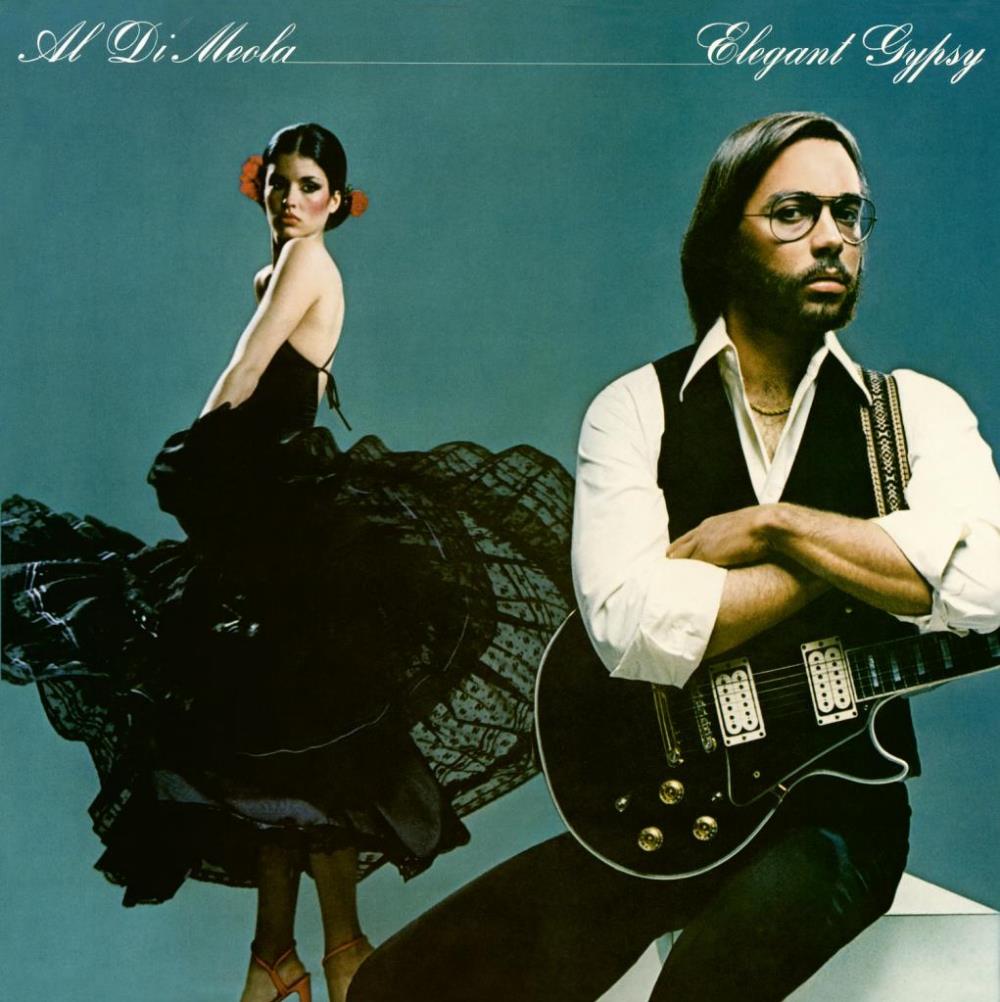


I didn’t know the name Al Di Meola. I certainly hadn’t heard of Return to Forever. Chick Corea and Stanley Clarke were familiar, but Al Di… ah, who? But from the moment “Flight Over Rio” exploded out of those half-broken speakers, I was done for.

Here’s the thing: Elegant Gypsy isn’t just fast. It isn’t just technical. It’s alive. This album doesn’t care if you’re ready. It grabs you by the collar, throws you into a hurricane of fusion, flamenco, and Latin rhythm, and dares you to keep up.

Di Meola’s guitar work is blistering—sure. But it’s also delicate when it needs to be. He doesn’t just play fast. He plays intentionally. There’s weight in every note, even when his fingers are moving at light speed. “Mediterranean Sundance,” his duet with Paco de Lucía, isn’t just a highlight—it’s a masterclass. You can feel the heat rising off the strings. You can hear two cultures colliding and dancing at once. It’s the sound of passion pushed through wood and wire—and that little whew at the end hits as hard as any chord.

And then there’s Elegant Gypsy Suite.


This track—more of a journey than a song—feels like the core of the whole album. At nearly ten minutes, it refuses to rush, despite being driven by a guitarist who could break land speed records. Instead, it shifts, morphs, and moves through phases. It opens in a brooding, almost cinematic space—like it’s scoring a Sergio Leone western that got hijacked by an avant-garde flamenco troupe. Then the melodies begin to circle, tighten, and rise. Di Meola slides between electric and acoustic passages without missing a beat, blending precise lines with raw emotion. There’s a section where the rhythm drops out and you’re left with this eerie, floating tension—before it snaps back in and charges forward like a bullfight.

It’s not just a guitar showcase—it’s storytelling. It’s Di Meola proving that speed means nothing without soul, that complexity doesn’t have to come at the cost of clarity. That suite is the reason this album transcends the fusion label. It’s bigger than genre. Its composition. It’s vision.

Critically, Elegant Gypsy did its damage. It went gold. It won Guitar Player magazine’s Album of the Year. It peaked high on the jazz charts. And yet, outside of jazz or guitar nerd circles, you barely hear it mentioned. No Rolling Stone rankings. No VH1 countdowns. It’s not part of the mainstream memory.

But ask any musician. Ask anyone who’s tried to tame six strings into something worth listening to. They’ll tell you: this album is sacred.

That night in the barracks, Elegant Gypsy didn’t just win the argument—it flipped the script. It reminded me why I cared about music in the first place. Not for popularity. Not for nostalgia. But for discovery. For the thrill of being wrong about what you thought music could be.

That’s what a breakout album really is. It doesn’t just launch a career. It launches you into something new.

So I keep listening. I keep digging. Not because I want to be the guy with the deep cuts, but because every now and then, a record still finds me and knocks me flat. When that happens, I stop everything. I pour a drink. I let it play all the way through.

Because sometimes, music doesn’t just break out.

It breaks you open.


Mixed Music Bag – Week 44

TUNAGE – MINI BIO – MMB

One of the things I enjoy the most about listening to music is finding artists who aren’t part of mainstream popularity. It’s rewarding to watch your discovery become super famous, but sometimes, you want to stay small. It’s having your own secret band in your back pocket. Tenpenny Joke is such a band. 

Tenpenny Joke was an Australian rock band from Melbourne’s Mornington Peninsula in 1997. They made their mark in the melodic rock scene.

Musical Journey

The band achieved a significant milestone in 2004 when they signed with Shock Records/Sing Sing Productions. Their debut album, “Ambush on All Sides,” was released in 2005. It was produced by Matt Voigt, known for his work with The Living End, Kiss, and Aaliyah.

Band Lineup 

  • Craig “Boz” Boswell – drums
  • Anthony Casey – vocals
  • Peter Coon – guitars
  • Tim Kill – bass guitar
  • Brian Rimmer – vocals and guitar

Musical Style and Impact

Their sound was primarily melodic rock, incorporating progressive and alternative elements. The band gained international recognition, receiving airplay across multiple countries, including the US, UK, Europe, New Zealand, and Asia. They were particularly successful in Japan, where their track “Across The Ocean” became highly requested on Yellowbeat radio.

Notable Works

Ambush on All Sides” (2005) – Full-length album

  • Notable Tracks
    • Across the Ocean – An excellent track showcasing the band’s classic rock influences
    • “Evil Things” – A light-hearted composition that highlights their musical range
  • My Favorites
    • Black Satellite 
    • Emergency


Mixed Music Bag – Week #7: Concrete Blonde

ARTICLE – MINI BIOGRAPHY – MMB

I’m a little behind because of my recent prolonged illness, so please forgive my tardiness. Here is my response to Glyn’s MMB.

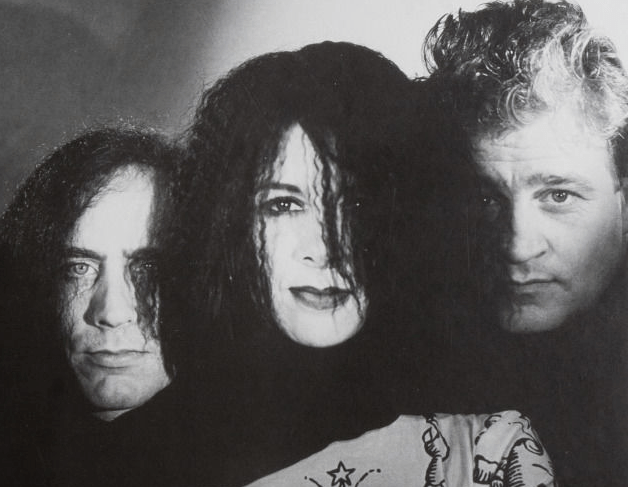
From the moment I heard, “There’s a crack in the mirror and bloodstain on the bed,” I was floored. I wondered who the hell was this singing and what band is this? I must have listened to that song back to back for a week straight. I’m sure it wasn’t that long, but I played it repeatedly. Well, the band Concrete Blonde, and the song was Bloodletting

The opening bass line captured my attention, and I was grooving. However, when the vocals arrived mixed with powerful lyrics, I seemed to be teleported into the song. I could feel everything she was singing about. Yeah, yeah, I was young, and everything was so damn serious. It was the best thing I’d ever heard blah, blah. However, Concrete Blonde has remained one of my favorite bands throughout my lifetime. Here are the particulars:


Concrete Blonde occupies a unique and enduring place in the rich tapestry of alternative rock music. Formed in the vibrant musical landscape of Los Angeles in the 1980s, Concrete Blonde emerged as a beacon of emotional depth and musical innovation. Led by the captivating vocals and songwriting prowess of Johnette Napolitano, the band’s distinctive blend of rock, punk, and folk influences captivated audiences and earned them a devoted following. This essay explores Concrete Blonde’s evolution, impact, and enduring legacy, delving into their thematic depth, musical craftsmanship, and cultural significance.

Formation and Early Years:

Concrete Blonde traces its origins to the convergence of talents between vocalist/bassist Johnette Napolitano, guitarist James Mankey, and drummer Harry Rushakoff in the mid-1980s. Drawing inspiration from the eclectic music scene of Los Angeles, the band forged a sound that defied easy categorization, blending elements of punk, rock, folk, and alternative music. Their eponymous debut album, “Concrete Blonde,” released in 1986, showcased their raw energy and emotional intensity, laying the foundation for their subsequent success.

Thematic Depth and Musical Craftsmanship:

At the heart of Concrete Blonde’s music lies a profound exploration of the human condition, infused with love, loss, longing, and redemption themes. Johnette Napolitano’s evocative lyrics and soul-stirring vocals serve as a conduit for raw emotion, resonating with listeners on a deeply personal level. Whether channeling heartache and despair in “Joey” or exuding defiance and resilience in “Bloodletting (The Vampire Song),” Concrete Blonde’s music transcends genre boundaries, inviting listeners into a world of introspection and catharsis.

Musically, Concrete Blonde’s compositions are characterized by their dynamic arrangements, melodic hooks, and rich instrumentation. James Mankey’s masterful guitar work ranges from atmospheric textures to blistering solos, complementing Napolitano’s emotive vocals with nuance and depth. The rhythm section, anchored by Harry Rushakoff’s propulsive drumming, provides a solid foundation for the band’s sonic exploration, while guest musicians add layers of sonic richness to their sound.

Cultural Impact and Enduring Legacy:

Throughout their career, Concrete Blonde left an indelible mark on the alternative rock landscape, influencing subsequent generations of musicians and earning critical acclaim for their distinctive sound and uncompromising vision. Their breakthrough album, “Bloodletting,” released in 1990, propelled them to mainstream success, fueled by the haunting single “Joey” and the atmospheric title track “Bloodletting (The Vampire Song).” Subsequent albums, including “Walking in London” and “Mexican Moon,” further cemented their reputation as one of the preeminent bands of the alternative rock era.

Beyond their musical achievements, Concrete Blonde’s impact extends to their engagement with social and political issues, using their platform to advocate for causes ranging from environmental conservation to LGBTQ rights. Their music resonates with audiences worldwide, providing solace, inspiration, and a sense of connection in an ever-changing world.


The song that made me a fan.

Lyrics: Dance Along the Edge

Sometimes we laugh like children
Go running holding hands
I never felt like this before,
I never will again
Sometimes we cry like babies
I hold you to my heart.
I just can’t stand to see you sad,
It tears me all apart

And we’re so afraid and it’s such a shame,
There is no reason we should doube it.
The things we want to say we’ver never said!
And we look away and it’s all ok and
Never really talk about it
It’s a shame the way we dance along the edge
Dance along the edge.

We always seem so careful,
We’re always so unsure.
Our past mistakes they make us shakey… eyes on the door.
When do we stop searching
For what we’re searching for?
Then when it comes, we question love and try for more!

And we’re happy here, but we live in fear
We’ve seen a lot of temples crumble.
Some of flesh and blood from love under glass.
Will we come undone? Will we turn and run?
And will we know it when we find it?
It’s a game the way we dance along the edge.
And we’ll walk the line and we’ll do our time
For just as long as we’ve been given,
And pretend that we don’t hear the things they’ve said.
Can we promise love? Is it all too much
And do our old souls still believe it?
It’s insane the way we dance along the edge.

Sister Rosetta Tharpe: Music Icon

ARTICLE – MINI BIOGRAPHY – MUSIC

I discovered Sister Rosetta Tharpe by accident. I was working on my novel and let my Blues playlist play on. I found myself stuck between my prose and the music. It’s one of my favorite places while I’m writing. I found myself lost in an ole’ blues standard. However, the more I listened, the more I realized the tune was different. I stopped and looked at the artist’s name. It was Sister Rosetta Tharpe. I wasn’t familiar with the name, but her sound was familiar.

As I investigated her music, I realized why her sound was so familiar. I remember hearing her music playing in the kitchen of my grandmother. My grandmother would clap, dance, and sing along with her music while she prepared different meals.

Sister Rosetta Tharpe was a pioneering figure in the history of American music. With her distinctive blend of gospel, blues, and rock and roll, Tharpe had a far-reaching impact that continues to be felt to this day. Her unique sound and style were not just revolutionary in terms of music, but also in terms of the societal norms of her time, adding another layer to her legacy.

Born on March 20, 1915, in Cotton Plant, Arkansas, Tharpe displayed musical talent from a very young age. She was raised in a family where religious music was a fundamental part of life, and this early exposure set the stage for her eventual career. She began performing at church services when she was just four years old, accompanied by her mother on guitar. By the age of six, Tharpe was a featured performer in a traveling evangelical troupe, demonstrating her prodigious talent and the power of her voice.

As a teenager, Tharpe moved to Chicago, a city known for its vibrant music scene. She quickly became a sensation in the city’s thriving gospel scene. Her powerful voice and unique guitar playing style set her apart from other artists, and she was soon performing to packed houses throughout the city. This was just the beginning of an illustrious career that would see her reach phenomenal heights.

In 1938, Tharpe took another major step in her career when she moved to New York City and signed with Decca Records. Her first record was an instant success, and she quickly became one of the most popular gospel artists in the country. Tharpe’s style was unique and groundbreaking; she combined the raw emotion of gospel with the driving rhythms of blues and rock and roll, creating entirely her own sound.

Even though Tharpe was a gospel artist, her music transcended the genre and appealed widely. She performed at nightclubs and theaters, breaking down barriers between sacred and secular music. Tharpe was a trailblazer in many ways – she was one of the first black women to perform with a white orchestra, and she was also one of the first artists to use heavy distortion on her electric guitar. This technique would later become a staple in rock music.

Tharpe’s influence extended far beyond her own career. She was a major influence on artists like Elvis Presley, Chuck Berry, and Johnny Cash. Her distinctive guitar-playing style paved the way for the development of rock and roll, and her powerful voice continues to inspire singers to this day. It is a testament to her talent and impact that she influenced such iconic figures in music.

Sister Rosetta Tharpe passed away on October 9, 1973, but her legacy remains. She was posthumously inducted into the Rock and Roll Hall of Fame in 2018, a fitting tribute to a woman who did so much to shape the course of American music. Her impact is not only seen in the music of those who came after her, but also in the way she broke down racial and gender barriers in her lifetime. Her life and career serve as an inspiring example of the power of music and the strength of individuality.