Poem of the Day – 06102026

The Song of the Idiot

By Rainer Maria Rilke
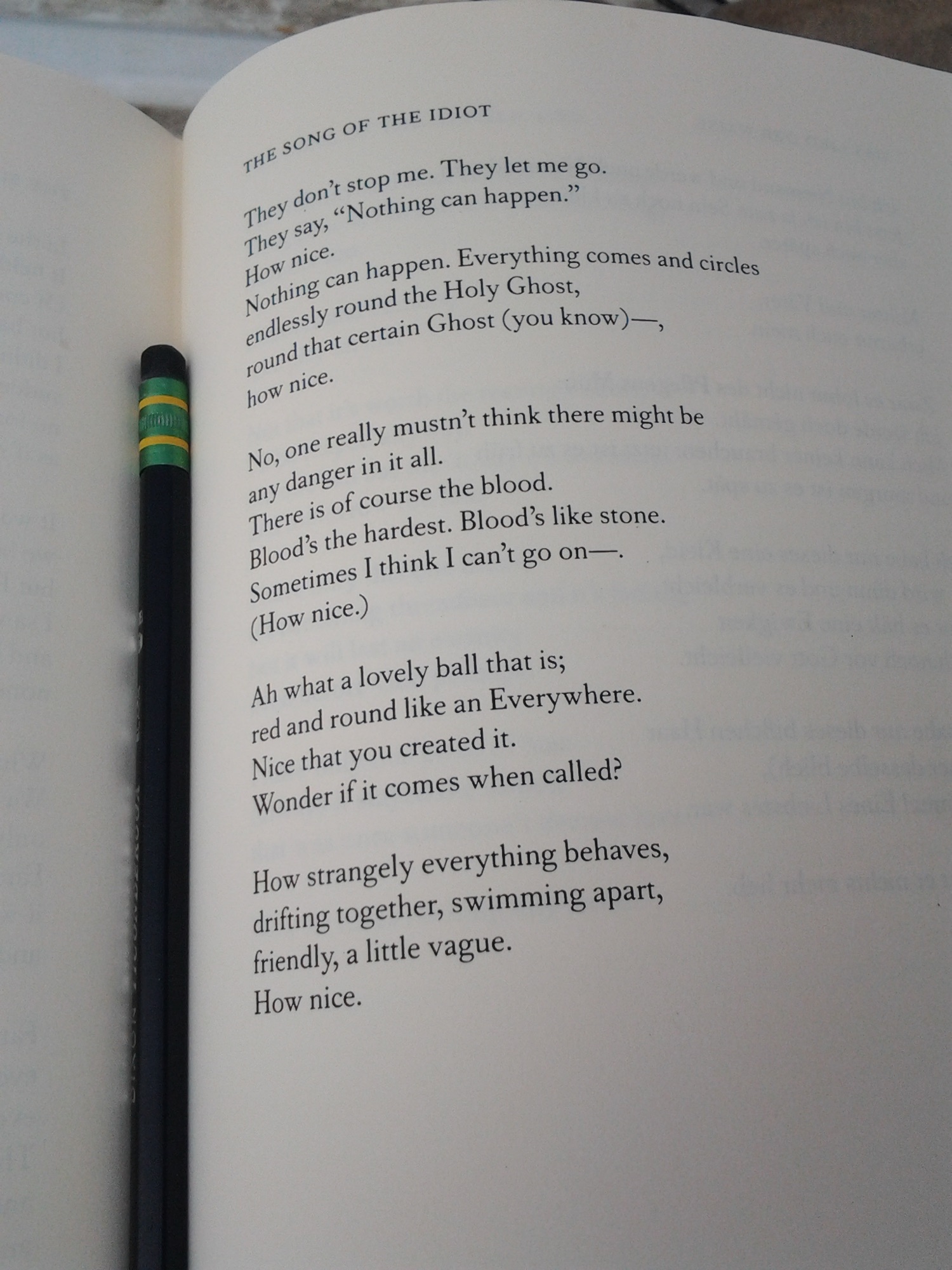

There is something unsettling about the speaker in this poem.

Not because he sounds dangerous.
Not because he sounds loud or broken in obvious ways.

But because he moves through the world with a strange mixture of innocence, detachment, and awareness that never fully settles into clarity.

“How nice.”

The phrase repeats with almost childlike simplicity, yet each repetition feels heavier than the last. Less comforting. More uncertain. As if the speaker is trying to convince himself the world is harmless while quietly sensing something beneath the surface he cannot fully name.

That tension gives the poem its power.

Rilke’s “idiot” does not feel foolish in the ordinary sense. He feels exposed. Unprotected against the overwhelming complexity of existence. The poem drifts through thoughts about blood, danger, ghosts, exhaustion, and meaning the way the mind drifts when it can no longer hold reality in neat categories.

And perhaps that is the deeper truth here:

Sometimes people labeled “foolish” are simply those who experience the world too openly.

Too sensitively.
Too honestly.
Without the emotional armor most people spend years constructing.

The world teaches us quickly to organize experience into certainty:

  • this is safe
  • this is dangerous
  • this matters
  • this does not
  • this is rational
  • this is absurd

But Rilke resists that structure.

Everything in the poem circles. Thoughts dissolve into one another. Meaning behaves unpredictably. The speaker notices beauty and terror almost simultaneously, unable to fully separate them.

That can feel disorienting.

But it also feels deeply human.

Because life rarely arrives in clean emotional categories. Joy and grief coexist. Fear sits beside wonder. Exhaustion lives beside tenderness. Most people simply become practiced at hiding the contradiction.

The “idiot” does not.

And maybe that is why the poem lingers.

Not because it explains anything clearly, but because it captures the strange psychological experience of trying to exist inside a world that often feels both intimate and incomprehensible at the same time.


Reflection Prompts

  • Have you ever felt emotionally out of step with the world around you?
  • What parts of yourself do you hide in order to appear more “reasonable” or composed?
  • Is sensitivity always weakness—or can it also be a form of perception others avoid?
Quote of the Day – 04302026


Personal Reflection

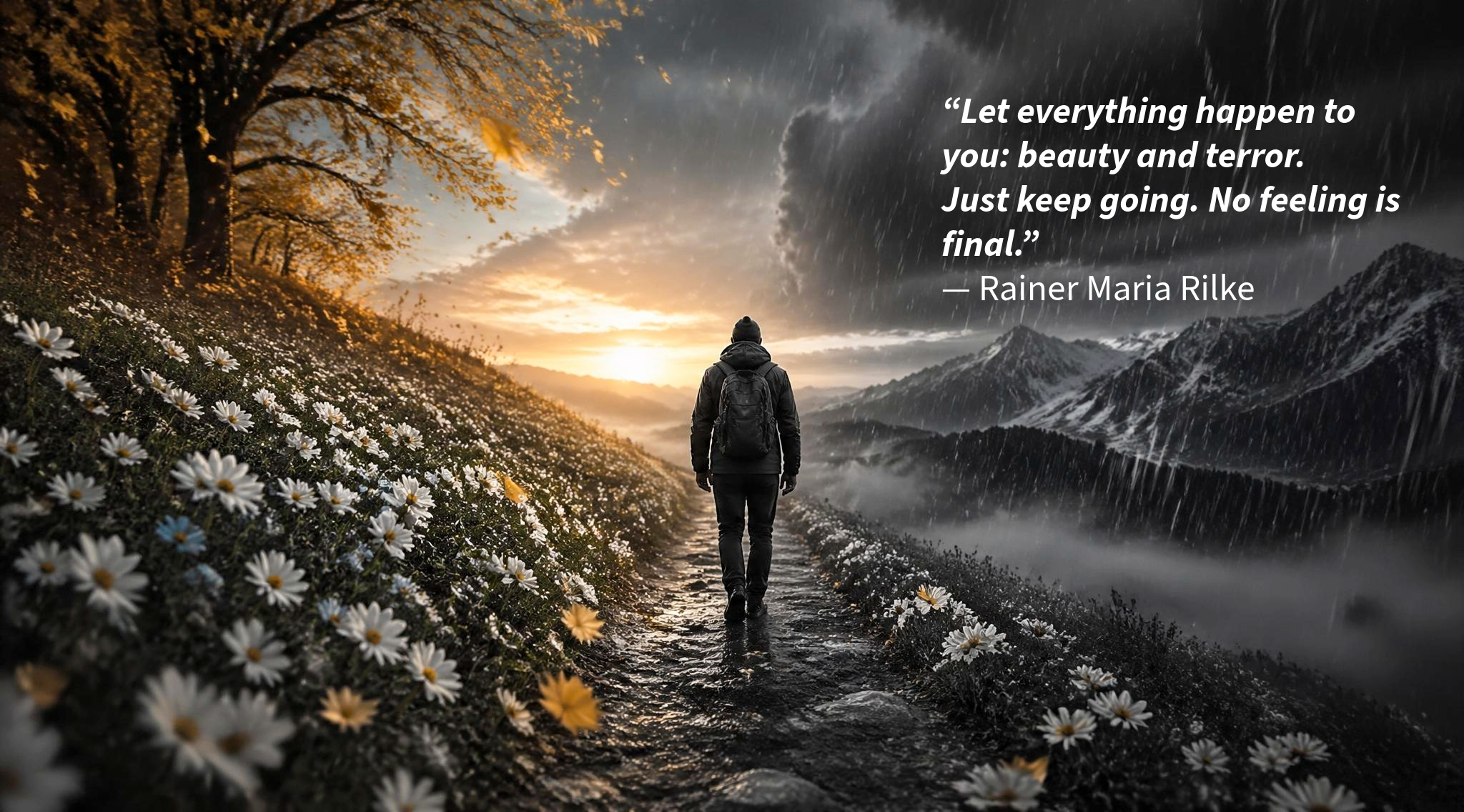
It reads like permission and command at the same time. Let it happen. Keep going. Two instructions simple enough to remember and difficult enough to spend a lifetime learning.

Most people want selective living. Beauty without grief. Love without risk. Growth without discomfort. We bargain constantly with reality: I’ll accept joy, but not uncertainty. I’ll welcome change, but not loss.

I’ve made those bargains too. They never hold. Life arrives whole or not at all.

Beauty enters carrying expiration dates. Terror sometimes arrives disguised as transition. Even happiness can unsettle you when you’re more accustomed to struggle.

Rilke refuses the fantasy of emotional permanence. The panic says this will last forever. The despair says this defines me now. The ecstasy whispers never let this end.

But weather moves.

Feelings feel absolute while we are inside them, the way storms convince the sky to look permanent. Then morning happens. Then another season. Then a version of you who can hardly remember how total it once seemed.

That does not make the feeling false. It makes it passing.

Maybe wisdom is not learning how to avoid intensity.

Maybe it is learning not to build your house inside it.

Welcome what comes.
Grieve what leaves.
Enjoy what blooms.
Endure what burns.

And when the moment swears it is forever—
nod politely,
then keep walking.


Reflective Prompt

What feeling have you mistaken for a permanent identity or permanent future?

Quote of the Day – 04122026


Personal Reflection

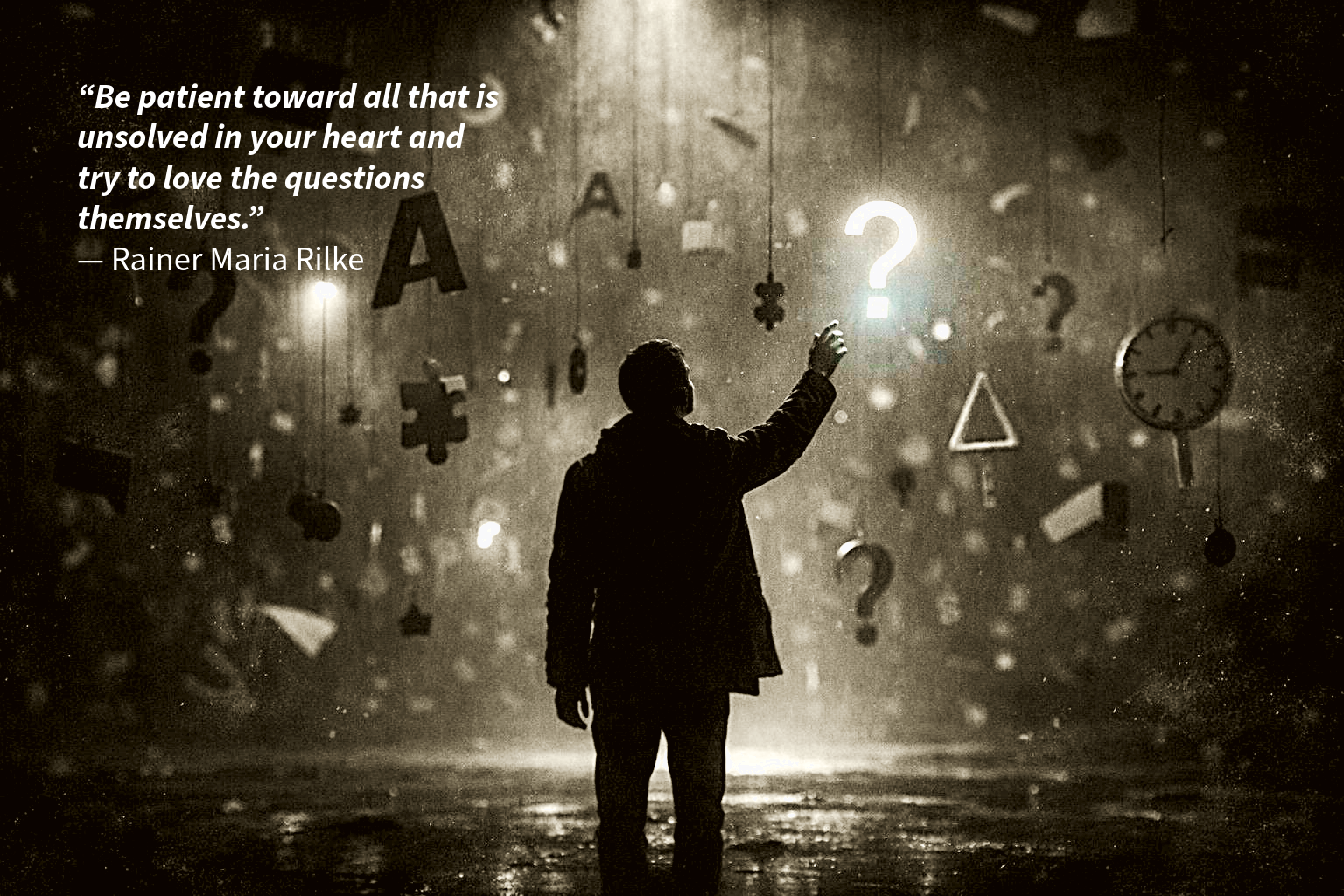
It sounds gentle at first—almost like reassurance. Be patient. Don’t rush. Let things unfold. The kind of advice that feels calm on the surface, easy to agree with.

But patience isn’t passive. Not the kind Rilke is talking about.

There’s a tension in not knowing. A constant pull to figure things out, to close the loop, to get to something solid you can stand on. I’ve felt that pressure—to resolve things quickly, to make sense of what doesn’t yet make sense.

Unanswered questions don’t sit quietly. They follow you. Show up at the wrong time. Linger longer than you want them to.

And the instinct is to push them away or force an answer just to quiet the noise. Even if the answer doesn’t fully fit.

Rilke challenges that instinct. Not by offering solutions—but by asking you to stay in the uncertainty without trying to escape it.

To sit with what’s unresolved without turning it into something it isn’t.

Because maybe the problem isn’t the question—
it’s the need to end it too soon.

Maybe not everything is meant to be answered right away.
Maybe some things are meant to be lived through first.

Not solved.
Not finalized.

Just carried—until they change shape on their own.

And maybe patience isn’t about waiting…
it’s about staying present long enough to understand.


Reflective Prompt

What question in your life are you trying to answer too quickly?

Quote of the Day – 09182025


Reflection:
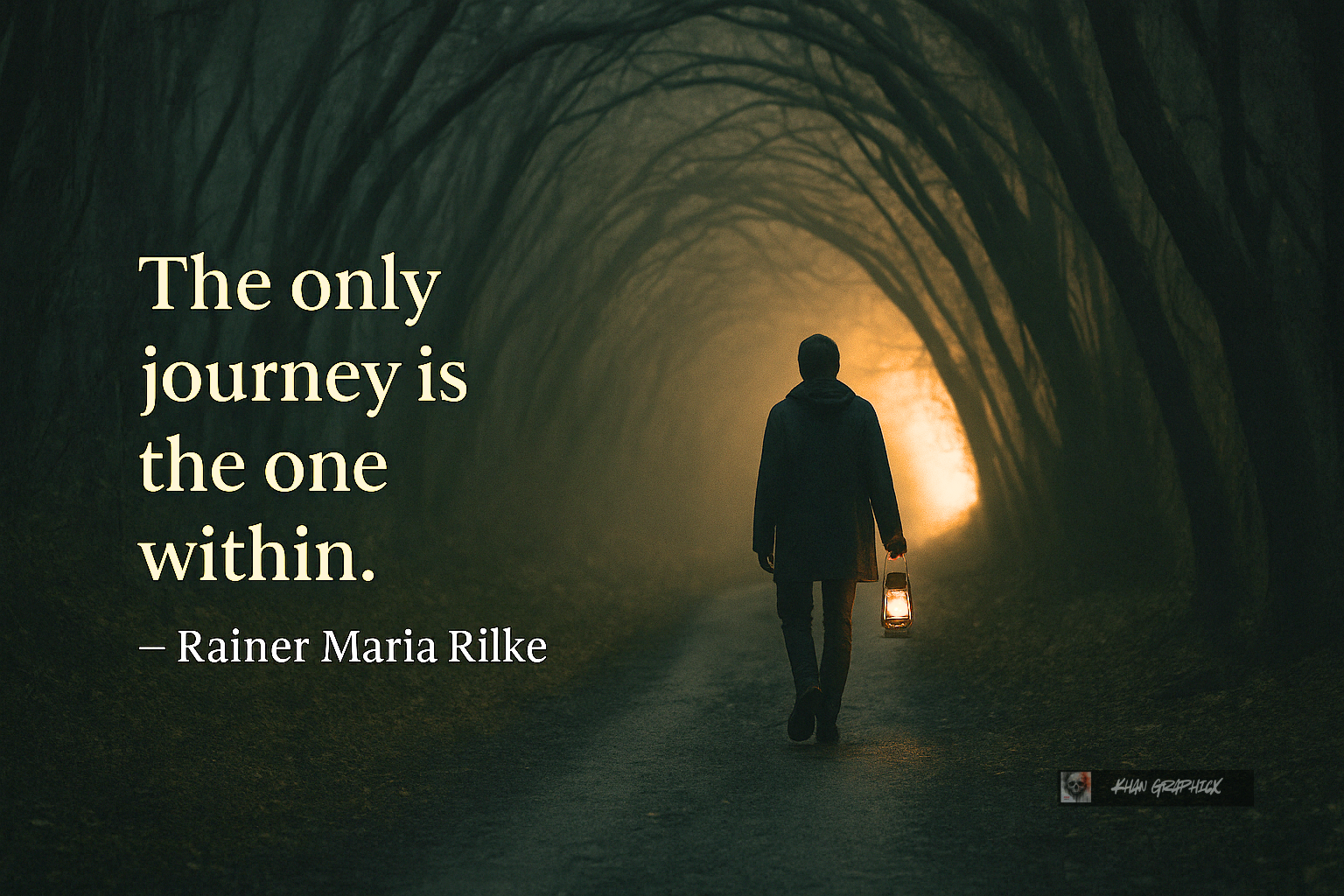
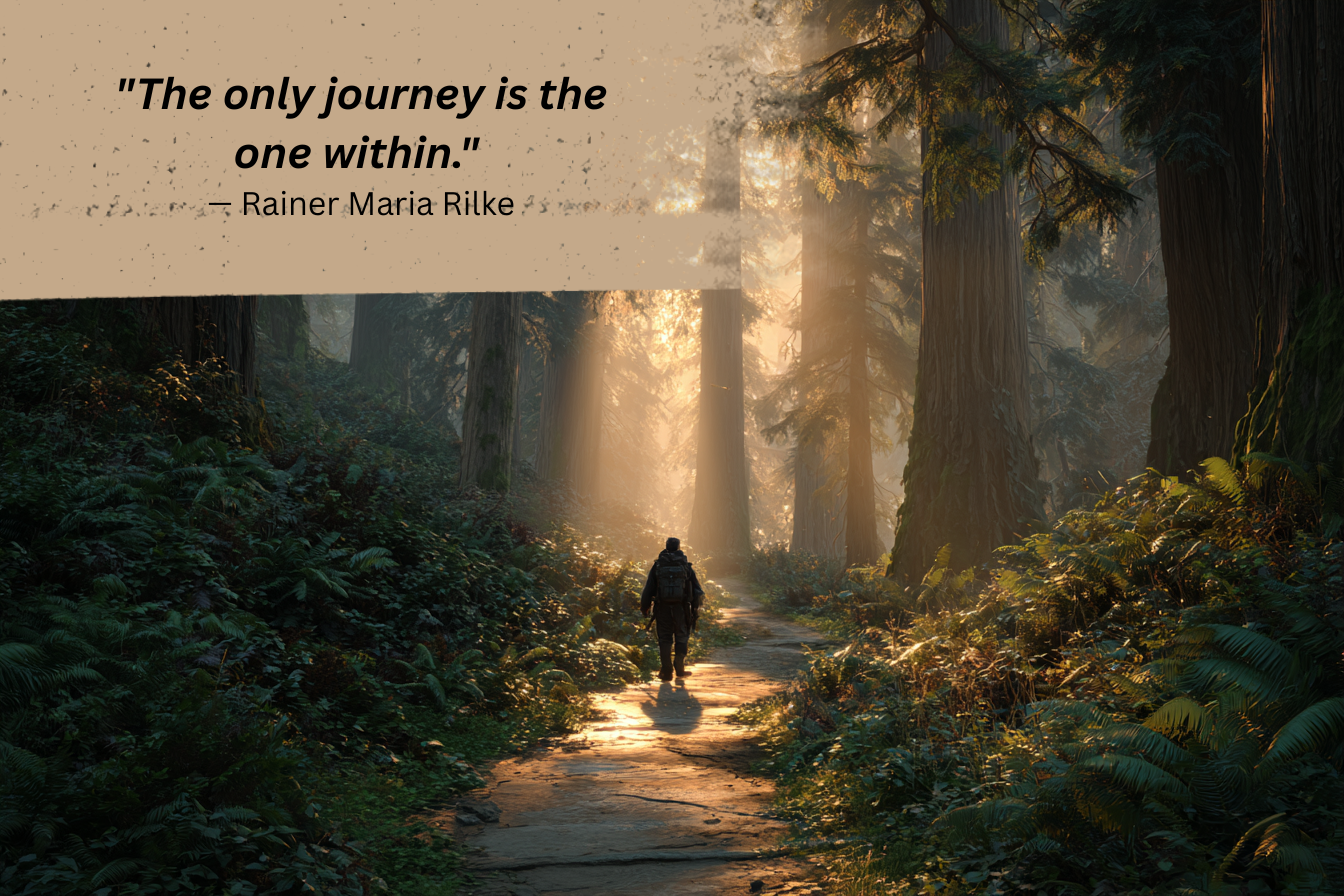
We spend so much time looking outward — to jobs, titles, possessions, even the applause of others — as if these external things could finally define us. But Rilke reminds us: the only journey worth taking is inward. Everything else is a distraction.

The only title that matters is being ourselves. And that’s harder than it sounds. The world keeps pushing us to become our “Best Selves,” while also telling us exactly how that should look. There’s a whole industry built on convincing us we’re incomplete without their blueprint. But let’s be honest — half the people preaching this gospel don’t seem to know who the hell they are.

Self-discovery isn’t about chasing a trend or polishing a brand. It’s a lifestyle, a discipline, a refusal to outsource our identity. To walk inward is to risk discomfort, to face truths we’d rather bury, to learn how to be at home in our own skin. But it’s the only road that doesn’t run out beneath us.

Prompt for readers:
What would it look like for you to stop chasing the world’s version of a “best self” and start living your own?

Quote of the Day – 08112025


Personal Reflection:
The hardest journey is often the one no one else can see. The road into yourself has no clear signs, no reassuring milestones, and no one to tell you if you’re headed the right way. Sometimes it feels like walking in circles; other times, like stepping into a part of yourself you’ve avoided for years. But each turn, each pause, each step into the shadows brings a truth you can’t find anywhere else. This is the kind of journey that reshapes not the world around you, but the one within you — and that’s where every lasting change begins.

Reflective Prompt:
Where in your life have you avoided the inward journey, and what might you discover if you finally take the first step?