Late Night Grooves #149

WHOT Episode 149 – “The Jungle Line” by Joni Mitchell
Hosted by Mangus Khan

[Drums begin—raw, repetitive, almost ritualistic. A strange synth cuts in like neon over ancient stone. Then: silence.]

“You’ve tuned in to Late Night Grooves.
WHOT.

The hottest in the cool.

I’m Mangus Khan.

And tonight—Episode 149—we don’t just press play.

We unravel.

Because some songs aren’t made to move you.

They’re made to unsettle you.

And if you’ve got the nerve to stay with them long enough…

They’ll show you parts of yourself you didn’t know were watching.

The track?
Joni Mitchell – ‘The Jungle Line.’
From The Hissing of Summer Lawns, 1975.

A record people didn’t understand then.
A record people are still trying to catch up to.

And this track?

This was Joni swinging a wrecking ball through every box the industry tried to trap her in.

She was folk, right?
Soft guitars. Laurel Canyon sunsets.

Not here.

This time, she leads with drums.

Field recordings of Burundi drummers pounding like a heartbeat through barbed wire.

Then comes the Moog synth. Cold. Detached. Watching from a distance.

And over that?

Joni’s voice.

Observing. Dissecting.

Cool on the surface. But listen closer.

She’s not distant. She’s wounded.

Because this song?

It’s not about jungle rhythms or abstract art.

It’s about the white gaze.

About how we turn other cultures into wallpaper.

“Rousseau walks on trumpet paths / Safaris to the heart of all that jazz…”

She’s talking about appropriation.
About aesthetic tourism.
About the quiet violence of being seen but never understood.

And while she’s at it?

She’s looking at herself, too.

Because Joni wasn’t afraid to hold the mirror up to her own complicity.

That’s what makes this track bold.

Not just that she named it—

But that she included herself in the naming.

This is self-interrogation in 4/4 time.

And it’s uncomfortable.

But that’s what evolution sounds like.

The Jungle Line isn’t smooth.

It’s jagged.

It’s intentionally unresolved.

The drums never let up.
There’s no chorus.
No payoff.

Just this loop
Like a mind circling a question it can’t stop asking.

And if you’ve ever sat in that kind of silence—

You know what this song feels like.

It’s not just a sonic experiment.

It’s a reckoning.

Episode 149.

Joni Mitchell.
The Jungle Line.

A groove that doesn’t soothe.

A voice that doesn’t plead.

Just a truth that won’t be simplified.

This is Late Night Grooves.
WHOT.

And I’m Mangus Khan—

Still digging through the uncomfortable.

Still playing the songs that refuse to make you comfortable.

Still broadcasting for the ones brave enough to listen all the way through.”


Mingus and Mitchell’s Rebellion

TUNAGE – THROWBACK THURSDAY

A jazz legend. A folk icon. One final act of creative defiance.

When Joni Mitchell dropped Mingus in 1979, it threw everyone for a loop. Critics scratched their heads; fans wondered where the dulcimer had gone. It didn’t sound like Blue, or Court and Spark, or anything even remotely close to her folk-pop reputation. And honestly? Joni didn’t care.

“This wasn’t just a genre crossover — it was a genre collision.”

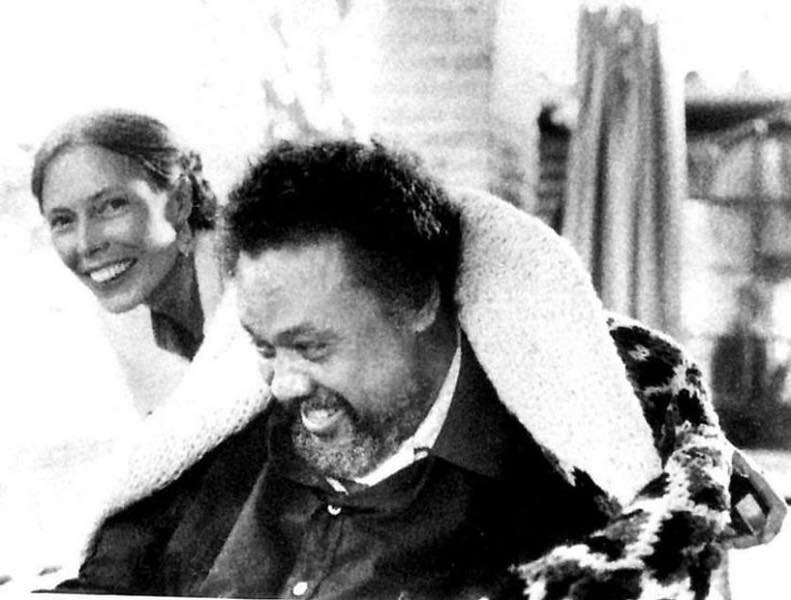
This was Charles Mingus’s final project. ALS had stolen his ability to play, but not his impulse to push boundaries. So instead of retreating into legend, he reached out to Joni Mitchell — the queen of tunings, lyrics, and curveballs — and asked her to set words to some of his compositions. She said yes.

The result was a challenging listen — five spoken-word “raps,” interludes pulled from their conversations, woven between rich, angular jazz compositions. It was intimate, raw, and not made for background listening. You don’t just hear music — you hear mortality, mischief, and Mingus grumbling like a jazz prophet in a wheelchair.

“Mingus couldn’t play anymore, but he wasn’t done.”

Mitchell described their first meeting like this:

“The first time I saw his face it shone up at me with a joyous mischief… Charlie came by and pushed me in—‘sink or swim’—him laughing at me dog paddling around in the currents of black classical music.”

Translation: Mingus didn’t want a tribute. He wanted a partner with nerve.

The lineup was no joke:

  • Jaco Pastorius on bass (melting frets like butter)
  • Wayne Shorter on sax (bending the air around him)
  • Herbie Hancock on electric piano (tickling the keys like he invented them)
  • Peter Erskine and Don Alias holding down rhythm
  • Plus wolves — yes, wolves — on “The Wolf That Lives in Lindsey”

“She didn’t smooth the edges — she leaned into the mess.”

This isn’t dinner-party jazz. It’s messy, meandering, occasionally maddening. But it has guts. At one point, Mingus told her she was singing the wrong note.
She replied, “That note’s been square so long it’s hip again.”
Mingus, without missing a beat: “Put in your note, my note, and two grace notes too.”

That’s the whole album right there — layered, irreverent, and unbothered by convention.


From Skeptic to Fan

My journey into Joni Mitchell’s world didn’t start with a musical epiphany. It started with a woman — one who casually mentioned that Prince was a fan of Joni Mitchell. I made a face. Possibly several. My inner monologue said: Oh great, another misunderstood-genius folk artist I’m supposed to pretend to like.

But then I saw her vinyl collection.

Not a greatest-hits graveyard. Not recycled top 40 safe bets. Her shelves were full of weird, daring, intentional records — the kind people own because they listen, not just display. I started paying attention.

I got home, looked up Joni’s discography, and there it was: Mingus. Charles Mingus? With her? I hit play.

Then I heard him — the voice. The Maestro. Laughing, breathing, alive. For a second, I thought I’d stumbled onto a secret Mingus record.

Then the bass came in. And I paused.

This isn’t Mingus on bass. But the lines were liquid, wild.
Then the piano hit. I stopped. “Who’s tickling the keys like that?” I muttered. I knew that sound. Herbie Hancock.

This was no crossover fluff. This was a full-on creative risk with real players and real weight.

I stopped the record, called her, and said:
“Okay — what’s the Joni Mitchell starter kit?”

She gave it to me. Blue. Hejira. Court and Spark.

I listened. And suddenly, the whole picture came into focus.

I came back to Mingus later — and this time, I didn’t feel lost. I was ready. I didn’t need it to make sense immediately. I just needed to meet it where it was.


Critical Reception: Then and Now

Upon its release in 1979, Mingus got a lukewarm reception.
Stereo Review said it had “no improvisation.” Robert Christgau gave it a C+, calling it a “brave experiment” that didn’t quite succeed.

Folk fans missed the softness. Jazz critics missed Mingus’s hands. Everyone expected something different — and Mingus gave them none of it.

But over time, things changed. Today, Mingus is respected for what it is: bold, strange, and ahead of its time.

“After four decades, the deeply personal and experimental Mingus has grown into one of the most important titles in the Mitchell catalog.”
— Ron Hart, GRAMMY.com

Even those who played on it are reflecting differently now:

“It was and remains a brave project and statement… an essential piece of not only Joni’s library of music, but of American music in the late 1970s.”
— Peter Erskine, drummer on Mingus

Funny how time — and maybe a little patience — can change everything.


Final Word

Mingus isn’t cozy. It’s not an easy listen. It’s not even especially likable at first.

But it’s real.

Two artists — one dying, one evolving — making something on their own terms. No pandering. No hand-holding. Just music, conversation, and courage.

I started listening to Joni Mitchell because of a woman.
But I kept listening because Mingus didn’t try to win me over.
It made me meet it halfway.

And once I did, I never looked at music — or Mitchell — the same way again.