Personal Reflection
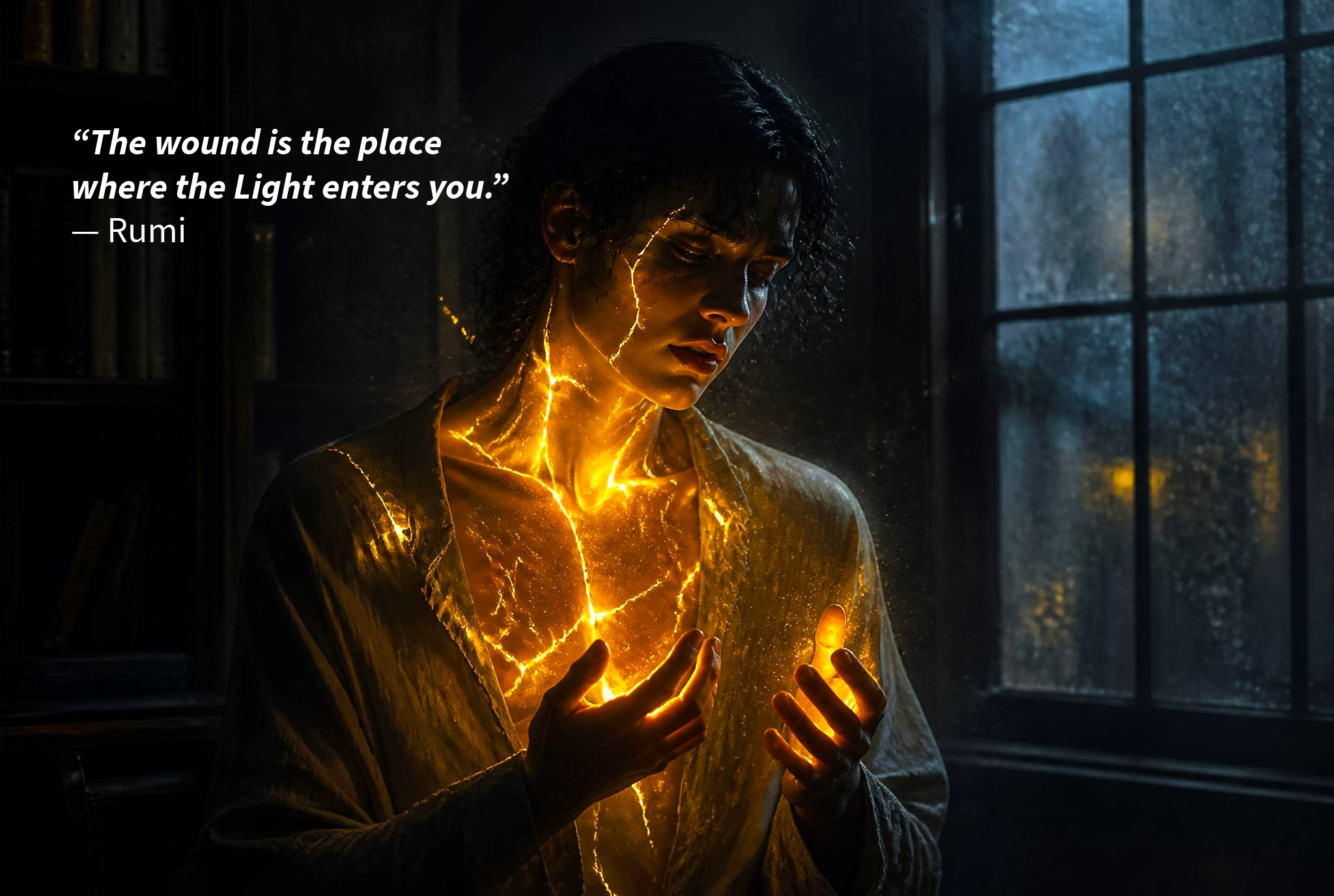
There’s something almost dangerous about this quote because people tend to romanticize it too quickly. They hear “light” and immediately imagine healing arriving beautifully through suffering, as if pain automatically transforms people into wiser, softer, more enlightened versions of themselves.
But wounds do not feel illuminating while they are open.
They feel raw.
Disruptive.
Unfair.
Because real emotional wounds change the way people move through the world long before they teach them anything meaningful.
Grief alters attention. Betrayal reshapes trust. Anxiety rewires the nervous system until ordinary life begins feeling subtly unsafe in ways difficult to explain to anyone who has never lived inside chronic emotional tension. Even old wounds continue speaking through present reactions long after the original moment has technically passed.
That’s the exhausting thing about psychological pain:
the body does not care whether the danger is current or remembered.
It responds anyway.
And after enough hurt, many people stop trying to heal altogether. They shift into management mode instead. Learn how to function around the wound. Work around it. Distract themselves from it. Build routines sturdy enough to avoid touching the deeper emotional fractures underneath daily life.
But avoided wounds rarely disappear.
They wait beneath behavior. Beneath defensiveness. Beneath emotional numbness and carefully controlled distance. Sometimes people become so adapted to surviving around pain that they no longer remember who they were before the wound became part of their identity.
And maybe that’s why genuine healing feels frightening sometimes.
Because healing threatens familiarity.
If pain shaped your worldview long enough, letting light into it can feel almost disorienting. Tenderness becomes suspicious. Peace feels temporary. Joy arrives carrying anxiety because experience taught you how quickly beautiful things can vanish without warning.
Mental exhaustion deepens there—in constantly preparing for impact even during moments where life is briefly gentle.
Still, Rumi’s insight lingers because despite all of this, wounds do change perception. Not automatically toward wisdom, but toward possibility. Toward depth. Toward a more honest understanding of how fragile and emotionally complicated human beings truly are.
Some people emerge from suffering harder.
Others emerge more awake.
Maybe the light entering through the wound is not optimism.
Maybe it’s awareness.
The painful, clarifying realization that life is temporary, people are fragile, and love matters precisely because nothing stays untouched forever.
Because once someone has suffered honestly, superficial things begin losing their grip. Performance matters less. Perfection matters less. You begin recognizing the hidden exhaustion in other people more quickly because your own wounds taught you how carefully human beings hide their pain from one another.
And perhaps healing begins there—not in erasing the wound, but in allowing it to deepen your humanity instead of closing it completely.
Because scars may never fully disappear.
But sometimes they become openings instead of prisons.
Reflective Prompt
What wound in your life changed the way you now understand yourself—or the hidden pain carried by other people?
Discover more from Memoirs of Madness
Subscribe to get the latest posts sent to your email.


The part about how avoided wounds don’t disappear but start shaping behaviour in quieter ways is especially true. Most people don’t realise how much of their “normal” is actually adaptation to pain. Thanks for sharing these thoughts with us Mangus.
LikeLike
Probably the wounds that I inflicted upon myself… hugs
LikeLike