Personal Reflection
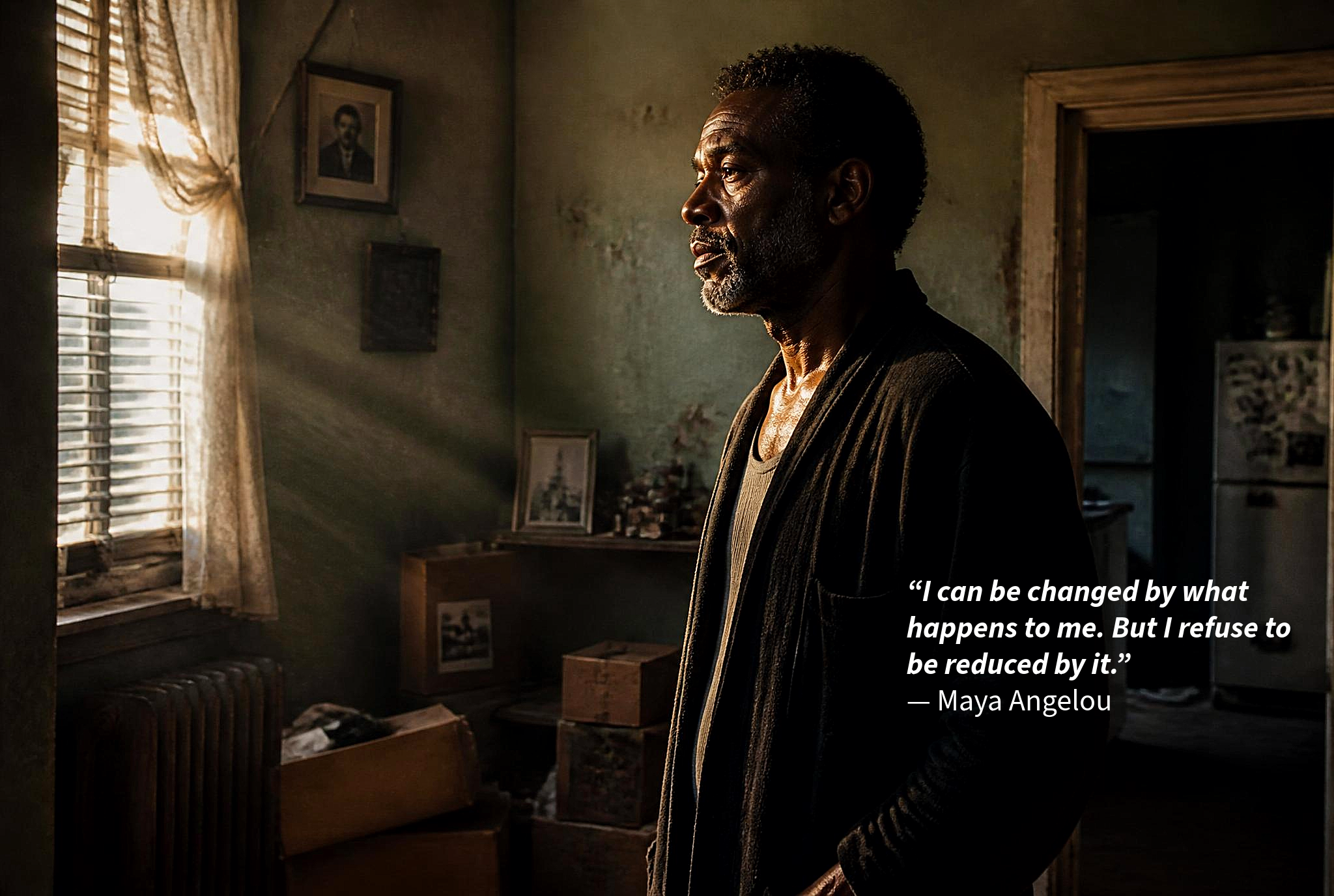
There’s a quiet defiance inside this quote that feels earned rather than performed. Not the kind of resilience people post online beside motivational graphics and temporary confidence. Something older than that. More scarred. More honest.
Because Maya Angelou is not speaking about avoiding pain.
She’s speaking about surviving transformation without surrendering the core of yourself entirely.
And life changes people whether they consent to it or not.
Loss changes people. Betrayal changes people. Exhaustion changes people. Years of carrying anxiety quietly through ordinary routines changes people. Even love changes people—especially when it leaves.
That’s one of the hardest truths about emotional survival:
you do not walk through difficult experiences untouched.
Anyone who claims otherwise is usually performing strength rather than living it honestly.
The nervous system remembers too much for that.
Certain disappointments alter the way a person enters rooms. Certain heartbreaks teach hypervigilance. Certain seasons of loneliness reshape the relationship someone has with trust, vulnerability, even hope itself. You become aware of fragility in places where innocence once existed naturally.
And perhaps the deepest exhaustion comes from grieving older versions of yourself while still needing to function as the person life forced you to become afterward.
That process can feel deeply disorienting.
You begin noticing how suffering rewrote parts of your personality quietly. Maybe you became more guarded. More distant. More careful with your softness. Maybe humor became armor. Maybe independence became easier than risking disappointment again. Maybe survival required adaptations that no longer feel removable even after the danger has passed.
Mental health conversations often frame healing as returning to who you were before pain.
But what if that person no longer exists?
What if healing is not restoration…
…but integration?
The difficult, ongoing work of acknowledging how life changed you without allowing those changes to become emotional imprisonment.
Because there’s a difference between being shaped by suffering and being consumed by it.
Maybe resilience is not preserving innocence forever.
Maybe resilience is remaining emotionally alive after innocence leaves.
Continuing to love despite grief. Continuing to trust carefully after betrayal. Continuing to believe your life still contains meaning after seasons that tried to empty it of color entirely.
Not because suffering made you stronger in some romantic sense.
But because suffering did not succeed in reducing you into bitterness alone.
And perhaps that is its own kind of victory:
to carry scars honestly without allowing them to become the only story your life knows how to tell.
Reflective Prompt
How has pain changed you—and what part of yourself are you still fighting to protect from becoming hardened by it?
Discover more from Memoirs of Madness
Subscribe to get the latest posts sent to your email.


Anyone who claims otherwise is usually performing strength rather than living it honestly. Continuing to love despite grief. Continuing to trust carefully after betrayal. Continuing to believe your life still contains meaning after seasons that tried to empty it of color entirely. But because suffering did not succeed in reducing you into bitterness alone. LOVE this. Lived this! Appreciate this!
LikeLiked by 1 person
Pain comes in different forms. Loss, grief, injury, confusion, confidence and the shattering of self worth.
I refused to let it beat me, accepted bad days as well as the good.
LikeLike