Personal Reflection
At first glance, it sounds almost irrational. Why would anyone consciously choose suffering? Why stay attached to pain, habits, relationships, fears, or identities that clearly exhaust them?
But human beings rarely cling to suffering because it feels good.
They cling to it because it feels known.
That’s the unsettling thing about emotional survival—familiar pain can start feeling safer than unfamiliar peace.
People adapt to things they were never meant to normalize. Anxiety becomes routine. Loneliness becomes personality. Hypervigilance becomes “just being responsible.” You wake up tired long enough and eventually exhaustion stops feeling temporary. It simply becomes the atmosphere of your life.
And once suffering becomes familiar, the idea of existing without it can feel strangely destabilizing.
Because who are you without the struggle you organized yourself around?
That question quietly terrifies people more than they realize.
Healing sounds beautiful in theory, but real healing often demands identity disruption. It asks people to release coping mechanisms that once protected them. To stop defining themselves entirely through survival. To step into emotional territory where the outcomes are uncertain and the old defenses no longer apply.
That kind of vulnerability feels dangerous.
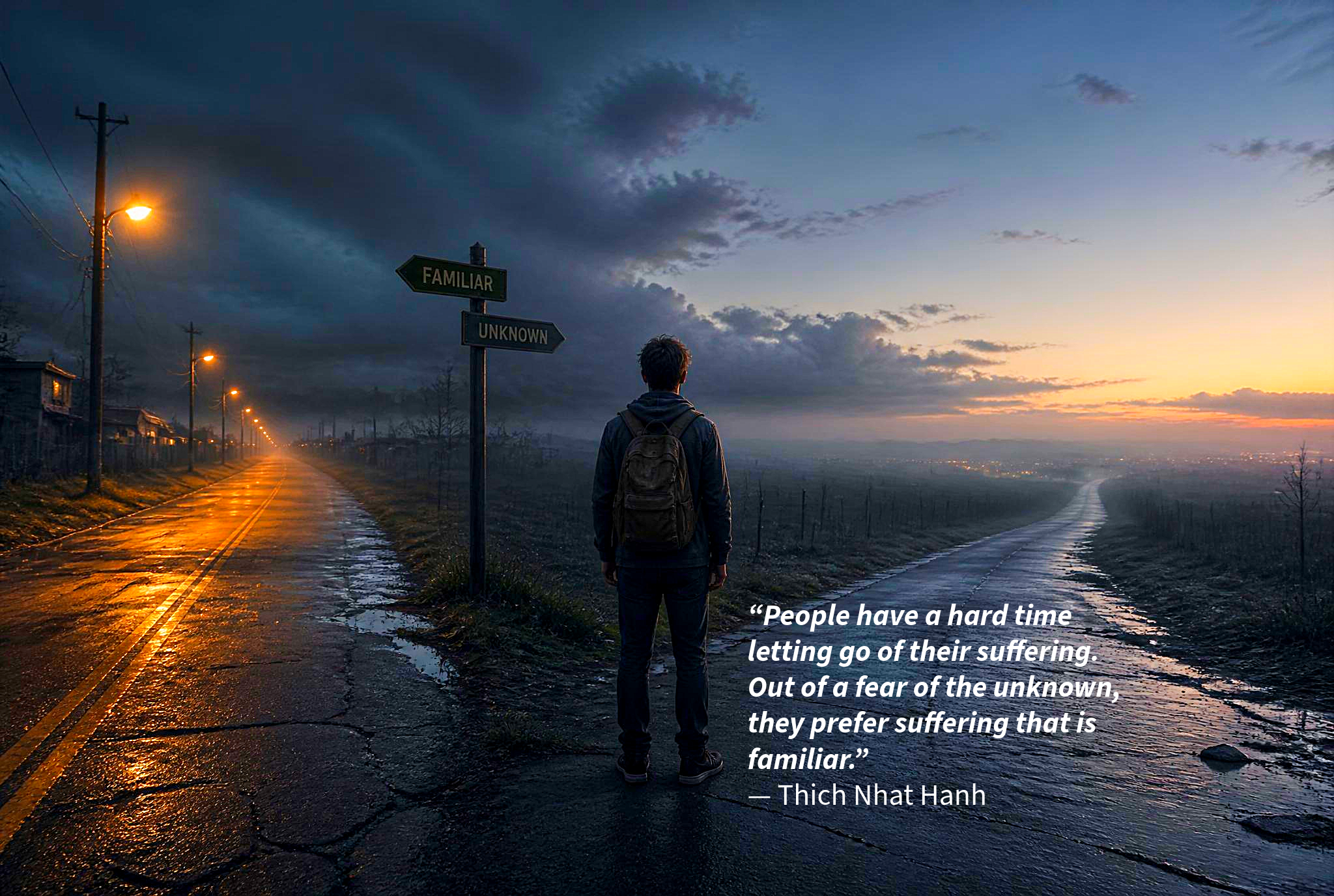
So people return to familiar suffering the way exhausted travelers return to old roads they already know are broken. Not because the road is good—but because uncertainty feels worse.
Mental health conversations often underestimate how deeply attachment to pain can root itself inside identity. Sometimes people do not merely carry suffering.
They build routines around it. Relationships around it. Entire versions of themselves around it.
And eventually the fear shifts.
It’s no longer:
“What if I continue suffering?”
It becomes:
“What if I let go of this and no longer recognize myself afterward?”
Still… there comes a moment where familiar pain stops feeling protective and starts feeling confining.
A moment where survival itself becomes too small for the life waiting beyond it.
Maybe healing begins there—not in certainty, but in willingness. The willingness to enter emotional territory you cannot fully predict. The willingness to believe peace may feel unfamiliar at first without mistaking unfamiliarity for danger.
Because perhaps freedom is not the absence of fear.
Perhaps freedom is deciding that the unknown no longer frightens you more than the suffering you already know by heart.
Reflective Prompt
What pain in your life has become so familiar that part of you no longer knows who you would be without it?

