
Why This Poem Today
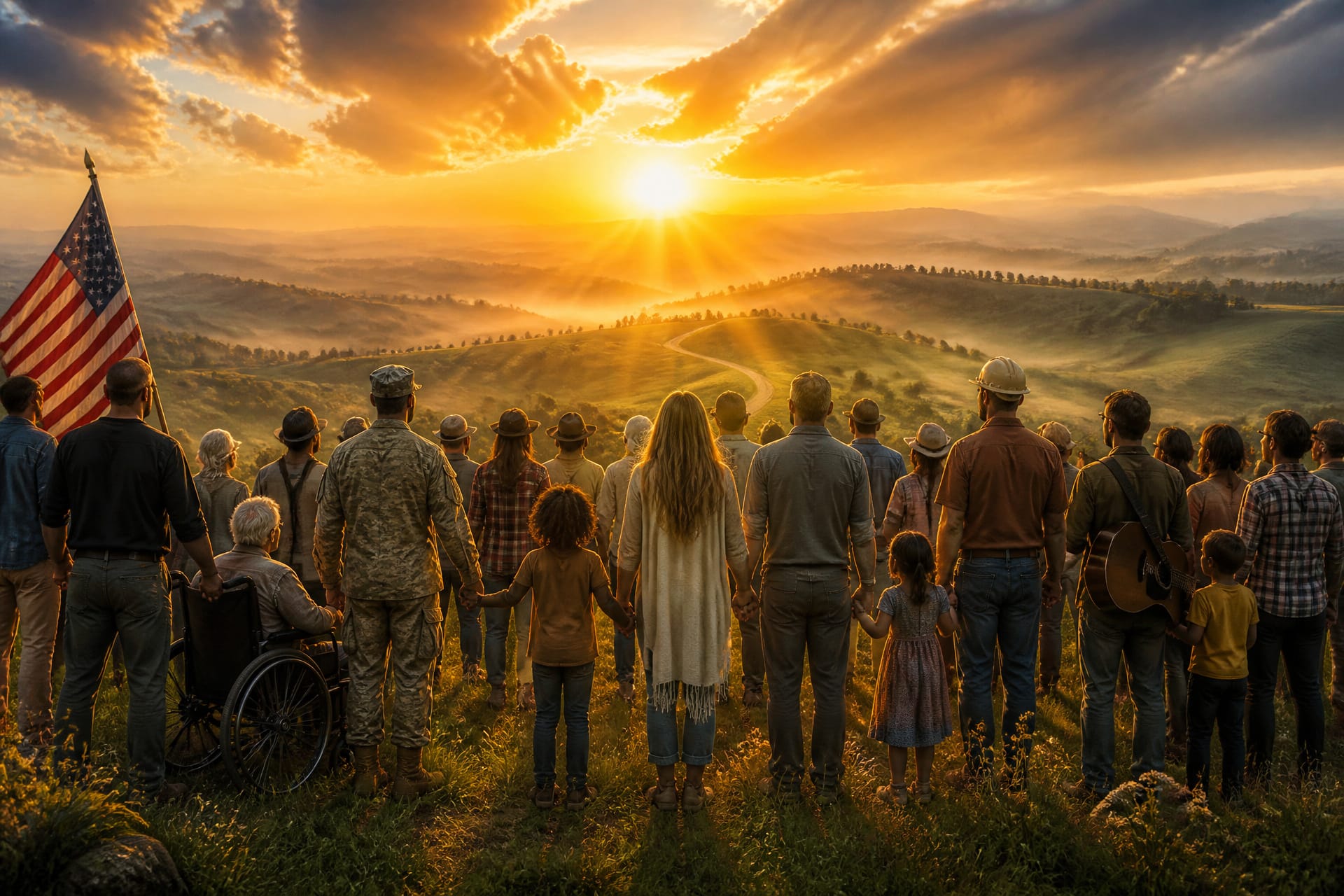
Independence Day is often filled with fireworks, flags, and celebration. Yet beneath those traditions lies a deeper question: What does freedom ask of us? James Weldon Johnson’s Lift Every Voice and Sing reminds us that liberty is more than a historical event—it is a continual act of hope, perseverance, remembrance, and responsibility. Rather than ignoring the hardships of the past, the poem calls us to honor them while walking forward with courage. It is a celebration not only of freedom won, but of freedom continually pursued.
Today’s Selection
Lift Every Voice and Sing
Poet: James Weldon Johnson
First Published: 1900
Literary Movement: African American Literature / Early Modern American Poetry
Country: United States
Reading Time: Approximately 3 minutes
Copyright Status: Public Domain (United States)
About the Poet
James Weldon Johnson (1871–1938) was an American poet, novelist, educator, lawyer, diplomat, and civil rights leader whose influence extended far beyond literature. A prominent figure in the Harlem Renaissance and an early leader of the NAACP, Johnson believed deeply in the power of language to inspire justice and unite communities. Written as a poem before being set to music by his brother, J. Rosamond Johnson, Lift Every Voice and Sing has become one of the most enduring expressions of hope, resilience, and faith in American history. More than a patriotic work, it is a testament to the enduring belief that progress is possible when we refuse to abandon hope.
Historical Context
Written in 1900 to commemorate Abraham Lincoln’s birthday, Lift Every Voice and Sing emerged during a period when African Americans continued to face segregation, disenfranchisement, and racial violence despite the promises of Reconstruction. The poem acknowledges painful history while refusing to surrender optimism. Its enduring message reminds readers that freedom is strengthened when truth, perseverance, and hope walk together.
The Poem
Lift every voice and sing
Till earth and heaven ring,
Ring with the harmonies of Liberty;
Let our rejoicing rise
High as the listening skies,
Let it resound loud as the rolling sea.
Sing a song full of the faith that the dark past has taught us,
Sing a song full of the hope that the present has brought us,
Facing the rising sun of our new day begun
Let us march on till victory is won.
Stony the road we trod,
Bitter the chastening rod,
Felt in the days when hope unborn had died;
Yet with a steady beat,
Have not our weary feet
Come to the place for which our fathers sighed?
We have come over a way that with tears has been watered,
We have come, treading our path through the blood of the slaughtered,
Out from the gloomy past,
Till now we stand at last
Where the white gleam of our bright star is cast.
God of our weary years,
God of our silent tears,
Thou who has brought us thus far on the way;
Thou who has by Thy might
Led us into the light,
Keep us forever in the path, we pray.
Lest our feet stray from the places, our God, where we met Thee,
Lest, our hearts drunk with the wine of the world, we forget Thee;
Shadowed beneath Thy hand,
May we forever stand.
True to our God,
True to our native land.
Reflection
There is a difference between celebrating freedom and understanding its cost.
Every Fourth of July invites us to remember the birth of a nation, but James Weldon Johnson encourages us to think beyond a single moment in history. His poem reminds us that freedom is not static. It is not preserved simply because it was once declared. It survives only when each generation chooses to protect it with courage, compassion, and an unwavering commitment to justice.
One of the poem’s greatest strengths is its honesty. It does not pretend that the road toward liberty has been smooth. Instead, it acknowledges suffering without allowing suffering to become the final word. That balance is remarkably difficult to achieve. Too often we are encouraged to see history as either entirely triumphant or entirely tragic. Johnson offers something more mature. He asks us to recognize both the wounds and the victories, understanding that hope gains its greatest power when it grows from truth rather than denial.
That lesson extends far beyond national celebrations.
Each of us carries our own history of setbacks, disappointments, and unexpected turns. There are moments we would gladly erase and burdens we never asked to bear. Yet our lives are not defined solely by what has happened to us. They are shaped by what we choose to do next.
Hope, in this sense, is not naïve optimism. It is disciplined perseverance.
It is the decision to continue building when destruction would be easier. It is choosing kindness in a world that often rewards cynicism. It is believing that tomorrow can be better without pretending that yesterday never happened.
Perhaps that is why this poem continues to resonate more than a century after it was written. It speaks not only to one community or one moment in American history, but to the universal human desire to move forward without forgetting where we have been.
Independence is often celebrated as an achievement. Johnson quietly reminds us that it is also a responsibility.
Our freedoms become meaningful only when they are accompanied by integrity, empathy, and the willingness to leave the world more just than we found it. Whether those acts are large or small, public or private, they become the footsteps that future generations may one day choose to follow.
Today, as celebrations fill neighborhoods across the country, this poem offers a gentle invitation to reflect on more than fireworks and festivities. It asks us to consider how we might live in ways that honor both the sacrifices of those who came before us and the hopes of those who will come after us.
Freedom is not merely something we inherit.
It is something we continually become worthy of.
Questions for Reflection
- What does freedom mean to you beyond national celebrations?
- How can remembering difficult chapters of history strengthen hope rather than diminish it?
- In what ways can your daily choices contribute to a more compassionate and just community?
Closing Thought
The strongest voices are not always those that shout the loudest. Often, they are the ones that continue singing with hope after every reason to fall silent.
Further Reading
More by James Weldon Johnson
- The Creation
- Fifty Years
- Brothers
Related Poets
- Langston Hughes
- Paul Laurence Dunbar
- Claude McKay
- Georgia Douglas Johnson

