Personal Reflection
It’s a hell of a line because it sounds simple until you actually try to live inside it.
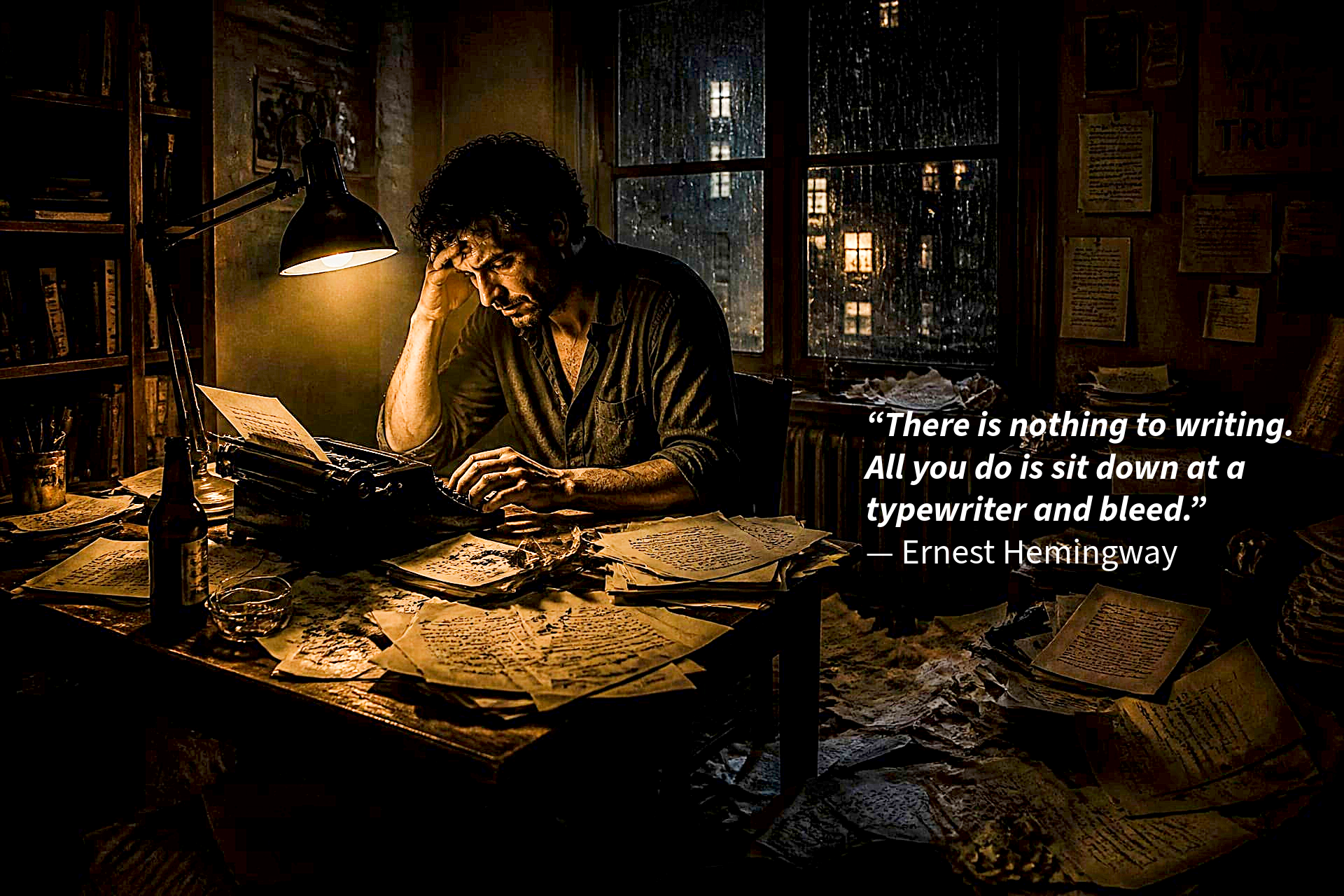
People love the quote because it turns writing into something cinematic. A lonely genius at a desk sacrificing pieces of himself for art. Cigarette smoke hanging in the room like a second atmosphere. Whiskey sweating beside unfinished pages.
But most bleeding in writing isn’t dramatic.
It’s quieter than that.
It’s deleting twenty pages because they were dishonest. It’s admitting a character sounds more like your armor than your truth. It’s sitting in front of a blank screen on days when your mind feels like wet concrete and writing anyway because silence has started to rot inside you.
The page doesn’t care how talented you think you are. It only cares whether you showed up honestly.
The problem with writing from the vein is that eventually you hit something real.
Not aesthetic sadness. Not curated vulnerability. The real thing.
The memory you keep circling but never naming directly. The resentment hidden beneath your humor. The loneliness beneath productivity. The exhaustion of trying to create meaning in a world addicted to distraction.
And sometimes the hardest part isn’t writing it.
It’s recognizing yourself after you do.
Because writing has a way of revealing contradictions you’d rather leave buried. You discover how often you perform confidence while privately unraveling. How many opinions are actually defenses. How much anger is grief wearing steel-toed boots.
That’s why so much modern writing feels hollow despite sounding polished. Too many people are trying to sound like writers instead of risking being human.
Readers can feel the difference.
A perfect sentence without emotional truth is taxidermy. It looks alive until you get close enough to notice the glass eyes.
Still, there’s something strangely merciful about the process.
Writing gives chaos a shape.
Not control. Not mastery. Just shape.
A paragraph becomes a way of holding something painful long enough to examine it instead of letting it devour you whole. Sometimes the sentence arrives before the understanding does. Sometimes the story knows what hurts before you’re willing to admit it yourself.
Maybe that’s the real bleeding Hemingway meant.
Not suffering for spectacle.
But surrendering enough honesty to leave a human fingerprint behind on the page.
Reflective Prompt
What part of yourself keeps appearing in your work no matter how hard you try to disguise it?