Skills from a Graduate of the School of Hard Knocks

If I’m being honest, the things I’m good at didn’t come from any classroom with fluorescent lights and tidy rows. They came from life pulling me aside, usually at the worst possible moment, and saying, “Pay attention—this part matters.” Most of what I know was earned the long way: scraped knuckles, late nights, and a few seasons where survival wasn’t guaranteed but somehow still happened. These skills didn’t unfold gently. They arrived as consequences, as revelations, as the quiet clarity that follows a storm.

One thing I’ve learned is that I’m better at creating a feeling than I am at delivering a finished product. I don’t sit down to produce anything polished or algorithm-friendly. I write to capture a moment’s temperature—the hush before a confession, the weight of a truth someone’s been carrying too long, the strange peace that settles in when you finally stop pretending everything is fine. I follow the line that tightens my chest because that’s where the real story is hiding. Atmosphere isn’t decoration; it’s the closest thing I have to honesty. And if someone walks into that space and feels seen, then the work did what it was supposed to.

I’ve also learned how to make complicated emotions legible—not tidy, not simple, but real. The heavy stuff never hands you clean language. Grief has its own dialect. Shame speaks in whispers. Loneliness shows up wearing someone else’s coat. Most people run from these things because they think naming them will make them bigger. But I sit with them long enough to understand their shape. Not because I’m brave—because I don’t know how else to move through the world. If I can translate that heaviness into a line that makes someone pause and think, “Yeah… me too,” then maybe the weight becomes shareable.

Another skill I’ve picked up is the ability to hold a ridiculous number of moving parts without letting the whole structure collapse. MKU. MoM. HoT. Fiction arcs. Art projects. QOTD. Image collections. The universe I’m building is messy, sprawling, and sometimes bigger than I intended. But even in the chaos, there’s a thread running through it—something emotional, instinctive, connective. I don’t always know where the thread is leading, but I know when I’ve lost it. And I know how to find my way back by listening to what the work is trying to become. People mistake this for multitasking; it’s really just surviving the storm with both hands open.

I’ve stopped worshipping the first draft. If a piece doesn’t feel right, I tear it apart, not out of self-doubt but out of loyalty—to the truth, to the reader, to the version of myself that refuses to settle for the easy version of anything. Revision is where the honesty happens. It’s where the mask slips. It’s where I notice the lines I wrote to protect myself instead of reveal something. I’ve rebuilt myself enough times to know that tearing something down is just another form of creation.

And finally, I adapt. Quickly. Quietly. Often without applause or acknowledgment. Life didn’t give me the privilege of staying the same for long. Every year demanded a new version of me—some built by choice, others by necessity. Adaptation isn’t a talent; it’s a scar that learned how to walk. When something breaks, I adjust. When something shifts beneath my feet, I move. Reinvention stopped feeling dramatic years ago; now it’s just how I breathe.

These are the skills I’ve gathered on my way through the wreckage. Not glamorous. Not marketable. But real. They weren’t taught—they were carved. And maybe that’s the mark of a true education in the school of hard knocks: you don’t graduate with honors. You graduate with perspective. With endurance. With stories you didn’t ask for but somehow needed.

And when someone asks what you’re good at, you finally have the language to answer—not with pride, but with truth.


Well Shit, There Is Never Enough Duct Tape

Weathered, Hard Knocks Wisdom


Well shit. There is never enough duct tape.

Guppy and I are sitting in the middle of chaos again. She’s perched on the edge of the desk, licking her paw like she’s above it all. Around us, the lab looks like a hardware crime scene — cables spilling from gutted towers, screws scattered like confession pieces. A half-drunk cup of coffee cools beside me, burnt and bitter, the official scent of frustration.

She meows right on cue, the sound sharp and knowing. I look over. “Yeah,” I tell her. “I did it again.”

Outside, the truck’s still dead in the driveway. The house keeps popping up new problems like it’s auditioning for a demolition reel. And inside, my computers — the ones that run everything I’ve built — have decided to crash in unison. It’s a full symphony of failure.

It kinda feels like life bitch-slapped me. I’m standing there, half laughing, half wondering what cosmic fuse I blew this time. Then, in my mind, a ghostly finger points right at me and says, in that whiny little voice only the universe uses: “You know why.” The kind of voice that grates — part guilt, part game show host.

So I sit there, breathing through the noise, because reacting to chaos never resolves anything. There’s never enough duct tape for that kind of mess.


I’ve been fixing broken things since I was a kid. Did my first tune-up at eight years old — or what I thought was a tune-up. Standing on a kitchen chair in my school clothes, wrench in hand, trying to change plugs and set points. Madre nearly lost her mind when she saw the grease stains on that chair. But when that engine coughed back to life, I felt it — that quiet click inside that says, You can fix this.

Then came the eighties and my next addiction: computers. Back before color screens and mouse pads, when hope fit on a floppy disk and syntax errors were life lessons. We typed code line by line, fingers crossed, praying the damn thing would run. Our instructors were learning right beside us. When we figured out how to make a 5.25-inch floppy dual-sided, we thought we were gods.

We wrote everything down back then — notebooks, sketchpads, pages of half-finished programs and circuit doodles. There weren’t breaches in those days, just broken noses if someone got too close to your notebook. Hidden between the pages, you’d find a floppy or two — our version of a flash drive. Everything we built lived by hand, by instinct, by obsession.


I remember the early version of Memoirs of Madness. It wasn’t even a site yet — just an idea and a laptop I built from scavenged parts. I used to walk to the local library to borrow their Wi-Fi, fingers freezing on the keyboard, trying to post something before the battery died. My first “lab” was a pile of junked machines I dragged home and resurrected. Every boot-up felt like a small miracle, a little defiance against the void.

Then I got fancy — started buying ready-made machines, the kind that come preloaded with operating systems that assume they know what’s best for you. Windows. Loud, bossy, always watching. So I went back to Linux. The hard way, of course.

And naturally, it couldn’t be as simple as clicking “install.” There are, what, fifty different Linux distros to choose from? (It’s probably not fifty, but in the middle of a rebuild, it sure as hell feels like it.) Matching distro to hardware… don’t even get me started. The world’s built for Windows and Mac, not for the stubborn few still willing to build their own bones.

My old MacBook’s still around, though. She’s slow, loyal, and half-retired. She’s got the heart for it, just not the legs. I can’t bring myself to replace her. We’ve been through too much — too many drafts, too many late nights, too many little resurrections.

Every crash, every patch, every clunky restart just reminds me: I’ve been here before. Different machines, same madness.


It’s that time of year again — the anniversaries of loss, the kind that pile up quietly. Some losses don’t stay buried; they just wait for the calendar to circle back. And it’s in moments like these you pause, wondering what the right response to chaos even looks like. Because reacting never fixes it — there’s never enough duct tape.

The machines hum again now — not perfect, but alive. The house still leaks. The truck still sulks. I’ll fix what I can, curse what I can’t, and keep rebuilding in the meantime.

Guppy jumps into my lap, head-butts my beard, and purrs like she’s proud of me for surviving another day. I scratch behind her ear, take a sip of cold coffee, and sigh.

So, what am I working on?

My life.

And for now, it’s still running — a little buggy, sure, but running all the same.

Groove, Guppy… Guppy? Groove, please… ah, yes, thank you.

🎧 Soundtrack: “Help Me” – Sonny Boy Williamson II | “The Stumble” – Freddie King


Daily writing prompt
What have you been working on?

When the Room Goes Quiet

“Fear doesn’t always mean run. Sometimes it means you’ve finally cornered the truth.”


Let’s start with an admission: I’ve never liked the sound of my own voice.
Not the way it cracks when I speak too quickly, or how it forgets itself halfway through a thought. Writing has always been safer — the words obey there. They arrive dressed and deliberate. Out loud, they stumble.

Before I speak, my body stages a small rebellion. My pulse climbs. My jaw tightens. The air feels heavy, as if the room is waiting to see what kind of fraud I’ll turn out to be. That’s what fear does — it turns attention into judgment, curiosity into threat. Only when I’m speaking about my writing does this happen — as if some inner voice hisses, “How dare you think your work is worthy of commentary?”

Yet outside the creative world, I’ve never hesitated to speak. Giving orders? No problem. I did it unapologetically. If someone broke down or got their feelings hurt, my answer was simple: “It’s not my fault your parents raised you to be a pansy.” Was that wrong? Of course. But it was effective — more often than not. That’s why the transition to civilian life hit me like a slow collapse. You can’t bark your way through vulnerability. You can’t command creativity. It doesn’t answer to rank.

But it isn’t really the audience I fear. It’s exposure.
Writing lets me curate my confessions, polish the edges, make the mess beautiful. Speaking strips that away. It demands the raw version — the one that still shakes. And people are strange — sometimes cruel. Some need to be publicly flogged for how they treat others. I laugh when life gives them a taste of their own medicine. Not because two wrongs make a right — they don’t — but because it’s human to feel that flicker of satisfaction when justice shows up wearing irony’s grin. What always gets me, though, is how quickly the guilty feign ignorance. “I’ve done nothing,” they say. Or worse, “All I did was…” as if cruelty came with a receipt and a refund policy.

Sometimes I wonder if the page has made me soft. Soft in that pansy way I used to mock. Where are the tissues? Did you just hand me the cheap stuff? Man, you better give me the Puffs if we’re gonna do this right.
Thank you.
Where was I?
Right — softness. I can write about grief, about love, about the parts of me that never healed. It’s almost easy to do so from the shadows, where no one sees your face or knows your name. A brave soul or a coward? Maybe both.

What do I look like without my mask? Will it fall away, or do I have to peel it off piece by piece? It’s okay to be frightened by what you see. It’s okay to scream aloud as you stare at the stranger in front of you — until you realize it isn’t a stranger at all.
It’s you.
And that’s the moment the voice in your head mutters, “The shit just got real. Damn it, man.”

Could I say these things out loud without flinching? Could I bear the sound of my truth without a backspace key to hide behind?

Maybe that’s what this season of my life is about — learning to live without the safety of revision. To understand that fear, pain, and uncertainty aren’t evidence of weakness, but proof that I’m alive — proof that I matter. The pounding of my heart, the sweat along my brow, the tingling at my edges — they’re all part of it. Then somewhere amidst all of this, I clear the mechanism. Serenity appears. It doesn’t replace the fear, pain, or uncertainty; it listens to them. They have a conversation while I exhale.

I don’t know if I’ll ever love the microphone. But I’m starting to think the page and the stage aren’t enemies. They’re just two mirrors — one for the voice, one for the soul — and I’m standing between them, trying to recognize my own reflection.


Reflective Prompt

What would your truth sound like if you stopped editing it mid-sentence?
Say it out loud — even if your voice shakes.


Author’s Note

Sometimes honesty is a fistfight between who we were and who we’re trying to be. This one left a few bruises — the good kind.
Now, if anyone knows where I left the ice packs… or hell, even a bag of frozen peas — I’m open to suggestions.
Where’s the love, people? Where’s the love?

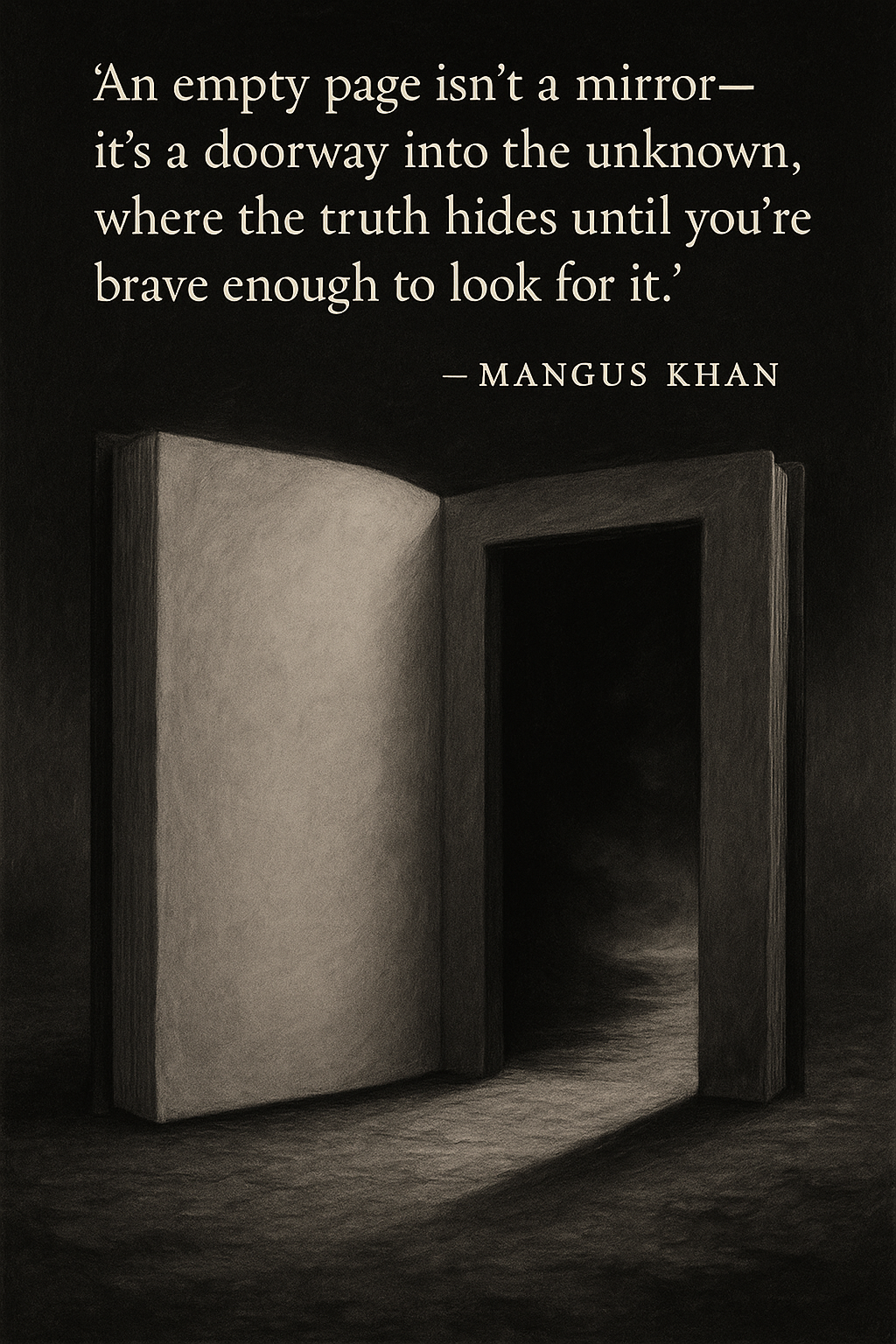
Quote of the Day – 10082025


Personal Reflection:
We like to believe we know ourselves, but the page has a cruel way of proving otherwise. It strips away the rehearsed versions—the masks we polish for public view—and leaves us standing there, naked with the truth we almost buried. Writing doesn’t always heal; sometimes it exposes the wound we’ve been pretending isn’t there.
Yet, that’s the beauty of it. The page doesn’t demand perfection, only presence. Each sentence becomes an act of courage, a conversation between who we think we are and who we’re becoming. It’s not the ink that transforms us—it’s the willingness to face what the ink reveals.


Reflective Prompt:
When was the last time your writing surprised you?
What truth emerged from your words that you didn’t know you were ready to face?

Detention, Da Vinci, and the Making of a Misfit

I wouldn’t know the names of the masters if you paid me a million dollars. I can’t look at a painting and tell you who brushed what stroke or why it matters. There are a few comic book artists I really enjoy, but again, I couldn’t tell you their names. I just know when something stops me in my tracks.

The feeling I get when I look at art… I don’t really have words for it. It’s like trying to explain why a storm feels beautiful while it’s tearing through your neighborhood. You just feel it. Despite that, I spend my time trying to create the same kind of reaction in other people—through writing, art, film, photography—whatever medium happens to grab me that day.

I recall giving a speech in class once. When I finished, there was silence. No applause, no eye rolls—just my classmates staring at me like I’d confessed something I shouldn’t have. My teacher asked what inspired it, and I told him I made the whole thing up. He didn’t believe me. They sent me to the counselor’s office to “discuss my feelings.”

It took a while, but I finally convinced an adult that it was a work of fiction. I had my notebook with me, filled with half-finished stories and wild ideas. That notebook saved me. It proved I wasn’t broken—I was just a writer.

It was after that little incident I landed myself in detention for running my mouth. I’ve got a habit of voicing my disdain in its raw, unfiltered form. Come to think of it, that might’ve been what led my mother to suggest I give up profanity for Lent. Hmmm.

Meanwhile, back in detention, I checked out an art book from the library and started leafing through it. I found a Da Vinci sketch—nothing fancy, just a face drawn with impossible precision. I tried drawing my own version, and something in me shifted. After that, I started drawing everything. Then, write everything. Strangely, that was the birth of Mangus Khan.

Funny how things happen, huh?

Since then, I’ve learned that every work of art hits everyone differently. I’ve written things I meant to be serious, only to have people burst out laughing. There’s no predicting what someone will feel. You just roll with it, cherish the experience, and most of all—feel.


Author’s Note:
Don’t let anyone crush your creative spirit. They may not understand what you’ve created—and that’s okay. You never know how it will affect the next person. So create. Always create.

Daily writing prompt
Who are your favorite artists?

The Stories That Yearn to Be Told

Daily writing prompt
What is your favorite hobby or pastime?

I didn’t set out to be a writer. It happened by accident, somewhere between a half-finished sketch and a notebook full of half-thought ideas. Back then, I was a teenager with more curiosity than direction, filling pages because it felt like the only way to keep my thoughts from spilling everywhere else. One of my oldest friends likes to remind me he can’t remember a time I didn’t have a notebook in my hand. He says I was always scribbling or sketching, usually both.

It was at his house, during one of those long afternoons that used to stretch forever, when someone suggested I could write and illustrate my own book. I never did—but the idea never left. Over the years I’ve written stories inspired by other people’s art, and drawn illustrations for stories that weren’t mine. Maybe that’s the closest I’ve come to answering that old dare.

These days, my rituals are quieter, more deliberate. I start with coffee, smokes, and a notebook—that’s the constant. The rest depends on mood. Sometimes I need silence; other times, I scroll through playlists until I find something that matches the weather inside my head. The room is dimly lit, Guppy purring on the desk, both of us waiting for my next move. It’s not glamorous, but it’s home—the small ritual that turns chaos into coherence.

I don’t consider writing a hobby. But apparently, some people around me do. They say it like it’s harmless, even complimentary, as if writing were just another way to pass the time. Most days, it pisses me off—not because I crave validation, but because it ignores the time, discipline, and mental excavation it takes to build worlds, shape characters, or research a single line that rings true.

I’ve spent weeks turning over ideas before I ever write a word, sometimes months just mapping the geography of a story or tracing the emotional logic of a character. That’s not leisure; that’s labor—creative, invisible, and deeply consuming. Yet somehow, the work only “counts” if it’s published, printed, or profitable. Maybe that’s the illusion people live by: that creation isn’t real until it leaves your desk.

I’ve read the books. I’ve done the study. I’m not waiting for a permission slip to call myself a writer. Still, I can admit that sometimes fresh eyes help—someone catching a rhythm I missed, a sentence that stumbles, or an idea that needs to breathe differently. But that’s collaboration, not validation. The work itself has always been serious enough.

I remember the first time I saw my name in print. I was just a kid then, with childish dreams about becoming something I didn’t fully understand. But even at that age, I knew it was the only thing that gave me genuine joy and peace. It felt right. Like I’d found the one place where my head and my heart could finally speak the same language.

Even when I draw, I’m still telling stories. Sometimes, when I get it right, a single sketch can hold the whole narrative—the emotion, the silence between moments, the pulse of something unfinished but alive.

As an adult, that sense of wonder changed shape. I never thought my writing would go anywhere; most of it was just stories I’d tell my wife over coffee or late-night laughter. When she smiled, I’d rewrite. When she made that face—the one that said, “you’ve hit something”—I’d dig deeper. For a long time, I was defensive about my writing, too fragile to take a critique, too unsure to trust my own voice.

But somewhere along the way, I stopped chasing perfection and started writing from that place where the magic happens. I write from the soul, not the head. It took me forever to realize that for myself, even though I’d taught it a thousand times in workshops. Funny how the truths we teach others take the longest to reach home.

So maybe my favorite pastime isn’t writing itself, at least not in the way people imagine. It’s telling the stories that insist on being told—the ones that show up uninvited and refuse to leave quietly. Not the planned ones or the well-outlined projects, but the whispers that come when I’m half-awake, the flickers that make me reach for a pen even when I swore I was done for the night.

Those are the stories that remind me why I started. They aren’t about publishing or approval or anyone’s idea of success. They’re about listening—to memory, to imagination, to the things that ache to take shape. I suppose that’s what writing has always been for me: not a hobby, not even work, but a kind of surrender.
A way of being in conversation with something larger than myself.

Quote of the Day – 10072025


Personal Reflection (Memoirs of Madness Edition)

We like to think writing is an act of control — that we build worlds one word at a time, bending them to our will. But the truth is far less divine. Sometimes we stumble into a story by accident, and other times it drags us down a flight of stairs just to show us who’s really in charge.

That’s the part no one warns you about — the loss of authorship. The realization that the page doesn’t belong to you once the ink starts moving. You can’t force honesty; it bleeds out when it’s ready.

Maybe the act of falling — of tripping over what we meant to write — is where the real work begins. That’s when the masks crack, when the ghosts step forward, when the story stops pretending to be art and starts confessing its truth.

The best stories don’t wait for our permission. They just want us to be brave enough to stay on the floor long enough to listen.


Reflective Prompt for Readers

What stories have you stumbled into — the ones that weren’t part of the plan but somehow revealed a truth you didn’t know you were carrying?

Burnt Coffee & Time Machines

Daily writing prompt
List three jobs you’d consider pursuing if money didn’t matter.

When I first answered this question years ago, I leaned into time travel, jukeboxes, and 24-hour diners. Those images still live in me—they always will—but retirement has shifted my perspective. Now it isn’t about dreaming up another job so much as embracing what I already do: writing, creating art, and taking pictures.

People love to say, “If you do something you love, you never work a day in your life.” I’ve always liked the sound of that, though I know now it isn’t quite true. Writing and art have been part of me most of my life, and while I love them, they demand work—grinding, detailed, sometimes thankless work. The pride comes not from sidestepping that effort, but from doing it anyway and still loving the process enough to come back the next day. That’s the real magic.

Although I’m still tinkering with my time machine in the basement, for now, time travel lives inside my stories. That’s the gift of the page: step through, and suddenly you’re anywhere. And while the dream of owning a 24-hour diner never happened, I still sometimes write in one. The booths are cracked, the coffee burnt, and the danish usually stale—but if you show up before the morning rush, you might catch a fresh pastry and, better yet, a pocket of quiet. The hum of neon, the shuffle of strangers, and the early-morning stillness create a kind of portal of their own.

So maybe I never needed to own the diner. Perhaps it was always enough to sit in the corner with a notebook, bad coffee, and the ache of possibility in the air—time traveling in my own way.


Author’s Note:
The older I get, the more I realize it’s not about finding the perfect job, but finding the space where your imagination can keep breathing. Whether it’s a chipped mug in a half-empty diner, or the quiet corner of your own basement where “impossible” machines get built, what matters is the work you return to—the thing that keeps you curious. For me, that’s the page, the image, the story. The grind and the magic are inseparable.

Reflective Prompt:
Where do you find your own “time machine”—the place, habit, or ritual that lets you slip out of ordinary time and into the work (or play) you love, even when it demands effort?

Confessions of an Insomniac – Episode 2: Mainlining Caffeine

Daily writing prompt
What could you do more of?

Sleep and I are estranged lovers—centuries of cold shoulders and midnight betrayals between us.
Sleep is like that perfect lover we imagine we could find, but do we really want perfection? Knowing that perfection is something for shitbirds and affirmation junkies. There’s no help for the shitbirds, but the affirmation junkies—there’s a new 5 a.m. virtual meeting. I think that’s the word. Who knows? I can’t keep up. Hell, I can’t even get up.
If we reconciled now, the shock might kill us both—like a jolt of mainlined caffeine through a cracked vein.

I could try being nicer to people. Be giddy, even. (Insert laugh track here.) But no—perish the thought. Niceness feels suspicious, like a door-to-door guru peddling enlightenment for the price of my dignity.

The writer in me says write more, which is hilarious because I already write every damn day. My editor swears I start a new series just to watch her eye twitch. Sometimes she sends me texts that are just a single, vibrating ellipsis. I plead the Fifth. She rolls her eyes so hard I can hear it over the phone.
The other day she asked, “When are you going to take the next step? You know you’re ready, right?”
Maybe she’s right. Maybe it’s time I believe in myself a little more—have faith in the work I keep throwing into the world like sparks from a stubborn match.

Still, there’s something quietly miraculous about creating work you love and finding out strangers love it too. For years, I didn’t have the time—raising a family will eat decades before you can blink. (Contrary to the baffling opinions of certain buttwipes who think parenting is optional.)

But the thing I’d truly like to do more of? Pay attention to my art. Not for money, not for likes—just to see how far I can push it. No limits, no internal hang-ups, none of the flimsy excuses we invent to dodge our own passions. Retirement has made one thing clear: I’m a storyteller. Always have been. Every skill I’ve picked up—writing, photography, film work, design—has been another star in the same battered sky, flickering through the smog of burnt coffee and late-night keystrokes. Each one lights a different corner of the story. Perhaps it’s time to stop forcing the tale into a single constellation and let the stars arrange themselves, allowing the story to decide whether it shines as prose, image, film, or sound.

As I write this, it begs the question… What if?
What if I let go and took the plunge? Will doubt finally fall away? Will I edge closer to whatever version of me is hiding under all this noise—no matter how cleverly I might hide myself?
Not to get hippy-dippy, but isn’t that the engine under all of this—the quiet force beneath the surface, behind the mask we flash to the world?
Excuse me while I glue my mask back together. They don’t epoxy like they used to. Progress my ass.

Maybe sleep will keep sulking in the corner. Fine. I’ll keep mapping my own constellations until the night runs out of darkness.
Sleep can wait. Niceness can rot. The story gets every last hour I have.

Mangus Khan: Exposed, then Reborn

Daily writing prompt
Why do you blog?

I didn’t start blogging out of passion. I started because somebody told me I needed a website. Truth is, I didn’t even know what a blog was. I opened an account here on WordPress, a couple more elsewhere, and thought traffic would just follow me, the way stray dogs follow a food truck. Wrong. This place sat dead for nearly ten years—so long I forgot it existed—until one random day in 2022 when a notification lit up my screen. A new like. WTF? From where? I clicked the link and landed back here, staring at the ghost of myself.

When I first began, I was faceless. Anonymous. That mask was armor, and it gave me freedom. I could bleed here, collapse here, spit out my fears and grief without worrying who was watching. At events I’d hear people talk about my work—sometimes praise, sometimes poison—and they had no idea the person standing close enough to smell their cologne was the one who wrote it. Sometimes I’d even push them, ask what they really meant, still hiding my identity like a loaded gun in my pocket.

Then came the rupture. Tragedy. Exposure. Suddenly there was a face to the words. My face. And Mangus died in that moment. The mask was gone, and anonymity was stripped clean.

Why did I come back? Simple: the people here. When nobody read my words, I read theirs. Hours spent slipping into voices from around the world, getting lost in stories that weren’t mine. Even without traffic on my end, the connection was real. Still is, when I manage to claw time out of the chaos. Since 2023 this blog has grown beyond what I imagined it could be. Grateful doesn’t come close. Appreciation feels too small. What I feel is heavier, messier. It sits with teeth in it.

Now I blog to bleed. To heal. To rage. To rejoice. To carve my words into the silence before it swallows me again. Blogging reminded me who I was before chaos dictated my breath, and it taught me something else, too: the strength was always mine. I just forgot where I left it.


Author’s Note: The support I receive from my WordPress peeps keeps me motivated and engaged. Thank you. What started as a faceless outlet has turned into something I never imagined—a place where words aren’t just spilled but witnessed. Every like, every comment, every late-night read means more than I can put cleanly into words. You all remind me that writing doesn’t have to echo in a vacuum. It can breathe. It can bruise. It can belong.

So yeah—I’ll keep showing up here, scars and all.

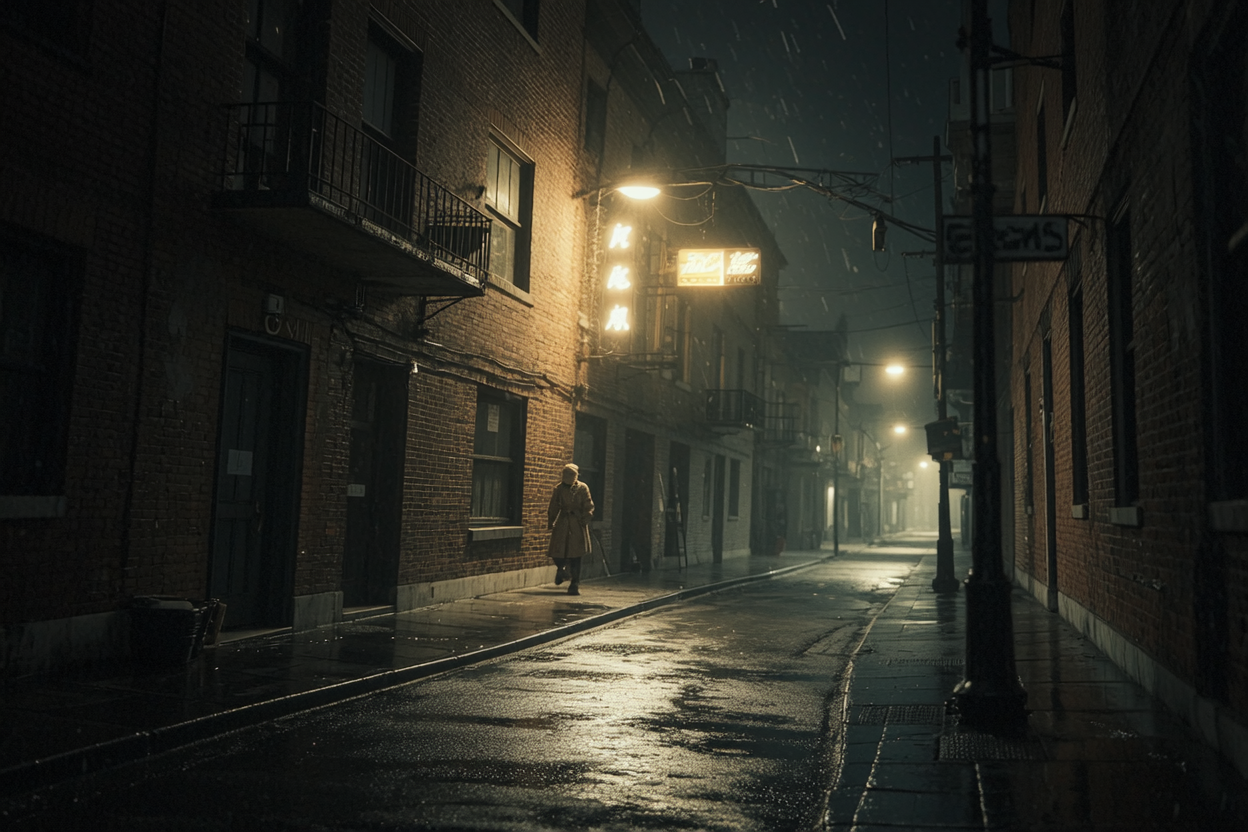
The Streets Breathe, the Shadows Crawl

Daily writing prompt
What do you enjoy most about writing?

I used to treat setting like an afterthought—slap a name on a town, maybe add a landmark, and call it done. But by accident, I stumbled into a book on worldbuilding, and it flipped something in me. Now I see the world itself as a character, one that presses against the protagonist and antagonist alike. The streets breathe. The shadows crawl. The town isn’t just where the story happens—it is the story. Almost like the place itself is the boogeyman lurking in the dark. And honestly, that’s what I enjoy most right now: shaping a world that fights back.

I didn’t just sit at a desk and invent details out of thin air. I pulled out a notebook, stacked up the photos from my travels, and let the world start whispering. I’ve crossed oceans, driven the continental United States, and every stop—whether a dusty diner, a half-broken neon sign, or a small-town mural—carries something worth keeping. This time, instead of pushing the idea of “place” aside, I leaned into it. Notes piled up. History mixed with imagination. Articles, old texts, even scraps of folklore—they all became raw material. Slowly, the world started to take on a pulse of its own.

The most interesting part of my travels has never been the landmarks—it’s the people. Their traits, the way they speak, even the rhythm of how they move through the world—all of it has the potential to slip into one of my characters. The world itself is beautiful, yes, but it’s the hidden histories that take my breath away. I don’t announce my sources, but my binders are crammed with notes—detailed, cited, cross-referenced, tabbed like I’m building my own private archive. The research takes longer than the writing, and I don’t mind. Once I get my hands on a piece of history, I can twist it, bend it, or use it in ways it was never meant to be used. That’s the thrill—watching a small discovery push a story into a direction I never planned.

What I’ve discovered is that if you build a world properly, it doesn’t just hold one story—it can hold a whole series of them. A single town, mapped and breathing, can stretch into multiple narratives, each pulling from the same veins of history, rumor, and atmosphere. That’s the real joy for me right now: knowing the work I put into one world can echo across stories, creating a place readers can return to, and a place I never quite finish exploring myself.

Prompt Addicts Anonymous

Hi, my name is Mangus, and apparently… I write.

“Me, pretending I’m above blog prompts while secretly outlining my fifth entry.”


Do I like blogging challenges and blog hops?
No. They’re annoying. They’re addictive. They’re helpful. And I resent all of that.

I don’t like being told what to write.
Until I do.
Then suddenly I’m five prompts deep, haven’t blinked in two hours, and now I’m questioning my entire emotional architecture because someone dared to ask, “What does the moon mean to you?”

I don’t like structure.
But I need it.
Because without a deadline or a theme, I will absolutely stare into the void and call it “research.”

Blog hops? Ugh.
Too much small talk.
Too many exclamation points.
And yet, three comments in, I’ve discovered a writer who casually blew my mind with a six-sentence story about grief and bees, and now I’m subscribed, emotionally compromised, and wondering how I ever lived without them.

So yeah. I complain. Loudly. Often.
I feel this way on Mondays, Wednesdays, and Fridays.
I suppose it’s because my coffee delivery is usually late. My favorite pen ran out of ink again, and the “good” refills are on backorder on Amazon.
It’s not that I’m bitter. I’m just… creatively dehydrated and emotionally overcaffeinated on the wrong days.

However, on Tuesdays and Thursdays, something shifts in the universe.
Champagne falls from the heavens.
Words become the elixir of the gods.
In the dead of winter, I smell the tranquil aroma of lavender in the gentle breeze.
My fingers dance. My spirit opens. The muse doesn’t knock — she kicks down the door with glitter in her wake and says, “Write, fool.”

And I do.

And don’t even get me started on the enablers.
There’s Sadje, who keeps creating these annoying, wonderful challenges, like Sunday Poser. So, what if I built an entire series based on one of them?
Then there’s Di, dropping a daily prompt I now use as a backbone for long fiction like it’s a casual hobby. She’s also got this Share Your World thing — yeah, I’m not sharing jack. Even though, if we’re being honest, this post accidentally answers the first two questions of this week’s challenge. I have no idea what she’s talking about on the last two.
And Fandango — this ole fart has a daily word challenge I use across multiple posts. I’m an ole fart too, fist in the air and all that. Solidarity.
Melissa from Mom with a Blog — I don’t know, maybe moms were the original Jedi. She posts these random images with alt text that make me write funny, weird things… and I enjoy it. Can you say,” Jedi mind trick?” The betrayal.
Eugi doing all kinds of magical stuff and her Moonwashed Weekly Prompts got me feeling all peace, love, and hair grease. Writing beautiful peaceful stuff. That’s just wrong! Shame on you!
And Esther Chilton? She just shows up once a week, drops off a prompt like it’s no big deal. I gotta wait a whole week for the next one. It’s crap like that which killed cable.
Let’s not forget the peskily awesome staff at Promptly Written, who boldly accepted the rantings of an insomniac and continue to push their readers to explore their creative limits. What the hell is that? Inspiration by force? Motivation disguised as structure. Madness. Glorious, structured madness.

Don’t get me started with the photography challenges.
Ceemay Allah have mercy on her — encouraged me to explore my camera, sending me running to capture images of things I’d normally ignore without a second thought. Who does that? Cee did.
Images I took for her challenges have ended up as descriptions or scenes in so many stories. Too many to mention.
And Leanne Cole with her Monochrome Madnessscoffs — having me try to add depth, texture, and shadow to things that clearly weren’t meant to be that serious. And yet… I tried. Multiple times. Because apparently, I have no control over my own artistic direction anymore, if ever.
Because of these women — and others — I’ve even heard people refer to me as a Photographer. Of course, I correct them. Obviously. But people be yapping about anything these days.

Here’s what I say about the lot of them:
“How dare you ask me to create my ass off and enjoy it?”
Complete. Utter. Rubbish.


So? Which one of you enablers got under your skin this week?

Sadje. Di. Fandango.
The crime? Just read the damn blog.

Let’s call it what it is: Prompts Addicts Anonymous.

“Hello, my name is Mangus…”
[sniff]
“…and I’m a…”
(It’s okay, we’re here for you.)
“…I’m a prompter.”
(Applause)
“Hey Mangus…”


Author’s Note:
This essay was born in public — a response to a simple blog prompt that, like most of my writing, spiraled into something I didn’t expect. It lives on the edge between complaint and confession, between sarcastic side-eye and real reverence for the people and prompts that keep dragging me back to the page.

If you’ve ever rolled your eyes at structure, dodged a deadline, or cursed the muse for showing up late and uninvited — this one’s for you.

And if you’re one of the people I name in here?
Yeah, I’m talking about you — but in a good way.
With sincere gratitude and thanks. You guys and so many more are one of the reasons I keep going.

— Mangus

How to Lose, Fight, and Write Anyway

Daily writing prompt
When is the last time you took a risk? How did it work out?

DAILY PROMPT RESPONSE

The last time I took a real risk, I didn’t jump out of a plane—or onto one with three Camel cigarettes, a dime, a suit a size too small, and a half-whispered prayer. You know the kind of move you make when desperation’s gnawing at your ribs and pride’s already dead.
No, I did something worse.
I posted my writing online.
Voluntarily.
Like a lunatic begging for public execution, dragging my entire bloodline down with me.
Go ahead. Pile up the rocks. Light the torches.
Here comes some fool named Mangus Khan—half dead from alcohol withdrawal, twitching on caffeine, clinging to bad decisions and a blog password like they’re body armor.


You’re not just tossing words into the void—you’re stepping out from cover, wide open, daring every hidden sniper in your own mind to take the shot.
The ground gives out beneath you, and suddenly you’re swallowed by a wraith screaming, “Disrespectful twit!”
PTSD flares up like a tripwire.
You can’t do that. You’ve got to stay safe. You can’t expose yourself like that.
Then comes the voice—the one that always shows up.
The one that tells you, “You’re a fraud, that you’re embarrassing yourself, that no one asked for this, and no one cares.”
It’s all there. Waiting.
It feels less like posting and more like being a fugitive, hunted for the crime of being seen.


Self-doubt is a masked assassin, cutting you a thousand times and spraying iodine on every wound.
You feel the burn every time you open a document. Some days, it’s enough to make you scream.
And yet—there’s something stubborn. Something deep down.
A fire that refuses to die, screaming, “Come on! Face me!”
Still swinging, no matter how much shame you pour on it.
It spits back at the doubt.
It says: Maybe this isn’t perfect. Maybe it’s not even good. But it’s mine. And it’s real.
The fight never ends. Some days you lose. Some days you swing back harder.
But if you’re lucky, you stop waiting for the permission slip that’s never coming—and you start writing anyway.


I clicked the button.
Not because I felt brave. Not because I silenced the voices.
I clicked it because if I didn’t, they would win.
It wasn’t some Hollywood moment. No slow clap. No flood of praise.
Just the hollow thud of silence at first.
I startled like I’d been caught doing something I wasn’t supposed to.
What was that?
Could it be?
A sound. A signal. A crack in the wall I thought would never break.
If you’re lucky—and if your courage holds—you hear something.
A whisper from the ether.
I see you.


I’m not fearless now. I never will be.
To think otherwise is the act of a fool.
I am a great many things, but a fool isn’t one of them.
Every time I sit down to write, Doubt whispers sweet nothings in my ear, stroking my hair like an old lover.
I moan at the comfort of it. Yes, that’s it. A little to the left.
But I know something she doesn’t:
I made it through once.
I can do it again.
Sentence after sentence.
And that’s enough.

The outcome? Unknown to me.
It’s entirely up to you.

One thing’s certain:
I am Mangus Khan.
And I write the Memoirs of Madness.

REBLOG: A Writer’s Path – Why Authors Need Continuous Learning

I’ve been saying this for years, but this article gives some advice.

Mangus Unplugged

Peering at the surface of my mind

PROSE – Straight talk

This is a response to a writing prompt I found on Medium. I thought it would be a good opportunity to slow down and examine what I’m doing and why? In the following few lines, perhaps, you will be able to better understand the writer known as Mangus Khan. So, I will put down the mask and speak to you plainly.

This has been sitting in my drafts for months. I forgot about it. So here it is …

When did you start writing? Is there a specific story?

I started writing when I was young. I can remember a specific age, but people’s opinions of me really mattered at the time. Shakespearean Psychobabble sticks out as an early work. I recall it fondly.

Do you have rituals in writing? If yes, then please share them with us.

No rituals per se, but nothing gets written without a cup of coffee. I’m afraid of what might come from my mind without my fix. I jot down anything in my head when I first wake up. Writing down the raw idea is essential for me. This way, I have an untainted version of the concept. Next, depending on what kind of mood I’m in that day; I might play a little music. I typically don’t write poetry to music, but it has inspired several poems. When I’m writing longer works, I find music drives the emotion I’m conveying rather well. However, it depends on my mood or what I’m writing.

The ugliest monster that writers are afraid of is writer’s block. If you have a recipe to deal with it, kindly share it with us.

Writer’s block has never been an issue for me. I think it is nothing more than a myth constructed by some writer during a particular undefined period. However, my constant monster or crippling demon is self-doubt. For me, it’s like Doubt lurks in the shadows of every corner. However, journaling is what keeps me sane. Not everything I write gets posted.

Describe the process of finding ideas for your stories. Please elaborate.

There is no set process. Nothing like step 1. I do this or Step 2. I do that. That might be nice or maddening. I let things flow to me, how they are supposed to. If I remember, I was meant to. If I wasn’t, I don’t. However, I often get gentle reminders and other times they aren’t so gentle.

As humans, we suffer without knowing it by choosing not to move outside our comfort zone. Do you have a “comfort zone” in writing (i.e., a topic that you always like to write about)? Have you tried to step outside your comfort zone and write something drastically different?

Typically, I can write just about anything. Of course, there are genres I’m better at than others.

Besides Medium, do you use other writing platforms? Please share our experiences.

I run a blog about my work and a writer’s workshop website. Both of these sites are hosted on WordPress. Both are relatively new, but there is a direct correlation to the work I put into them.

Have you published a book? If yes, how and where…etc. Plz, feel free to share your links with us.

No

You write because writing provides you with something special. Could you share your experience?

Writing, for me, is cheaper than a shrink. It’s my state of calm, my safety blanket, or my church. When writing, I have the ability to be myself. I can say all the things I wanted to say but couldn’t. I get to stare my demons in the face and tell them to “KICK ROCKS,” whether they leave or not is another matter entirely. However, I find peace within the moments I can write these lines.

Do you write a paragraph, a chapter, or a story with the end in mind or not? plz explain

I get several ideas throughout the day. However, the ones I pay the most attention to come in the morning. They are mainly fragments of something. Sometimes it’s the beginning, while others, it’s the middle, and of course. Example: Once, I wrote an entire novella around a single scene in an alley.

Every writer has an idol. Who is yours? And what do you find inspiring in her or his trajectory?

There have been several writers over the years who stuck out to me. There have written something that spoke to the soul.

Does being on a writing platform like Medium help your writing plans? Plz, elaborate.

No, my writing plans are completely independent of Medium. However, I found my Medium experience to be beneficial in regaining my confidence in my writing ability. Medium has also broadened my creative abilities in storytelling. Since, I have started writing here, I’ve explored my talents in photography and rediscovered cinematography.

Java & Verse #1

Gwendolyn Brooks (1917 – 2000)

In honor of the writing community we know and love. I wanted to point out one of its legends for a few moments.

Gwendolyn Brooks in the poetry room at the Library of Congress in November 1985. (Bettmann, Getty Images)

She was the first ethnic minority to win the Pulitzer Prize on May 1, 1950. In school, when it came to black writers, Langston Hughes, Richard Wright, and James Baldwin were familiar names. I can’t say that my school overlooked Brooks, but she seemed overshadowed by more popular poets. I discovered her body of work much later in life after I started attempting to write poetry. After several phone calls to the poetry clan announcing my discovery, most laughed and asked, “What rock did you crawl out from under?” They reminded me that Maya Angelou and Nikki Giovanni were the “really important” African American poets. I couldn’t believe my discovery and continued my research into the body of her work, finally getting my hands on an autographed copy of one of her books. After that, she became one of my literary heroes.

Gwendolyn Brooks was born in 1917 in Topeka, Kansas, and she published her first poem at 13 years old. When I think about what I was doing at 13, though I was writing stories back then, I lacked the courage to publish my work. Brooks has written over twenty books of poetry.

I would have never written a poetic line if it hadn’t been for the work of Gwendolyn Brooks. of course, many could argue that Brooks had nothing to do with my talent or ability. This opinion may be accurate, but the crazy part, I did not know. However, if Brooks hadn’t made her accomplishments within the poetry community and society, she wouldn’t have changed the establishment’s mindset. She made poetry cool. By the time I discovered and understood the magic of her work, a published poet, I also taught workshops. With a blown mind and new respect for writing, I immersed myself in reading everything I could get my hands on.

Here’s an interview I found online that tells an interesting story about when she discovered she had won the Pulitzer Prize.

American poet Gwendolyn Brooks sat down in 1986 to talk with Alan Jabbour, director of the Library of Congress’ American Folklore division.

How remarkable is this woman? I remember staring at the screen, thinking I would never be that good. Forget winning the Pulitzer Prize or any other award. I might as well roll up my quills and clean out my inkwell. Yes, I wrote with a quill and had an inkwell on my writing table. I was feeling myself with a few poems published, and radio shows in the works. I turned down everything and went to my former profession. Then, one day, a former student appeared out of nowhere and asked me a question.

“Are you going to finish what you started?” She asked, straight-faced and unapologetically.

I didn’t answer her at that moment. She turned and walked away, leaving me spellbound and speechless. Then, while preparing dinner, I exclaimed, “How dare she call me out like that? Rolling up on me like I’m soft or something!” The class started in an hour. If I left then, I could make it. Walking into class, I rocked a “Free verse rules!” T-shirt and a raggedy pair of closed-toed Tevas. Absent the salutations and idle chitchat, I launched straight into an analysis of Rilke’s “Faces” with no notes, guide, or any of the traditional materials I usually had for class. I lectured like that for the next six weeks.

I ended that workshop with, “One must be bold to matter, yet humble to make a difference.”

Thank you, Ms. Brooks, for inspiring one of my favorite lines in my career. Teaching that lesson to all the writers I’ve helped has been an absolute honor.

Listen to her legendary poem read by her!.

Thank you for your support I truly appreciate it.

Closed Blinds

POETRY – MINDFULNESS

With a push of a button, the television screen goes blank, removing that annoying hum that fills our homes for the better part of the day. A hum we seldom realize exists until it has gone. Then, finally, we notice how peaceful your life has just become.

I sat down by my window
and opened the blinds

From my window, I see
a world absent of law

No quarter for those who want it
No quarter for those in need
There was none, even for those
who drop to their knees and plead.

From my window, I witness
the darkness of the light,

the woman adjusting her clothes
because she just made her rent in the backseat
the man whose rent vanished in a puff of smoke
the child who wonders about their next meal
because their father just drank it away

from my window, I see light
through the darkness

the young man helping the older couple
a reminder that there is still courtesy, although fading
the blooms of the flowers in an overgrown garden
steadily growing, steadily fighting,
as we should, like every moment was our last

from my window, I witness those
who will not bow

Those whose faith is unwavering
those who love unconditionally
with no concern for themselves
those who continue to fight
though is no sign of hope

In this window, I have seen
many things

things that you want to fix but cannot
things that make us cry,
even if it is silently amongst a hundred

The things that will make a stand on mountaintops and cheer
The things that will make the strongest of men get up and walk away

These things and much more represent the ideal I have spent my life fighting for.

No wonder I can never close the blinds.

Thanks for reading!