
Personal Reflection
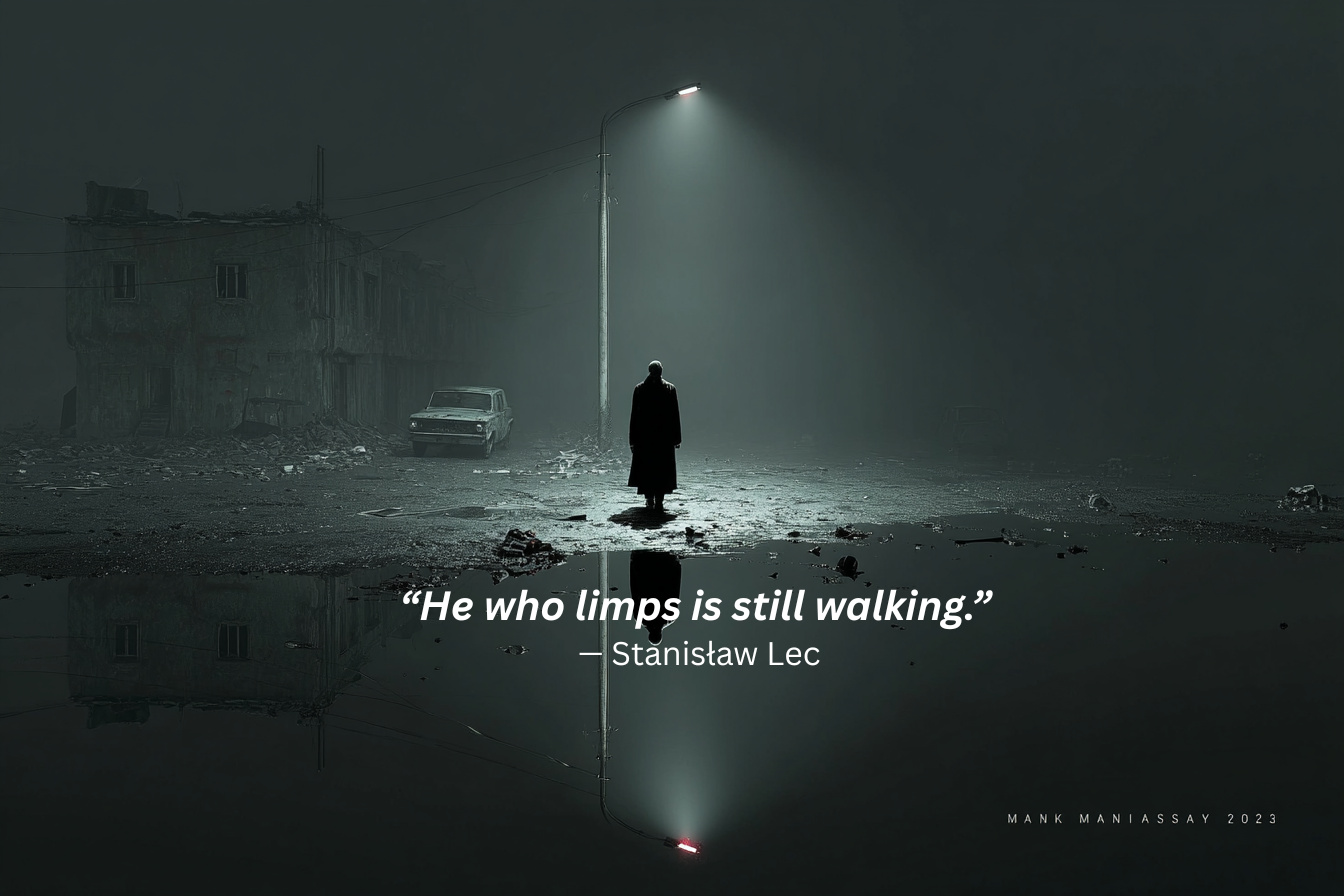
Lec wasn’t speaking about a literal limp. He was speaking about the way the soul walks after it’s been fractured — the uneven rhythm that comes from surviving what was meant to end you. The limp is what remains after the world has tried to take your stride. It’s the visible mark of invisible wars.
To limp is to continue in spite of the damage. It’s not about returning to who you were; it’s about carrying forward what you’ve become. There’s a quiet rebellion in that — a refusal to disappear. Lec understood that progress isn’t always graceful; sometimes it drags, sometimes it stumbles, but it endures. The limp is living proof that the wound didn’t win.
In a world obsessed with appearances and perfection, the limp is a dangerous kind of honesty. It exposes what survival really looks like — imperfect, asymmetrical, raw. And yet, it moves. That’s the defiance Lec is whispering about: the beauty of motion after meaning has collapsed. The limp is consciousness made visible — a body aware of its own fragility, yet stubborn enough to continue.
Maybe strength isn’t about walking straight after all. Maybe it’s about limping with purpose — about accepting that every step forward carries a story the unbroken will never understand.
Reflective Prompt
When you think of the ways you’ve been altered by what you’ve survived, where do you still feel the limp? Not in body, but in memory — in the quiet spaces where strength became something slower, more deliberate. What would it mean to stop hiding that uneven rhythm, and instead see it as proof that you refused to stop moving?
 Memoirs of Madness