The Gospel According to Miss Ruby

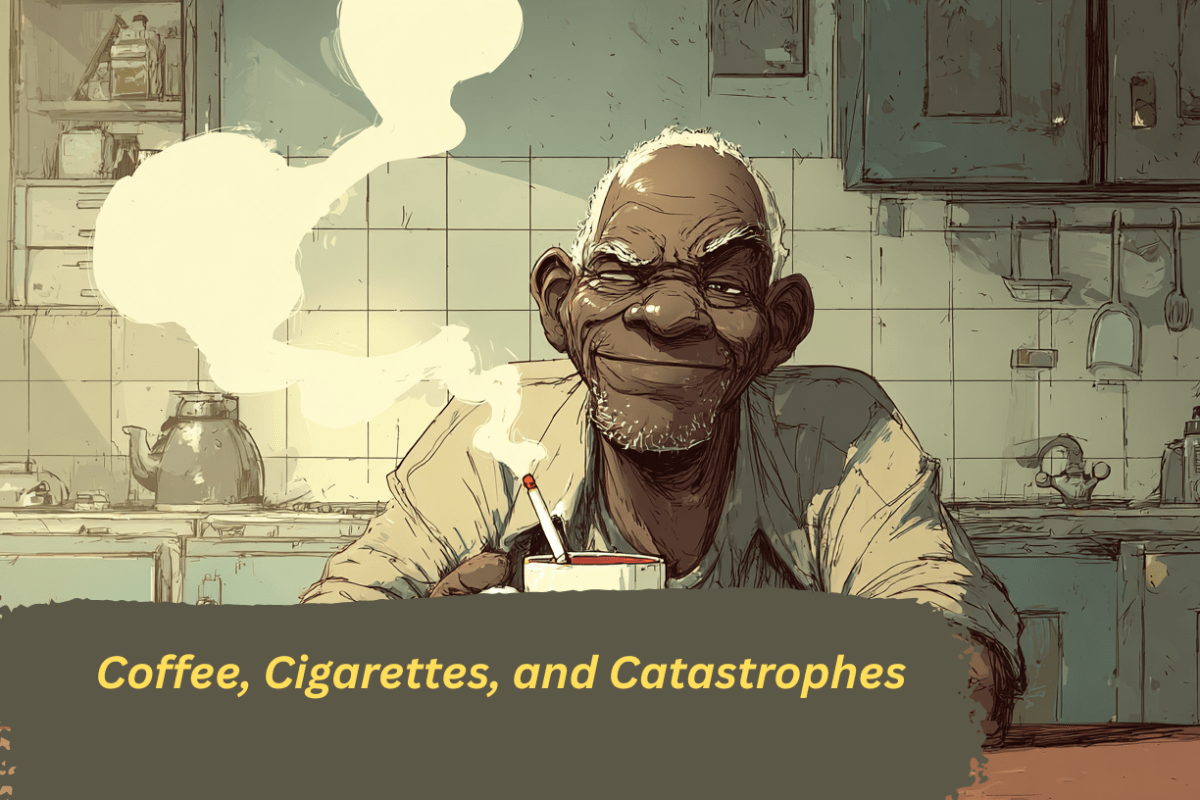
Coffee’s hot, cigarettes’ crooked, and I’m still alive—something Ruby predicted would not be the case by now. Ruby Mae Washington: church-choir soprano, Bible-quoting barroom brawler, and the only woman who ever made me fear both God and the county judge in the same night.

We met at a fish fry. She was belting “His Eye Is on the Sparrow” like she’d personally trained the sparrow, while I was trying to look saved enough to score a free plate. Ruby locked those righteous eyes on me and said, “The Lord sent you to me.”
I should’ve run, but my stomach said catfish first, escape later.
The hush-puppies were innocent; the mushroom gravy was a trap.

Ruby believed in two things: eternal salvation and controlling the thermostat. One was free; the other cost me my heating bill and half my sanity. Every argument started with “The Good Book says…” and ended with a flying object. I once dodged a coffee mug that left a steam trail like a patrol car chasing a stolen Buick.

But here’s the quiet part I don’t like to admit: I liked the danger. Her storms gave my own silence something to push against. After years of drifting through women like a man checking coats he’ll never claim, Ruby’s fire felt like proof I was still combustible.
Her idea of intimacy was a carefully integrated system of prayer and guilt. She’d bless the bed, bless the moment, and halfway through ask the Almighty to “smite the devil out of this man,” which really kills a mood when you’re the man in question.

The breaking point came during a revival service. Preacher asked the congregation to cast out their demons. Ruby shoved me forward like I was auditioning for an exorcism. I stumbled down that aisle, the choir screaming “Just As I Am,” and thought, Buddy, you ain’t ever been more accurate.
Walking out that night, casserole dish tucked under my arm like stolen evidence, I felt something loosen—a knot I’d carried since my twenties when love started to mean endurance instead of joy.

I left with a busted lip and the deep conviction that God loves me, but Ruby does not. Moral of the story? When a woman sings like an angel and fights like a heavyweight, don’t wait for the rapture—grab your hat and go.
But some nights, when the coffee’s cooling and the cigarette burns itself out, I still wonder if the sparrow kept watching after I left.


Author’s Note

Today’s tale from Coffee, Cigarettes, and Catastrophes slides in under the watchful eyes of three prompt masters—FOWC, RDP, and the Word of the Day—all of whom make sure I never run out of linguistic ammunition.
The mandatory culprits—mushroom, patrol, and integrated—were stirred into the story like contraband creamers in Grumble’s coffee: slow to dissolve, impossible to ignore, and guaranteed to leave a bitter aftertaste.

If you’re a writer looking for trouble, follow those prompts. They’re like neighborhood watch for the imagination—keeping your words on patrol while you sneak your own demons into the draft.

The Circle That Opens Itself

Part VI of the Spiral Series

The next breach opened on its own.

No twist. No artifact. No contact.

It simply opened.

Carla felt it hours before she saw it. The air turned sluggish, sticky in her lungs. The horizon bent subtly, like the earth had taken a deep breath and held it too long. Every footstep became suspect. Every shadow slanted just a few degrees off true.

Her pulse accelerated. Not fear. Not instinct. Just alignment.

The spiral didn’t need her hand anymore. It only needed her presence.

The map Mikail left had led her here, to a quiet coastal stretch she’d never seen on any topographic registry. A village tucked between crescent cliffs, surrounded on all sides by worn sea walls and high tides. The cliffs curved inward toward the town in a shape too deliberate to be natural. From above, it looked like a pupil watching the ocean.

The people were still here.

That was the worst part.

They walked slowly. Deliberately. Wearing simple white garments, hand-stitched with spirals that mirrored the ones etched into Carla’s dreams. Their faces were peaceful, but blank. Not vacant. Given.

She stepped into their pattern, and no one stopped her.

As she moved through the village, time seemed to soften. The light seemed tired, flat, and gray, without the harsh contrast of morning or dusk. The sea air should have been sharp with salt and rot, but instead it tasted light, almost sterile. Too clean.

She passed an elderly woman seated cross-legged on a worn stoop, staring at nothing. A child nearby stacked rocks into a spiral that folded in on itself.

Someone offered her food—a piece of fish, salt-dried and paper-thin.

Please. Eat. It’s good,” the man said.

She shook her head. Her stomach was empty, yet distant, as if it belonged to someone else.

“Why are they still here?” she wondered. “Why didn’t they run?”

The answer whispered up her spine:

They didn’t need to. The spiral came to them.

The breach was in a collapsed chapel at the cliff’s edge. The roof had caved in long ago, and the sea wind passed through like breath through open ribs.

At the center: a spiral of stones, pale and smooth.

At the heart of the spiral: a hole.

Not wide. Not deep. But falling. An absence shaped like a center. A place that swallowed light without dimming.

She approached slowly.

And the world slowed with her.

Her boots crunched over broken mosaic tiles—ancient murals worn smooth, erased by reverent feet. The hole didn’t call to her. It listened.

She knelt beside it and stared down.

And immediately felt herself tilting inward—mind first.

“It opened itself,” she whispered.

“Because you’re near.”

The voice didn’t startle her.

A woman stood in the arched doorway, barefoot and hooded. She wore no artifact, no pack. Just white linen wrapped like ritual. Her presence wasn’t threatening—it was inevitable.

Familiar, like someone from a memory Carla never lived.

“You don’t have to seal it,” the woman said. “You’ve done good already. You brought the spiral here. Now rest. Let it open.”

Carla stood. She didn’t know when she’d knelt.

“You want it open?”

The woman smiled.

“It’s not a fault to be part of something larger.”

Carla’s heart hammered. She couldn’t tell whether it was fear… or resonance.

“You could seal it,” the woman said. “But the spiral would find another path. It always does. This place chose to remember. Others will forget.”

Carla’s hand drifted to the artifact, but it didn’t hum. It was still. Watching.

“You could lie down,” the woman continued, her voice now like a lullaby. “Let the spiral hold your memory. You wouldn’t even dream. Just one long nap, inside the pattern. No more fight. No more fault.”

Carla shivered.

She looked at the breach again. It wasn’t pulsing.

It was breathing.

Explore the other side,” the woman said. “We did. And we’re better for it. Lighter.”

“Lighter?” Carla repeated.

“Not weight. Memory. The spiral carries it now. We walk without the burden. Isn’t that what you want?”

The woman reached forward, palm out. Not aggressive. An invitation.

Carla stepped back.

Her knees locked. Her legs wanted to move forward, but her spine screamed against it.

“I’m not here to serve the spiral,” Carla said.
“I’m here to close it.”

“Then do it,” the woman said gently. “Seal it. End it. Slow its speed, its spread. Try to make the world still again. But you’ll only bury your part. The rest will wake. It always does.”

Carla stepped to the edge of the breach, her marked hand throbbing under her sleeve.

She clenched her fist.

She felt the warmth of the stone beneath her boots. Heard the ocean breathing behind her. Saw the villagers waiting in the square without moving.

They weren’t prisoners. They weren’t brainwashed.

They had chosen this.

Because forgetting is easier than bearing the weight of what’s coming.

She pressed her palm to the ground.

And twisted.

No explosion. No scream.

Just a soft recoil, like a rubber band relaxing after centuries of tension.

The spiral of stones dimmed, then faded. The villagers blinked as if waking from a collective trance. Some dropped to their knees. Others simply walked away. One stared out to sea and wept silently, not knowing why.

The woman was gone.

The chapel was whole.

But the hole was still there—only now it was closed with a thin skin of glass-like stone, faint spiral lines beneath its surface like fossilized breath.

Carla stood alone in the chapel’s center.

The mark on her palm no longer burned. It pulsed. Steady. Like a metronome waiting for a new rhythm.

The spiral hadn’t just opened itself.
It had opened her.


Author’s Note:
This chapter was happily written for Mindlovemisery’s Menagerie and #Wordle #430. Four chapters remain—stay tuned as the spiral tightens.

Kimonogate 3

Episode 3:

Myrtle Revealed (or, The Boney Truth)

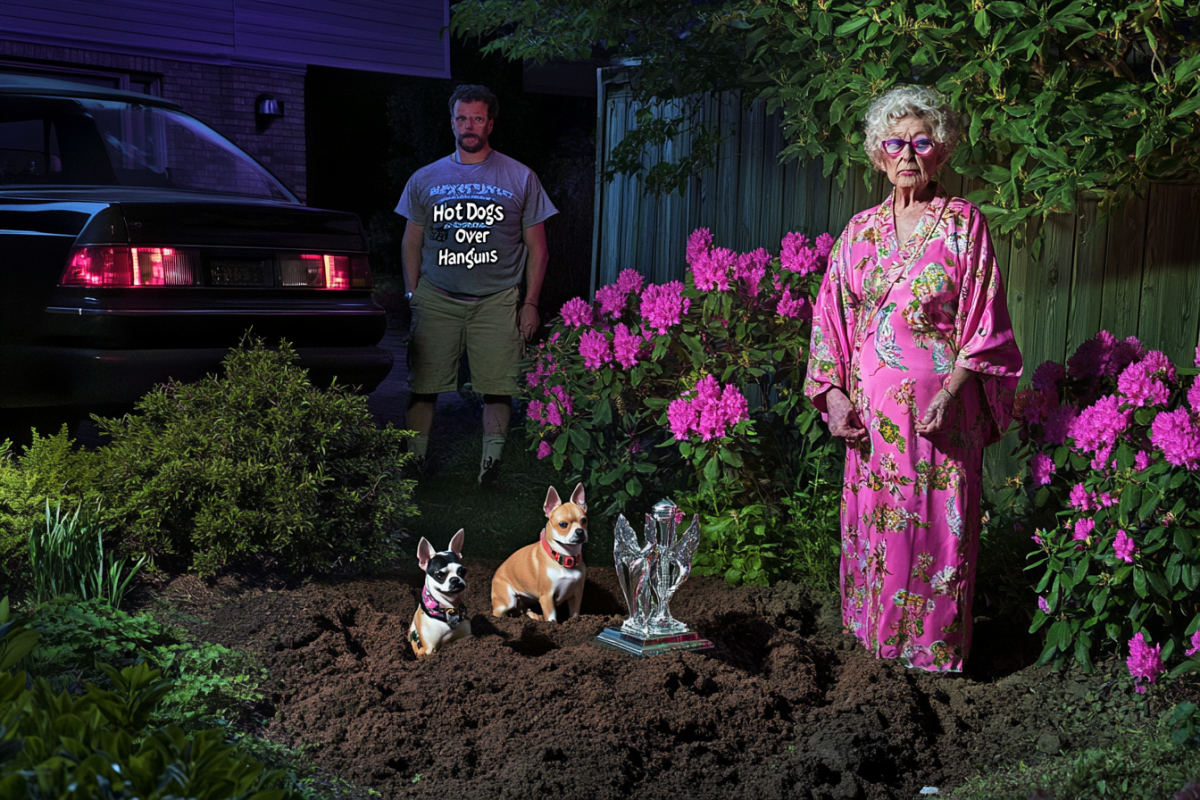
Everyone on Rosewood Lane thought Myrtle McKlusky was a cardigan-wearing, prune-juice-drinking, HOA-terrorizing widow with three jittery Chinese Crested dogs. They were only 25% right.

What no one—not even the mayor, not even Capote—knew was that Myrtle was also…

Tempest Fablestein.

Yes. The Tempest Fablestein. The mysterious, scandalously successful author of the internationally adored, historically inaccurate, and erotically charged adventure-romance series featuring Boney LaFleur, the one-armed French nobleman turned treasure hunter.

She had written 43 novels, 5 novellas, and a cookbook (“Feast Like a Fabulist: 18th Century Seduction Stews”) from the converted sunroom behind her kitchen. Her books had sold over 47 million copies. She was, by all definitions, secretly loaded.

Her fans included conspiracy theorists, failed Broadway understudies, and a suspicious number of junior senators.

And to maintain her anonymity, Myrtle had hired a professional actor—a classically trained Scotsman named Malcolm Finnegan Duff-Whitely III—to play the role of Tempest in public.

Enter Malcolm

At book signings, literary galas, and erotic parchment conventions, Malcolm wore a velvet smoking jacket, quoted Shakespeare deep cuts. He wielded a Scottish accent so buttery it made podcast hosts weep. He was charming. Mysterious. Allegedly celibate.

And he had been in love with Myrtle for six years.

The Confession

During a livestream at the National Erotic Adventure Awards Gala, Malcolm—accepting the award for “Best Use of the Word Ravish in a Scene Involving Lava”—snapped.

“I—I can’t do this anymore,” he said, eyes glassy. “I’ve lived a lie.”

The crowd hushed. A woman in the third row fainted into a fondue fountain.

“I’m not Tempest Fablestein. I’m just Malcolm. But she—”
He stared into the camera.
“She is the greatest mind of our time. And Myrtle… if you’re watching—I love you. I’ve loved you since Boney rode that bull through the Vatican archives.”

Before the audience could react, two large men in matching black suits and medieval-looking boots appeared. They flanked him.

Malcolm’s voice rose over the chaos. “Tell her I meant it!”

He was dragged offstage, still clinging to his crystal pegasus trophy.

The livestream abruptly cut to a pre-recorded interview where “Tempest” explained how she researched 18th-century brothels using only Google Earth and intuition.

The Fallout

A 14-second clip surfaced on YouTube hours later. It showed Malcolm being pushed into a black Escalade while yelling, “Tell Myrtle I know her rhubarb pie uses vodka!”

The clip was quickly removed by Tempest Enterprises LLC under “copyright and culinary infringement.”

Still, the legend of the confession spread. Reddit threads multiplied. Fans demanded answers.

Back in Rosewood Lane…

In her sunroom, Myrtle sat staring at her laptop. Capote snored on a pile of manuscript pages. Pont and Pint had rolled themselves into an anxious spiral.

She didn’t cry. Myrtle McKlusky hadn’t cried since Boney LaFleur and the Lusty Siege of Strasbourg made Oprah’s underground erotica list.

Instead, she opened a new document.

Title: “Boney LaFleur and the Man Who Dared to Love.”

That night, in the dim warmth of his paneled study, Mayor Gerald swirled cold chamomile tea and reached for the false back of his bookshelf.

Click.

Behind it: Every single Boney LaFleur first edition, wrapped in archival sleeves and arranged by emotional damage level.

He pulled out “Boney LaFleur and the Underdressed Pharaoh” and gently opened the jacket. Inside:

“To G—
May you never lose your own treasure map.
—T.F.”

He sighed and rubbed his eyes.

“She’s been right next door this whole time,” he whispered.

Then, from a drawer, he pulled a laminated keepsake:
“Boney LaFleur’s Ten Principles of Gentlemanly Adventure.”

He read aloud, voice cracking:

“Rule #1: Never underestimate the swordplay of a woman with nothing left to prove.”

Capote, who had somehow snuck into the study again, thumped his tail once in quiet agreement.

Gerald leaned back in his chair.
“You got me, Myrtle.”

Chronically Challenged: A Friday the 13th Love Story VI

FICTION – 3TC #MM87

Chapter 6:

One Last Leap

The chrono-device vibrated softly in Fiona’s hands, like it had a secret to tell.

It glowed—not in flashes this time, but in steady, rhythmic pulses that matched the cadence of her breath. Blue-white light warmed the bones of her fingers.

The screen read only:
Temporal Window Detected
Friday, 13. Reset.

Fiona stared at it. Her stomach dropped. Again.

“We’re back in range,” she said, voice hushed, reverent.

Elliot stood beside her, damp curls pressed to his forehead. He didn’t ask where—or when—they’d land next. He just met her eyes, the gravity of the moment flickering behind his usually breezy expression.

“Are we ready?” he asked.

She wanted to lie. Wanted to shrug, joke, mask the rising panic the way she always had. But the truth felt louder than usual. Like something long trapped was suddenly allowed to rise to the surface.

“I don’t know,” she admitted. “But I’m tired of waiting for everything to make sense before I act. And I’m tired of thinking real things can only happen in safe places.”

Elliot nodded, slowly. “Then let’s jump.”

She reached for his hand.

They pressed the reset button together.

The air peeled around them like silk.
Light shattered. Sound vanished. The world spun gently sideways—

And then stopped.

Fiona opened her eyes and gasped.

They stood in a room so pristine, it almost didn’t seem real. The walls were curved and white, seamless, like poured milk. The air buzzed faintly, charged, clean, just on the edge of ozone. Somewhere, soft instrumental music played in a scale she couldn’t name.

Outside a wall-sized pane of glass, a city stretched like a dream: silver towers arched into the sky, ribboned with floating platforms and streaks of silent light. Buildings glowed from within like lanterns. There were no wheels, no smoke. No gravity-bound noise.

“Oh,” Fiona whispered. “I think this is… the future.”

Elliot spun slowly, taking it in like a wide-eyed kid at a museum. “Either that, or we got adopted by the Apple Store.”

Fiona laughed before she could stop herself. It sounded too loud in the quiet, like a human voice didn’t quite belong here.

They found a curved bench—soft and warm to the touch, like stone that had learned empathy—and sat down. Outside, a gliding drone zipped past, trailing soft purple light.

Elliot leaned back, knees bouncing. “Do you think we’re… allowed to be here?”

Fiona stared at their warped reflections in the glass. “Does anyone belong anywhere? I mean, really?”

He glanced at her. “That feels like a yes and a no.”

She smiled faintly. “It’s a yes if you’re next to me.”

The hum of the space surrounded them. It didn’t feel sterile anymore—it felt gentle, like the universe was holding its breath.

Fiona shifted to face him, nervous energy rippling beneath her skin.

“I need to say something,” she said. “And this time I’m saying it out loud so I can’t take it back.”

Elliot blinked. “Okay.”

“I want to be with you,” she said, the words trembling as they left. “Not just next to you. Not just in shared proximity because of academic overlap or time travel disasters. I want… us. I want to be chosen. And to choose you.”

The air seemed to shimmer with its weight.

Elliot was quiet, processing. Then:

“You astound me,” he said. “Every time I think I’ve caught up to how smart or strong or out-of-my-league you are, you find a new way to knock me sideways.”

Her cheeks went hot. “That’s a very dramatic compliment.”

He tilted his head. “You kissed me with physics. I think I’m allowed some drama.”

Then, he leaned in and kissed her.

It wasn’t perfect. His glasses bumped her temple, and she accidentally bit his bottom lip. But neither pulled away. It was clumsy and honest and full of all the things they hadn’t let themselves say until now.

When they parted, forehead to forehead, Fiona felt the moment lodge somewhere deep. This—whatever this was—wasn’t theoretical. It wasn’t temporary. It felt inevitable.

The chrono-device buzzed softly.

They looked down. A new prompt blinked on the screen:

RETURN TO ORIGIN?

Fiona turned to Elliot, heartbeat syncing with the pulse of the text.

“What do you think?” she asked.

Elliot slid his fingers between hers.

“I think we’ve got a date to finish,” he said.

They stood. The device warmed in her hand.
And then the light took them home.

Chronically Challenged: A Friday the 13th Love Story

Daily writing prompt
What notable things happened today?

DAILY PROMPT RESPONSE – FICTION SHORT STORY SERIAL

Chapter 1:

The Ask


Dr. Fiona Klausner had survived worse.

She’d survived peer review by an all-male panel who said things like “feisty formula” and “adorably ambitious.” She’d survived seventeen-hour data cleanses on a broken monitor, and one ill-fated attempt to microwave soup in a vacuum chamber.

But this? This was worse.

She stared across the lab at Dr. Elliot Chowdhury, hunched over a datapad, brow furrowed, lips moving as he whispered numbers to himself. Probably modeling the lattice resonance from their last run. Probably not thinking about her at all.

He wore what he always wore: a Ramones t-shirt (today’s said “Hey Ho Let’s Go”), wrinkled jeans, a slightly singed lab coat, and plastic-frame glasses held together with electrical tape. His prematurely gray hair appeared to have lost an argument with gravity.

To Fiona, he looked like the human embodiment of a chaotic good equation. Unshaven. Brilliant. Endlessly distracting.

You don’t have to do this, her brain whispered. You could just ask him to double-check the time-slice projections. You don’t have to launch your dignity into space on a caffeine-fueled whim.

She reached for her mug, cold. Her hands were damp. Without realizing it, she began adjusting her elegant lab coat. The sleeve, the collar, the pocket. Again and again.
Then she realized what she was doing—you already fixed that—and forced her hand to stop.

Just let it go. He’s nice to everyone. He probably lent you that soldering iron because he’s kind, not because he was flirting in the language of hardware.

She stood up anyway.

Her chair screeched across the tile. Elliot looked up, startled but smiling.

Abort. Retreat. Climb into the trash can and make it your home.

“Elliot?” she said.

He blinked. “Yeah?”

She cleared her throat, then blurted, “I was wondering if you wanted to get dinner sometime. With me. Socially. I mean. Or romantically. I mean—if that’s a thing you’d want. Or ever consider. Or—”


She’d said it. It was now out in the world, irreversible.

Her heart pounded. Her stomach twisted into knots.
She actually felt her intestines realigning themselves like they were trying to flee the scene.

This was a biological emergency.

And then, Elliot made a face. A tiny nose scrunch, subtle but visible.

What’s that face? His nose? Is that a disgust squint?
Do I stink? Is it the emergency deodorant? Oh god, is it the lentil soup from yesterday? I knew it lingered.

Then she blinked. Realized something.
Wait. That’s his thinking face.
She’d seen it dozens of times—whenever he was mid-equation, mid-epiphany, or mid-muffin.
It wasn’t rejection. It was…processing.


Oh. Oh no. This is happening. This is real.

Dr. Fiona Klausner—world-class brain, terrifying poise, hair that doesn’t know chaos—just asked me out.
Me. In this shirt. In these pants. Do these pants even have a functioning zipper?

She’s hot.

Why is a hot girl asking me out?

Am I pitiful? Is this a setup? Is there a camera in the fume hood?

Then it hit him.
The last time a hot girl asked me out…

Carla Smith.
Candle wax. Glitter. A Yelp review.
He still didn’t know how that review got posted under his name, but it cost him two months of eye contact with anyone named Carla.

Say something. Say yes. Don’t mention Carla. Or glitter. Or wax. Just say yes.

He scratched behind his ear. His nose twitched again. Panic reflex.

And somehow, he said it.


“Like a date?” Elliot asked, voice surprisingly steady.

Fiona nodded like a wind-up toy nearing the end of its coil. “Yes. That. Ideally.”

He smiled—not smug or surprised, but warm. Real.

“I’d really like that.”

She blinked. “You would?”

He ran a hand through his ridiculous hair. “Yeah. I’ve been meaning to ask you, actually. But I figured I’d mess it up and say something weird, like, I don’t know… ask if you wanted to split a burrito and debate quantum foam.”

She laughed—a real, involuntary laugh—and it echoed through the lab like something newly possible.

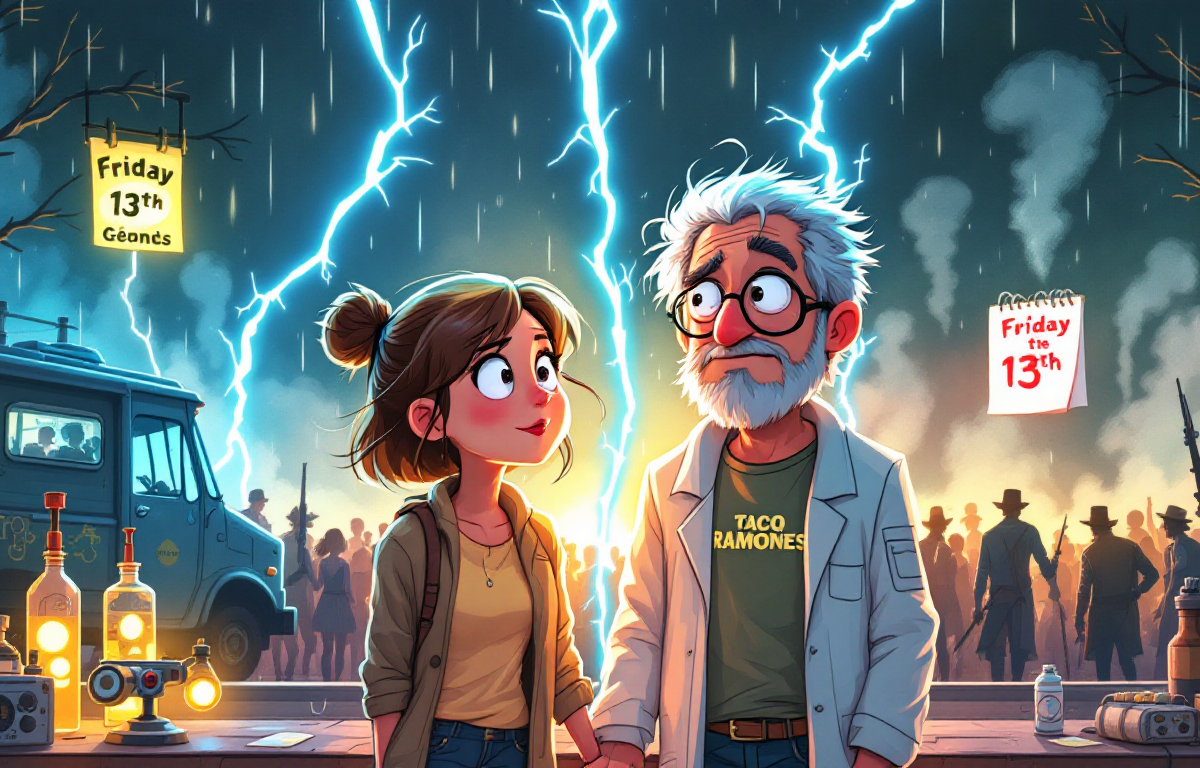
Elliot looked at his watch. “Wait… what day is it?”

Fiona checked her phone. “Friday. The 13th.”

He grinned. “Of course it is.” He shrugged. “What’s the worst that could happen?”

Across the lab, hidden behind a tower of coiled cabling and dead sensors, the chrono-lattice prototype pulsed softly. Once. Twice. Like it was listening. Like it was waiting.

Neither of them noticed.

They were both too busy melting down in tandem.

Caught in the Heavy

FICTION – FOWC, RDP, 3TC


Caught in the Heavy

The corridor stretched on like a memory he couldn’t escape—narrow, dim, damp with a cold that clung to the skin like breath on glass. Mildew, rusted metal, and aging wood tinged the air, a scent that settled into the lungs and whispered of long-forgotten places. Floorboards groaned beneath his boots, their brittle creaks echoing like old bones remembering how to hurt.

He stood in the middle of it all, unmoving. Not frozen by fear exactly—more like resignation. The kind that seeps in after the tenth mistake, the last apology, the moment you realize the story you’ve been living might never shift its ending. He used to think time would fix it. But time, he’d learned, doesn’t heal. It settles—like dust.

The walls pressed close with peeling wallpaper and old nail holes where lives once hung. He scanned them as if he might find his past nailed there, too. Maybe a younger version of himself in a photo frame, smiling with someone whose name he couldn’t say out loud anymore.

An unfortunate truth surfaced: he’d chosen this silence. No one forced him here. He pulled away. He locked the doors before anyone knocked. They called it being guarded—he called it survival.

On a crooked table sat a lone candlestick, melted to a stub. Its wax clung like a memory—dried, useless, but still intact. He reached for it absently, fingers brushing tarnished brass. Cold. Solid. Real. A reminder that even forgotten things still leave traces.

He wondered how long he’d been standing here. How long had he been waiting for the hallway to say something? But hallways don’t speak. They listen. They hold your silence for you until it grows too loud to ignore.

Everything around him felt heavy. His coat, soaked with damp air. His thoughts sagged with years of unanswered questions. Even his heartbeat felt labored, as if each thud carried the weight of something he refused to let go.

He closed his eyes and thought of the words he never said. The calls never returned. The glances he turned away from because he didn’t trust what he saw in them.

Regret was a slow grief, the kind you wear like skin. And the mind, cruel and calculating, was its favorite weapon. Not a blade, not a gun—just memory sharpened to a whisper that says, “this is who you really are,” when you least expect it.

Still, a thought rose unbidden through the noise—quiet, but firm:

We always try to overlook the past, because we can’t change it. But we forget the important factor about the past… the wisdom we gain from it.

He let the idea settle, warm against the cold inside him. Maybe that’s what he’d come here for. Not punishment. No escape. But understanding. A reckoning not with the pain itself, but with the lesson buried beneath it.

He didn’t move. Not because he couldn’t—but because this was the only place he could hear himself. This hallway wasn’t just a space. It was a mirror, a memory, a confessional.

A bulb overhead buzzed, casting him briefly in light—harsh, unflattering. His reflection in the warped glass at the far end looked like a man still mid-sentence, still caught between what he was and what he feared he’d never be.

Just enough light to prove he was still there.

Just enough to remind him that some corridors don’t lead out.
They lead in—and if you’re not careful, they never let you leave.

Top 5 Ways to Ask a Girl Out: Rule #3

FICTION – SHORT FICTION SERIES


Top 5 Ways to Ask a Girl Out: Rule #3
Never assume you’re the smartest person in the driveway.


So there I was, elbow-deep in engine parts, sweating like a liar in a job interview, and just barely pretending I knew what a serpentine belt was. I nodded at a bolt like it had insulted me personally.

She crouched next to me, sipping her probably-toxic coffee and watching with the calm curiosity of someone waiting for a raccoon to finish rooting through their garbage.

“You need a 10mm socket for that,” she said casually.

I froze. “What?”

“That bolt. You’re using the wrong size. That’s why it keeps slipping.”

I looked at the wrench in my hand. I had no idea what size it was. I picked it because it was shiny and made a satisfying clink against the toolbox.

“Right,” I said. “Just warming it up. Loosening the tension.” I said “tension” like I knew what it meant in this context. She didn’t call me out. Worse—she smiled.

“Here,” she said, reaching into the toolbox and plucking out the exact socket like a seasoned mechanic. Then, with zero hesitation, she slid under the hood next to me and got to work like it was no big deal.

“Wait,” I said. “You know how to fix this?”

“I grew up with three older brothers and a string of bad cars,” she said. “Also, I once rebuilt an engine because YouTube dared me.”

I blinked. “So… you’re just letting me fake my way through this for fun?”

“I was curious how long it would take before you admitted it,” she said, laughing. “You were doing okay, though. Kind of charming, in a flailing sort of way.”

Flailing. Excellent. I was now officially “flail-charming.”

She handed me a rag. “Wipe your hands. You’ve got grease on your face. And your shirt. And somehow your ear?”

I wiped at everything and absolutely made it worse.

“Thanks,” I muttered.

She leaned back on her heels, wiping her own hands like a total pro. “So. What was your plan? Fix my car and hope I’d fall in love with you on the spot?”

I froze.

Then shrugged. “Honestly? That was Plan A. I didn’t have a Plan B.”

She laughed. A real one. Then, after a beat, she said, “Well… I like Plan A.”

I nodded, trying not to panic. “Cool. Same. Feels like a solid… multi-step process.”

“You’ve got two more rules left, right?” she said, grinning. “Can’t wait to see what’s next.”

Neither could I.

Mostly because I had absolutely no idea what I was doing.

Top 5 Ways to Ask a Girl Out: Rule #2

Daily writing prompt
What makes you laugh?

DAILY PROMPT RESPONSE – FICTION SHORT SERIES


Top 5 Ways to Ask a Girl Out: Rule #2
Don’t insult her car. Even if it deserves it.


We walked down the driveway in silence. Not the comfortable, romantic kind of silence. More like the kind where you know you’re about to meet something terrifying and no one wants to be the first to scream.

Her car came into view. If a rusted toaster had anxiety, it would look like this. The paint was more of a suggestion. The bumper was being held on by what looked like hope and duct tape. One of the side mirrors was missing entirely, probably in protest.

“This is it,” she said, completely straight-faced.

I nodded slowly. “Cool. Vintage… apocalypse chic.”

She raised an eyebrow.

Damn it.

“I mean—it has character. You don’t see this kind of structural chaos every day.”

She laughed. “It’s a piece of crap. You can say it.”

“No! I mean… yes. But lovingly.”

Smooth.

I crouched down to check out the front wheel, pretending to know what I was doing. Which I mostly did. I watched a lot of videos. Some had music. That counts.

“So what’s it doing?” I asked.

“It makes this… sound,” she said, twisting her face like she was bracing for judgment. “Kind of a high-pitched… squeal? Or a scream? It’s hard to describe. Definitely not a sound cars are supposed to make.”

“Got it,” I said. “A banshee vibe.”

She nodded. “Exactly. Like if a haunted violin and a blender had a baby.”

I popped the hood. Steam hissed out like the car was sighing in defeat. I was immediately sweating. From heat, stress, and fear that I was about to electrocute myself in front of someone I liked.

“You don’t have to actually fix it,” she said. “I just thought you might know a guy or something.”

“I am the guy,” I said, way too confidently.

I was not the guy.

Still, I grabbed a wrench like I meant business. Tools make you look legitimate. I tapped something metal. It made a sound. Not a good one.

She leaned over my shoulder. “You sure this is safe?”

“Totally,” I lied. “I’ve done this… dozens of times.”

Once. On YouTube. At 2AM. After searching “how to fix car without dying.”

The gnome wasn’t there anymore. I kind of missed him.


I’m laughing … are you?

Let me know when you are ready for Rule #3

Here’s the link to Rule #1

Toilet Paper and other Hard Truths

FICTION – FSS #193

He quickly climbed the trellis and reached the balcony outside of her bedroom. He watched her through her window. She was sitting on the floor, legs crossed, phone in hand, completely unaware. She always tied her hair back when she focused, and it was. Probably texting. Probably him.

Jason exhaled slowly, pressing his back against the wall just under the window. He hadn’t planned this. Not exactly. But after three days of being ignored, after seeing that one blurry photo on her story—just a hand on her thigh and a drink in the background—he couldn’t sit still.

He could hear The Cranberries playing in the background—Linger, soft and haunting. She moved to the music, not dancing exactly, but swaying in that unconscious way, like the song had tapped into something old and private inside her. Like it spoke to her soul. Like she was his private dancer and didn’t even know it.

With difficulty, he swallowed. He needed to go. He wasn’t that guy. Not the creepy ones—the ones who watched from the dark, who mistook obsession for romance. The ones who fantasized about a glance, a laugh, a shared elevator ride, and turned it into something it wasn’t.

The ones who, when they finally worked up the nerve, stood trembling and said, “Don’t you remember? You smiled at me once.” Eyes wide. Pleading. Every breath pulling them deeper into the abyss of desperation.

Jason stared at his hands. Pale knuckles, shaky grip on the cold railing.

This wasn’t who he was.
At least, he hoped not.

He jumped from the balcony, hurting his ankle but maintaining his dignity. The pain was excruciating, but it kept him honest. Every limp, every throb was a reminder: he didn’t belong up there. Not like that.

Branches whipped past as he hobbled through the trees behind her house. The cold air cut at his lungs, the wet grass soaked through his sneakers. But he kept going—because turning back would’ve been worse.

Finally, he reached the lake, where his friend Tina was waiting. She was pacing back and forth, arms crossed tight, hoodie pulled over her head. Her eyes lit up when she saw him.

“Did you do it?” she asked urgently, stepping toward him. “Well?”

He didn’t answer right away, sinking onto a bench near the water’s edge, leg outstretched, ankle swelling fast. He winced.

“I saw her,” he said, staring out at the dark water. “She was dancing.”

Tina blinked. “So… that’s a yes?”

Jason shook his head slowly. “No. I couldn’t. I’m not that guy.”

She let out a breath, relief and maybe a little disappointment mixing in her face. She sat next to him, pulling her knees up to her chest.

“Good,” she said. “Because if you were, I wouldn’t be here.”

They sat in silence for a while, the lake still, the sky just hinting at dawn.

How did I get here?
Jason stared at the rippling water like it might answer.

Where did this notion come from—the idea that if he just showed up, climbed high enough, looked long enough, maybe something would fall into place? Some moment, some clarity, some spark between them that would finally catch.

But there was no spark. Just a girl in her room, moving to music, living her life without him in it. And him, standing outside like a stranger.

He wasn’t always this guy. Was he?

Maybe it wasn’t about her at all. Maybe she was just the screen he projected it all onto.

“I think I scared myself,” he said aloud, not even sure if Tina was still listening.

She said nothing at first. Just nodded slowly.

“You weren’t trying to get her back,” she said after a while. “You were trying to find something in yourself. And you didn’t like what you saw.”

Jason closed his eyes.

That was it. That was exactly it.

Tina reached for his hand, hoping Jason would somehow see her, somehow feel her—not just her skin, but what was underneath. All the nights she answered when no one else did. All the pieces of him she held onto so he wouldn’t fall apart.

Her fingers brushed his knuckles. He didn’t pull away. But he didn’t look at her either.

Jason was still staring at the water, lost in his head, somewhere far away from this bench, this lake, from her.

She squeezed his hand gently, grounding him. Or maybe anchoring herself.

“You don’t have to chase ghosts,” she said, voice low. “You aren’t one.”

Jason finally turned to her, and for the first time that night, there was something behind his eyes. Not clarity, not yet—but something softer than the ache he’d been carrying.

He looked down at their hands, then back at her. And something between them shifted.

Tina noticed Jason was crying. Not sobbing, not breaking—but that controlled weep, the only kind allowed for men. Shoulders still. Jaw tight. Tears slipping down anyway.

He squeezed her hand tighter, but it wasn’t painful. It was grounding. Like he needed to make sure she was real.

She watched him, unsure if she should speak, unsure if words would help or just fracture the moment.

Were the tears for the girl he never really had?
Or for something else?
Something older. Deeper. Something even he hadn’t named yet.

Maybe it wasn’t about her at all. Maybe it was the weight of pretending he was okay for too long. The performance of being fine, being cool, being over it. Maybe this was the moment he stopped acting.

Tina didn’t move. She didn’t ask. She just let him feel it.

Because sometimes that’s the only way through.

Everyone knew Jason was the strong one. The steady one.
It was killing her to see him like this—silent, unraveling at the edges.

She remembered last summer. When she chucked every ounce of her self-respect out of the window for Marcus. God, Marcus. She could barely say the name without feeling her stomach turn.

Jason didn’t judge her. Didn’t say I told you so. He just sat next to her on the curb, handed her a Gatorade, and said, “You’ve got nothing to prove. Not to anyone.”

And then:
“I promise I’ll see you through to the other side. We can cry, get drunk, get high, and cry again—if that’s what you need.”

At the time, she thought he was just trying to make her feel better. Talking big, saying what friends say when they don’t know what else to do.

But he meant it.

The bastard was right there, holding her hair back as she worshipped the porcelain god, talking her through it like she was in labor. He had an endless supply of toilet paper, too—which, in hindsight, was no small thing. Because let’s be real: when a real crying fit hits, tissues don’t cut it. Toilet paper is the only thing that makes sense. There’s a lot, and it’s everywhere.

And now here he was. Finally cracked open.

And it was her turn.

“Why are you here, Tina?” Jason asked, voice rough. “Pity? Some sense of duty? Or something else?”

She didn’t flinch, but it stung. Not the words—she’d heard worse—but the fact that he said them. That he really didn’t know.

Tina leaned back, looked up at the night sky like it might help her find the right words. It didn’t.

“You think I came out here in the middle of the night, to a freezing-ass lake, because I pity you?” she said finally. “Come on, Jason. Give me more credit than that.”

He looked away, jaw tight.

“I’m here,” she said, softer now, “because I don’t like who you become when you think no one’s watching. Because I’ve seen you hold everyone else together for so long that I forgot you might fall apart, too.”

She paused.

“And maybe… yeah. Maybe because part of me was waiting for you to need me for once.”

The silence that followed wasn’t awkward. It was heavy. Honest.

Jason didn’t respond right away. But this time, when he looked at her, he really looked.

“There’s never been a time I didn’t need you,” he said, eyes low. “But I don’t think I knew that until right now.”

He ran a hand through his hair, exhaled like he’d been holding it for years.

“So I acted like a jackass.”

Tina didn’t speak right away. She just let it hang there, let him sit in it.

Then she smirked, just a little. “Yeah. You did.”

Jason gave a short, almost-laugh. “Thanks for the grace.”

She nudged his shoulder. “You’re welcome.”

And just like that, the cold didn’t feel so cold.
The silence didn’t feel so loud.
And maybe—for the first time in a long time—Jason felt like he wasn’t holding the weight alone.

Poetry & Blueberry Pancakes

SHORT FICTION

It’s Saturday morning, and I’m sleeping in, although I really need it after waiting until the last minute to write an article. I squeeze my eyes shut and try to go back to sleep, but the aroma of freshly brewed Colombian coffee and blueberry pancakes tickles my nostrils. I smile, feeling content. I love blueberry pancakes so much that it’s almost criminal. If I were on death row, my last meal would definitely be blueberry pancakes and chewy chocolate chip cookies. I’d wash it down with a satisfying mug of Colombian coffee. Just thinking about it makes me want to moan with delight.

Then it hit me: I live alone. Who the heck is in my house? So, I armed myself. My bed linen had swallowed my sidearm, so I grabbed a whiffle ball bat. You may wonder why a grown man would have a whiffle ball bat in a word: grandkids. You may also be wondering how a plastic bat would do any damage. It will, I assure you. Let me explain.

I concede that you may not have heard of anyone getting the beatdown with a whiffle ball bat. Simply put, no one would ever admit to this happening to them. Imagine the shame and ridicule they would receive from peers and family. The victims would go to extreme lengths to come up with a backstory to explain their faces being covered in welts. They could even enlist the genius of their cousin, who spun ridiculously plausible stories to get them out of troublesome situations. However, when the cousin looks at them blankly for a moment, they state, “I got nothing.” The victims respond, “Really?” Their cousin hands them a beer and says, “Looks like you need this.” They nod and take a swig.

I walked into the kitchen, ready to do damage, thinking of all the houses on the block and how dare they pick mine. I couldn’t believe my eyes. It was Ursula. Ursula was my muse, who had seen me since the illness. She seemed to disappear without any explanation.

“Hey, what are you doing here?” I asked.

She shot me a puzzled look. “You’re writing again; you need me.”

I leaned against the counter, folding my arms. “Really? I do. It’s not like you’ve been around to know,” I replied.

She paused momentarily before answering; her expression hurt. “Hun, you got sick and started babbling about quitting the game. I didn’t know how to handle it. With Aunt Harry covering the bar, I figured it was a good time to take a holiday.”

“What’s this?” I asked, pointing to the skillet.

She smiled. “Your favorite,” she said, lifting a plate of blueberry pancakes. I took the plate and headed towards the office, but then stopped as I realized something.

“Why do you have a beard?” I asked.

“Hun, you know beards are in fashion now. Don’t be silly,” she remarked.

I stared at her, considering her logic. “But you’re a girl, so go shave,” I demanded, pointing my finger toward the bathroom.

She scoffed as she turned off the skillet, then stormed towards the bathroom, yelling, “Fine…go put some pants on!” over her shoulder as she closed the door.

I stood puzzled momentarily, then realized I was standing in my boxers. I poured myself a cup of coffee and then put the coffee and the pancakes in the office. I slipped on a pair of shorts and began eating my breakfast. I was on my second helping of pancakes when Ursula finally emerged from the bathroom. She was freshly showered, sporting a blank tank top and khaki shorts. Though it had been a while since I had seen her, she still had a banging body and would be considered attractive by most men. However, she had a minor setback. Ursula had lime green skin and crimson eyes that sparkled when her ideas flowed. They were on fire now.

Ursula began explaining her ideas on how we could succeed with the magazine. As she spoke, I stopped eating and started taking notes. I don’t particularly appreciate taking notes on a story but I haven’t found a way to avoid it yet. The more I wrote, the more she spoke. Ursula was typically a pain in the butt and a bit of a slave driver, but it felt good to be working again. So, I groaned inwardly. We were almost done with the layout for the next few months when there was a knock at the door.

I opened the door to find my cousin standing there. Like most family members, he assumed he had an open invitation to my home, arriving unannounced and expecting to be welcomed. He lifted his head, sniffed the air, smacked his lips as if tasting the air, and headed to the kitchen without saying a word. Then, he fixed himself a plate and returned to the front porch, where we typically sit when the weather permits. I brought him a cup of coffee and placed it beside him. As he ate, he occasionally mumbled about how delicious the pancakes were. Ursula sat on the railing and lit a Cohiba, her preferred cigar. Eventually, my cousin finished his pancakes, and we began our usual banter, reminiscing about our mothers and the good old days.

Right on cue, my cousin starts reciting some Don L. Lee. He hits me with, “But He Has Cool,” or “He even stopped for green lights.” My cousin’s rhythm and cadence are second to none. I found myself leaning back in the chair, swaying as he went straight into his rendition of “Big Momma,” another Don L. Lee standard. Ursula also felt him and nearly fell off the banister; I chuckled. I hit him with a medley consisting of “The Poet” by Dunbar and a bit of “The Backlash Blues” by Hughes, capping it off with a dash of “I Know My Soul” by Mckay.

My cousin responds, “Boy, you think you’re bad, don’t you.” “I learned from you; I ought to be!” I remark.

He smiles and hits me with Hayden’s “The Ballad of Nat Turner.” I’m floored; I wasn’t expecting that one. Though Ursula is smiling, she taps her wrist, signaling that we must return to work. I pretend not to notice. My cousin starts reciting “Black Jam for Dr. Negro” by Mari Evans. I wave my hands in defeat but deliver Jean Toomer’s “Georgia Dusk” to make it sting. He’s on fire today, and I need to do something. I think for a moment; then it hits me. I hit him with a double dose of Rilke, starting with “Going Blind” and following up with the prose piece “Faces.” And just for good measure, I slide into the opening sequence of the prologue of Ellison’s “Invisible Man.”

He sat back in the chair and shot me a stern look. “There you go cheating… you know this is poetry only!”

I chuckled with a wide grin. “Oops, my bad.” We burst into laughter.

“Hun, we really need to get back to work!” Ursula exclaims.

I lift my arms in surrender. “Okay… okay, we’re finished, girl… hold on a minute.”

My cousin shoots me a strange look after he looks around the porch. “Cuz, who are you talking to?”

“Ursula, that lime green pain in the butt sitting on the banister,” I state as I point in her direction.

My cousin slowly turns around and looks back at me. “Lime green, huh?”

“Uh-huh… yep.”

His eyes dart in that direction, then back to me. “I don’t see anybody… and you don’t either! What do you have in that cup?”

With a shy smile, I lift my cup. “Colombian,” and take a sip.


Photo by u041eu043bu044cu0433u0430 u041du0443u0440u0443u0442u0434u0438u043du043eu0432u0430 on Pexels.com

~thank you for reading~