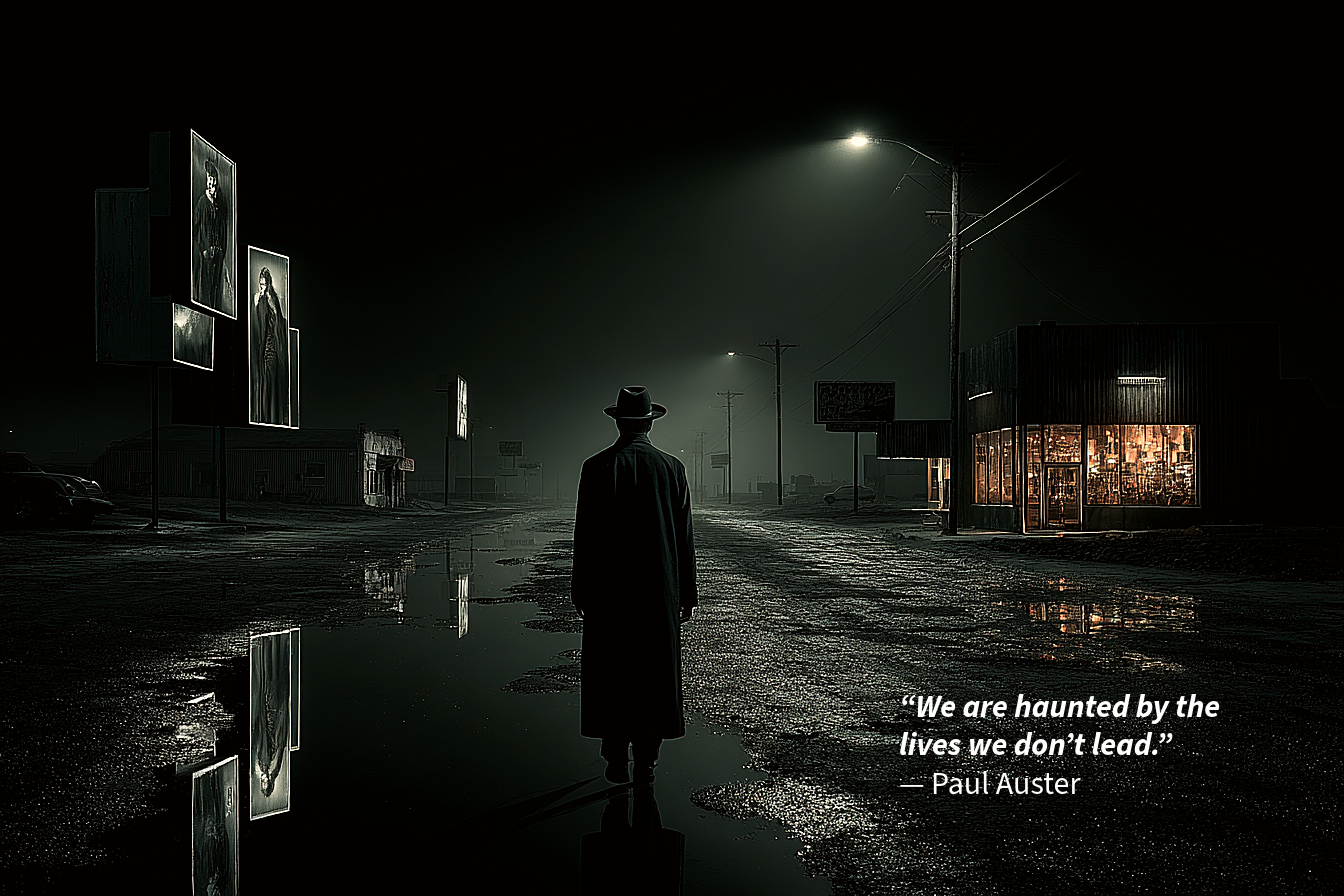
Quote of the Day – 12062025


Personal Reflection:
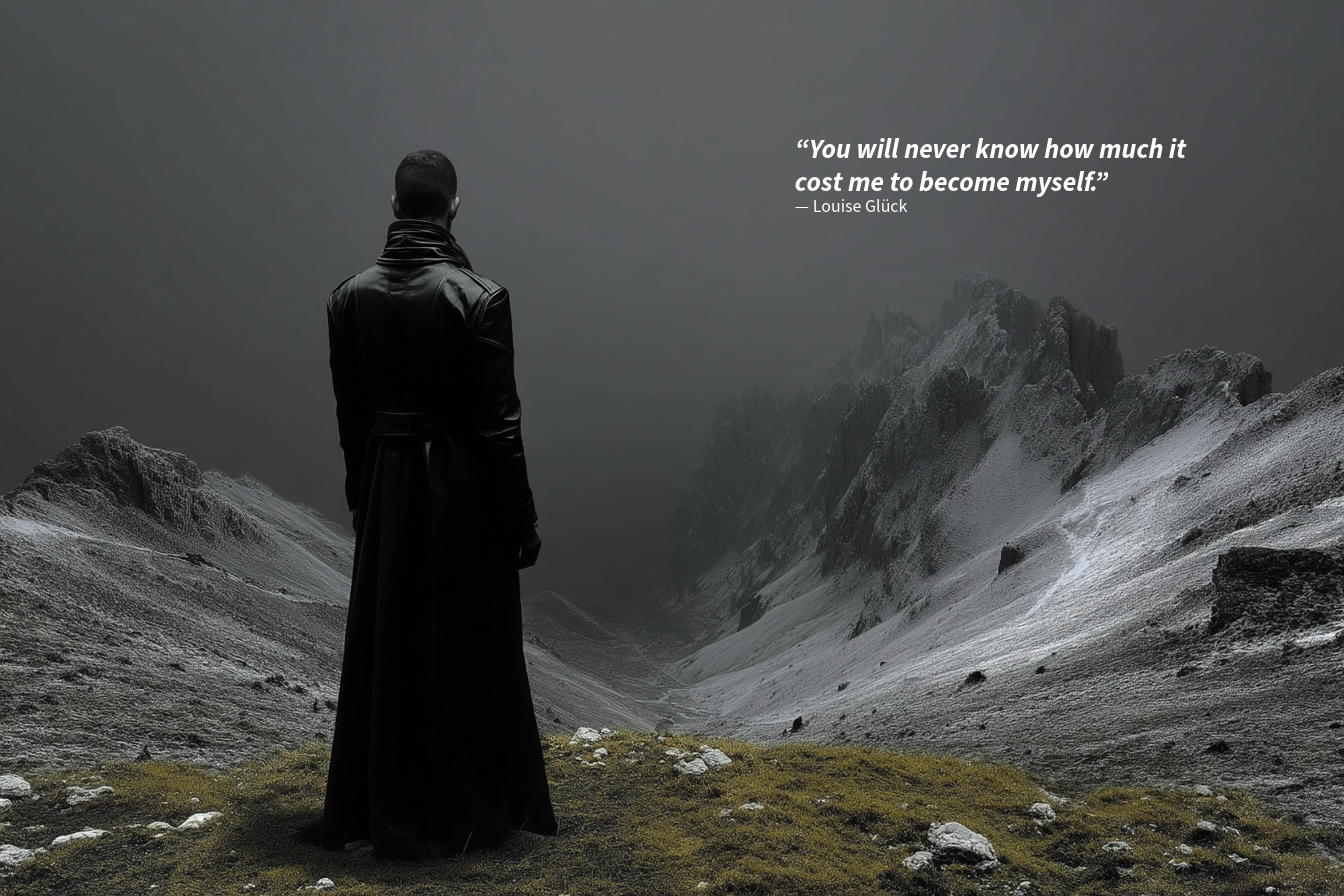
Winter is honest about the cost of things. The cold exposes cracks, the dark lengthens shadows, and even the light arrives at angles that reveal what’s usually hidden. This line drops into that landscape with quiet gravity. Becoming yourself isn’t a clean story or an easy arc. It’s a series of choices no one else fully sees — the losses, the risks, the private battles that never made it into conversation. The world may admire who you are now, but it rarely understands the price you paid to get here.

Because becoming yourself isn’t a single transformation — it’s a slow burn that demands pieces of your former life as fuel. You lose people who preferred the older versions of you. You outgrow dreams you once swore were permanent. You dismantle comforts that kept you small because growth demanded more space than they allowed. And beneath all that change is a truth most people never consider:
evolution is expensive.

Not financially — emotionally.

It takes courage to stand in the wreckage of who you were and still decide to keep moving. It takes clarity to recognize when something familiar has turned into something harmful. And it takes a quiet, relentless kind of strength to admit that becoming yourself means disappointing the expectations others built around your past.

The cost isn’t always visible — but the ache is.

Maybe the point isn’t to be understood — not fully. Maybe the point is to honor the price you paid. To acknowledge the private courage it took to shed your old life and stand in the sharper air of who you are now. Becoming yourself is not about being admired — it’s about being true, even when truth carries weight.

And if the world never knows the cost?

That doesn’t diminish the value.
It means you carried something heavy far enough to step into your own name — and that is enough.


Reflective Prompt:
What part of your becoming has been misunderstood or unseen by others?

Chilled to the Bone and Shadow

Groovin’ with Glyn: Week 1

Air of December by Edie Brickell and the New Bohemians


December is a month of conflicting mindsets. On one hand, people get swept up in the season and start doing “Good Things,” as if generosity is something they dust off once a year like ornaments from the attic. Smiles get bigger. Voices get lighter. Folks try to be kinder, cleaner versions of themselves — at least for a few weeks.

But not everyone rises with the cheer.
Some slip the other way — into that deep, cold room December knows how to unlock. The early darkness settles on their shoulders. The empty chairs at the table get louder. They watch the world light up and feel nothing but the distance.

The weather has changed. We felt the shift back in November — a quiet warning — but December carries the truth in its bones. The calendar hints at winter, but nature tells you outright. Woodchucks waddle with purpose, grabbing whatever scraps they need to seal themselves away. Raccoons run their winter reconnaissance, scouting warm corners with criminal determination.

Across the street, after sundown, the trees start speaking. Leaves rustle in patterns the wind doesn’t claim. Then: silence. Then another rustle — heavier this time — followed by a shadow shifting where it shouldn’t. And there it is:
a raccoon the size of a small planet climbing like gravity signed a waiver. Somehow that bandit-faced acrobat is perched on the roof of a three-story house, staring down like it owns the deed.

Meanwhile, Christmas trees bloom behind neighborhood windows — soft glows behind glass, promises of borrowed joy. For the next thirty days, people will act like saints in training, as if kindness has a seasonal password and only December knows it. Christmas carols creep through grocery aisles. Decorations multiply like mushrooms.

This is precisely why you need a strong music collection.
Survival gear.
Armor.

Because there are only so many versions of “Jingle Bells,” “White Christmas,” “Deck the Halls,” and “Frosty the Snowman” a person can take before something in them snaps.
Though Frosty and Rudolph do have their… alternative interpretations — the ones no one plays around polite company. Those versions? Those have some soul to them.

The lights are up on half the streets by now — fake pine needles, borrowed glow, holiday cheer on rotation. But behind windows, in alleys, in empty rooms and quiet corners, the air tastes different. Thinner. Sharper. More honest.

That’s when I slip on “Air of December.”
Soft bass. Careful voice. Shadows tucked into the chords.
This song doesn’t promise warmth, and it sure as hell doesn’t ask you to smile.
It just says: pay attention.

Edie Brickell & New Bohemians were never a mainstream machine. They had one catchy breakout moment, and most people froze them in that era like a photograph in a drawer. Air of December is one of those tracks even longtime fans forget exists. It’s not whispered in corners or held up as a hidden classic. But for the ones who hear it — really hear it — there’s a quiet respect. A recognition of its weight. Its weather. Its staying power.

The song opens like a door easing into colder air — a small shift in pressure you feel more than hear. The guitar stays clean but unsweet; the bass hums low like a steady engine under the floorboards; the drums hold back, giving the track room to breathe. The band understands restraint — they don’t fill the silence; they let the silence carry meaning. There’s distance in the mix as well, not loneliness but space, like the walls of the room are set a little farther apart than usual. It gives the whole track that “cold air in the next room” feeling — a quiet tension humming beneath the melody.

Brickell’s voice moves with deliberate softness.
She doesn’t chase the melody — she circles it.
As if she is dancing alongside it, doing her best not to disturb the melody, but to belong to it.
It’s intimate without being fragile or overbearing — confessional without wandering into theatrics. It respects the moment, and we appreciate that without even realizing we do.
This is the “close-but-not-too-close” mic technique: you feel near her, but not pulled into her chest. You’re listening in, not being performed to.

Her lyrics drift like breath on cold glass — shapes that form, fade, and return slightly altered.
Brickell doesn’t write scenes; she writes impressions.
Smudges.
Moments that land in your body long before your mind explains them.
That’s December — not revelations, just quiet truths catching you in the corner of your eye.

There’s also the emotional sleight of hand: a major-key framework phrased with minor-key honesty. Hopeful chords, weary inflections. Warm instrumentation, cool delivery. A contradiction — just like the month. This isn’t a heartbreak song or a holiday anthem. It’s a temperature. A walking pace. The sound of someone thinking as the sun drops at 4:30 PM.

Some songs become seasonal without meaning to — not because they mention snow or nostalgia, but because they inhabit the emotional weather perfectly.
This one does.

It sounds like a room after the noise has died down and the truth hasn’t found its words yet.
It sounds like someone sitting beside you, matching your breathing.
It sounds like December without the costume.

Most December songs want to wrap you in tinsel and memory.
This one just sits beside you.
Doesn’t judge.
Doesn’t push.
Just listens.

People claim they want authenticity in December — honesty, depth, meaning.
They don’t.
They want distraction wrapped in nostalgia.
They want songs about snow so they don’t have to face the winter inside themselves.

“Air of December” refuses that bargain.
It listens — and listening is dangerous this month.

Give someone a quiet December track and half of them will panic.
They’ll change it before the first truth lands.
Stillness has a way of turning the room into a mirror.

Most December listeners don’t want the real temperature.
They want the thermostat set to everything’s fine.
But winter doesn’t trade in lies.
And neither does this track.

Yet there’s a strange comfort in that kind of honesty.
The song doesn’t shield you from the cold — it invites you into it.
It says, look around, breathe, the truths you’ve been dodging all year are rising — and you’re strong enough now to meet them.

December strips everything down to bone and breath.
This track reminds you that what remains is still yours.

That Grown Folk Shit

Song Lyric Sunday • Theme: Rivers, Streams, Creeks, Brooks

We got those Sunday Jazz Vibes going. It’s never intentional, but it’s always right. The slow grooves of Grover Washington Jr. set the tone before the coffee even cools. The things that man does with a sax ought to be illegal in a few states.

“East River Drive” rolls in like a slow-moving tide — smooth on the surface, dangerous underneath. It’s one of those tracks that pretends to be background sound until you realize you’ve stopped whatever you were doing just to follow the way he bends a note. That sly confidence, that river-road swagger. The rhythm section lays back like it’s got nowhere to be, while Grover glides above it all, mapping the emotional coastline of a Sunday morning.

A subtle deep groove — the kind that whispers instead of shouts, trusting you’ll lean in.

And somewhere between those warm horn lines and the long exhale of morning, my mind drifted downstream. That’s when the tonal shift hit — jarring in the best possible way.

Sliding from Grover into Melody Gardot is like stepping out of warm light into cool river air. Grover softens the room; Gardot sharpens it. His sax gives you glide. Her voice gives you gravity. With Grover, the river moves. With Gardot, the river speaks.

She pulls you in with that first line:
“Love me like a river does.”

On paper, it’s simple.
In her mouth, it’s a philosophy.

The river isn’t passion.
It’s not urgency.
It’s not the cinematic love-story nonsense we were raised on.

A river flows.
A river returns.
A river shapes the land without ever raising its voice.

She’s not asking for fireworks.
She’s asking for endurance.

Then the quiet boundary:
“Baby don’t rush, you’re no waterfall.”

That’s the deal-breaker disguised as tenderness.
The waterfall is the crash, the spectacle, the “falling in love” that feels good until you’re pulling yourself out of the wreckage.

She wants none of that.

Her voice is soft, but the boundaries are steel.

Strip away the romance of rivers and waterfalls and what she’s really saying is:

“If you’re going to love me, do it in a way that won’t break me.”

That’s not fear.
That’s experience.

The next verse shifts from river to sea — steady flow to swirling depth. Not for drama. For honesty. Intimacy always disorients you a little.

But even in that turbulence, she returns to her anchor: no rushing, no crashing, no spectacle. Even the sea has tides. Even passion needs rhythm.

Then the lens widens — earth, sky, rotation, gravity. Love as cycle, not event. Love that keeps you grounded without pinning you down.

And then back to the whisper:
“Love me, that is all.”

Simple words.
Colossal meaning.

What I love about this track is that it refuses to lie.

It doesn’t speak of love the way movies do — all gush, sparks, and declarations nobody could sustain after the credits roll. Gardot isn’t chasing fireworks. She’s not interested in romance that burns hot and disappears just as fast.

She’s talking about grown-folk love.

The kind that shows up.
The kind that lasts.
The kind built on years, not moments.

Her metaphors — river, sea, earth — aren’t poetic decoration. They’re durability tests:

Can your love flow?
Can it deepen?
Can it cycle?
Can it stay?

She’s asking for a love that tends a lifetime, not a scene. A love shaped by presence, not passion; by commitment, not chaos.

The kind you don’t stumble into.
The kind you earn.

And maybe that’s why this one gets me every time — there’s a difference between love that excites you and love that holds you. I’ve lived long enough to know which one matters more.

And let me say this plainly: this track comes from Melody Gardot’s debut album. Worrisome Heart was her first offering to the world, and I’ve rarely seen that kind of sophistication and grace appear so fully formed on a debut. Most artists spend years trying to grow into this kind of emotional control — the restraint, the nuance, the quiet authority. Gardot walked in with it from day one. No hesitation. No warm-up laps. Just a young artist already carrying the poise of someone who’s lived a lifetime and managed to distill it into song. Truly a marvel.

Before you watch the performance below, a quick note:
This reflection is based on the studio version of “Love Me Like a River Does,” from Worrisome Heart — the quiet, intimate rendition where she whispers the philosophy of grown-folk love straight into your chest. But in the live version you’re about to hear, she opens with something unexpected: the first verse of Nina Simone’s “Don’t Explain.” It’s a deliberate nod — smoky, weary, full of Simone’s emotional steel — and Gardot weaves it in so seamlessly you barely notice the transition until it’s done. One moment you’re in Nina’s world of bruised truth; the next, Gardot slips into her own song like it was always meant to follow. It turns the piece from a gentle plea into something closer to a declaration.

What makes the song hit is how Gardot never pushes. The arrangement stays minimal. The room stays dim. Every breath has space around it.

It’s intimacy without intrusion.
Truth without theater.

A quiet manifesto from someone who knows the cost of loving too fast and too violently.

She’s asking for love like water — not the kind that drowns you, but the kind that carries you and keeps coming back.

A grown-folk kind of love.
A river kind of love.
The kind that lasts because two people choose the flow over the fall.

And maybe that’s the real Sunday lesson — some songs don’t need volume to be heard. Some just need stillness.

Quote of the Day – 11192025


Personal Reflection

November has a way of showing you what still weighs on you — the half-finished things, the quiet regrets, the truths you’ve been circling all year without naming. The air feels thinner, the days shorter, the world stripped to bone. And somewhere in that bare landscape, you start to notice what you’ve been carrying without meaning to. This quote steps right into that moment. There are burdens you can’t hand off, no matter how much you want to. And there are truths you can’t ignore, no matter how tired your spirit feels. November doesn’t care about the story you told yourself in June. It cares about what’s still in your hands now.

But this is the month when the hidden weight starts talking back.
Not loudly — that would almost be merciful — but in a steady, relentless whisper that threads itself into every quiet space. The things you avoided start showing teeth. The versions of yourself you grew out of linger like ghosts in their old rooms. And the silence you once thought you needed becomes a mirror you can’t turn away from.

This is the part no one warns you about: becoming often means letting go of the lies that kept you upright. The narratives that softened the edges. The masks you perfected. November strips those away with the same casual certainty that trees drop their leaves. And in the cold clarity that follows, you’re left facing truths that aren’t gentle. The ones too heavy to carry gracefully, too essential to abandon without losing your shape.

Some truths don’t break you.
They reveal you.

Maybe that’s November’s gift — not clarity, but honesty. Not resolution, but recognition.
This month doesn’t ask you to rise.
It asks you to stay.
To sit with what’s real.
To hold your truth without rushing to pretty it up or make it palatable.

Becoming isn’t a transformation montage. It’s the slow, steady acceptance of who you’ve been, who you are, and who you’re trying to grow into — even when those identities don’t agree. It’s learning to carry what matters, set down what doesn’t, and live with the ache of not always knowing the difference.

Maybe today the victory isn’t lightness.
Maybe it’s the willingness to stop pretending the weight isn’t there — and the quiet courage it takes not to look away.


Reflective Prompt:

What truth have you carried all year that still refuses to be put down?

Tap, tap, tap … Follow me

Groovin’ with Glyn: November, Week 1

November doesn’t crash in. It slips under the doorframe like it owns the place, tracking in the smell of rain and cold metal. Children rubbing their bellies because they have OD’d on candy. I miss those days. November comes as if it knows we need to exhale. Not long, just a little bit. Something quick to recharge for the next round of madness.

There’s a moment in early November when the world gets quiet enough that you actually hear yourself think — and sometimes you wish you hadn’t. The wind carries that familiar bite as the last of the fall aromas slide along with it. Then something else rides in on the shift — soft, strange, a whisper you almost mistake for memory. You turn your head without meaning to, unsure if you heard anything at all. The wind changes again, closer this time, warm against your ear as it murmurs, “Wake up.”

That’s the space “Wake Up” lives in.

A small Scottish band barely scratching 30K streams, November Lights shouldn’t hit this hard on paper. But the track feels like standing just outside your own life, watching the windows fog over while you debate going back inside. Not regret or clarity. More like the low buzz of a lightbulb that isn’t sure if it wants to live or die.

The vocals don’t beg. They ask. Quietly. Like someone nudging you in the dark, not to startle you, but to keep you from drifting too far away. And the production carries that nocturnal haze — the kind that tells you somebody sat alone longer than they meant to, letting reverb fill the silence they didn’t want to face.

Beneath it all is a steady pulse, the kind that hints at recognition rather than revelation. November has a talent for that — it doesn’t hand you answers; it hands you a mirror. The cold sharpens edges you swore were already smooth. The light changes, and suddenly everything looks closer to the truth.

The Honest Take

This is a quietly beautiful track. Not earth-shattering. Not one that guts you. Not every song is meant to gut you, but all of them should resonate with you on some level. Not every listener — just the ones the track was meant for. Something you won’t know until the needle touches the vinyl. Some songs don’t raise their voice; they settle in beside you and wait. “Wake Up” is exactly that — understated, precise, intentional.

The Devil’s Voice in the Back of the Room

Look, if you’re waiting for grit, you won’t find it here.
If you want broken glass and a voice that sounds like it gargled the night, keep moving.
And yes — someone out there will dismiss this as too clean, too polished, too “indie boy with a synth pad.”

Let them.

Not every November needs a fist.
Some start with a shoulder tap, a soft reminder you can’t ignore.
Besides, honesty hits harder than distortion when you hear it at the right hour.

The Lift — Why It Belongs Here

Because November is a month with its own kind of mercy.
Not loud.
Not generous.
But real.

It doesn’t demand.
It nudges.
Sometimes it’s a hand on your shoulder saying, “You’re slipping. Come back to yourself.”

This song is that hand.
The hush before the confession.
The breath before the descent.
The spark before the month settles in.

Week 1 shouldn’t break you.
It should open the door.

“Wake Up” does that.
Softly.
Deliberately.
Without apology.

November is here.
The lights are on.
Step inside — and enjoy this breath, because winter is coming.


Quote of the Day – 11182025


Personal Reflection

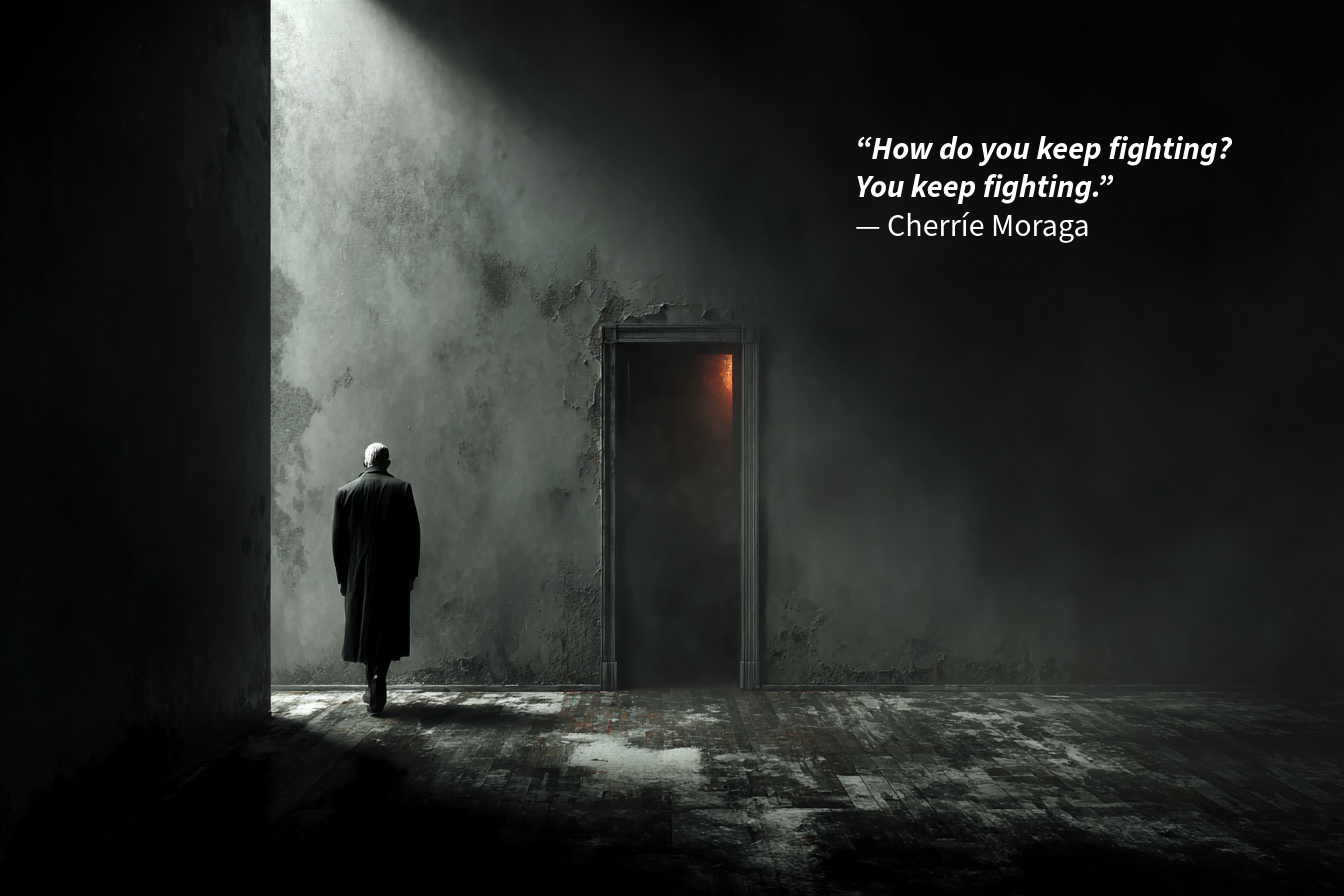
Some days there’s no revelation waiting for you. No clarity. No second wind. Just the simple, unglamorous choice to keep moving in the direction you said mattered. The world keeps insisting everything should come wrapped in a pretty bow — clean lines, smooth edges, no proof of the struggle it took to get there. But look at any real artisan. Their world is chaos until the work is done. Sawdust choking the air, paint bleeding onto the floor, bruised knuckles, tools scattered like a crime scene. Creation is never tidy. It’s loud. It’s stubborn. It demands a piece of you. And the outcome only becomes breathtaking because you walked through the mess and didn’t flinch.

We love to romanticize perseverance — the comeback story, the clean arc, the triumphant soundtrack. But most real fighting looks nothing like that. It’s waking up already exhausted. It’s dragging old fears behind you like unwilling dogs, snarling and snapping with every step. It’s pushing forward even when the only thing you’re sure of is the ache settling somewhere between your ribs and your resolve. And buried underneath it all is the truth you don’t say out loud: stopping feels too close to disappearing. And you’ve disappeared enough times already.

Maybe that’s the lesson today. You don’t have to feel brave to keep going. You don’t need inspiration or momentum or some sudden rush of conviction. You just keep moving. Step by stubborn step. Breath by stubborn breath. And somewhere in that slow crawl forward, you realize the fight was never about winning — it was about refusing to vanish from your own life. That quiet persistence becomes its own kind of craft. Its own kind of art.


Reflective Prompt

Where are you still fighting, even quietly, even without applause?

The Other Woman Was My Wife

What I Learned Too Late and the Two Songs That Explained It


Song Lyric Sunday – Nina Simone, “The Other Woman”

My wife knew more about music than any woman I’ve ever met outside my mother. She couldn’t name artists, albums, or genres. None of that mattered. She just knew what was good. And the shit was spooky.

I learned this slowly, almost reluctantly, because I kept trying to talk to her about favorite artists. She never played that game. Her ear didn’t care about categories. Her heart didn’t negotiate with labels.

The first time she ever caught me off guard was the day I walked in and heard “Changes” by Black Sabbath drifting through the house.
Sabbath.
Black Sabbath.

Not a riff, not a hit — the one track that sounded like someone bottled regret.

It wasn’t that she was listening to Sabbath. It was that she somehow found the exact track I didn’t know I needed. And she did it without ever talking about music the way I did.

That quiet instinct — that sixth sense she carried — is what led her to two Nina Simone songs she treated like confessions. When she listened to Nina, the door stayed closed, the lamp stayed low, and you stayed out unless you were ready to walk into something fragile.

The smoke curled up from the cigarette balanced between her fingers, her hand resting beside a freshly cleaned ashtray. Hazelnut coffee filled the room, and Albert King was somewhere in the background complaining about the rain. I kissed her out of habit and apology — I stank to high heaven after a long day.

While I cleaned up, the music drifted from one blues track to another. I thought about grabbing a nap before the girls came home, when a voice cut through everything — soft, measured, heavy.

…wait. Is that Nina?

Next thing I knew, I was back at the table with a fresh cup of coffee. She didn’t look up, just nodded.

“I figured you’d get a nap before the girls got home,” she said.

I smiled into my cup.
This is why I married her — she got me.
She married me because I could reach the top shelf.
Balance in all things.

She slid the CD case to me and tapped a single track:

“The Other Woman.”

I replayed it a few times — autopsy mode — until she reached over and rested her hand on mine.

“Let it play, baby,” she said softly.

So I did.

“The Other Woman” isn’t loud or dramatic. It’s a truth-teller — the kind of song that doesn’t raise its voice because it doesn’t have to. Nina sings it low and steady, like someone who’s already made peace with the ache she’s naming. The piano stays half-lit, the bass moves like it’s carrying news no one wants to hear, and nothing in the arrangement tries to comfort you.

That’s what hooked my wife.
Not the lyrics.
Not the storyline.
The tone.

The way Nina delivered loneliness without apology.
The way she stood inside the ache without flinching.

My wife knew that tone.
She knew what it felt like to love a man who was half hers and half claimed by something bigger and colder than home.
“The Other Woman” wasn’t a song about cheating to her; it was the shape of a loneliness she never put into words — but Nina named it clean.

Back then, I thought it was a strange song for her to be listening to. I wasn’t stepping out. I felt the loneliness in Nina’s voice, but I didn’t understand the source. Maybe I wasn’t meant to — not then.

Years later, when she got sick — the kind of sick that turns a hospital room into a country of its own — I sat beside her bed with Nina in my headphones while I tried to write. And that’s when it hit me.

My wife knew what it felt like to be the other woman.

Not because of infidelity.
Not because of anything I did wrong.
But because of devotion and duty — the two forces that built our life and carved holes in it at the same time.

She loved a man claimed by an oath he made before he ever met her.
A man whose phone could ring at 2:17 a.m.
A man who packed on short notice and left with even less.

We preached “Family First.”
Said it often.
Said it like it was gospel.

But the truth — the one Nina kept whispering — was “Mission First.”


If “The Other Woman” named the loneliness, then “Tell Me More and Then Some” named the hunger beneath it.

Not desire — presence.
Not passion — time.
Nina sings that second track like a woman reaching out in the dark, asking for just a little more of a man she barely gets to keep.

For a military spouse, that’s the whole gospel:
the hours rationed out,
the moments cut short,
the days borrowed by orders.

You love the man, but the world keeps the schedule.

My wife never said she needed more of me — she never would have — but Nina said it for her.
Together, those two songs held the architecture of her heart:
the ache of being second and the quiet hope that maybe she could still have a little more time before the world claimed me again.

They lived on the same compilation she brought home when the girls were little — After Hours, still my favorite Nina collection. Maybe because it brought her voice into our home. Or maybe because it brought her truth into mine.

Those two tracks weren’t random choices.

They were the language she used to hold the parts of our life that the military kept taking.
The ache she carried quietly.
The hunger she never burdened me with.

Even now, as I write this, another Nina track slips in — “Ain’t No Use.” I didn’t cue it. Didn’t expect it. But there it is, like it wandered in to confirm every word on this page.

Nina always did that in our home — show up when truth was ready.

“The Other Woman” is my official Song Lyric Sunday entry because it appears on the 1969 compilation The Best of Nina Simone, one of her earliest and most enduring collections.

But really?
I’m choosing it because my wife understood this song long before I did. She lived the ache of being second to a calling she never chose, with a grace I still don’t know how to name.

Some songs don’t remind you of a person —
they finish the conversations you didn’t know you were having while they were still here.

This is one of those songs.

Let it play, baby.


Author’s Note:
This piece isn’t about infidelity. It’s about the complicated places where love and duty overlap, and the quiet truths that grow in the spaces no one talks about. My wife and I were both Nina Simone fans, though she understood Nina in ways I didn’t grasp until much later. The songs mentioned here — “The Other Woman” and “Tell Me More and Then Some” — were part of her private rituals, the moments she used to hold what our life couldn’t always name. This essay is my way of honoring the weight she carried with grace. If any part of it resonates with you, let it. That’s Nina’s doing, not mine.


Quote of the Day – 11172025


Personal Reflection:

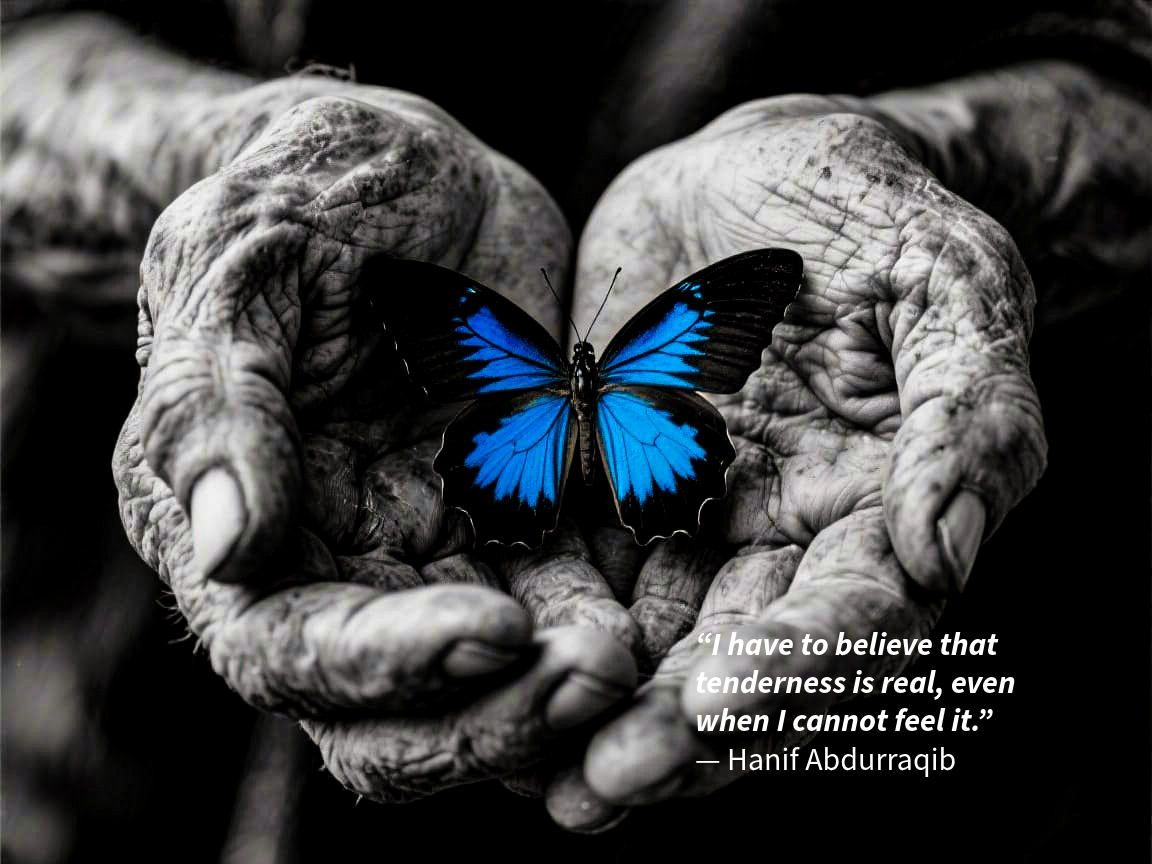
Some mornings you wake up armored without even trying. Shoulders tight. Voice low. Every small kindness feels like something meant for someone else. Perhaps it was a bad dream, or a fragment of a memory you thought was buried, rising just enough to shift the weight of the day before it even begins. This line lands right there—in that gap between what your heart remembers and what your body refuses to trust. Believing in tenderness on the days you can’t feel it isn’t delusion. It’s survival.

But let’s not pretend it’s easy. Disappointment builds scar tissue. Grief calcifies. Some hurts become fossils—old pain preserved in perfect detail, untouched but never truly gone. And some wounds never heal properly; they knit themselves together in crooked ways, reminding you that survival doesn’t always mean restoration. It’s hard to reach for softness when life has taught you to brace, to expect the hit, to map the exits before the door even closes behind you. Yet becoming requires a dangerous kind of courage: letting the walls down a fraction, enough for light to get in even if you’re still flinching. Tenderness is not weakness—it’s risk. And risk is where transformation waits.

Maybe today isn’t about feeling tenderness, but acknowledging the stubborn belief that it exists. And stubborn in the real sense—not noble or poetic, but the kind of hold you keep because letting go feels like losing one more piece of hope you can’t afford to misplace. A small, quiet truth you carry like a pilot light. Even when the world is loud. Even when your own heart feels far away. Becoming yourself means making room for what you cannot yet hold. Letting one soft thing survive the hard days. Trusting that tenderness, once allowed, knows how to find its way back.


Reflective Prompt:
Where in your life have you mistaken protection for absence?

Quote of the Day – 11102025


Personal Reflection:
Regret has a peculiar way of lingering — not loud, but constant, like background static. You can’t touch it, but it hums underneath the day. Auster’s words cut close: We are haunted by the lives we don’t lead. The choices we didn’t make, the versions of ourselves we left hanging in the doorway. We tell ourselves we’re fine with how things turned out, but every now and then, something stirs — a half-remembered song, a familiar street, a name we don’t say out loud — and we feel the ghost move again.

We don’t like to admit it, but we build entire lives out of what we didn’t choose. Every decision erases a hundred possibilities, and those absences don’t disappear — they follow quietly behind us, a shadow of what might have been. Maybe that’s what nostalgia really is — the ache of parallel versions of ourselves still trying to be born.

I think about the person I might’ve become if I’d stayed, if I’d gone, if I’d said yes instead of no. But every alternate life has its own price tag. Even the ones that look golden from this side of the glass would’ve demanded a different loss. Maybe the haunting isn’t punishment — maybe it’s memory’s way of reminding us that every path costs something.

And sometimes, the hardest ghosts to face aren’t the lives we never lived — they’re the parts of ourselves we abandoned along the way. The ones we outgrew too fast. The ones we silenced for approval. The ones we dismissed as weakness when they were just unguarded.

We are all haunted, but maybe haunting isn’t a curse — maybe it’s a form of tenderness. Proof that we’ve imagined more than we could live. Proof that somewhere inside us still believes in what’s possible. The trick is not to banish those ghosts, but to listen to what they’re trying to say: that life is not a single straight line, but a chorus of unfinished songs.

You don’t have to live every life to be whole. You just have to make peace with the ones that never happened — to thank them for showing you who you could have been, and then keep walking toward who you still might become.


Reflective Prompt:
What unlived version of yourself still lingers at the edges — and what might happen if you stopped mourning them and started listening to what they’re trying to tell you?

Quote of the Day – 11022025


Personal Reflection

Cohen understood something most people spend a lifetime avoiding — that joy and sorrow aren’t opposites, they’re partners in the same waltz. The beauty that moves us to tears is the same beauty that reminds us we’re temporary. The song doesn’t ask for your permission to feel; it simply reaches into the softest part of you and starts to play what’s already there.

We chase peace as if it means never aching again, but music teaches a different kind of peace — the kind that coexists with longing. You can close your eyes and still see everything you’ve lost, still feel the echoes of what once mattered. But in that ache, something holy hums. It’s the reminder that sorrow isn’t a wound to be healed; it’s a place the light passes through.

There’s a moment — quiet, heavy, sacred — when the melody hits something you didn’t know was waiting. Maybe that’s the soul recognizing itself. Maybe that’s what Cohen meant when he said the spirit soared. Not upward, but inward — toward the place where pain and beauty stop competing and begin to hold hands.

That’s what music does. It doesn’t cure the ache; it makes it sing.


Reflective Prompt

What song still finds the version of you you thought had disappeared?
When was the last time you let the melody hurt — and thanked it for remembering you?

The Moment Was Fluid, Until It Wasn’t

What one Sabbath song taught me about adrenaline, fear, and the silence that follows the hit.

I wasn’t planning to write about Ozzy Osbourne — I had a ticket in hand to see Earth, Wind & Fire. My mind was elsewhere — groove, joy, rhythm, nostalgia. And then the news came through: Ozzy was gone.

I’m not a diehard fan. I didn’t grow up in the church of Sabbath. But one track — one slow, heavy track that felt like it had something to say long after it stopped playing — stayed with me. It wasn’t a hit. It wasn’t a song anyone quoted. But I’ve carried it. And maybe that’s the thing about deep cuts — they don’t always connect when the world is loud. They wait.

For me, that song was “Hand of Doom.”
Not because it rocked.
Because it spoke — in the language of things we’re not supposed to say out loud. And as someone who’s walked through the slow churn of fear, of silence, of control disguised as coping… I heard it for what it was.

Not a story. Not a warning.
A truth.


Paranoid is the album everyone thinks they know. “War Pigs,” “Iron Man,” “Paranoid” — they’ve been immortalized on T-shirts, classic rock stations, and generations of guitar-store riff flexes. But buried in the middle of Side B is a track that speaks quieter and hits harder than all of them: Hand of Doom.

It’s not catchy. It doesn’t try to be. It starts slow, like a body being dragged. Geezer’s bassline feels surgical — steady, ominous, too calm for what’s coming. Then the lyrics begin, and you realize this isn’t a protest song. It’s a field report. A soldier comes back from war. But the war comes back with him.

“You push the needle in…”

There’s no glamor. No metaphor. Just addiction, disillusionment, and the long tail of trauma no one wants to claim responsibility for. Sabbath wasn’t just telling a story — they were holding up a mirror to a nation that fed its young to the fire, then blamed them when they couldn’t come home whole.

A lot of people describe the opening of “Hand of Doom” as a funeral. I’ve seen it written that way dozens of times. But as someone who’s stood in the stillness before something breaks loose, I hear it differently. That intro isn’t mourning. It’s anticipation. It’s the body preparing itself for impact before the mind catches up. It’s the weight of knowing something’s coming — and not being sure whether it’s physical, mental, or spiritual. We all have our own versions of that moment. Some of us walk into it in uniform. Some of us find it alone in a room at 3 a.m. But the question remains: when the unknown finally steps out of the shadows, will we be ready?

Now — with everything we know about PTSD, opioids, and institutional failure — this song still rarely gets mentioned. It makes people uncomfortable. That’s precisely why it matters.

It didn’t scare me as a kid, not like horror movies or ghost stories. It scared me because I could feel the silence around it, like everyone heard it and turned the volume down just a little too fast. Like it was saying something we weren’t supposed to know yet. Or worse — something we already knew, but had no idea how to answer.

When the tempo kicks up, the song finally gets its legs, but it doesn’t feel like freedom. It feels like adrenaline. And for me, it brings back that wired moment just before everything breaks loose. I remember being trained not to let fear take over. Taught that fear was the enemy. But no one tells you the truth: you can’t outrun fear. It doesn’t dissipate — it embeds. The real skill isn’t conquering it — it’s learning how to use it without letting it use you. This part of the song brings me back to the early days, before I learned that lesson. When your heart is pounding, your vision sharpens, and the fight-or-flight reflex kicks in so hard it makes your teeth ache. Everyone talks about those two instincts — but there’s a third no one wants to admit: freeze. And those were the ones that really got to me. The ones who froze. Because when that happened, it didn’t just endanger them — it split your focus. You had to break off from the target, from the objective, and turn toward someone whose body had already left the mission. And that… that’s its own kind of helpless.

There’s a brief pause in the song — a flash of return to the original tempo — and for me, it’s always felt like a breath that never quite makes it to your lungs. It’s not relief. It’s the moment before the shit gets real. It’s that split-second when you know the break is coming, but it hasn’t hit yet. The sound slows, but the tension tightens. I’ve lived that second. We all have, in our own ways. Whether it was the phone call, the sudden detour, the warning tone in someone’s voice — that moment before impact sticks with you. It’s what lets you feel the hit coming before it lands. And that’s what Sabbath nailed here: not just the crash, but the foreknowledge of it. The second your system knows everything’s about to change, but there’s nothing you can do except feel the bottom drop.

Then there’s the damn groove — that stretch of rhythm in the song that doesn’t feel panicked or chaotic. It feels locked in. And for those of us who made it to the other side of the moment, that groove is familiar. It’s the rhythm you step into when you’re fully immersed, taking care of business, senses dialed all the way up. But it’s not a jerking motion. You’re not holding your breath. You’re fluid. You stop trying to control the moment — you become part of it. You become one with it.

And just like that section of the track, the feeling barely lasts — so fleeting you question whether it even happened at all. It’s a kind of cognitive dissonance — a mental vertigo that never quite resolves. It’s like a strange trinity: us, them, and the thing we created in between. That thing… was doom. And in that moment, we were its hands.

“Hand of Doom” wasn’t a warning. It was a receipt.

And when you carry that receipt long enough, you stop asking for change.


Author’s Note: This piece was written as part of Jim Adams’ Song Lyric Sunday. Each week, contributors reflect on songs tied to a given theme. This week’s prompt led me here — to a track I hadn’t planned to write about, but couldn’t ignore.

Listening My Way Out

A reflection on what I hear when I write.

Daily writing prompt
What do you listen to while you work?

It depends on the work. And, if I’m honest, the version of me doing it.

If I’m handling logistics—email chains, platform fixes, all the invisible gears of the MKU—I’ll throw on a podcast or an audiobook. Something with steady cadence. Human voices filling the space so I don’t have to. It’s functional. Grounding. A distraction that still lets me move forward.

But when I’m writing—when the words actually matter—I need music. Not background noise. Not ambiance. Music that moves something.

There’s a point I hit when the doubt creeps in, when the old story shows up: You’re not good enough. You’re not ready. You don’t have anything left to say. And that’s when I reach for the headphones.

Because music gets me past that wall. Certain songs act like a key—one turn, and I’m not in the room anymore. I’m somewhere quieter, older, deeper. Below the part of me that edits, or performs, or tries to be clever. Music lets me slip under all that. It gives me access to the version of me that remembers things I haven’t lived yet. The version that trusts.

Writing becomes less about expression and more about excavation. I’m not inventing—I’m uncovering. Music helps me remember where to dig.

And when it’s really working—when the song hits just right—I’m not working at all. I’m listening.

To the story.
To myself.
To whatever’s been waiting.

So what do I listen to while I work?

Whatever helps me get out of my own way.

Late Night Grooves # 161

WHOT Episode 161 – “Best Direction” by Zig Mentality

Hosted by Mangus Khan

[No fade-in. Just impact. The drums kick like defibrillators. Guitars fuzz and slice. The voice? Controlled chaos.]

“WHOT.
Late Night Grooves.

I’m Mangus Khan.

And tonight—
We’re not looking for the right answer.
We’re just calling bullsht on all the wrong ones.*

Zig Mentality – “Best Direction.”

This track is the sound of pressure.

Not the kind that breaks you.

The kind that twists you into someone you barely recognize.

“Don’t know if this is the best direction…”

That line?
That’s not indecision.

That’s survival in progress.

Zig Mentality isn’t asking for guidance.

They’re screaming through the static.

They’re ripping through expectations, projections, corrections, selections.

Everyone wants you to be something.

This track says be something real.

Even if it’s loud.
Even if it’s messy.
Even if it scares people who only know how to follow maps.

The guitars don’t resolve.
The vocals barely hold on.

Because this isn’t a message.

It’s a moment.

And sometimes, that’s enough.

WHOT doesn’t play just to soothe.

We play what it feels like inside.

Tonight, it sounds like Zig Mentality.

Episode 161.
Best Direction.

I’m Mangus Khan—
Still walking.
Still questioning.
Still here.


Stripped Down and Soul-Deep: Ray LaMontagne’s Take on ‘Crazy’

TUNAGE – SLS

How an acoustic guitar and a raspy voice turned a genre-bending hit into something quietly devastating.

I’ve always been a fan of the acoustic guitar. In fact, it’s my favorite style. I’ve always felt that if an artist can make the acoustic guitar speak, then they’re really talented. There’s something about that sound—it adds a layer to the music that gets lost in the distortion of its electric counterpart. It’s honest. Exposed. No tricks to hide behind.

I first heard Ray LaMontagne’s Gossip in the Grain and was hooked immediately. That album had a mood I couldn’t shake—soulful, grounded, a little haunted. So when I found out he covered “Crazy,” I got excited. I wondered what he’d bring to it. I already knew it would be something special.

Not just because of Ray’s style, but because “Crazy” already lives in this weird, beautiful space between genres. I love it when songs do that. Even more, I love when a cover respects the original but still brings a fresh voice to it—makes it something completely different, without losing what made it great in the first place.

That’s exactly what Ray does here.

Yes, it’s the same “Crazy” that Gnarls Barkley made famous—but this isn’t just an acoustic remix. This is a complete reinvention. No beats. No polish. Just Ray, his guitar, and that worn, aching voice of his. And somehow, it feels bigger because it’s so stripped down.

He slows the whole thing down, stretches out the space between lines, and sings like he’s living every word. There’s one moment—when he softly asks, “Does that make me crazy?”—that just lingers in the air. It’s not a performance; it’s a question he doesn’t know the answer to.

Where the original had swagger, this version has weight. It feels like someone sorting through their own history, looking back on a breakdown that already happened. It’s quiet. It’s tired. And it hits like truth.

I’ve heard a lot of covers of this song, but none of them hit like this. No over-singing. No flash. Just soul. The acoustic guitar does all the emotional heavy lifting—carrying the tension, the silence, and everything in between.

If you’re into music that guts you in the gentlest way, this one’s for you. Just press play, close your eyes, and let it wreck you a little.


The Ones You Almost Miss

TUNAGE – MMB

I’ll be honest—I almost forgot about July for Kings. Not because they weren’t good (they were damn good), but because the early 2000s alt-rock scene was a crowded highway of hopefuls with radio-friendly grit. Between your Trapt and Trustcompany, Staind and Saliva, it was easy to miss the ones who weren’t screaming at you, but whispering, singing, aching.

July for Kings never blew the doors off the house—they lit a candle in the corner and let you sit with it.

Originally from Middletown, Ohio, July for Kings (formerly known as “Vice”) emerged with the kind of sincerity that was rare for the post-grunge era. Signed to MCA Records, they released their major-label debut, Swim, in 2002, produced by Blumpy (of Nine Inch Nails and Filter fame). Fronted by Joe Hedges, the band didn’t chase chart-topping bangers—they aimed for emotional resonance. They didn’t want the room to jump. They wanted the quiet ones in the back to feel something.

Tucked quietly in the back half of Swim, “Without Wings” is the kind of track you don’t fully appreciate until life slaps you around a bit. It’s not flashy. It’s not trying to be your anthem. But if you’ve ever sat in the middle of a storm you didn’t ask for—emotional, mental, or otherwise—this song knows you.

The intro is soft, a little echoey, almost ambient. Joe’s voice doesn’t come in with bravado. It comes in like someone who’s been quiet for a while and finally found the courage to speak. The lyrics?

“I fell too far, and the ground was hard… I tried to fly without wings.”

That line hits different when you’ve lived a little. When you’ve pushed too far, too fast—maybe to prove something, maybe just to feel alive—and came crashing back down. The song doesn’t judge you for it. It meets you there. It sits with you.

And that’s what makes this track so potent. Where some bands explode into their pain, July for Kings simmers. The tension builds, but it never becomes melodrama. The guitar doesn’t wait; it mourns. The drums don’t march—they pulse like a heartbeat just trying to steady itself again. It’s a reminder that not everything profound has to be loud. Sometimes the real stuff whispers.

Here’s the thing: If I’d gone with my first instinct— “meh, I don’t remember these guys, probably not worth digging into”—I would’ve missed this. Again. And that right there is the sneaky brilliance of music and life: the good stuff often lives just beneath the noise.

It’s easy to dismiss a band because they didn’t make the charts. Or skip a track because it isn’t on the playlist someone curated for you. But if you stay open—if you listen like you’re still learning, you start to find little truths tucked in the folds of forgotten records.

“Without Wings” is one of those truths. And maybe, just maybe, there’s a parallel there: how many people, ideas, places, or moments have we passed over because we didn’t give them the time to speak?

Music, like life, rewards the patient and the curious. Stay open. You never know what you might find.

If “Without Wings” landed with you, don’t stop there. July for Kings may have only brushed against the mainstream, but their catalog’s got depth for days.

Notable Singles:

  • “Normal Life” – Their biggest track, a soaring anthem about finding peace in the chaos.
  • “Believe” – Big chorus, emotional and earnest.
  • “Girlfriend” – Punchy and raw, with early-2000s radio rock bite.

Deep Cuts to Dig Into:

  • “Bed of Ashes” – Brooding and intense, this one simmers with frustration and loss.
  • “Meteor Flower” – A dreamier, more poetic track with subtle power.
  • “Float Away” (Nostalgia) – A post-major-label track soaked in melancholy and reflection.
  • “Blue Eyes” (Nostalgia) – Warm and haunted, one of their best slow-burners.

Without Wings doesn’t beg for your attention. It offers you something deeper: a mirror. A moment. A quiet confession that maybe… just maybe, we’ve all tried to fly before we were ready.

So, here’s your reminder: Don’t sleep on the deep cuts. Don’t skip the last few tracks. And don’t be so quick to write something-or someone—off.

You never know. It might be the song that helps you heal.


Late Night Grooves #158

WHOT Episode 158 – “On and On” by Curtis Harding

Hosted by Mangus Khan

[The bassline curls in warm and lazy. The drums hit like heartbeats. Then that voice—cool, confident, and full of earned wisdom.]

“This is Late Night Grooves.
WHOT.

Episode 158.

I’m Mangus Khan.

And tonight… we’re still carrying the weight.

But now?
We’re carrying it with rhythm.

Because healing doesn’t always show up loud.

Sometimes it shows up with a slow strut and a bassline that tells you:

You’re still here.

So keep going.

Tonight’s sermon:
Curtis Harding – “On and On.”

This is the sound of surviving with soul.

Not perfect. Not untouched.
But alive.

“I keep on loving you / On and on…”

He’s not just talking about a person.

He’s talking about life.

Loving it. Fighting with it.
Holding it like something sacred even when it’s cutting you up.

Curtis sings like someone who’s seen too much to lie—
But still finds a reason to show up with love anyway.

The horns come in like sunlight through a cracked window.

The drums move like breath.

The vibe says:
You made it through the dark.
So now let’s move.

This isn’t about erasing the pain.
It’s about dancing with it.

Because grief doesn’t disappear.

But joy can sit beside it.

And Curtis Harding?
He’s your reminder that both can exist at once.

Episode 158.
Curtis Harding.
On and On.
This is Late Night Grooves.
WHOT.

And I’m Mangus Khan—
Still here.
Still grooving.
Still choosing joy even when the beat slows down.

And if you’re out there tonight, thinking you can’t keep going—

Play this track again.

Let it remind you:

You already are.”


Late Night Grooves #156

WHOT Episode 156 – “What Weighs on You” by Zig Mentality

Hosted by Mangus Khan

[A low guitar loop spirals in, tight and tense. You feel the pressure before the first word is spoken.]

“WHOT.

Late Night Grooves.

Episode 156.

I’m Mangus Khan.

And tonight… I don’t have a message.

I have a question.

What weighs on you?

What’s the thing you haven’t said out loud?

The thought that sticks to your ribs when the room goes quiet?

What’s making your bones heavy, your sleep short, your hands shake just a little when no one’s looking?

Tonight’s track doesn’t preach.
It doesn’t even fully answer.

But it asks.

Zig Mentality – “What Weighs on You.”

This song sounds like someone trying to hold their breath for too long.
The beat is tight, almost suffocating.

And the lyrics?
They’re not there to comfort.

They’re there to pull the weight out of your chest and show it to you.

“You don’t gotta say it / I already know…”

That line alone?

That’s what makes this track dangerous—

Not because it’s loud.
But because it sees you.

This isn’t about rage.
This is about the quiet, everyday heaviness most of us are too scared to name.

The pressure to perform.
The fear of letting people down.
The ache of wondering if this version of you is the one worth keeping.

Zig Mentality doesn’t yell here.

They let the discomfort sit.

The groove isn’t wild, it’s controlled chaos.

Because this track knows the hardest battles don’t make a sound.

So tonight, I’m not spinning a banger.

I’m spinning a mirror.

What weighs on you?

Episode 156.
Zig Mentality.
What Weighs on You.

This is Late Night Grooves.
WHOT.

And I’m Mangus Khan—
Not handing out answers.

Just waiting with you in the silence that follows the truth.

Still listening.
Still asking.
Still here.


Black Card Revoked (And I’m Okay With That)

Am I a Snob?

I wish I could say no. That I’m above all that—ego, elitism, the subtle flexes wrapped in “taste” or “refinement.” I’ve tried, seriously. I’ve had the talks, done the therapy. I even cracked open the workbooks—are they still called that? Maybe it was a podcast. Or one of those journaling things we do when someone who shouldn’t matter (and whose name I can’t even remember) says something that sticks. It latches on like gum to your shoe, and suddenly you’re spiraling.

You know the kind of advice—like taking relationship tips from a guy who’s never had a girlfriend. Come to think of it, I’ve never even seen him talk to a woman.

Food Snob? Maybe. But It’s Personal.

“Nothing stays the same”—that’s the mantra we mumble when something doesn’t taste like it used to. The moment hits, and the only explanation that feels right is, “The bastards changed the formula.” Maybe they did. That’s possible.

But what’s also possible—and we hate admitting it—is that the stuff always tasted like garbage. We just didn’t know better. No one had the heart to tell us, because we loved it. And love, especially the nostalgic kind, can turn trash into treasure.

Still, when that old flavor hits different, I dig in. I refuse to accept that it’s me who changed. No—they changed it. And now it’s a matter of principle. “The bastards changed the formula” isn’t just a phrase. It’s my truth. I’m sticking to it.

Culture Snob? Absolutely.

Let’s be real—taste isn’t just personal. It’s cultural.

As a Black man in America, I grew up hearing things you couldn’t say out loud today. Not in public, anyway. Stuff like, “White folks don’t make potato salad like Black folks.” And everyone around the table would nod, mouths full of Granny Smith’s version, hoping for seconds before it disappeared. Because we all knew the danger of ending up with Ms. Johnson’s version. She never quite got it right. But her rhubarb pie? That had fifty things going on, and every one of them hit.

It’s remarkable how the world now dictates what’s considered refined. What’s divine? Overhyped restaurants serve up culture on a plate and call it status. Sure, sometimes it’s good. But nothing compares to the food from our cookouts, our picnics, our church socials. That food had soul. That food knew where it came from.

Now we pay $25 for a steak that comes out wrong and has to be sent back, just to taste decent—something we could’ve cooked at home better and cheaper, with seasoning that actually makes sense. But we do it anyway, because it makes us feel like we belong to something. Like we’re part of a club. Even if that club leaves us hungry and a little hollow.

That right there? That’s the bullshit I’m done with.

Ideology Snob? Let’s Get Real.

Let’s talk ideology. The code we live by. The beliefs hardwired into us through culture—whether we chose them or not.

They show up in how we talk, how we dress, what we read, the music we blast, and the stuff we secretly love but feel judged for.

And here comes the contradictions.

I’ve been told, “You act white.” Like that’s a crime. “I’m pulling your Black card.” “You’re an Oreo—Black on the outside, white on the inside.”

I used to carry a bag of Oreos with me. I liked them. And the same people who said that crap? They’d always take one when I offered. Hypocrites, the lot of them.

Then there are the stereotypes. Once, it was sweltering out, and some coworkers brought watermelons to beat the heat. One of my White friends waved and said, “Hey, we’ve got some watermelon!”
I shouted back, “I’m good, thanks.”

He came over to my truck looking confused.
“Hey man,” he said, “we’ve got some watermelon.”
“I don’t eat that shit,” I said flat.
He raised an eyebrow. “Next thing you’re gonna tell me is you don’t eat fried chicken.”
I looked at him and said, “I prefer mine baked.”

Truth? I love fried chicken. But my wife had me on baked for my blood pressure. That moment wasn’t about the food. It was about reclaiming space. Drawing a line. Saying, you don’t get to define me.

People try to strip your identity when it doesn’t fit their version of what Black is “supposed” to be. But if you stand still too long, they’ll say you’ve stopped growing. You can’t win. So you make your own rules. You claim the parts of yourself they don’t understand, and keep walking.

Music Snob? Nah. Just a Metalhead.

I’m a metalhead. But really, I love music across genres. Blues, jazz, hip hop, classical, metal, whatever hits. If it moves me, I’m in.

But I’ve caught flak for it. Side-eyes at shows. People coming up to me, tilted heads, awkward grins: “Are you enjoying yourself?” Like, I crashed the wrong concert. Like metal has a sticker on it that reads “For White Folks Only.”

Really? That’s your question?

As if I need permission to feel that same raw, gut-deep power you feel. As if I have to prove I belong. I didn’t know loud music came with gatekeeping.

Let’s be clear: music doesn’t segregate. People do. And the real pandemic? It’s not my playlist. It’s the weirdo energy and backhanded doubt people carry around like a badge.

The Labels Don’t Stick.

Stereotypes. Prejudices. Respectability rules dressed up in soft language and cheap slogans. You can’t run from them. We’re told to be ourselves, so long as it fits the mold. Be different, but not too different. Be authentic, but stay in bounds.

Nah. I’m done with that.

So I wear the names they throw at me. I carry them, not as scars, but as proof. Proof that people will always try to box you in. But boxes are for storage, not for living. And if they actually knew me—or tried—they’d realize we’d probably get along just fine.

I love exploring culture. I love discovering new food, ideas, and perspectives. I don’t just tolerate differences. I chase it. That doesn’t make me less Black. It makes me human.

And if I’m anything?

I’m weathered. But I’m true.


Author’s Note:
This rant was written for Sadje’s Sunday Poser, which I genuinely enjoy. It gives me space to think about real things—stuff that hits closer to home than all those philosophies written by dead people.

No, I don’t believe in ghosts.

Well… maybe?

Okay, that came out of nowhere.

Shuggie’s Boogie: The Kind of Guitar Playing That Makes You Question Your Life Choices

TUNAGE – SLS

In the endless debate about great guitarists, you know the names. They’re on every list. Hendrix. Clapton. Page. Santana. Occasionally, a few lesser-knowns sneak in—someone you maybe don’t know, so you check them out, nod, and go, “Okay, yeah, I see it.”

But there’s another tier. The ones who don’t make the lists. Not even the cool-guy “most underrated” lists. They’re ghosts. Phantoms. Legends whispered about in liner notes and sampled by producers who dig deeper than algorithms ever will.

Shuggie Otis is one of those.

Listening to Shuggie’s Boogie from Live in Williamsburg is like that moment in a bar when you stop in for a bite, thinking you’re just killing time. You sit down, order something greasy, maybe a beer. Then the band starts playing. No intro. No warning. You take a bite… and stop mid-chew. Fork halfway to your mouth. What the hell is happening on that stage?

You forget the food. You forget your phone. You just listen.

That’s what this track is. It blindsides you.

Shuggie doesn’t approach the guitar like a technician. He approaches it like someone who’s got something to say. This isn’t about speed or theory—it’s about attitude, feel, and intention. Every phrase lands with the kind of swagger that only comes from living a weird, sideways kind of life through music.

And the band? Locked in like they’ve been rehearsing for a world tour no one told you about. His son, Eric Otis, adds guitar textures like he’s painting in the shadows of his dad’s lead lines. Nick Otis, Shuggie’s brother, holds down drums with a groove that feels more instinct than effort. James Manning on bass is the glue—thick, steady, unshakeable.

The horns—Larry Douglas (trumpet, flugelhorn), Michael Turre (baritone sax, flute, piccolo, backing vocals), and Albert Norris—aren’t just dressing. They’re characters in the story, adding stabs and swells that make you lean in closer. And Russ “Swang” Stewart on keys knows exactly when to tuck in a note and when to let it bloom.

This isn’t a polished, clinical performance. It’s gritty. There’s some dirt under its nails. Some bark in the tone. But that’s why it works. There’s a certain beauty in letting the edges stay frayed. It’s alive. Like something could fall apart at any moment… but never quite does.

Shuggie recorded the original Shuggie’s Boogie when he was 17. Which is already annoying, because it was brilliant even then. But this live version? It’s deeper. Older. Wiser. Looser. He stretches out, takes his time, throws notes like curveballs that somehow always hit the strike zone.

It’s the sound of someone who doesn’t need to be on a list to prove anything.

If you’re into guitar playing that hits your chest more than your brain, this is your track. If you’ve ever dropped your fork because of a solo… well, maybe you already know.

And if you’ve never heard of Shuggie Otis? Good. You’ve got some listening to do.


Blues from the Shadows: Chuck Norris and In the Evening

TUNAGE – SLS

First, a quick word on the man behind the madness: Chuck Norris (no, not the roundhouse legend—the blues Chuck Norris) was an American blues guitarist born on August 11, 1921, in Kansas City, Missouri. A fixture in the post-war West Coast jazz and blues scene, Norris played with the likes of Floyd Dixon and Little Richard before stepping into the spotlight with his own recordings. Forget synthwave nostalgia—this Chuck comes armed with blood-drawing licks and a voice full of scars.

The track “In the Evening (When the Sun Goes Down)” comes from The Los Angeles Flash, a live recording captured in 1980 in Gothenburg, Sweden. The album, gritty and unvarnished, is the last known recording of Chuck Norris as a frontman. While his name rarely topped marquees, his guitar was a secret weapon behind some of the biggest names in rhythm and blues. Norris built his legacy in the shadows—session work, backing bands, and uncredited magic—but The Los Angeles Flash is where he finally took center stage.

So what does a man with decades of sideman dues to his name sound like when he finally steps into the spotlight? Let’s talk about “In the Evening.”

Let’s be clear: when Chuck Norris hits you with a track titled “In the Evening,” you’re not getting candlelight and whispered promises. You’re getting a slow-burn blues simmer—equal parts cigarette smoke and heartbreak. This isn’t background music. It’s the sound of someone who’s seen too much and plays like it’s his last night on Earth.

“In the Evening” unfolds with deliberate weight. From the first chord, Norris sets the tone: heavy, moody, and unafraid of silence. The groove is thick and smoky, the kind that makes you want to pour a drink you can’t afford and stare out a rain-streaked window. His guitar doesn’t just sing—it testifies.

The vocals? Low, worn, and half-growled. Norris delivers each line like he’s been through it—and probably twice. You believe him when he says he’s got the blues, because his fingers back it up with every tortured bend and unhurried lick. It’s not flashy. It’s not loud. But it hits hard, especially when he lets a note hang just long enough to make your chest tighten.

Where the album’s title track struts with brass-knuckled bravado, “In the Evening” sits back in the dark and dares you to come closer. It’s introspective, emotionally raw, and not afraid to sit in its own shadow. Think late-career Muddy Waters meets a bottle of something aged and unforgiving.

Now, is it perfect? Not quite. There’s a verse or two where the pacing drags a hair too long, and you wonder if the band nodded off for a second. But that’s part of the charm—this is live-wire blues played by humans, not robots. No polish. Just grit. In the end, “In the Evening” doesn’t need to beg for your attention. It earns it. Slowly. Relentlessly. Put it on when the night’s too quiet and your thoughts are too loud. Let Chuck Norris pull up a chair beside your regrets and keep you company until the bottle runs dry


Late Night Grooves #139

TUNAGE-LNG

WHOT Episode 139 – “My Country Suga Mama” by Howlin’ Wolf
Hosted by Mangus Khan

[Vinyl crackle, slow blues guitar riff enters like it’s been waiting for this moment all week.]

“It’s after midnight. The world’s too quiet, and your thoughts are too loud.

You’re listening to Late Night Grooves.
WHOT—The hottest in the cool.
And I’m Mangus Khan. Keeper of the turntables. Priest of the B-side gospel.

And tonight, we light a candle for Howlin’ Wolf.

Born June 10th, 1910. Didn’t sing the blues—he bent them, broke them, rearranged them until they stopped being music and started being medicine.

The track tonight is “My Country Suga Mama.” Last studio album. The Back Door Wolf, 1973. He was old. He was sick. He was done with pretending.

And here’s the thing about Wolf—if you thought you knew what the blues were, he made you start over.

He wasn’t clean. He wasn’t smooth. He didn’t slide into your speakers; he crashed through them.

That voice? It didn’t sing—it warned. It confessed. It dared you to look away.

And you didn’t even know what you were hearing at first. You just knew it grabbed something in your gut and held it.

Then came the feelings. All of them. Unlabeled, unapologetic.

“She got a bed in her kitchen, a stove in her bedroom too…”

See, this song isn’t just about a woman. It’s about comfort in chaos. It’s about the kind of love that don’t need logic, just location.

And musically? It doesn’t walk—it stomps. That groove’s got mud on its boots. The rhythm swings like it’s got nothing left to prove.

Wolf’s band knew exactly how far to push without cleaning him up. And that restraint? That’s the secret.

You don’t listen to Howlin’ Wolf. You let him happen to you.

You feel weird. You feel raw.

And somehow… You walk away better.

So yeah, maybe you came in here tonight looking for comfort.

But sometimes the truth doesn’t comfort—it rattles. And it’s better that way.

Let’s listen close.

This is Howlin’ Wolf.
‘My Country Suga Mama.’

Happy birthday, old dog.

Late Night Grooves.
WHOT.

And I’m Mangus Khan—spinning what the world forgot and what your soul’s been needing.”


F**k Top 40: The Mixtape Rebellion

TUNAGE – THROWBACK THURSDAY

Author’s Note: This article was originally written for Jim Adams’ Song Lyric Sunday, but I forgot to post it… oops.

Greatest hits albums fed us what we already knew. Mixtapes fed us what we didn’t even know we needed. This wasn’t about hits; it was about heart. About craft. About rebellion. In a world that settled for convenience, we chose meaning. And we built it, one song at a time.

There was a time when a “greatest hits” album promised the world and delivered little more than a shallow sampler. You walked into a record store, hopeful, only to find a shiny package filled with chart-chasing fluff, predictable tracklists, and maybe — if you were lucky — one or two songs you actually cared about.

For real music lovers, the greatest hits album was a betrayal. So we made something better: the mixtape.


The Mixtape: A Sacred Artform

Before playlists, before algorithms, there was the mixtape. But a mixtape wasn’t just a collection of songs. It was a statement. A curated, sequenced, and deeply personal offering.

Creating a mixtape meant something. It wasn’t about speed or convenience. It was about intention — about crafting a narrative that unfolded song by song. Each track was a chapter. Each transition is a carefully measured pause, a breath in the story.

You thought about the mood, the flow, and the emotional weight of every decision. Every track had a purpose. Every transition was considered. You didn’t just hit record — you crafted an experience.

You wrote out the tracklist by hand, agonized over timing, and re-recorded entire sides if a song didn’t fit. The case was decorated with doodles, magazine cutouts, scraps of personal history. In a way, you weren’t just sharing music; you were sharing yourself.

Mixtapes were acts of vulnerability. They were slow art in a fast world.


Why Greatest Hits Albums Let Us Down

Most greatest hits albums were designed by marketing departments, not musicians. They weren’t about storytelling — they were about sales.

  • They skipped deep cuts that real fans lived for.
  • They threw in new songs no one asked for.
  • They sequenced tracks by chart position, not emotional resonance.

Greatest hits albums too often strip music of its context — they offer songs without the journey, choruses without the verses. They were snapshots when what we craved was a full-length film.

And then there was K-Tel — the kings of the cash-in compilation. K-Tel would slap together a dozen radio edits, chop down songs for time, and cram them onto a single vinyl. These weren’t albums — they were sonic fast food. No vibe, no flow, no soul.

We wanted more. We wanted music to mean something. So we made it ourselves.


The Record Store: Temple of Taste

Finding the right record store was part of the rite of passage. You didn’t go to the mall. That was for tourists.

You found the secret spot — basement-level, behind a laundromat, no signage, just a door covered in band stickers. Inside: crates of vinyl, walls of obscure posters, and the Jedi behind the counter.

The staff weren’t clerks; they were gatekeepers. They didn’t just sell music; they shaped your journey through it. They tested you, judged your picks, and only shared their real knowledge if you proved you were serious.

Every trip was a lesson in humility and discovery. You learned to dig, to research, to listen with intention. You learned that taste wasn’t about what you liked — it was about what you understood.

In these sanctuaries of sound, music wasn’t just background noise — it was the lifeblood of identity.


Mixtapes Were a Rebellion

Mixtapes fixed what greatest hits albums broke.

  • They had a theme.
  • They had emotional sequencing.
  • They combined hits and deep cuts with purpose.

Mixtapes were the purest form of musical self-expression. They weren’t made for everyone — they were made for someone. For a friend, a lover, a crush, or maybe just for yourself.

They were personalized, handmade, and built for a specific mood or moment. Mixtapes were proof you knew music, not just what was fed to you.

In a way, they were quiet acts of defiance against mass production. They said: I’m not here for the hit parade. I’m here for something real.


When Greatest Hits Got It Right

Despite the letdowns, a few greatest hits albums actually nailed it.

For me, it started with The Best of Earth, Wind & Fire, Vol. 1.

Golden cover, timeless tracks, perfect flow. From “Got to Get You Into My Life” — a Beatles cover reimagined into pure, brassy soul-funk — to “September” and “Shining Star,” it didn’t feel like a compromise. It felt like a celebration.

Earth, Wind & Fire didn’t just repackage — they redefined. They reminded us that a greatest hits album could tell a story if you cared enough to sequence it like one.

And they introduced me to the quiet genius of Al McKay, the guitarist whose rhythm work underpinned so many of their classics. McKay wasn’t flashy. He wasn’t a solo king. But his grooves on “September,” “Shining Star,” and “Reasons” built the very foundation that generations danced to.

Without him, an entire era might have been grooveless.

Other albums got it right too: Queen – Greatest Hits (1981), Bob Marley & The Wailers – Legend (1984), ABBA – Gold (1992). These weren’t just collections; they were time capsules of feeling.


The Spirit Lives On

Today, we have playlists. We have algorithms. But the spirit of the mixtape still lives: in crate-diggers hunting for vinyl, in DJs building a night’s setlist with intention, in anyone who believes that how you present music matters as much as what you play.

Music, at its best, is not about accumulation. It’s about connection.

The mixtape wasn’t just a reaction to bad greatest hits albums. It was a revolution. A rebellion against mediocrity. A quiet, persistent demand for meaning.

And we’re still feeling it.

“Anyone can collect songs. It takes a real heart to make them matter.”


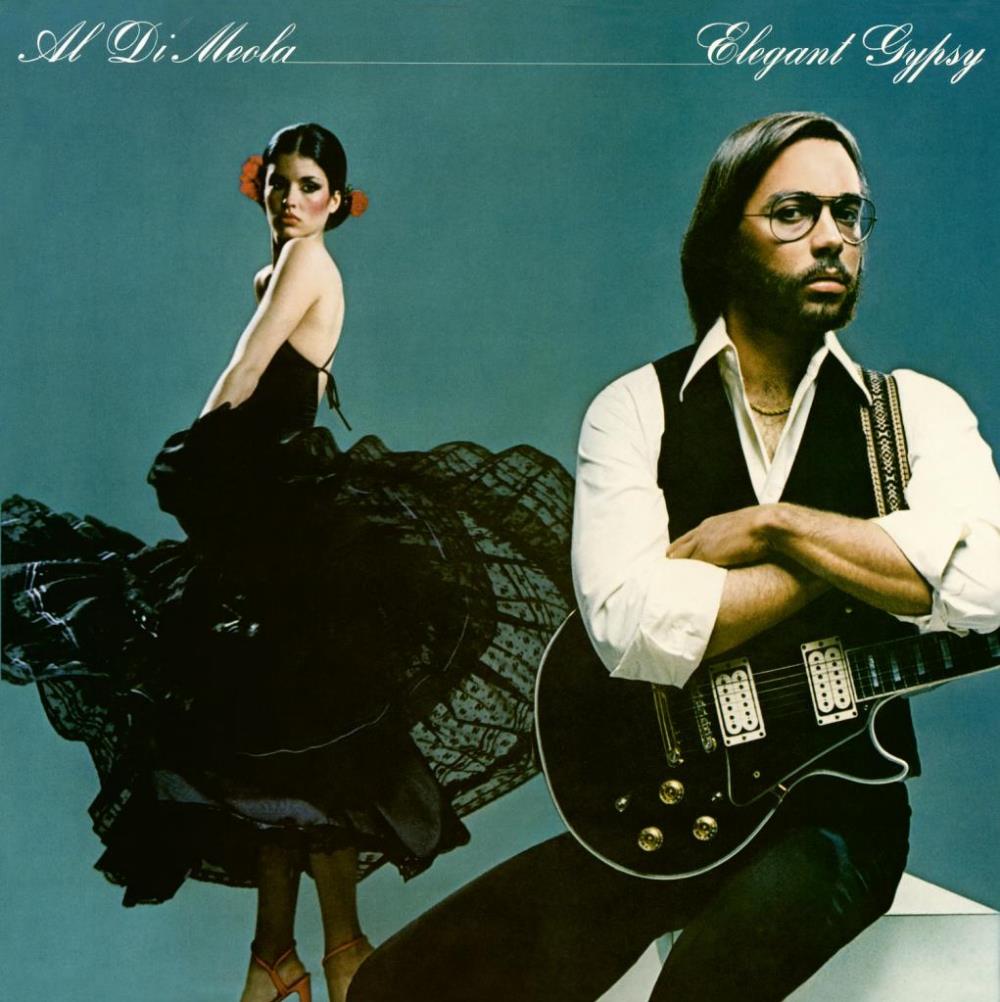
What Elegant Gypsy Taught Me About Sound

TUNAGE – SLS

I never understood what people meant by a “breakout album.” It always sounded like marketing speak, like some suit in a record label office decided a release would be a moment before the music even had a chance to prove it.

But now that I’ve been listening to music for decades—really listening—I get it. A breakout album is the one that changes the game. It’s the moment when an artist stops following the rules and starts rewriting them. It doesn’t just shift their career—it shifts how you hear music and move through the world. What happens when a certain song creeps into your headphones at 2 a.m.

For me, those shifts started showing up most often in the music of the ’70s and ’80s. Maybe because that was the last time I remember feeling invincible. Some of my friends say it’s because we were young, wild, and untouched by the creeping anxiety that comes with growing older and seeing too much. I don’t know. All I know is, back then, the music mattered. It wasn’t background noise—it was a pulse.

Usually, when people write about breakout records, they stick to pop and rock. And sure, I’ve got love for Thriller, Born to Run, and The Dark Side of the Moon. They deserve their place. But when we only look in that direction, we miss a world of records that hit just as hard—and sometimes deeper.

Let’s talk about the blues for a second.

Breakout albums in the blues don’t always come with fireworks. They come with smoke. With mood. With grit. Robert Johnson’s King of the Delta Blues Singers wasn’t even released while he was alive, but when it hit in 1961, it sent shockwaves through every guitar player worth their calluses. That wasn’t just a collection of songs—it was a haunted house tour through American music. And Albert King’s Born Under a Bad Sign? That record is basically the DNA for half of modern rock guitar. You can hear it in Hendrix. You can hear it in Clapton. You can feel it in your spine.

And then Stevie Ray Vaughan’s Texas Flood came along in 1983 and slapped the ’80s awake. In a decade buried in synths and neon, he reminded everyone what raw emotion sounded like. Blues didn’t die—it just needed someone to walk back in with a Strat and a storm.

Still, for me, the blues is the voice of memory. Jazz, though—that’s where I live.

I didn’t even know I was being raised on jazz. My mother had it spinning through the house, soft and steady. There were no lectures, no explanations, just vibes—Miles, Monk, a little Ella, and Louis. It seeped into me without permission.

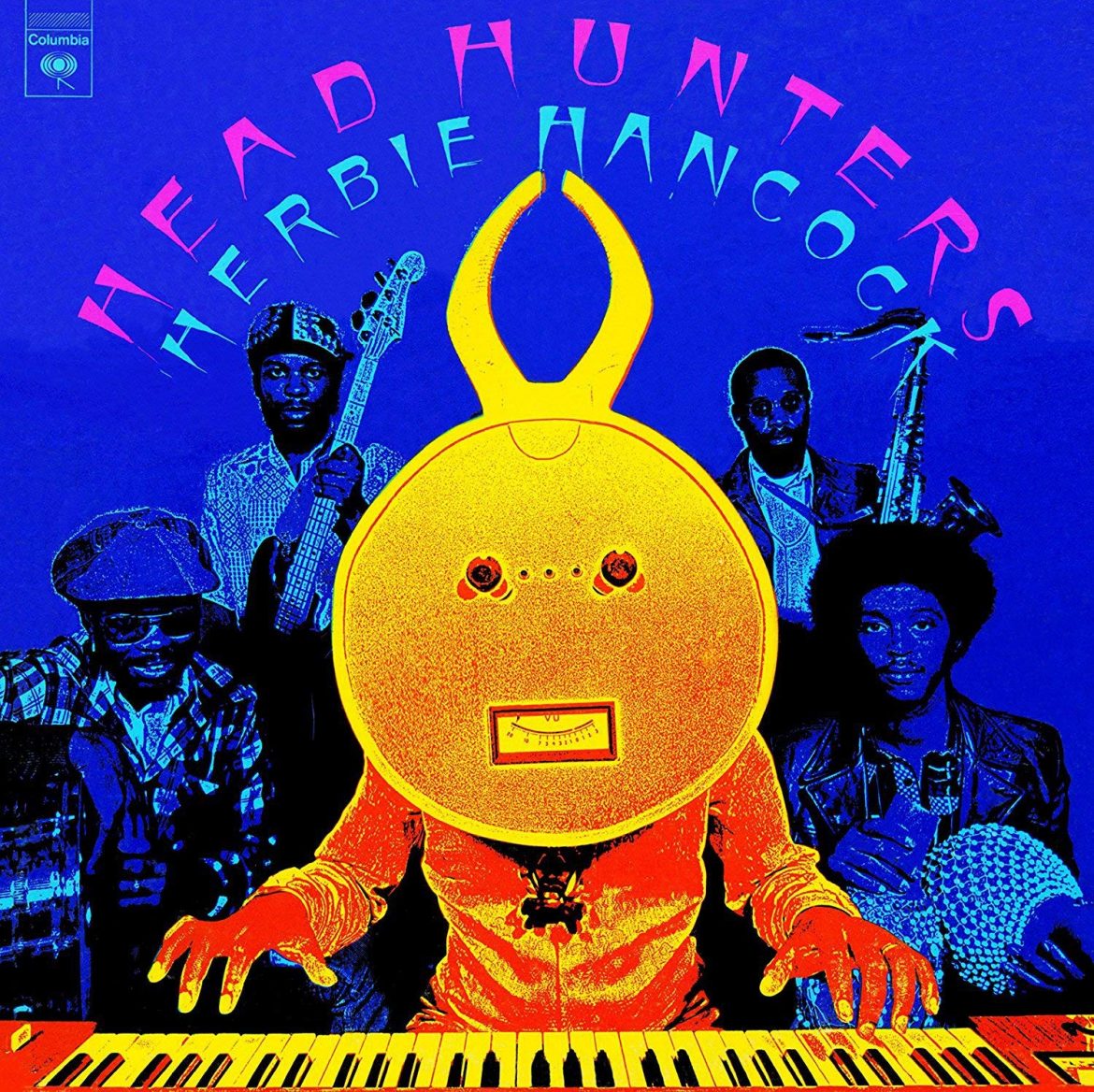
Later, when I started tracing back the music that moved me most, I found myself standing in front of Kind of Blue. I didn’t understand modal jazz or the genius behind its understatement. I just knew it felt like thinking clearly. Coltrane’s A Love Supreme—that one was different. That one burned. It felt like prayer in motion. And Herbie Hancock’s Head Hunters? That album made me question everything I thought jazz could be. It didn’t walk. It didn’t swing. It grooved.

But if you really want to know the moment the floor dropped out from under me—when I realized how deep this rabbit hole could go—it wasn’t a household name that did it. It was a cassette tape. In a barracks. On a night that started like any other.

It was the late ’80s. I had a makeshift pirate radio thing going with a buddy. We were playing Zeppelin, Floyd, Spyro Gyra—the kind of music that made you feel smart and a little dangerous. We were fueled by bad liquor and worse decisions.

Then Good walked into my room, talking slick. “You think you know music?” he said.

I told him to show me something better.

He popped in a tape.

Elegant Gypsy.


I didn’t know the name Al Di Meola. I certainly hadn’t heard of Return to Forever. Chick Corea and Stanley Clarke were familiar, but Al Di… ah, who? But from the moment “Flight Over Rio” exploded out of those half-broken speakers, I was done for.

Here’s the thing: Elegant Gypsy isn’t just fast. It isn’t just technical. It’s alive. This album doesn’t care if you’re ready. It grabs you by the collar, throws you into a hurricane of fusion, flamenco, and Latin rhythm, and dares you to keep up.

Di Meola’s guitar work is blistering—sure. But it’s also delicate when it needs to be. He doesn’t just play fast. He plays intentionally. There’s weight in every note, even when his fingers are moving at light speed. “Mediterranean Sundance,” his duet with Paco de Lucía, isn’t just a highlight—it’s a masterclass. You can feel the heat rising off the strings. You can hear two cultures colliding and dancing at once. It’s the sound of passion pushed through wood and wire—and that little whew at the end hits as hard as any chord.

And then there’s Elegant Gypsy Suite.


This track—more of a journey than a song—feels like the core of the whole album. At nearly ten minutes, it refuses to rush, despite being driven by a guitarist who could break land speed records. Instead, it shifts, morphs, and moves through phases. It opens in a brooding, almost cinematic space—like it’s scoring a Sergio Leone western that got hijacked by an avant-garde flamenco troupe. Then the melodies begin to circle, tighten, and rise. Di Meola slides between electric and acoustic passages without missing a beat, blending precise lines with raw emotion. There’s a section where the rhythm drops out and you’re left with this eerie, floating tension—before it snaps back in and charges forward like a bullfight.

It’s not just a guitar showcase—it’s storytelling. It’s Di Meola proving that speed means nothing without soul, that complexity doesn’t have to come at the cost of clarity. That suite is the reason this album transcends the fusion label. It’s bigger than genre. Its composition. It’s vision.

Critically, Elegant Gypsy did its damage. It went gold. It won Guitar Player magazine’s Album of the Year. It peaked high on the jazz charts. And yet, outside of jazz or guitar nerd circles, you barely hear it mentioned. No Rolling Stone rankings. No VH1 countdowns. It’s not part of the mainstream memory.

But ask any musician. Ask anyone who’s tried to tame six strings into something worth listening to. They’ll tell you: this album is sacred.

That night in the barracks, Elegant Gypsy didn’t just win the argument—it flipped the script. It reminded me why I cared about music in the first place. Not for popularity. Not for nostalgia. But for discovery. For the thrill of being wrong about what you thought music could be.

That’s what a breakout album really is. It doesn’t just launch a career. It launches you into something new.

So I keep listening. I keep digging. Not because I want to be the guy with the deep cuts, but because every now and then, a record still finds me and knocks me flat. When that happens, I stop everything. I pour a drink. I let it play all the way through.

Because sometimes, music doesn’t just break out.

It breaks you open.


Built on Fault Lines

TUNAGE – SLS

The Hidden Band Origins of Today’s Boldest Solo Artists

The low-key origin stories behind music’s most defining solo careers.

This challenge was tough because I know too many artists to choose from. I didn’t want to go with the obvious ones — you know, Ozzy Osbourne from Black Sabbath, Eric Clapton from Cream, Sting from The Police, or Diana Ross from The Supremes. Legends, sure. But those are basically music history 101.

The real struggle? Picking a genre. Rock? Overflowing. R&B? Stacked. Jazz? Don’t even get me started — half the genre is built on solo careers that started in someone else’s band. There are solid examples everywhere. So instead of narrowing it down, I went wide — and spotlighted the solo artists whose band origins aren’t always part of the conversation.


Herbie Hancock – Miles’ Sideman to Funk Pioneer

Before blowing minds with Chameleon and Rockit, Herbie Hancock laid down genius in Miles Davis’ Second Great Quintet — one of the most legendary jazz lineups ever. He could’ve coasted on that. Instead, he rewired jazz with funk, synths, and even turntables.

His 1973 album Head Hunters didn’t just move jazz forward — it cracked it open. “Chameleon” became an anthem, and Herbie never looked back. His solo career didn’t just stand out — it helped rewrite what jazz could be.


Teddy Pendergrass – From Group Harmony to Grown-Man Swagger

Teddy didn’t slide into solo stardom — he owned it. But before the robes and roses, he was the voice behind Harold Melvin & the Blue Notes. That’s him on “If You Don’t Know Me By Now.”

He dialed up the heat when he went solo in the late ’70s. Teddy wasn’t just singing love songs — he was setting the blueprint for every smooth, commanding R&B frontman who came after him.

Kenny Rogers – Psychedelic Cowboy?

We remember Kenny Rogers for the beard, the chicken, and “The Gambler.” But in the late ’60s, he fronted The First Edition, a trippy country-rock band. “Just Dropped In (To See What Condition My Condition Was In)” is a psychedelic classic — weird, bold, and nothing like what came after.

He didn’t start as a country icon — he became one. And he brought a little leftover weirdness with him.


Joe Walsh – From Power Trio to Solo Chaos

Before he was shredding with The Eagles, Joe Walsh was the wild force behind James Gang. “Funk #49” still hits like a punch to the chest. Then came his solo years — loose, loud, and hilarious (“Life’s Been Good” is chaos in the best way).

He had the chops, but more importantly, he had that unhinged charisma. And when he joined The Eagles, he didn’t clean up — he brought the madness with him.

Ice Cube – From Ruthless to Relentless

Before the solo albums, movies, and cultural icon status, Ice Cube was the pen behind N.W.A. He wrote most of Straight Outta Compton — then walked away over money and control.

His debut solo album, AmeriKKKa’s Most Wanted, hit like a sledgehammer. He didn’t just survive the breakup — he turned it into fuel and built a solo career that outpaced the group that made him.


Amerikkka’s Most Wanted Album Cover

Then There’s the Whole Bryan Ferry, Morrissey, Annie Lennox Thing…

You know the type. The ones who were technically in a band, but you kind of always knew they were destined to fly solo.

  • Bryan Ferry was Roxy Music—cool, stylish, theatrical. When he went solo, he smoothed out the edges and kept the vibe going with even more elegance.
  • Morrissey? When The Smiths dissolved, he doubled down on his own mythology — neurotic, literary, and unfiltered. Say what you will, but he made being miserable sound iconic.
  • Annie Lennox stepped out of Eurythmics and immediately leveled up. Tracks like “Why” and “No More I Love You’s” didn’t just show off her range — they felt like she was finally making music with no one else in the room.
  • Dave Stewart didn’t vanish. He became a quiet force, producing and writing for legends like Tom Petty and Stevie Nicks. He dropped solo albums, too. No hype, no drama — just intense, melodic work from a guy who knows what to do in a studio.

Natalie Merchant – Quiet Power, Loud Impact

I’ve got all these artists in my library. That’s why this post was hard — every one of them means something to me. Every career shift hit a different note.

But the artist I landed on? Natalie Merchant. Not the biggest name. Not the flashiest. But the one who hit me quietly — and stayed.

I first fell for her voice on 10,000 Maniacs’ version of “Peace Train.” Then I lost track of her — until “Carnival” came out. That song pulled me right back in. Restrained, observational, hypnotic. It led me to Tigerlily. That’s when it clicked. I was in.

She didn’t just go solo — she effortlessly pushed her boundaries, building something slower, wiser, and entirely her own.


Tigerlily Album Cover

 “San Andreas Fault” – A Quiet Warning Disguised as a Lullaby

Though “Carnival” was the standout, I’ve always been partial to “San Andreas Fault.” It opens softly — just piano, some breath between the lines — and stays there. But listen closely, and it’s tense. It’s about chasing dreams on unstable ground, about the illusions of safety and paradise.

It’s a warning, wrapped in a lullaby. A metaphor that doesn’t yell — it just sits with you. That’s Merchant’s power. She doesn’t need volume. She needs space — and she knows how to fill it.


Final Thoughts

Natalie Merchant didn’t just survive leaving 10,000 Maniacs — she defined herself in the process. And that’s the real thread through all these stories: artists stepping away from the comfort of the group, betting on themselves, and making something real.

Sometimes the biggest moves aren’t loud.
They’re quiet.
Intentional.
Built on fault lines — and still, somehow, they hold.


This post was written for Jim Adams’ Song Lyric Sunday

I’ll Remember April, But Not Like This

TUNAGE – MMB (APRIL)


Charles Mingus didn’t just play a jazz standard—he took it apart, set it on fire, and built something unforgettable.


“I’ll Remember April” is one of those jazz standards every musician runs into, eventually. It’s basically a jam session rite of passage—48 bars of twisty harmonic turns masquerading as a wistful ballad about lost love and changing seasons. I’ve been familiar with it for years. Played it, heard it, filed it under “That one tune that’s fun to blow over but nobody remembers the lyrics to.”

Then I heard the Charles Mingus versions.

Someone once told me, “There’s jazz, and then there’s Mingus.” At the time, I thought that sounded like one of those pretentious one-liners people drop in record stores to feel superior. But after diving into his takes on “I’ll Remember April,” I get it. Oh man, do I get it.

Mingus didn’t just cover “April.” He took it apart like a mad scientist, rewired its guts, jolted it with electricity, and dared you to still call it a “standard.”


The Café Bohemia Version (1955): Mingus and Roach Light a Fuse

Let’s start at Café Bohemia, 1955. Picture a packed New York club, cigarette smoke thick enough to chew, and a band that clearly didn’t come to play it safe. Max Roach sits in on drums, and if you’ve ever wanted to hear someone simultaneously keep time and destroy it, this is your moment.

The melody of “April” makes a brief cameo, like it wandered onstage and then realized it was at the wrong gig. What follows is 13 minutes of fearless improvisation, with Mingus, Roach, and pianist Mal Waldron operating on some telepathic groupthink. The horns? They show up, but the rhythm section is driving the bus—and the bus is on fire.

Roach’s drumming is the engine room of this madness. His solo isn’t just technically jaw-dropping—it’s spiritually charged. He plays like he’s pulling sound from some ancient, elemental place. It’s powerful, commanding, and completely locked into the spirit of the tune, even as the band steamrolls past the recognizable parts of it. He doesn’t just support the performance—he embodies it.


The Antibes Version (1960): Bud Powell and the Beautiful Collision

Now fast-forward to 1960 at the Antibes Jazz Festival in France. Mingus is in full mythic form. His band includes avant-garde sorcerer Eric Dolphy, hard-bop bruiser Booker Ervin, and lyrical firebrand Ted Curson. Oh, and just to make things even more surreal—bebop piano legend Bud Powell drops in.

I was hypnotized by Powell’s piano. He doesn’t just comp—he sets the tone for the whole damn piece. His phrasing is gentle but firm, melancholic but insistent. He drove the vibe of the entire take with a calm storm underneath. It was a genius move by Mingus to bring him in. Powell didn’t just play the tune—he channeled it.

And as chaotic as the rest of the band is—Dolphy sounding like he’s melting into the fabric of reality, Ervin breaking every hard bop ceiling—Powell grounds the whole thing with this subtle gravitational pull. It’s stunning.


Same Tune, Two Earthquakes

Each of these versions is radically different, but neither feels careless. Each artist involved—Roach, Powell, Mingus himself—took the time to embody the nature and spirit of this piece. They didn’t just play “I’ll Remember April”; they meditated on it, exploded it, resurrected it.

Here’s the wildest part: I know I was listening to the same song. But these takes? They felt like two completely different pieces of music. That’s not just impressive, it’s disorienting in the most thrilling way.

Café Bohemia is all raw nerve and instinct, like jazz fighting for its life in a boxing ring. Antibes is a theatrical, kaleidoscopic manifesto with solos. Both are driven by Mingus’s refusal to play it safe. Both reveal just how much space one tune can contain if you’ve got the nerve to stretch it.

After hearing these, that old quote—“There’s jazz, and then there’s Mingus”—stopped sounding smug. It started sounding accurate.

Mingus didn’t interpret “I’ll Remember April.” He cracked it open, poured his entire brain into it, and gave us two versions that are less about remembering a month and more about never forgetting the man who dared to redefine it.


Skunk Anansie: The Band That Kicked Down the Britpop Door

TUNAGE – SLS

I wasn’t looking for a new band. I was elbow-deep in grease, rebuilding an engine, when Skunk Anansie hit my ears — completely by accident. They were playing in the background, and something about the sound stopped me cold. Mid-wrench, I froze. The voice, the chaos, the nerve of it. As someone who’s always had a thing for rock bands fronted by women, I knew instantly this wasn’t background noise — this was a warning shot. I scrawled their name on a scrap of paper, went back to torquing bolts, and forgot about it. Years later, I found that note again. The rest? History.

Turns out, the band that hijacked my afternoon was in the middle of torching the status quo.

Formed in 1994, Skunk Anansie didn’t show up to blend in. While Britpop was navel-gazing and pretending it was revolutionary, Skunk Anansie was actually shaking things up — loud, political, unapologetically Black and queer. They weren’t the sound of the mainstream. They were the sound crashing through it.

Their debut album, Paranoid & Sunburnt, landed like a brick through a glass ceiling. It was blistering, furious, and full of truth that most people weren’t ready to hear. They didn’t write “Selling Jesus” and “Little Baby Swastikkka” for radio; they wrote them to confront, provoke, and awaken listeners.

But one track hit me harder than I expected: Intellectualise My Blackness.”

As a Black man of a certain age in America, I felt that song. It screamed frustration, the tightrope walk between pride and exhaustion, the unspoken demand to constantly explain, justify, tone down, and translate your existence—to “intellectualize” something simply being who you are. The song doesn’t offer simple answers. It just screams the question we’re too often forced to answer: “Why do I need to prove my identity to you?”

It’s not just a powerful track. It’s personal.

And then there’s I Can Dream — the song that might’ve grabbed me all those years ago. It’s not about chasing dreams. It’s about drowning in them. Fantasies of power when the world keeps shutting you out. “I can dream that I’m someone else,” Skin snarls, and it’s not a wish — it’s a survival mechanism. That song doesn’t whisper. It breaks the silence wide open.

Which brings me to Skin herself. She’s not just the lead singer — she’s the force of nature steering the ship. A Black, openly gay woman with a voice like a controlled explosion and a stage presence that demands attention. She didn’t fit into the rock world’s mold — she shattered it. Watching her felt like watching someone fight for breath and win.

They called their sound “clit-rock,” because of course they did — loud, feminine, political, and deliberately hard to market. And they wore that label like armor.

Paranoid & Sunburnt wasn’t just a strong debut—it ripped the roof off what rock albums could be. It wasn’t sanitized, safe, or diluted. It was their truth, screamed at full volume. This album laid the groundwork for everything that followed: headlining Glastonbury as the first Black British-led act, performing for Mandela, sharing a stage with Pavarotti, and returning years later with 25LIVE@25 to remind everyone they never lost a step.

Skunk Anansie never asked for permission. They took up space, challenged everything, and demanded the world catch up. They’ll always be the band that made me put the wrench down — and feel something real.


Mingus and Mitchell’s Rebellion

TUNAGE – THROWBACK THURSDAY

A jazz legend. A folk icon. One final act of creative defiance.

When Joni Mitchell dropped Mingus in 1979, it threw everyone for a loop. Critics scratched their heads; fans wondered where the dulcimer had gone. It didn’t sound like Blue, or Court and Spark, or anything even remotely close to her folk-pop reputation. And honestly? Joni didn’t care.

“This wasn’t just a genre crossover — it was a genre collision.”

This was Charles Mingus’s final project. ALS had stolen his ability to play, but not his impulse to push boundaries. So instead of retreating into legend, he reached out to Joni Mitchell — the queen of tunings, lyrics, and curveballs — and asked her to set words to some of his compositions. She said yes.

The result was a challenging listen — five spoken-word “raps,” interludes pulled from their conversations, woven between rich, angular jazz compositions. It was intimate, raw, and not made for background listening. You don’t just hear music — you hear mortality, mischief, and Mingus grumbling like a jazz prophet in a wheelchair.

“Mingus couldn’t play anymore, but he wasn’t done.”

Mitchell described their first meeting like this:

“The first time I saw his face it shone up at me with a joyous mischief… Charlie came by and pushed me in—‘sink or swim’—him laughing at me dog paddling around in the currents of black classical music.”

Translation: Mingus didn’t want a tribute. He wanted a partner with nerve.

The lineup was no joke:

  • Jaco Pastorius on bass (melting frets like butter)
  • Wayne Shorter on sax (bending the air around him)
  • Herbie Hancock on electric piano (tickling the keys like he invented them)
  • Peter Erskine and Don Alias holding down rhythm
  • Plus wolves — yes, wolves — on “The Wolf That Lives in Lindsey”

“She didn’t smooth the edges — she leaned into the mess.”

This isn’t dinner-party jazz. It’s messy, meandering, occasionally maddening. But it has guts. At one point, Mingus told her she was singing the wrong note.
She replied, “That note’s been square so long it’s hip again.”
Mingus, without missing a beat: “Put in your note, my note, and two grace notes too.”

That’s the whole album right there — layered, irreverent, and unbothered by convention.


From Skeptic to Fan

My journey into Joni Mitchell’s world didn’t start with a musical epiphany. It started with a woman — one who casually mentioned that Prince was a fan of Joni Mitchell. I made a face. Possibly several. My inner monologue said: Oh great, another misunderstood-genius folk artist I’m supposed to pretend to like.

But then I saw her vinyl collection.

Not a greatest-hits graveyard. Not recycled top 40 safe bets. Her shelves were full of weird, daring, intentional records — the kind people own because they listen, not just display. I started paying attention.

I got home, looked up Joni’s discography, and there it was: Mingus. Charles Mingus? With her? I hit play.

Then I heard him — the voice. The Maestro. Laughing, breathing, alive. For a second, I thought I’d stumbled onto a secret Mingus record.

Then the bass came in. And I paused.

This isn’t Mingus on bass. But the lines were liquid, wild.
Then the piano hit. I stopped. “Who’s tickling the keys like that?” I muttered. I knew that sound. Herbie Hancock.

This was no crossover fluff. This was a full-on creative risk with real players and real weight.

I stopped the record, called her, and said:
“Okay — what’s the Joni Mitchell starter kit?”

She gave it to me. Blue. Hejira. Court and Spark.

I listened. And suddenly, the whole picture came into focus.

I came back to Mingus later — and this time, I didn’t feel lost. I was ready. I didn’t need it to make sense immediately. I just needed to meet it where it was.


Critical Reception: Then and Now

Upon its release in 1979, Mingus got a lukewarm reception.
Stereo Review said it had “no improvisation.” Robert Christgau gave it a C+, calling it a “brave experiment” that didn’t quite succeed.

Folk fans missed the softness. Jazz critics missed Mingus’s hands. Everyone expected something different — and Mingus gave them none of it.

But over time, things changed. Today, Mingus is respected for what it is: bold, strange, and ahead of its time.

“After four decades, the deeply personal and experimental Mingus has grown into one of the most important titles in the Mitchell catalog.”
— Ron Hart, GRAMMY.com

Even those who played on it are reflecting differently now:

“It was and remains a brave project and statement… an essential piece of not only Joni’s library of music, but of American music in the late 1970s.”
— Peter Erskine, drummer on Mingus

Funny how time — and maybe a little patience — can change everything.


Final Word

Mingus isn’t cozy. It’s not an easy listen. It’s not even especially likable at first.

But it’s real.

Two artists — one dying, one evolving — making something on their own terms. No pandering. No hand-holding. Just music, conversation, and courage.

I started listening to Joni Mitchell because of a woman.
But I kept listening because Mingus didn’t try to win me over.
It made me meet it halfway.

And once I did, I never looked at music — or Mitchell — the same way again.


Why “Sometimes It Snows in April” Still Hurts So Good

CHALLENGE RESPONSE – MMB

One of my nephews stopped to visit. We talked about philosophy, music, and a bunch of other things. Almost like he knew I needed to get out of my own head for a moment and be reminded of something that’s always been soothing—music.
After he had left, I plugged in the headphones and got to work.


Prince’s music has left a mark on humanity.
However, the music I enjoyed the most was songs seldom played on the radio—the tracks only discussed quietly among the fans who kept searching for the ones that touched them deepest.

For me, “Sometimes It Snows in April” is one of those songs.

It’s not built for the charts. No booming drums or flashy guitar solos. Just a delicate piano, soft guitar, and Prince’s voice—fragile, almost whispering. It’s stripped down in a way that makes you sit still. Makes you feel.

The song was part of the Parade album in 1986, which doubled as the soundtrack to Under the Cherry Moon. Prince played Christopher Tracy in the film—a charming romantic who dies too soon. The song is what comes after: mourning, confusion, and the quiet heartbreak of losing someone who wasn’t supposed to be gone yet.

And Prince didn’t try to clean it up. He kept the raw demo. You can hear creaking chairs and fingers sliding on strings. Those imperfections? They’re what make it real.

The lyrics hit like a conversation you didn’t want to have but needed:
“Sometimes it snows in April / Sometimes I feel so bad, so bad.”
Simple words, but when Prince sings them, they carry weight. It’s not performance—it’s confession.

Then came April 21, 2016. Prince passed away. Suddenly, a song about losing someone too soon became eerily personal. It was recorded in April. He died in April. And just like that, it sounded like he’d written his own farewell without knowing it.

And here’s the part that always gets me—I often wonder why we don’t truly appreciate an artist until after their transition.
Why do we wait?
Why do the tributes flood in only once they’re gone?
It’s a question that’s never been answered—at least not a good one.

Maybe it’s human nature. Maybe we think there’ll always be time. Maybe we don’t realize what someone gave us until we can’t get more of it.

With Prince, we had a genius in real-time. But songs like “Sometimes It Snows in April” remind us that his deepest gifts weren’t always the loudest. They were the quiet truths tucked in between the hits—the kind you don’t hear until you’re really listening.

“Sometimes It Snows in April” isn’t just about death. It’s about love, memory, and the strange ache of time. It’s about the moments we don’t talk about much—but feel the deepest.

And that’s why it still hurts. In the best kind of way.


Song Lyric Sunday – 011152025

MINI BIO – SLS

Immersing myself in the musical offerings of my fellow melody enthusiasts has been an absolute delight. Each shared track opened new doors, introducing me to artists I’d never encountered and fresh interpretations of beloved classics. The experience was a powerful reminder of music’s eternal nature and remarkable ability to mend the soul. As I pondered my contribution to this musical exchange, I drew blanks beyond the familiar territory of standards. Rather than force a conventional choice, I ventured into uncharted waters. Taking a bold step away from my usual selections, I dove deep into my carefully curated blues collection – a genre I rarely explore in these challenges. What I discovered there was nothing short of magical – a hidden treasure patiently waiting for its moment to shine. Like a dusty gem catching the light for the first time, this blues piece emerged from the depths of my collection, ready to share its brilliance.


Let me share with you this incredible musical journey that starts with “Work with Me, Annie,” a deliciously cheeky rhythm and blues gem that burst onto the scene in 1954. Hank Ballard and The Midnighters crafted this irresistible tune with its playful winks and nudges, wrapped in an infectious melody that just makes you want to move. The song’s magic lies in its teasing nature – never crossing the line but dancing right up to it with a mischievous grin.

But here’s where my musical adventure takes an exciting turn. While exploring the blues rabbit hole, I stumbled upon Snooky Pryor’s take on this classic from his 1999 album “Shake My Hand.” Oh, what a discovery! Pryor takes this already spicy number and adds his own special sauce – that soul-stirring harmonica of his weaves through the melody like a river of pure blues feeling. He doesn’t just cover the song; he reimagines it, breathing new life into those suggestive lyrics with his raw, authentic blues voice while his harmonica tells stories of its own.

It’s like finding a cherished vintage photograph that’s been lovingly restored and enhanced, keeping all its original charm while adding new layers of depth and character. Pryor’s version is a beautiful testament to how great music can evolve while staying true to its roots, creating something that feels both wonderfully familiar and excitingly fresh.


Lyrics:

Song by Hank Ballard

(guitar intro)

(Oooh!)
Work with me, Annie
(a-um, a-um, a-um, a-um)
Work with me, Annie
Ooo-wee!
Work with me, Annie
Work with me, Annie

Work with me, Ann-ie-e
Let’s get it while the gettin’ is good

(So good, so good, so good, so good)

Annie, please don’t cheat
(va-oom, va-oom, va-oom, va-oom)
Give me all my meat (ooo!)
Ooo-hoo-wee
So good to me

Work with me Ann-ie-e
Now, let’s get it while the gettin’ is good

(So good, so good, so good, so good)

A-ooo, my-ooo
My-ooo-ooo-wee
Annie, oh how you thrill me
Make my head go round and round
And all my love come dow-ow-own
(Ooo!)

Work with me, Annie
(a-um, a-um, a-um, a-um)
Work with me, Annie
Don’t be ‘shamed
To work with me, Annie
Call my name
Work with me, Annie

A-work with me, Ann-ie-e
Let’s get it while the gettin’ is good

(So good, so good, so good, so good)

So Good!

(guitar & instrumental)

Oh, our hot lips kissing
(a-um, a-um, a-um, a-um)
Girl, I’ll beg mercy
Oh, hugging and more teasing
Don’t want no freezing

A-work with me, Ann-ie-e
Let’s get it while the gettin’ is good

(So good, so good, so good, so good)

Ooo-ooo
Umm-mmm-mmm
Ooo-ooo-ooo

FADES

Ooo-ooo-ooo-ooo.


While treasure hunting in my blues archive, something magical happened – you know how music just grabs you sometimes? There I was, ready to wrap things up, when the blues spirits themselves seemed to whisper, “Hold up now, we’ve got more stories to tell!” And just like that, this hypnotic groove reached out and caught me, channeling the spirit of the legendary John Lee Hooker himself. That unmistakable rhythm, that raw, pulsing energy – it was impossible to resist.

And I wasn’t the only one feeling it! There was Guppy, my faithful furry companion, already swaying to the beat. In a moment of pure joy, I reached for her paws, and we shared this impromptu dance party. Reality (and our respective ages) quickly reminded us to take a seat, but that groove? Oh, it wasn’t letting go! So there we were, two old souls – me in my trusty chair, Guppy on her favorite pillow – still caught up in the rhythm, still moving and grooving, still feeling that blues magic work its way through our bones.

You know those perfect little moments when music just takes over, and age becomes just a number? This was one of those precious times when the blues reached out and reminded us that you’re never too old to feel the rhythm, never too dignified to let loose and wiggle along with the beat. Guppy and I might not be spring chickens anymore, but in that moment, we were timeless dancers in our own little blues club.


Let me tell you about this absolute gem I uncovered – “Got to Have Money” by Luther “Guitar Junior” Johnson. Talk about finding the perfect blues treasure! This piece just oozes that authentic Chicago blues spirit, the kind that grabs you by the soul and doesn’t let go. Johnson doesn’t just play the blues; he lives and breathes it through every note, every guitar lick, every word that flows from his lips.

You know those songs that just tell it like it is? This is one of those honest-to-goodness truth-tellers. Johnson wraps his gritty, soulful voice around a story we all know too well – that endless dance with the almighty dollar. But it’s not just about the message; it’s how he delivers it. Those guitar riffs? Pure magic! They weave through the song like a conversation, sometimes whispering, sometimes crying out, but always speaking straight to the heart.

And that groove! Oh my goodness, that groove! It’s the kind that gets under your skin and makes your feet move whether you want them to or not. Johnson has this incredible way of taking something as universal as money troubles and turning it into this beautiful, moving piece of art that makes you feel less alone in your struggles. It’s like he’s sitting right there with you, nodding his head and saying, “Yeah, I’ve been there too, friend.”

This is exactly why I love diving into these blues archives – you never know when you’ll surface with a piece that speaks such raw truth while making your spirit dance at the same time.


Lyrics:

Yes, a little drive by upon the hill
And this is where It begin to start
Mama told Papa, said “Pack up son!”
“We gonna leave this sow land again”


I was just a little bitty boy
′Bout the age of five
Too much work
Not enough money
This what it’s all about


Got to have money
Got to have some money, y′all
Got to have money
Got to have some money, y’all


Muddy Waters got money
Lightnin’ Hopkins got it too
Tyrone got money
Want me some money too


Got to have money
Can′t get along without it
Got to have some money
Can′t get along without it


I used to have you water
15 bottles
For 15 cents a day
Shame a boy my age
Worked so hard everyday


But now I’m grown
I′m on my own
And this I want you to know
If you want me to work for you, baby
You got to give me big dough


‘Cause I got to have money
Got to have money, y′all
Can’t get along without it
Got to have money, y′all


They say money is a sign for sympathy
The root of all evil
If this is what money really is
Call the Doctor ’cause I got a fever

I got to have money
Got to have money, y’all
Can′t get along without it
Got to have money, y′all

Got to have some money
I got to have some money


Writer(s): John T Williams

Here is the link to the challenge. Thanks Jim for hosting I had blast with one.

Late Night Grooves #134

I discovered an unexpected musical universe while exploring my mother’s collection of 45 rpm records. Hidden within these vinyl discs were recordings by familiar artists I never knew existed, alongside completely unknown musicians who created remarkable work. I smile at my previous assumption of musical expertise, now humbled by the vastness of what remains unexplored. We often experience music through curated selections – songs deemed worthy by others’ judgment. While these choices frequently merit their status, countless talented artists and their exceptional works remain in obscurity, their songs gradually disappearing from collective memory, heard only through chance encounters with dusty records. It is in this spirit I selected tonight’s track. This was made famous and was covered by Nirvana, and when discussing the track, people are most familiar with Nirvana’s cover.

The Man Who Sold the World” is a cryptic and evocative song released by David Bowie in November 1970 in the US and April 1971 in the UK as the title track of his third studio album. The song features a distinctive circular guitar riff by Mick Ronson and haunting, phased vocals by Bowie, recorded on the final day of mixing. The song is built around a repeating electric guitar riff with an acoustic guitar underneath, primarily in the key of F. The musical arrangement creates a complex harmony that shifts between different chords, creating a disturbing yet compelling sound structure. The song explores themes of identity crisis, duality, and multiple personalities. Bowie explained that he wrote it while searching for a part of himself, reflecting the feeling of youth trying to discover one’s true identity. The lyrics were partially inspired by the 1899 poem “Antigonish” by William Hughes Mearns.


Late Night Grooves #129

Tonight on LNG, I figured we would go with the “last Monday of the year” theme. I found this little gem in some notes about music tucked away in one of my many notebooks. I swear I need to make some sort of resolution to organize these notes. I’m shaking my head. This is the equivalent of a vow to lose weight, exercise more, or quit smoking, and my all-time favorite, focus on me. This is my year. Anyway, I digress.

“Thank God It’s Monday” is a unique punk rock anthem released by NOFX in 2000 on their album “Pump Up the Valuum.” The song, written by Mike Burkett (Fat Mike), offers an ironic twist on the typical Monday blues sentiment. The track presents a contrarian view of weekdays, celebrating Mondays while criticizing traditional weekend activities. The lyrics express a preference for Mondays over Fridays, pointing out how weekends are filled with crowded, smoky bars and packed restaurants. The song’s protagonist lives a “5-day weekend” and a “year-long holiday,” embracing Mondays when most people are at work. Each day is compared to a holiday—Tuesdays are like Christmas, Wednesdays like Hanukkah, and Thursdays like Thanksgiving.


A Journey into 1969

Daily writing prompt
Share what you know about the year you were born.

DAILY PROMPT RESPONSE

I’ve always been a fan of history. I can babble about various eras throughout at a moment’s notice. I once had a secretary tell me I could do things that happened 3000 years ago, but I can’t remember to check my email or voicemail. I laughed my butt off when she said it because it was entirely accurate. Despite all the things in history I researched, I never looked into the year I was born.

So, spent most of the day researching events of 1969 and discovered I did, in fact, know many of them. So, the excitement I was feeling sort of dwindled. Then I kept digging and found some cool stuff that requires further research so things are right in the universe again. I would have had this post out earlier, but I fell into the rabbit hole and started reading newspaper articles about the events I was researching. I also started following local events that were only important to the people involved. So deep, I became jittery from the lack of coffee. So, I had to stop and get my caffeine and nicotine levels back in tolerance.

I’m not even close to finishing my research in 1969, but I thought I had better stop and post the research outline I had composed. I fully expect several from the stoop and knucklehead reports to stem from my research.

Global Events

  • Apollo 11 Moon Landing (July 20, 1969) 
    • NASA astronauts Neil Armstrong and Buzz Aldrin became the first humans to land and walk on the Moon.
  • Vietnam War Escalation 
    • Ongoing conflict: U.S. troop levels peaked, and anti-war protests grew worldwide.
  • Sino-Soviet Border Conflict 
    • Armed clashes occurred between China and the Soviet Union along their shared border.
  • Stonewall Riots (June 28, 1969)
    • A pivotal moment in the LGBTQ+ rights movement started at the Stonewall Inn in New York City.
  • Charles Manson Arrested (December 1969) 
    • Manson and members of his cult were arrested for a series of murders in California, including that of actress Sharon Tate.
  • Coup in Libya (September 1, 1969)
    • Muammar Gaddafi led a bloodless coup to overthrow King Idris, beginning his long rule over Libya.
  • Brazil’s AI-5 Dictatorship
    • Institutional Act No. 5 tightened the military dictatorship’s control, suspending civil liberties and intensifying oppression.
  • The First Mont Blanc Tunnel Opened (July 16, 1969)
    • Connecting Italy and France, this tunnel improved European transportation networks.

Science and Technology

  • ARPANET Goes Online (October 29, 1969)
    • The precursor to the internet successfully transmitted its first message between UCLA and Stanford.
  • Concorde Makes Its Maiden Flight (March 2, 1969)  
    • The supersonic aircraft completed its first test flight in France.
  • Mariner 6 and Mariner 7 Missions  
    • NASA spacecraft sent back close-up images of Mars.
  • First Automatic Teller Machine (ATM) Installed in the U.S.
    • Chemical Bank in Rockville Centre, New York, installed the first U.S. ATM on September 2, 1969.
  • Creation of the Monty Python Comedy Troupe
    • Although their show debuted in 1969, the group formed earlier that year and shaped modern comedy.
  • First Transcontinental Boeing 747 Flight
    • While its commercial debut came in 1970, Boeing conducted its first long-range test flights in 1969, revolutionizing air travel.
  • First Manned Flight of the Lunar Module (March 3, 1969)
    • Apollo 9 tested the Lunar Module in Earth’s orbit, a critical step toward the Moon landing.
  • Soyuz 4 and Soyuz 5 Docking (January 1969)
    • The Soviet Union achieved the first successful docking of two manned spacecraft in orbit.
  • First Artificial Heart Implant in a Human
    • Dr. Denton Cooley implanted the first artificial heart into a patient as a bridge to transplantation.
  • Discovery of Reverse Transcriptase in Viruses
    • The enzyme reverse transcriptase was identified, laying the groundwork for advances in genetic engineering and virology.
  • Advances in Organ Transplantation
    • Immunosuppressive drugs were improved, increasing the success rate of organ transplants.
  • Introduction of UNIX
    • Developed at Bell Labs by Ken Thompson and Dennis Ritchie, UNIX became a foundational operating system for modern computing.
  • The Birth of Microprocessors
    • Developments in integrated circuits paved the way for the microprocessor, though commercial products were still a few years away.

Political Events

  • Richard Nixon Becomes U.S. President (January 20, 1969)
    • Nixon was inaugurated as the 37th President of the United States.
  • Yasser Arafat Becomes Chairman of the PLO  
    • Arafat was elected to lead the Palestine Liberation Organization.
  • The Troubles Begin in Northern Ireland
    •  A violent ethno-nationalist conflict erupted, lasting for decades.
  • Montreal Expos and Kansas City Royals Debut (1969) 
    • Major League Baseball expanded, introducing these teams.
  • The Voting Age Debate in the U.S.
    • Ongoing discussions began to lower the voting age from 21 to 18, eventually leading to the 26th Amendment in 1971.
  • The Cuyahoga River Fire (June 22, 1969)
    • The river in Cleveland, Ohio, caught fire due to severe pollution, sparking national outrage and leading to environmental reforms.
  • The Black Panther Party’s Free Breakfast for Children Program
    • The program expanded in 1969, providing meals to thousands of children and bringing attention to social inequities.
  • Swann v. Charlotte-Mecklenburg Board of Education
    • A U.S. Supreme Court case began challenging racial segregation in public schools through busing, influencing desegregation efforts.
  • The Chappaquiddick Incident (July 18, 1969)
    • Senator Ted Kennedy’s car accident on Chappaquiddick Island resulted in the death of Mary Jo Kopechne, raising questions about his political future.

Cultural Highlights

  • Sesame Street Premieres (November 10, 1969)
    • The educational children’s TV show debuted on PBS.
  • The Santa Barbara Channel Platform A Oil Spill
    • Though overshadowed by other environmental events, this spill marked one of the largest in U.S. history, leading to modern environmental activism.
  • First Issue of New York Magazine
    • The magazine debuted in 1969, influencing American journalism and pop culture.

Music 

Major Events

  • Woodstock Music Festival (August 15-18, 1969)
    • Held in Bethel, New York, Woodstock became an iconic event of the counterculture movement. It featured legendary performances by Jimi Hendrix, Janis Joplin, Santana, and more.
  • The Altamont Free Concert (December 6, 1969) 
    • Organized by the Rolling Stones, this concert turned violent, with the Hells Angels providing chaotic security, leading to the death of a concertgoer.
  • The Beatles’ Abbey Road Released (September 26, 1969)
    • Featuring hits like “Come Together” and “Here Comes the Sun,” *Abbey Road* became one of the band’s most iconic albums.
  • The Beatles Perform for the Last Time Together (January 30, 1969)
    • The famous rooftop concert at Apple Corps in London marked their final public performance as a band.
  • Led Zeppelin’s Rise to Fame
    • The band released their debut album, “Led Zeppelin” (January 12, 1969), and their second album, “Led Zeppelin II” (October 22, 1969), revolutionizing rock music.

Album Releases

  • The Rolling Stones – “Let It Bleed” (December 5, 1969)  
    • Featuring classics like “Gimme Shelter” and “You Can’t Always Get What You Want.”
  • David Bowie – “Space Oddity” (July 11, 1969) 
    • The album featured Bowie’s breakthrough single “Space Oddity,” inspired by the Apollo 11 moon landing.
  • Johnny Cash – “At San Quentin” (June 1969)
    • A live album recorded at San Quentin Prison featuring the hit “A Boy Named Sue.”
  • The Who – “Tommy” (May 23, 1969) 
    • A rock opera about a “deaf, dumb, and blind boy,” which became a milestone in progressive rock.
  • Crosby, Stills & Nash – “Crosby, Stills & Nash” (May 1969)
    • The trio’s debut album features hits like “Suite: Judy Blue Eyes.”
  • Grand Funk Railroad – “On Time” (August 1969) 
    • debut album, while initially dismissed by critics, provided a sonic roadmap for the success that followed

Genre Milestones

  • The Birth of Heavy Metal
    • Led Zeppelin, Black Sabbath (their self-titled album recorded in late 1969), and Deep Purple helped define the heavy metal genre.
  • Motown’s Continued Dominance
    • Stevie Wonder, Diana Ross & The Supremes, and Marvin Gaye released hits like “My Cherie Amour” and “Someday We’ll Be Together.”
  • Country Rock Emerges 
    • Albums like The Byrds’ *Dr. Byrds & Mr. Hyde* and The Flying Burrito Brothers’ *The Gilded Palace of Sin* popularized the genre.
  • Jazz Fusion Gains Traction
    • Miles Davis began working on *Bitches Brew* (released in 1970), blending jazz with rock elements.

Live Performances and Innovations

  • The Harlem Cultural Festival (Summer 1969)
    • Known as the “Black Woodstock,” this series of concerts in Harlem showcased artists like Nina Simone, Stevie Wonder, and Sly and the Family Stone.
  • Introduction of the Moog Synthesizer in Popular Music
    • The Moog synthesizer was prominently featured in albums like Wendy Carlos’s *Switched-On Bach,* helping to popularize electronic music.

Notable Singles

  • “Suspicious Minds” – Elvis Presley (1969)  
  • “Honky Tonk Women” – The Rolling Stones (1969) 
  • “Aquarius/Let the Sunshine In” – The 5th Dimension (1969)  
  • “Bad Moon Rising” – Creedence Clearwater Revival (April 1969) 
  • “Pinball Wizard” – The Who (March 1969)

Movies 

Box Office Leaders

  • Butch Cassidy and the Sundance Kid
  • The Love Bug
  • Midnight Cowboy 
  • Easy Rider 
  • Hello, Dolly!

Award-Winning Films:

  • “Midnight Cowboy”: Won Best Picture Oscar, first X-rated film to do so
  • “True Grit”: Earned John Wayne his only Academy Award for Best Actor
  • “Z”: Won Best Foreign Film Oscar
  • “The Prime of Miss Jean Brodie”: Earned Maggie Smith Best Actress
  • “Cactus Flower”: Brought Goldie Hawn Best Supporting Actress

Notable International Releases

  • Army of Shadows: French war drama directed by Jean-Pierre Melville
  • Pierrot le fou: French crime drama by Jean-Luc Godard
  • Simon of the Desert: Spanish historical drama by Luis Buñuel
  • On Her Majesty’s Secret Service: Sixth James Bond fi\47

Mixed Music Bag – Week 51

ARTICLE – TUNAGE – MINI BIO – MMB

The Yellowjackets 

In several previous posts, you’ve heard me yammer on about my musical journey and how different things in my life helped establish my evolving musical tastes. During the 1980s, I became a fan of jazz and the sub-genre of jazz fusion. This was spurred by my introduction to Al Dimeola, legendary guitarist of the Jazz Fusion trio Romantic Warrior. As I drove deeper into jazz fusion, I discovered “The Yellowjackets.” 

The Yellowjackets are a highly influential American jazz fusion band formed in 1977 in Los Angeles. Assembled initially as a backup band for guitarist Robben Ford, they evolved into one of jazz’s most respected groups. Ford left the band to pursue a different musical direction after recording their first album. The track Rush Hour on their 1981 self-titled release is often considered Robben Ford’s best work. 

Original Lineup: 

  • Robben Ford (Guitar)
  • Russell Ferrante (Keyboards)
  • Jimmy Haslip (Bass)
  • Ricky Lawson (Drums)

After Ford’s departure, the band continued as a trio. Despite Ford’s departure, the band maintained the sound band established with Ford. Mirage a Trois (1983) marked the transition of the band’s sound into a direction. They added saxophonist Marc Russo to add in the transition. Their album Shades (1986) cemented their sound, unique to their previous sound. 

Critical Acclaim

  • Shades (1986) reached No. 4 on the Billboard jazz album chart, featuring the Grammy-winning single “And You Know That”
  • Greenhouse (1991) reached No. 1 on the Billboard Contemporary Jazz Album chart.
  • Yellowjackets (1981) – Their debut album reached No. 16 on the Billboard Jazz Albums chart and made serious waves in jazz radio

Grammy Recognition

Their most acclaimed albums include:

  • Politics (1988) – Won Grammy for Jazz Fusion Performance
  • Jackets XL (2020) – Nominated for Best Large Jazz Ensemble Album
  • Parallel Motion (2022) – Their latest Grammy-nominated album

Current Lineup

The band currently consists of:

  • Russell Ferrante (Piano & Synthesizers) – founding member
  • Bob Mintzer (Woodwinds & EWI)
  • Will Kennedy (Drums)
  • Dane Alderson (Bass)

Musical Legacy

Throughout their 43-year history, the Yellowjackets have recorded 25 albums and received 17 Grammy nominations, winning two. Modern rhythms, strong melodies, and innovative jazz fusion compositions characterize their music.


Mixed Music Bag – Week 44

TUNAGE – MINI BIO – MMB

One of the things I enjoy the most about listening to music is finding artists who aren’t part of mainstream popularity. It’s rewarding to watch your discovery become super famous, but sometimes, you want to stay small. It’s having your own secret band in your back pocket. Tenpenny Joke is such a band. 

Tenpenny Joke was an Australian rock band from Melbourne’s Mornington Peninsula in 1997. They made their mark in the melodic rock scene.

Musical Journey

The band achieved a significant milestone in 2004 when they signed with Shock Records/Sing Sing Productions. Their debut album, “Ambush on All Sides,” was released in 2005. It was produced by Matt Voigt, known for his work with The Living End, Kiss, and Aaliyah.

Band Lineup 

  • Craig “Boz” Boswell – drums
  • Anthony Casey – vocals
  • Peter Coon – guitars
  • Tim Kill – bass guitar
  • Brian Rimmer – vocals and guitar

Musical Style and Impact

Their sound was primarily melodic rock, incorporating progressive and alternative elements. The band gained international recognition, receiving airplay across multiple countries, including the US, UK, Europe, New Zealand, and Asia. They were particularly successful in Japan, where their track “Across The Ocean” became highly requested on Yellowbeat radio.

Notable Works

Ambush on All Sides” (2005) – Full-length album

  • Notable Tracks
    • Across the Ocean – An excellent track showcasing the band’s classic rock influences
    • “Evil Things” – A light-hearted composition that highlights their musical range
  • My Favorites
    • Black Satellite 
    • Emergency


Mixed Music Bag and Song Lyric Sunday

TUNAGE ARTICLE

After reading some music posts this morning, I realized I have the opportunity to combine Glyn’s and Jim’s challenges. Let’s get at it…

Here is my response to Glyn’s Mixed Music Bag

In 1998, I was on assignment in Wisconsin, and during my downtime, I attended several music festivals. One night, the fellows and I were captured by a funky bassline. We followed the sound, expecting a black guy jamming on the bass, but that wasn’t what we saw.

We were shocked and later pushed aside our stereotypes and prejudices. We stood listening to a long-haired, tall caucasian male pumping the bass with everything he had. The joyful expression on his face was captivating. Yet, he wasn’t the star of the show. A short-haired woman belted out a bluesy rock rendition of the Aretha Franklin classic Respect.

It was one of the most powerful, energetic, and soulful performances I ever saw from a smaller band. Immediately, I became a fan and grooved the entire set. My musical taste varies depending on my mood, but I wasn’t expecting my companions to enjoy the show. I knew the music they listened to regularly, and it wasn’t anything like this.

“Who are these guys?” we shouted.

They were Tina and the B-Side Movement.

Here are the particulars:

Tina and the B-Side Movement, later known simply as Tina and the B-Sides, emerged as one of Minneapolis’s most influential and beloved rock bands in the late 1980s and 1990s. Led by the charismatic and talented Tina Schlieske, the group carved out a unique space in the Midwest music scene with its blend of bluesy rock, folk-inspired Americana, and raw energy.

Origins and Early Years

The band’s story begins with Tina Schlieske, who caught the music bug early in life. Growing up in the suburb of Apple Valley, Minnesota, Schlieske was drawn to the vibrant Minneapolis music scene of the 1980s. Inspired by a diverse range of artists, including Aretha Franklin, David Bowie, Janis Joplin, and Elvis Presley, Schlieske began sneaking into clubs to perform as early as 1984, well before she was of legal age.

Gradually, Schlieske assembled a band that would become Tina and the B-Side Movement. The group’s name evolved over time, starting as a joke referencing “bowel movement” before settling on the B-Side Movement, a nod to the B-side of records that often contained hidden gems.

Musical Style and Influences

Tina and the B-Sides developed a sound that defied easy categorization. Their music was a tight fusion of bluesy rock, folk-inspired melodies, and roughly hewn Americana[1]. This eclectic mix reflected Schlieske’s diverse musical influences and her desire to avoid being pigeonholed into any one genre.

Schlieske’s powerful vocals were at the heart of the band’s sound. Her sister Laura Schlieske also contributed vocals, creating a dynamic that often evoked the spirit of a tent revival[2]. The band’s lineup evolved over the years but typically included guitars, bass, drums, and keyboards, creating a full, robust sound that could fill any venue, from small clubs to large outdoor amphitheaters.

Rise to Prominence

Tina and the B-Sides built their reputation through relentless touring and energetic live performances. They played every club that would have them, gradually building a devoted following across the Midwest[1]. Their popularity proliferated, particularly in cities like Chicago, Milwaukee, and Madison, as well as throughout their home state of Minnesota.

The band’s DIY ethos was evident in their early releases. Their debut album, “Tina and the B-Side Movement,” was released in 1989 on Schlieske’s own label, Movement Records. This was followed by “Young Americans” in 1992 and “Monster” in 1994, all self-released and promoted through grassroots efforts and constant touring.

Live Performances and Reputation

Throughout the 1990s, Tina and the B-Sides became known for their electrifying live shows. They earned a reputation as one of the best bar bands in America, packing venues wherever they played[2]. The chemistry between band members, particularly between Tina and Laura Schlieske, was a highlight of their performances.

Their popularity in Minneapolis was particularly notable. The band played multiple sold-out shows at the famous First Avenue venue, earning them a coveted star on the club’s exterior wall. This honor placed them alongside Minnesota music legends like Prince, The Replacements, and Hüsker Dü.

Here is one of my favorite tracks…


Song Lyric Sunday

You’re my daughter and my son
You are my chosen one
You will always be
Unconditional love
Lifetime to learn
Maybe somehow
We will learn to love again
You’re my daughter and my son

You’re my daughter and you are my son
Not too hard to understand
You’re my brother and my sister too
All about the point of view
I can see it in your eyes sometimes
You afraid and so am I
Only love will be the only way
One day you will understand
You’re my daughter and my son
We are so out of place
Me you and them
And then all our fears
All hidden tears
Maybe somehow
We will learn to love again
You’re my daughter and my son
You’re my daughter and you are my son
Not too hard to understand
You’re my brother and my sister too
All about the point of view
I can see it in your eyes sometimes
You afraid and so am I
Only love will be the only way
One day you will understand
You’re my daughter and my son
You’re my daughter and you are my son
Not too hard to understand
You’re my brother and my sister too
All about the point of view
I can see it in your eyes sometimes
You afraid and so am I
Only love will be the only way

One day you will understand
You’re my daughter and my son


I’ve hundreds of bands live and witnessed several unforgettable performances. However, I say confidently that Tina and the B-Sides is still one of my favorites.

Late Night Grooves #98

One of the most popular albums of my youth was Dio’s Hold Diver. The best-known tracks from that album were Holy Diver and Rainbows in the Dark. The track Holy Diver has been covered more times than I can count. Some of the covers are rather interesting, but I still prefer the original. My nephew says I’m stubborn that way. I chuckle every time I think about it because he’s probably right.

Ronnie James Dio sang with Black Sabbath for a while, so many of my friends felt the necessity to discuss who the better singer was, Ozzy or Ronnie James. As that topic could be addressed adequately over a keg of beer, they tried until they were summoned by the porcelain god, Ralph. However, a buddy dubbed me a cassette of Holy Diver, and I listened.

As the album plays over my Sennheisers as I write this post, I find myself singing along with the track Invisible. It has always been my favorite track from the Holy Diver album. So, here it is …

I’ve always thought this album cover was righteous.

Mixed Music Bag – Week 23 – Not an Addict

TUNAGE ARTICLE – MMB

Here’s my response to Glyn’s Mixed Music Bag. It’s been awhile since I have participated, so let’s jump right into it. I was stuck in traffic a few years ago, a song on the radio caught my attention. I had never heard before, but it stuck with me. I assumed it was going to be another time where you here a song and don’t hear the artist, but I got lucky. The artist was K’s Choice and the track was Not an Addict

Sarah and Gert Bettens

K’s Choice, a Belgian rock band formed in the early 1990s, has captivated audiences worldwide with their deeply emotional lyrics and haunting melodies. Founded by siblings Sarah and Gert Bettens, the band has navigated the complexities of the music industry with a unique sound that blends rock, folk, and alternative elements.

K’s Choice originated in Antwerp, Belgium, with the Bettens siblings at its core. Their musical journey began in the local music scene, where they quickly gained attention for their distinctive sound and lyrical depth. The band’s breakthrough came with releasing their second album, “Paradise in Me,” in 1995. The album featured the hit single “Not an Addict,” which brought them international recognition. With its powerful lyrics and compelling melody, this song became an anthem for many and solidified K’s Choice as a formidable presence in the alternative rock genre.


Song Lyric Sunday – King Diamond’s Abigail

TUNAGE – SLS


This post has been over 30 years in the making. Let me explain with a little back story. So, in 1987, a guy I knew in high school suggested three albums. Over a period of several months, this guy and I had drunken conversations about heavy metal. During this time, I knew hardly anything about the genre beyond the typical bands everyone listened to at the time, Van Halen, Motley Crue, and alike. Plus, I had one huge disadvantage. I was Black.

Today, no one gives two shakes about what music you like, but back then, in my region of the world, it was a big deal. I recall getting flack for my taste in music. However, this one guy would come up to me, and we’d rap about metal and drink beer. So, the last album he suggested I buy was King Diamond’s Abigail. He gave me the rundown on how King Diamond used to be with Mercyful Fate and all that. So, I bought the album without reservations because his previous recommendations were solid. In fact, I still listen to those artists.

I put on this album and was immediately thrown. Yeah, I was mindfucked. There was no one there telling me they loved me. No foreplay or heavy petting. Just take this, and you’re gonna like it; I did. Abigail was nothing like any music I had heard before. I sat for hours trying to figure out what I was listening to. All I knew was that I was drawn to it. None of my friends listened to this style of music, so I couldn’t discuss the album. For years, I’ve tried to find someone I could talk to about this album. Either they couldn’t stand King Diamond or never heard of him. I even had people question why a Black guy was listening to heavy metal. Without further ado or hyperbole, I present King Diamond’s Abigail. This entire album is some eerie shit!


Narrative and Concept

“Abigail” is a concept album that tells a gothic horror story set in 1845. The narrative follows a young couple, Jonathan and Miriam La’Fey, who inherit a mansion. Seven mysterious horsemen warn them about a terrible fate awaiting them if they stay in the house. Ignoring the warning, they encounter the spirit of Abigail, a stillborn child whose spirit possesses Miriam, leading to a tragic and gruesome series of events.

The album’s storytelling is a standout feature, with each song advancing the plot while creating a vivid, eerie atmosphere. The lyrics, written by King Diamond, are rich in detail and character development, immersing the listener in the dark tale. Songs like “Arrival,” “The Family Ghost,” and “Black Horsemen” are essential pieces of the narrative puzzle, each contributing to the unfolding horror.

Musical Composition and Style

Musically, “Abigail” blends heavy metal, speed metal, and progressive elements. Its complex arrangements, technical proficiency, and King Diamond’s distinctive falsetto vocals characterize it. The album showcases the exceptional musicianship of the band members: Andy LaRocque and Michael Denner on guitars, Timi Hansen on bass, and Mikkey Dee on drums.

The guitar work on “Abigail” is particularly noteworthy. It features intricate riffs, harmonized solos, and melodic passages, enhancing the album’s dramatic effect. Andy LaRocque and Michael Denner’s dual guitar interplay is a highlight, providing both aggression and melodic depth. Tracks like “A Mansion in Darkness” and “The 7th Day of July 1777” display their technical prowess and ability to convey the album’s ominous mood.

The rhythm section, with Timi Hansen on bass and Mikkey Dee on drums, provides a solid foundation for the album’s intensity. Dee’s drumming is dynamic and precise, adding to the album’s relentless energy, while Hansen’s bass lines add depth and complexity to the compositions.

Thematic Elements and Atmosphere

“Abigail” is steeped in themes of horror, possession, and the supernatural, drawing heavily from gothic fiction and classic horror films. The album’s lyrics are filled with vivid imagery, creating a cinematic experience for the listener. King Diamond’s theatrical vocal techniques, including his famous high-pitched falsetto and menacing growls, bring the characters and story to life.

The atmosphere of “Abigail” is dark and foreboding, achieved through the music and the production. The album was produced by King Diamond and Roberto Falcao, who crafted a sound that balances clarity with a raw, menacing edge. The production emphasizes the album’s dramatic dynamics, from the quiet, suspenseful moments to the explosive, intense sections.

Keyboards and sound effects further enhance the album’s eerie ambiance. These elements are used sparingly but effectively, adding to the overall sense of dread and tension. For instance, the haunting intro of “The Possession” and the chilling conclusion of “Black Horsemen” feature atmospheric sounds that contribute to the storytelling.

Impact and Legacy

“Abigail” is widely regarded as one of the greatest concept albums in metal history and a defining work in King Diamond’s career. Its success helped establish King Diamond as a solo artist and set a high standard for narrative-driven metal albums. The album’s blend of horror themes, theatricality, and musical complexity has influenced countless metal bands and artists.

The impact of “Abigail” extends beyond its initial release. Many metal musicians have cited it as influencing numerous tribute performances and covers. The album’s storytelling approach has also paved the way for other concept albums in metal, encouraging artists to explore ambitious, narrative-driven projects.

King Diamond’s ability to create a cohesive and compelling story through music is a significant achievement, demonstrating the potential of the concept album format. “Abigail” remains a testament to his creativity and vision, showcasing his unique blend of horror and metal in a way that continues to resonate with fans.

Conclusion

“Abigail” by King Diamond is a masterful album that combines intricate storytelling, exceptional musicianship, and a haunting atmosphere to create a landmark in the metal genre. Its gothic horror narrative, driven by King Diamond’s distinctive vocals and the band’s technical prowess, has left an indelible mark on the world of heavy metal. More than three decades after its release, “Abigail” continues to be celebrated as a classic, influencing new generations of metal artists and captivating listeners with its dark, compelling tale.


Lyrics:

Abigail

Song by

King Diamond

Abigail, I know you’re in control of her brain, Abigail
And I know that you’re the one that’s speaking through her, Abigail
Miriam, can you hear me?

I am alive inside your wife
Miriam’s dead, I am her head

I am alive inside your wife
Miriam’s dead, I am her head

Abigail, don’t you think I know what you’ve done, Abigail
I’ll get a priest
He will know how to get her soul back

Oh, Jonathan, this is Miriam
Our time is out
Remember the stairs, the only way

Abigail, nothing I can do but give in, Abigail
Follow me to the crypt
Abigail, you aught to be reborn where you died, Abigail
Jonathan, I agree, yes, I do

I am alive inside your wife
Miriam’s dead, I am her head
Soon I’ll be free

Songwriters: Kim Bendix Petersen.


Thanks, Jim and Di, for coming up and hosting this theme.

Song Lyric Sunday – Whistling Dixie

TUNAGE – SLS

As a child, I had the hardest time learning to whistle. So, when I saw the theme for this week, I had a nice flashback to that time. Oh yeah, this week’s theme is songs with whistling in them. Thanks to Jim Adams for hosting every week. Here are two of my favorites in this category.

“Raindrops Keep Fallin’ on My Head” by B.J. Thomas

“Raindrops Keep Fallin’ on My Head,” performed by B.J. Thomas, is a classic song that epitomizes the easygoing, optimistic spirit of late 1960s pop music. Written by the legendary songwriting duo Burt Bacharach and Hal David, the song was released in 1969 as part of the soundtrack for the film “Butch Cassidy and the Sundance Kid.”

The song’s light, breezy melody, accompanied by Thomas’s warm and soulful vocals, conveys a sense of resilience and cheerfulness despite life’s inevitable challenges. The lyrics, which speak of a carefree attitude in the face of adversity, perfectly complemented the film’s whimsical tone and became an instant hit.

“Raindrops Keep Fallin’ on My Head” topped the Billboard Hot 100 chart in January 1970 and won an Academy Award for Best Original Song. Its enduring popularity is a testament to its timeless appeal, capturing a universal sentiment of maintaining a positive outlook no matter what obstacles come one’s way. The song remains a beloved classic, frequently covered and featured in various media, bringing listeners a sense of joy and optimism worldwide.

Lyrics:

Raindrops keep fallin’ on my head
And just like the guy
Whose feet are too big for his bed

Nothin’ seems to fit
Those raindrops are fallin’
On my head, they keep fallin’

So, I just did me some talkin’ to the sun
And I said, I didn’t like
The way he got things done

Sleepin’ on the job
Those raindrops are fallin’
On my head, they keep fallin’

But there’s one thing I know
The blues they send
To meet me won’t defeat me (aah)
It won’t be long till
Happiness steps up to greet me

Raindrops keep fallin’ on my head
But that doesn’t mean
My eyes will soon be turnin’ red
Cryin’s not for me ’cause
I’m never gonna stop the rain by complainin’
Because I’m free, nothin’s worryin’ me

It won’t be long till
Happiness steps up to greet me

A raindrops keep fallin’ on my head
But that doesn’t mean
My eyes will soon be turnin’ red
Cryin’s not for me ’cause
I’m never gonna stop the rain by complainin’
Because I’m free, nothin’s worryin’ me

Songwriters: Burt F. Bacharach, Hal David.


“Me and Julio Down by the Schoolyard” by Paul Simon

“Me and Julio Down by the Schoolyard” is a lively and infectious song by Paul Simon, released in 1972 on his self-titled solo album. Known for its upbeat tempo and catchy melody, the song showcases Simon’s distinctive storytelling and musical style, blending elements of folk, rock, and Latin rhythms.

The song narrates the adventures of the narrator and his friend Julio, who get into some unspecified trouble “down by the schoolyard.” The playful and somewhat mysterious lyrics have sparked much curiosity and speculation over the years about the nature of their mischief. Despite the ambiguity, the song’s joyful energy and whistling sections create a carefree and nostalgic atmosphere.

“Me and Julio Down by the Schoolyard” became one of Simon’s early solo hits. It was celebrated for its unique blend of musical influences and whimsical yet relatable narrative. The song remains a favorite in Paul Simon’s extensive catalog, capturing the essence of youthful exuberance and the timeless appeal of friendship and misadventure.

Lyrics:

Mama pajama rolled out of bed, and she ran to the police station
When the papa found out he began to shout
And he started the investigation
It’s against the law, it was against the law
Oh, what the mama saw, it was against the law

Mama looked down and spit on the ground
Every time my name gets mentioned
The papa say, “Oy, if I get that boy
I’m gonna stick him in the house of detention”

Well, I’m on my way
I don’t know where I’m goin’, I’m on my way
I’m takin’ my time, but I don’t know where
Goodbye to Rosie, the Queen of Corona
Seein’ me and Julio down by the schoolyard

Whoa, in a couple of days
They come and take me away
But the press let the story leak
And when the radical priest come to get me released
We was all on the cover of Newsweek

And I’m on my way
I don’t know where I’m goin’, I’m on my way
I’m takin’ my time, but I don’t know where
Goodbye to Rosie, the Queen of Corona
Seein’ me and Julio down by the schoolyard

Songwriters: Paul Simon.

Barbara McNair

ARTICLE – MINI BIOGRAPHY

Barbara McNair was an American singer, actress, and television personality who impacted the entertainment industry with her multifaceted career. Born on March 4, 1934, in Chicago, Illinois, McNair’s journey into the limelight began with her passion for music, nurtured in the choir of her local church. Her pursuit of an entertainment career led her to study at the American Conservatory of Music in Chicago and, later, the prestigious UCLA.

Early Career and Rise to Fame

Barbara McNair’s career took off in the late 1950s when she started recording for the Coral Records label, releasing a series of singles that showcased her versatile vocal range. However, her move to Motown Records in the mid-1960s catapulted her into the spotlight. McNair’s smooth voice and elegant presence made her a favorite among audiences, and she quickly became known for hits like “You’re Gonna Love My Baby.”

Parallel to her singing career, McNair ventured into acting, demonstrating her talent on both the stage and screen. She made notable appearances on Broadway, including roles in “No Strings” and “The Body Beautiful,” showcasing her ability to captivate audiences beyond her music.

Television and Film Success

In the late 1960s, Barbara McNair made significant strides in television, becoming one of the first African American women to host her own variety show, “The Barbara McNair Show” (1969-1972). The show was groundbreaking, featuring a mix of performances and interviews with celebrities, and broke new ground for African American women in entertainment.

McNair’s film career was equally impressive, with roles in films like “If He Hollers, Let Him Go!” (1968), “They Call Me Mister Tibbs!” (1970), and “The Organization” (1971), where she starred alongside Sidney Poitier. Her performances in these films were praised for their depth and demonstrated her versatility as an actress.

Legacy and Later Years

Barbara McNair was a trailblazer who broke racial barriers in the entertainment industry throughout her career. She used her platform to advocate for civil rights and actively participated in charity work, contributing to the betterment of her community.

In her later years, McNair continued to perform, touring the United States and abroad, and remained a beloved figure in the entertainment world. Barbara McNair passed away on February 4, 2007, but her legacy endures. She is remembered for her contributions to music, television, and film and her pioneering role as a woman of color in the entertainment industry.

Barbara McNair’s journey from a church choir in Chicago to the heights of Hollywood is a testament to her talent, determination, and the barriers she broke down along the way. Her life and career continue to inspire aspiring artists around the world.

Song Lyric Sunday – The Ohio Players – 04/14/2024

TUNAGE – SLS

I got excited when I saw the prompt for this post. There are so many songs I love that fit the category. I could go on a rant about these songs, but I will behave. Tonight, I will just provide five of my favorites in this category.

2. Disco Inferno – The Trammps (1976)

3. The Roof is on Fire – Rock Master Scott & The Dynamic Three (1984)

4. Beds are Burning – Midnight Oil (1987)

5. Fire Woman – The Cult (1989)

My all-time favorite song is none other than The Ohio Players. I remember sitting in front of my mother’s HiFi, flipping through records. I found this album cover and was mesmerized by it. I listened to this as much as I could. I never understood the meaning of the song until much later in life. Even today, I still enjoy the funk sound of this track. This track was recorded in 1974. Fire reached No. 10 on the disco/dance chart.

Lyrics:

Hey, now, huh-huh
Hey, hey, hey, no, (Ow, now)
Hey, now, huh-huh
Hey, hey, hey, no
Fire (Uh) Fire (Its all about) Fire (Woo, woo, woo)
Fire
The way you walk and talk really sets me off
To a fuller love, child, yes, it does, uh
The way you squeeze and tease, knocks to me my knees
Cause Im smokin’ baby, baby
The way you swerve and curve, really wrecks my nerves
And Im so excited, child, woo, woo
The way you push, push lets me know that you’re good
Oh, yeah
Fire (What I said, child, ow)
Fire (Uh-huh)
Got me burnin’ burnin’ burnin’
Ooh. Ooh, ooh, ooh
Burnin’, burnin’ baby
Oh, baby
When you shake what you got, and girl, you’ve got a lot
You’re really somethin’ child, yes, you are
When you’re hot you’re hot, you really shoot your shot
You’re dyn-o-mite, child, yeah
Well, I can tell by your game, you’re gonna start a flame
Love, baby, baby
I’m not gon’ choke from the smoke, got me tightenin’ up my stroke
Do you feel it, girl, yeah
Songwriters: Clarence Satchell, Marshall Jones, Leroy Bonner, Willie Beck, James L. Williams, Marvin Pierce, Ralph Middlebrooks. For non-commercial use only.


Thank you, Jim, for hosting this challenge. Thank you, Nancy, for suggesting this wonderful theme.

Song Lyric Sunday – The Time

TUNAGE – SLS

When I think about songs with cold in the title, two come to mind immediately: Foreigner’s “Cold as Ice” and Rainbow’s Stone Cold. However, I decided to take things in a different direction for this post. I wanted a track I always considered fun. One of my favorite bands is none other than The Time and their track Ice Cream Castles. Which was the title track from that album.

“Ice Cream Castles” is a funky and playful song by The Time, released in 1984. The track stands out with its whimsical lyrics and a groovy melody that captures the essence of 80s funk and R&B. The song, produced by Prince, features a blend of catchy guitar riffs, vibrant synthesizers, and smooth vocals, creating a lighthearted and danceable vibe. It encapsulates a dreamy, surreal aesthetic, much like the imagery suggested by its title, offering listeners a musical escape into a fantastical world of rhythm and style.

Here are the lyrics:

We are young, we are free on earth together. Let’s fall in love.
You are fine, you are white, I am of color. Let’s fall in love.

Ice cream castles in the summertime.
Ice cream castles in the summer.

I want you, you want me, we want each other. Is that so wrong?
It’s raining. Mad sisters, why can’t they realize, that it won’t be long?

We’re all ice cream castles in the summertime.
Ice cream castles in the summer.
Let’s do something soon.

We are young, we are free. Let’s come together before the end.
I am blue, you are too, what could be better? Let’s make friends.

We’re all ice cream castles in the summertime.
Ice cream castles in the summertime.
We’re all ice cream castles in the sun.
Ice cream castles when we fall.
Ice cream castles in the summertime.
Summertime, summertime, summertime.

Is that what you need?
White girls, black girls, orientals, Jamaican?

Ice cream castles in the summertime.
We’re all ice cream castles in the sun.
Ice cream castles when we fall.
Ice cream castles in the summertime.
Summertime.

White girls, black girls, orientals, jamaican.
I want you, you want me, we want each other.

White girls, black girls.
We are young, we are free on earth together.

Let’s do something, let’s do something soon.

We are young, we are free. Let’s come together.

Thanks, Jim, for hosting, and Nancy, for suggesting this one was fun.

Song Lyric Sunday – Gladys Knight

TUNAGE – SLS

This week’s challenge is a particular favorite of mine. I’m a bit of a soundtrack junkie, so I can ramble all day about the different tracks written for motion pictures. However, I’ll try my best to contain my urge to go into a full rant about this week’s challenge.

I’m a huge fan of the James Bond movies. Yes, the best James Bond was Sean Connery, that’s right, I said it. We all know that the Bond films are known for their theme songs and the Bond Girls. Sorry, I digress, I’m a little taken back by my favorite Bond theme song is for Licence To Kill, which featured Timothy Dalton as 007. I still trying to figure out how that happened. I’m confused because we saw his role in Flash Gordon, whose soundtrack was done by Queen.

The theme song for this film was sung by vocal legend Gladys Knight. It’s definitely one of my favorite songs of all time. The power and passion she brings to this song; I don’t have the words. The track was released in May 1989. This track is another example of the power of the music of the decade.

Lyrics

“Licence To Kill”

Ooooh
Ah-aaah
I need, I need, I’ve got to hold on to your love
Ooooh

Hey baby, thought you were the one who tried to run away
Ohh, baby, wasn’t I the one who made you want to stay?
Please don’t bet that you’ll ever escape me
Once I get my sights on you

I Got a licence to kill (to kill)
And you know I’m going straight for your heart
(Got a licence to kill)
Got a licence to kill (to kill)
Anyone who tries to tear us apart
(Got a licence to kill)
Licence to kill

Hey baby, think you need a friend to stand here by your side?
Yes you do (your side)
Ohh, baby, now you can depend on me to make things right (things right)
Please don’t bet that you’ll ever escape me
Once I get my sights on you

[2x:]
I Got a licence to kill (to kill)
And you know I’m going straight for your heart
(Got a licence to kill)
Got a licence to kill (to kill)
Anyone who tries to tear us apart
(Got a licence to kill)
Licence to kill

Say that somebody tries to make a move on you
In the blink of an eye, I’ll be there too
And they’d better know why I’m gonna make them pay
Till their dying day

[2x:]
Got a licence to kill (to kill)
And you know I’m going straight for your heart
(Got a licence to kill)
Got a licence to kill (to kill)
Anyone who tries to tear us apart
(Got a licence to kill)
Licence to kill

Gotta hold onto your loving
Licence to kill
Ooohooo!
Kill

Thanks Jim and Nancy

Late Night Grooves #57

It’s Monday; after a weekend of different genres, let’s slip back into the 80s and play a little rock & roll. Tonight, we are going to travel overseas to the UK. Instead of playing tracks from several bands, I will focus on a band I typically don’t listen to as much anymore. I was working on the blog when I noticed a comment mentioning Steve Clark from Def Leppard. I rolled with Def Leppard for two albums, High and Dry and Pyromania. I remember tragedy befell the band, but I couldn’t remember the details. I discovered Steve Clark had succumbed to alcohol abuse. While working on other blog projects, I reacquainted myself with Def Leppard.

Of course, I enjoyed the popular tracks from the mentioned albums, but I wanted to see if I could remember why I enjoyed them all those years ago. Quickly, I remembered why. Here are a few cuts I enjoyed from High & Dry.


Unfortunately, I never really got into the Pyromania album like I did with High & Dry. When Phil Collen joined the lineup, the sound changed for me. Pyromania has tracks that received a fair amount of airplay so I found it difficult to find a track fitting my criteria. However, midway through the album, I found the tracks I remembered.

It’s one of my favorites from this band by far.


Though their sound changed overall, I found Pyromania a decent album. In the song Die Hard the Hunter, the tandem guitar play of Clark and Collen is insane. I definitely see why they were called “The Terror Twins”

Well, that’s it for tonight. I did my best to find Steve Clark playing footage. He is definitely a joy to watch. I never watched this much footage of playing until tonight. Thanks, Ted, for mentioning him; what a treat!

Song Lyric Sunday – Going Biblical

CHALLENGE RESPONSE – SLS

Typically, I roll my eyes when I hear the term Christian Rock. It’s not because I don’t believe there could be such a thing, but when I first heard of the genre, the selected tracks presented to them weren’t rock. Not even close. The people presenting the music believed I listened to the “music of the devil.” It didn’t help; I sometimes started the day in the office by blasting Black Sabbath’s Sweet Leaf. Hey, sometimes I need a little kick somedays. There are days when caffeine and nicotine alone just aren’t enough.

Several years later, an NCO was playing some hard driving music from his office one night while we were working on preparing for an inspection. That music turned out to be Creed. I went out and bought the CD and gave it a listen. Immediately, I noticed the spiritual overtones in some of their music. I enjoyed their music, but never really reached the fan level. Even though I have their debut and sophomore albums. So, when I read this prompt, My Own Prison immediately came to mind. Let’s give it a listen.

Creed

LYRICS:

Court is in session, a verdict is in
No appeal on the docket today just my own sin
The walls cold and pale, the cage made of steel
Screams fill the room, alone I drop and kneel
Silence now the sound, my breath the only motion around
Demons cluttering around, my face showing no emotion
Shackled by my sentence, expecting no return
Here there is no penance, my skin begins to burn

(And I said, ohh) So I held my head up high
Hiding hate that burns inside
Which only fuels their selfish pride
(And I said, ohh) All held captive out from the sun
A sun that shines on only some
We the meek are all in one

I hear a thunder in the distance, see a vision of a cross
I feel the pain that was given on that sad day of loss
A lion roars in the darkness, only he holds the key
A light to free me from my burden and grant me life eternally

Should have been dead on a Sunday morning, banging my head
No time for mourning
Ain’t got no time
Should have been dead on a Sunday morning, banging my head
No time for mourning
Ain’t got no time

(And I said, ohh) So I held my head up high
Hiding hate that burns inside
Which only fuels their selfish pride
(And I said, ohh) All held captive out from the sun
A sun that shines on only some
We the meek are all in one

I cry out to God, seeking only His decision
Gabriel stand and confirms, I’ve created my own prison
I cry out to God, seeking only His decision
Gabriel stand and confirms, I’ve created my own prison

(And I said, ohh) So I held my head up high
Hiding hate that burns inside
Which only fuels their selfish pride
(And I said, ohh) All held captive out from the sun
A sun that shines on only some
We the meek are all in one
(And I said, ohh) So I held my head up high
Hiding hate that burns inside
Which only fuels their selfish pride
(And I said, ohh) All held captive out from the sun
A sun that shines on only some
We the meek are all in one

Should have been dead on a Sunday morning, banging my head
No time for mourning
Ain’t got no time


Here is another band whose music fits the parameters of the prompt. I’m providing a detailed article for Mixed Music Bag. So, just give this track a listen.

Flyleaf:

LYRICS:

Circle encircles the earth
Chance and choice break his heart
His innocent arm moves to save me and I am spared
His beautiful arm is bloody and cut off
His heart ripped out to show me he loved me
But I wouldn’t believe him
He did all that he could
I still would not believe him

I left his arms empty and tied outstretched for me until he died
Left his arms empty and tied outstretched for me until he died

No man shows greater love
Than when a man lays down his life
For his beloved

I left his arms empty and tied outstretched for me until he died
Left his arms empty and tied outstretched for me until he died

And here I am alive
And I don’t have the right
And he gives me the right
Costing him his life
New mercy’s in the morning

I believe
What if I believe you now?
Could it ever change this for you?
Forgive me, relieve me
Please come back to life

I believe
What if I believe you now?
Could it ever change this for you?
Forgive me, relieve me
Please come back to life
Come back to my life

I believe
What if I believe now?
Forgive me, relieve me
Please come back to life

Song Lyric Sunday – Children and Families

CHALLENGE RESPONSE – SLS


Nothing More

“Fade In, Fade Out” by Nothing More is a deeply emotional and introspective song that explores the universal themes of time, legacy, and the cyclical nature of life. Released as part of their album “The Stories We Tell Ourselves” (2017), the song delves into the relationship between generations, specifically focusing on the bond between a parent and child. Through its poignant lyrics, “Fade In, Fade Out” reflects on the inevitable passage of time, the experience of watching one’s parents age, and the desire to make the most of the moments shared with loved ones.

The song begins with a perspective that captures the essence of watching one’s child grow up, imparting wisdom, and hoping they find their way in life without losing themselves. As it progresses, the narrative shifts to express the child’s perspective—acknowledging the sacrifices made by the parents, the realization of their mortality, and the deep wish to carry forward their legacy. With its haunting refrain, the chorus emphasizes the transient nature of life, urging listeners to cherish their time with loved ones before it’s too late.

Musically, “Fade In, Fade Out” is marked by its dynamic shifts, moving from softer, reflective verses to powerful, emotionally charged choruses, mirroring the emotional depth and complexity of the subject matter. The song is a testament to Nothing More’s ability to weave intricate narratives through their music, offering listeners not just a song, but a profound emotional experience that resonates with the universal human condition of love, loss, and the hope of legacy. To hear this song preformed live adds another layer to it.

LYRICS:

Just the other day I looked at my father
It was the first time I saw he’d grown old
Canyons through his skin and the rivers that made them
Carve the stories I was told

He said
“Son, I have watched you fade in
You will watch me fade out
I have watched you fade in
You will watch me fade out
When the grip leaves my hand
I know you won’t let me down

Go and find your way
Leave me in your wake
Always push through the pain
And don’t run away from change
Never settle
Make your mark
Hold your head up
Follow your heart
Follow your heart”

Just the other day I stared at the ocean
With every new wave another must go
One day you’ll remember us laughing
One day you’ll remember my passion
One day you’ll have one of your own

And I say
“Son, I have watched you fade in
You will watch me fade out
When the grip leaves my hand
I know you won’t let me down

Go and find your way
Leave me in your wake
Always push through the pain
And don’t run away from change
Never settle
Make your Mark
Hold your head up
Follow your heart
Follow your heart, follow your heart, follow your heart”

We all get lost sometimes
Trying to find what we’re looking for
We all get lost sometimes
Trying to find what we’re looking for
I have watched you fade in
You will watch me fade out
When the grip leaves my hand
I know you won’t let me down

Go and find your way
Leave me in your wake
Always push through the pain
And don’t run away from change
Never settle
Make your Mark
Hold your head up
Follow your heart
Follow your heart, follow your heart”

When the morning comes and takes me
I promise I have taught you everything that you need
In the night you’ll dream of so many things
But find the ones that bring you life and you’ll find me


Thanks to Jim Adams for hosting and another excellent suggestion by Nancy, aka The Sicilian Storyteller

Song Lyric Sunday – War and Peace

CHALLENGE RESPONSE – SLS

Here is my response to SLS, hosted by Jim Adams

“Run to the Hills” by Iron Maiden is a powerful track from their 1982 album, “The Number of the Beast.” The song is renowned for its compelling musicality and thought-provoking lyrics, which offer a critical perspective on the historical conflicts between Native Americans and European settlers. Through its driving riffs supplied by Dave Murray and Adrian Smith and Bruce Dickerson’s dynamic vocal range, “Run to the Hills” tells a story from both viewpoints: the indigenous peoples of America and the invading settlers.

The song’s narrative highlights the violence, exploitation, and injustices faced by Native Americans during the colonization period, emphasizing themes of freedom, survival, and the tragic consequences of imperialism. Iron Maiden uses this track to showcase their musical talent and provoke reflection on a dark chapter in history, making it a memorable and impactful piece in the realm of heavy metal.


Lyrics:

White man came across the sea
He brought us pain and misery
He killed our tribes, he killed our creed
He took our game for his own need

We fought him hard, we fought him well
Out on the plains, we gave him hell
But many came, too much for Cree
Oh, will we ever be set free?

Riding through dust clouds and barren wastes
Galloping hard on the plains
Chasing the redskins back to their holes
Fighting them at their own game
Murder for freedom, a stab in the back
Women and children and cowards attack

Run to the hills
Run for your lives
Run to the hills
Run for your lives

Soldier blue in the barren wastes
Hunting and killing’s a game
Raping the women and wasting the men
The only good Indians are tame
Selling them whiskey and taking their gold
Enslaving the young and destroying the old

Run to the hills
Run for your lives
Run to the hills
Run for your lives

Yeah

Run to the hills
Run for your lives
Run to the hills
Run for your lives

Run to the hills
Run for your lives
Run to the hills
Run for your lives

Late Night Grooves #53

It was 1993, and my wife had returned home from the exchange for a bit of bargain shopping. I frequently would shake my head at her purchases on a great many things, but that woman had a knack of finding the jam in the bargain CD bin. This feat was shocking to me because she couldn’t name five music artists correctly if the world depended on it. That day, she introduced me to Lucky Peterson and Albert King.

So, tonight on Late Night Grooves, we are doing a dual tribute to my late wife and senior editor, who just happen to be huge Blues fans. So, its Saturday Night Blues with your host Mangus. Tonight, featuring some of my favorites from Lucky Peterson and Albert King.

I wasn’t ready!

This album played through the first time, and I tapped my foot during the entire album. My late wife, a brilliant woman, noticed this a started sliding gadgets that have needing repairs for a long time. With my foot tapping in time with music, I made quick work of my honey do list.

Next thing I knew the music changed and I was introduced to Albert King, who later became one of my favorite Blues guitarists. But our love affair started here with this cut:

No discussion about Albert King’s music can be held without the mentioning of King’s live album; Wednesday Night in San Franscisco. In my opinion, one the most important albums of the live recording genre. It’s certainly one of my favorite Blues albums of all-time. Here is a track from that album.


Late Night Grooves #52

Tonight, we are going back to the 80’s to feature a group only had one song worth mentioning. Well, maybe two. Here’s Vandenberg

Mixed Music Bag: Week 2 – Tori Amos

ARTICLE – MINI BIOGRAPHY – MMB

During most of Tori Amos’ rise to stardom, my face was buried in the used record stacks, looking for classic jazz and blues. Though I collected many treasures, it wreaked havoc on my sinuses. I’m not sure if I ever fully recovered. Despite my obsession, I remember some of the women ranting about the excellent music of Tori Amos. I’m telling you, if it wasn’t Davis, Monk, Parker, Wolf, or Waters, I wasn’t trying to hear it.

As it turned out, I had three female soldiers assigned to my section. Although I had worked with female soldiers before in various limited capacities, I had never had any assigned to my section. Although they were from different backgrounds and musical tastes, they were all fans of Tori Amos. Finally, they talked me into listening. Here’s the particulars. Let’s get started:


Tori Amos, an American singer-songwriter and pianist, has captivated audiences worldwide with her distinctive voice and profound lyrical content. Known for her emotionally intense songs that blend classical music influences with alternative rock, Amos has carved a unique niche in the music industry. This blog post delves into her life, music, activism, and enduring legacy, offering a comprehensive look at one of the most influential artists of her generation.

Early Life and Musical Beginnings

Born Myra Ellen Amos on August 22, 1963, in North Carolina, Tori Amos demonstrated prodigious musical talent from a young age. Encouraged by her Methodist minister father and her mother of Eastern Cherokee descent, Amos began playing the piano at two and composing by age five. Her early exposure to gospel music and classical compositions profoundly influenced her musical style.

Amos’ prodigious talent earned her a scholarship to the prestigious Peabody Institute at Johns Hopkins University when she was five. However, her inclination towards rock and popular music led to her dismissal at 11. Undeterred, she played in bars and clubs in the Washington D.C. area during her teenage years, honing her skills and developing her distinctive style.

Her first professional music endeavor was as the lead singer of the 1980s synth-pop band Y Kant Tori Read, which was not a commercial success. This setback paved the way for Amos to establish her solo career, leading to her breakthrough debut solo album, “Little Earthquakes,” in 1992.

Breakthrough and Mainstream Success

“Little Earthquakes” marked a significant turning point in Amos’ career. The album’s raw, emotional intensity and unconventional songwriting resonated with listeners and critics, establishing her as a unique voice in the music industry. With hit singles like “Silent All These Years” and “Crucify,” Amos gained a devoted following and critical acclaim.

Her subsequent albums, including “Under the Pink” (1994) and “Boys for Pele” (1996), continued to explore complex emotional and social themes while showcasing her virtuosic piano skills and innovative arrangements. Amos’ ability to blend classical music elements with contemporary styles helped her maintain a distinctive identity in the evolving music scene of the 1990s.

Amos has received numerous accolades throughout her career, including multiple Grammy Award nominations. Her fearless approach to addressing personal and societal issues through her music has cemented her status as an influential figure in the industry.

Artistry and Musical Style

Tori Amos’ music defies easy categorization, blending classical, rock, electronica, and folk elements. Her classically trained piano skills are at the forefront of her compositions, often complemented by intricate arrangements and a wide range of instrumentation. Her lyrics are known for their depth, exploring themes such as religion, sexuality, feminism, and personal trauma.

Amos draws inspiration from various sources, including mythology, literature, and personal experiences. Her storytelling ability is evident in her songwriting, where she creates vivid, emotionally charged narratives. Her voice, with its distinctive timbre and dynamic range, adds an additional layer of expressiveness to her music.

Her musical influences are as eclectic as her style, ranging from classical composers like Debussy and Rachmaninoff to rock and folk artists like Led Zeppelin and Joni Mitchell. This blend of influences has helped Amos create a sound that is uniquely her own, resonating with fans across different genres and generations.

Notable Works and Albums

Throughout her career, Tori Amos has released a multitude of albums that have garnered critical and commercial success. “Little Earthquakes” and “Under the Pink” are often cited as her most impactful works, featuring songs that address complex emotions and personal struggles. “Boys for Pele” showcased her experimental side, incorporating harpsichord and brass instruments into her music.

Other significant albums include “From the Choirgirl Hotel” (1998) and “Scarlet’s Walk” (2002), each demonstrating Amos’ evolution as an artist and storyteller. Her ability to adapt and explore different musical landscapes while maintaining her core artistic identity is a testament to her talent and versatility.

Activism and Impact

Beyond her music, Tori Amos is a passionate advocate for various causes, including women’s rights, sexual assault awareness, and LGBTQ+ rights. She co-founded the RAINN (Rape, Abuse & Incest National Network), which has become the largest anti-sexual violence organization in the United States.

Amos’ activism is reflected in her music, where she often tackles challenging and taboo subjects, offering support and solidarity to those who have experienced trauma. Her dedication to these causes has inspired her fans and fellow artists, amplifying her impact beyond the music industry.

Legacy and Influence

Tori Amos’ influence extends far beyond her discography. As a pioneering female artist in the alternative rock and singer-songwriter genres, she has inspired countless musicians with her authenticity, musical innovation, and lyrical depth. Her contributions to music and activism have earned her a dedicated fanbase and a lasting legacy as an influential and respected figure in the industry.


Butterfly Lyrics :

[Verse 1]
Stinky soul, get a little lost in my own
Hey General, need a little love in that hole of yours
So one way’s now and Saturday’s now
And our kittens all wrapped in cement
From cradle to gumdrops got me running girl as fast as I can

[Chorus]
And is it right, Butterfly
They like you better framed and dried?

[Verse 2]
Daddy, dear, if I can kill one man why not two?
Well, nurses smile when you’ve got iron veins
You can’t stain their pretty shoes
And pompoms and cherry blondes
And the kittens still wrapped in cement
From God’s saviors to gumdrops got me running girl as fast as I can

[Chorus]
And is it right, Butterfly
They like you better framed and dried?

[Outro]
Got a pretty pretty garden; pretty garden, yes
You’ll be a pretty pretty garden; pretty garden


A remarkable cover of an REM classic

Song Lyric Sunday: God – 03102024

CHALLENGE RESPONSE – SLS

This challenge was tough for me, not because I didn’t know a song that fit the parameters, but because I knew too many to choose one. So, I decided to cheat a little, just a tad. I’m going to list my Top 3 favorites within the parameters. However, I will only deep drive on the first song. My Top 3 are as follows:

  • God Bless the Child – Billie Holiday
  • God is a Bullet – Concrete Blonde
  • Dear God – XTC

God Bless the Child is my favorite because of the dear memories it holds within the melody and lyrics—memories I rarely recall until I hear the song. Immediately, I’m teleported back into my childhood, listening to my mother playing the track on the HiFi. For the longest time, she only played Diana Ross’s cover of the song. I memorized and sang it along with her. I found the original when I was old enough and brought the 45 for Mom. Here are the particulars about the song.


The Meaning of “God Bless the Child”

“God Bless the Child” is a song that carries profound meanings, intertwining themes of independence, self-reliance, and the harsh realities of inequality and economic disparity. Originating as a jazz standard, it was famously performed by Billie Holiday, who co-wrote the song with Arthur Herzog Jr. in 1939. Through its poignant lyrics and soul-stirring melody, the song delves into the complexities of financial dependency and social stratification, resonating across generations with its timeless relevance.

Interpretation of Lyrics

At its core, “God Bless the Child” emphasizes the value of self-sufficiency. The opening lines, “Them that’s got shall get, Them that’s not shall lose,” reflect a stark observation of societal dynamics, where the rich grow richer and the poor face continual hardship. This sets the stage for the song’s central message, advocating for personal strength and independence in a world rife with inequities.

The chorus, “God bless the child that’s got his own,” underscores the dignity and empowerment found in self-reliance. It suggests a divine favor or resilience bestowed upon those who can stand on their own feet, contrasting the vulnerability of those who depend on the charity or whims of others. This message is particularly poignant, considering Billie Holiday’s own struggles with poverty and racial discrimination, adding a layer of personal testimony to the song’s narrative.

Cultural and Historical Context

“God Bless the Child” emerged during significant social and economic upheaval in the United States, reflecting the hardships of the Great Depression and the subsequent recovery period. Its themes resonated with many who experienced financial insecurity and witnessed the disparities between social classes. Over the decades, the song has been interpreted by numerous artists across various genres, each bringing their own perspective but retaining the core message of autonomy and resilience.

Philosophical and Ethical Considerations

Beyond its commentary on economic issues, “God Bless the Child” also touches on deeper philosophical and ethical questions. It prompts listeners to consider the values of independence versus interdependence and the moral responsibilities of the fortunate towards the less privileged. In this light, the song can be seen as a call to introspection and empathy, encouraging individuals to find their strength while recognizing the interconnectedness of society.

Legacy and Influence

The enduring appeal of “God Bless the Child” lies in its universal message and emotional depth. It has transcended its original context to become an anthem of perseverance and dignity, inspiring listeners to reflect on their circumstances and society. The song’s influence extends beyond music, permeating cultural discussions and academic analyses, attesting to its profound impact and relevance.

In conclusion, “God Bless the Child” is more than a musical composition; it reflects human resilience, social justice, and the quest for dignity. Its message of self-reliance amidst adversity resonates, offering inspiration and insight to each new generation that discovers its timeless verses.

God Bless the Child Lyrics (1956 Version)

Them that’s got shall have
Them that’s not shall lose
So the Bible said and it still is news

Mama may have, Papa may have
But God bless the child that’s got his own, that’s got his own

Yes, the strong get smart
While the weak ones fade
Empty pockets don’t ever make the grade

Mama may have, Papa may have
But God bless the child that’s got his own, that’s got his own

Money, you’ve got lots of friends
They’re crowding around the door
But when you’re gone and spending ends
They don’t come no more
Rich relations give crusts of bread and such
You can help yourself, but don’t take too much

Mama may have, Papa may have
But God bless the child that’s got his own, that’s got his own

Mama may have, Papa may have
But God bless the child that’s got his own, that’s got his own

He just don’t worry ’bout nothing, ’cause he’s got his own


You guys already know how I feel about Concrete Blonde. However, XTC’s Skylarking was packed with amazing songs, and I spent a lot of time listening to it.

Thanks to Jim Andrews for hosting this challenge. Such a fantastic suggestion, Nancy, aka The Sicilian Storyteller.

Mixed Music Bag – Week 1: Alabama Shakes & Adam and the Ants

ARTICLE – MINI BIOGRAPHY – MMB

Here is my response to Glyn’s Mixed Music Bag

Alabama Shakes, a band whose name evokes the southern roots from which they emerged, has captivated audiences around the world with their raw, soulful sound. Since their formation in Athens, Alabama, in 2009, the band has garnered critical acclaim and a dedicated fan base for their electrifying performances and genuine musicality.

At the heart of Alabama Shakes is lead vocalist and guitarist Brittany Howard, whose powerhouse vocals and emotionally charged delivery have become synonymous with the band’s sound. From the moment she belts out the opening notes of a song, Howard effortlessly commands attention, infusing each lyric with a sense of urgency and sincerity that cuts straight to the soul.

Backing Howard is a talented ensemble of musicians including Heath Fogg on guitar, Zac Cockrell on bass, and Steve Johnson on drums, whose collective chemistry and tight instrumentation provide the perfect backdrop for Howard’s powerhouse vocals.

What sets Alabama Shakes apart is their commitment to authenticity. In an age where studio production and auto-tune reign supreme, the band’s stripped-down approach to music feels refreshingly genuine. Their debut album, “Boys & Girls,” released in 2012, is a testament to this authenticity, with its raw, bluesy sound and heartfelt lyrics resonating with listeners deeply and personally.

Tracks like “Hold On” and “I Found You” showcase the band’s ability to blend elements of rock, soul, and blues into a seamless and infectious sound that feels both timeless and contemporary. With each soulful guitar riff and impassioned vocal performance, Alabama Shakes transports listeners to a place where music is not just heard but felt.

The band’s sophomore effort, “Sound & Color,” released in 2015, further solidified their status as musical innovators. From the hauntingly beautiful title track to the raucous energy of “Don’t Wanna Fight,” the album is a sonic experimentation and emotional depth masterclass.

Beyond their recorded music, Alabama Shakes is renowned for their electrifying live performances. Whether performing in an intimate club or headlining a festival stage, the band’s energy and passion are palpable, leaving audiences spellbound and craving more.

As Alabama Shakes continues to evolve and push musical boundaries, one thing remains constant: their unwavering commitment to authenticity. In a world where trends come and go, the band’s timeless sound and genuine spirit remind us of the power of music to move, inspire, and unite us all.


Few bands stand out in the vibrant tapestry of punk rock history quite like Adam and the Ants. With their flamboyant style, infectious energy, and rebellious spirit, they carved out a unique niche in the late 1970s and early 1980s music landscape.

Formed in London in 1977 by frontman Adam Ant (born Stuart Leslie Goddard), Adam and the Ants quickly made a name for themselves with their distinctive blend of punk, glam rock, and new wave. With Ant’s charismatic persona at the forefront, the band’s music became synonymous with theatricality, bravado, and unabashed rebellion.

At the heart of Adam and the Ants’ sound was their innovative use of tribal rhythms and dual drummers, which added a primal, tribal element to their music. Combined with Ant’s swaggering vocals and catchy guitar riffs, the band created an infectious and unmistakably their own sound.

Their breakthrough came with releasing their sophomore album, “Kings of the Wild Frontier,” in 1980. Fueled by hits like “Antmusic” and “Dog Eat Dog,” the album catapulted Adam and the Ants to international fame, earning them a legion of devoted fans and cementing their status as icons of the punk rock movement.

But it wasn’t just their music that set Adam and the Ants apart—their larger-than-life image and fearless sense of style. With their elaborate costumes, tribal face paint, and provocative lyrics, the band embraced a sense of daring and empowering theatricality. They dared to challenge societal norms and push the boundaries of self-expression, inspiring countless fans to embrace their individuality and inner rebellion.

Throughout their career, Adam and the Ants continued to push musical boundaries with albums like “Prince Charming” and “Friend or Foe,” showcasing their versatility and innovation as artists. Tracks like “Stand and Deliver” and “Prince Charming” further solidified their status as cultural icons, earning them critical acclaim and commercial success.

Though the band’s lineup underwent changes over the years, with Ant pursuing a successful solo career in the 1980s, the legacy of Adam and the Ants endures. Their music continues to resonate with audiences old and new, serving as a testament to the enduring power of punk rock to inspire, provoke, and ignite the fires of rebellion.

Adam and the Ants remind us to embrace our inner eccentricities and celebrate our unique identities in a world that often prizes conformity over creativity. With their infectious energy, fearless spirit, and unapologetic attitude, they remain timeless symbols of punk rock swagger and defiant individualism.

Mixed Music Bag – Week #7: Concrete Blonde

ARTICLE – MINI BIOGRAPHY – MMB

I’m a little behind because of my recent prolonged illness, so please forgive my tardiness. Here is my response to Glyn’s MMB.

From the moment I heard, “There’s a crack in the mirror and bloodstain on the bed,” I was floored. I wondered who the hell was this singing and what band is this? I must have listened to that song back to back for a week straight. I’m sure it wasn’t that long, but I played it repeatedly. Well, the band Concrete Blonde, and the song was Bloodletting

The opening bass line captured my attention, and I was grooving. However, when the vocals arrived mixed with powerful lyrics, I seemed to be teleported into the song. I could feel everything she was singing about. Yeah, yeah, I was young, and everything was so damn serious. It was the best thing I’d ever heard blah, blah. However, Concrete Blonde has remained one of my favorite bands throughout my lifetime. Here are the particulars:


Concrete Blonde occupies a unique and enduring place in the rich tapestry of alternative rock music. Formed in the vibrant musical landscape of Los Angeles in the 1980s, Concrete Blonde emerged as a beacon of emotional depth and musical innovation. Led by the captivating vocals and songwriting prowess of Johnette Napolitano, the band’s distinctive blend of rock, punk, and folk influences captivated audiences and earned them a devoted following. This essay explores Concrete Blonde’s evolution, impact, and enduring legacy, delving into their thematic depth, musical craftsmanship, and cultural significance.

Formation and Early Years:

Concrete Blonde traces its origins to the convergence of talents between vocalist/bassist Johnette Napolitano, guitarist James Mankey, and drummer Harry Rushakoff in the mid-1980s. Drawing inspiration from the eclectic music scene of Los Angeles, the band forged a sound that defied easy categorization, blending elements of punk, rock, folk, and alternative music. Their eponymous debut album, “Concrete Blonde,” released in 1986, showcased their raw energy and emotional intensity, laying the foundation for their subsequent success.

Thematic Depth and Musical Craftsmanship:

At the heart of Concrete Blonde’s music lies a profound exploration of the human condition, infused with love, loss, longing, and redemption themes. Johnette Napolitano’s evocative lyrics and soul-stirring vocals serve as a conduit for raw emotion, resonating with listeners on a deeply personal level. Whether channeling heartache and despair in “Joey” or exuding defiance and resilience in “Bloodletting (The Vampire Song),” Concrete Blonde’s music transcends genre boundaries, inviting listeners into a world of introspection and catharsis.

Musically, Concrete Blonde’s compositions are characterized by their dynamic arrangements, melodic hooks, and rich instrumentation. James Mankey’s masterful guitar work ranges from atmospheric textures to blistering solos, complementing Napolitano’s emotive vocals with nuance and depth. The rhythm section, anchored by Harry Rushakoff’s propulsive drumming, provides a solid foundation for the band’s sonic exploration, while guest musicians add layers of sonic richness to their sound.

Cultural Impact and Enduring Legacy:

Throughout their career, Concrete Blonde left an indelible mark on the alternative rock landscape, influencing subsequent generations of musicians and earning critical acclaim for their distinctive sound and uncompromising vision. Their breakthrough album, “Bloodletting,” released in 1990, propelled them to mainstream success, fueled by the haunting single “Joey” and the atmospheric title track “Bloodletting (The Vampire Song).” Subsequent albums, including “Walking in London” and “Mexican Moon,” further cemented their reputation as one of the preeminent bands of the alternative rock era.

Beyond their musical achievements, Concrete Blonde’s impact extends to their engagement with social and political issues, using their platform to advocate for causes ranging from environmental conservation to LGBTQ rights. Their music resonates with audiences worldwide, providing solace, inspiration, and a sense of connection in an ever-changing world.


The song that made me a fan.

Lyrics: Dance Along the Edge

Sometimes we laugh like children
Go running holding hands
I never felt like this before,
I never will again
Sometimes we cry like babies
I hold you to my heart.
I just can’t stand to see you sad,
It tears me all apart

And we’re so afraid and it’s such a shame,
There is no reason we should doube it.
The things we want to say we’ver never said!
And we look away and it’s all ok and
Never really talk about it
It’s a shame the way we dance along the edge
Dance along the edge.

We always seem so careful,
We’re always so unsure.
Our past mistakes they make us shakey… eyes on the door.
When do we stop searching
For what we’re searching for?
Then when it comes, we question love and try for more!

And we’re happy here, but we live in fear
We’ve seen a lot of temples crumble.
Some of flesh and blood from love under glass.
Will we come undone? Will we turn and run?
And will we know it when we find it?
It’s a game the way we dance along the edge.
And we’ll walk the line and we’ll do our time
For just as long as we’ve been given,
And pretend that we don’t hear the things they’ve said.
Can we promise love? Is it all too much
And do our old souls still believe it?
It’s insane the way we dance along the edge.

Song Lyric Sunday – Singled Out

Here is my response to Jim Adams’ SLS

This prompt was a little difficult for me, because I grew up during the time when we collected 12 inch singles. So, after a bit of research, I was surprised to find one of the songs I enjoy fitting the parameters of the challenge.

The Pixies are an influential American alternative rock band formed in 1986 in Boston, Massachusetts. The band consists of Black Francis (vocals, guitar), Joey Santiago (guitar), Kim Deal (bass, vocals), and David Lovering (drums). It is known for its distinctive blend of punk, surf rock, and indie pop elements. The Pixies’ music is characterized by loud-quiet dynamics, catchy hooks, and surreal lyrics exploring themes of surrealism, mythology, and pop culture.

With iconic albums such as “Surfer Rosa” (1988) and “Doolittle” (1989), the Pixies garnered critical acclaim and a dedicated cult following, influencing a generation of alternative rock bands with their innovative sound. Hits like “Where Is My Mind?” and “Debaser” remain staples of the indie rock canon, while the band’s energetic live performances solidify their reputation as one of the most influential acts of the late 20th century. Despite periods of hiatus and lineup changes, the Pixies continue to create music and tour, leaving an indelible mark on the landscape of alternative rock.


Where is my Mind? Lyrics

Ooh
Stop

With your feet on the air
And your head on the ground
Try this trick and spin it, yeah
Your head will collapse
If there’s nothing in it
And you’ll ask yourself

Where is my mind?
Where is my mind?
Where is my mind?

Way out in the water, see it swimmin’

I was swimmin’ in the Caribbean
Animals were hidin’ behind the rocks
Except the little fish, bumped into me
I swear he was trying to talk to me, koi-koi

Where is my mind?
Where is my mind?
Where is my mind?

Way out in the water, see it swimmin’

With your feet on the air
And your head on the ground
Try this trick and spin it, yeah
Your head will collapse
If there’s nothing in it
And you’ll ask yourself

Where is my mind?
Where is my mind?
Where is my mind?

Way out in the water, see it swimmin’

With your feet on the air
And your head on the ground
Try this trick and spin it, yeah

SLS – 03032024 – Bye, Bye Miss American Pie

CHALLENGE RESPONSE – SONG LYRIC SUNDAY

Here is my response to Jim Adams’ Song Lyric Sunday

As a child, I can hardly remember when I listened to the radio and didn’t hear this song at least once. I heard so much I memorized the lyrics and sang right along. Yet, as time went on, I found myself growing tired of hearing this song. I remember wondering what was going to be the next big hit? I didn’t realize the song was already several years old. It’s such a timeless classic I had to take a moment and discuss its meaning. This is what I came up with.


The Layers of Meaning in “American Pie”

Don McLean’s iconic song “American Pie” has captivated audiences for decades with its enigmatic lyrics and haunting melodies. Released in 1971, the eight-and-a-half-minute epic is steeped in cultural references, historical events, and personal reflections, inviting listeners on a journey through the turbulent landscape of American society in the 20th century. As one of the most analyzed and debated songs in popular music history, “American Pie” continues to fascinate and inspire, offering layers of meaning that transcend time and space.

At its core, “American Pie” is a lamentation for the loss of innocence and idealism in American society and a nostalgic homage to the golden era of rock and roll. The song opens with the poignant line, “A long, long time ago, I can still remember how that music used to make me smile,” evoking a longing for the simpler times of youth and the transformative power of music to unite and uplift.

Central to the song’s narrative is the tragic plane crash that claimed the lives of Buddy Holly, Ritchie Valens, and The Big Bopper on February 3, 1959, often referred to as “The Day the Music Died.” This event serves as a metaphor for the loss of innocence and optimism in American society, marking the end of an era of rock and roll idealism and the onset of a more turbulent and uncertain period in history.

McLean weaves a tapestry of cultural references and symbolic imagery throughout the song, drawing on Americana, mythology, and spirituality themes to create a rich and evocative narrative. The lyrics are peppered with allusions to historical figures, events, and symbols, from “the King” (Elvis Presley) to “the jester” (Bob Dylan), from “the sacred store” (the record store) to “the holy dove” (a symbol of peace and spirituality).

One of the most debated aspects of “American Pie” is the interpretation of its cryptic lyrics, which have spawned countless theories and analyses over the years. Some interpretations suggest that the song is a commentary on the decline of American society and the loss of traditional values. In contrast, others see it as reflecting popular culture’s changing landscape and commercialism’s rise.

Yet, amidst the ambiguity and complexity of its lyrics, “American Pie” ultimately serves as a testament to the enduring power of music to transcend boundaries, unite disparate voices, and capture the collective consciousness of a generation. As McLean once said, “American Pie” is “a big song with big themes,” encompassing an entire nation’s hopes, dreams, and aspirations.

In conclusion, “American Pie” is a timeless masterpiece that defies easy categorization and interpretation. Its evocative imagery, poetic lyricism, and haunting melodies resonate with listeners of all ages, inviting them to ponder the mysteries of life, love, and loss. Whether viewed as a nostalgic tribute to the golden age of rock and roll or a poignant lament for the loss of innocence in American society, “American Pie” remains a symbol of hope, resilience, and the enduring power of music to inspire and uplift.


American Pie Lyrics

A long, long time ago
I can still remember how that music
Used to make me smile
And I knew if I had my chance
That I could make those people dance
And maybe they’d be happy for a while

But February made me shiver
With every paper I’d deliver
Bad news on the doorstep
I couldn’t take one more step
I can’t remember if I cried
When I read about his widowed bride
Something touched me deep inside
The day the music died

So, bye-bye, Miss American Pie
Drove my Chevy to the levee, but the levee was dry
And them good ol’ boys were drinkin’ whiskey and rye
Singin’, “This’ll be the day that I die
This’ll be the day that I die”

Did you write the book of love
And do you have faith in God above
If the Bible tells you so?
Now, do you believe in rock ‘n’ roll
Can music save your mortal soul
And can you teach me how to dance real slow?

Well, I know that you’re in love with him
‘Cause I saw you dancin’ in the gym
You both kicked off your shoes
Man, I dig those rhythm and blues
I was a lonely teenage bronckin’ buck
With a pink carnation and a pickup truck
But I knew I was out of luck
The day the music died

I started singin’, bye-bye, Miss American Pie
Drove my Chevy to the levee, but the levee was dry
Them good ol’ boys were drinkin’ whiskey and rye
Singin’, “This’ll be the day that I die
This’ll be the day that I die”

Now, for ten years we’ve been on our own
And moss grows fat on a rollin’ stone
But that’s not how it used to be
When the jester sang for the king and queen
In a coat he borrowed from James Dean
And a voice that came from you and me

Oh, and while the king was looking down
The jester stole his thorny crown
The courtroom was adjourned
No verdict was returned
And while Lenin read a book on Marx
A quartet practiced in the park
And we sang dirges in the dark
The day the music died

We were singin’, bye-bye, Miss American Pie
Drove my Chevy to the levee, but the levee was dry
Them good ol’ boys were drinkin’ whiskey and rye
Singin’, “This’ll be the day that I die
This’ll be the day that I die”

Helter skelter in a summer swelter
The birds flew off with a fallout shelter
Eight miles high and falling fast
It landed foul on the grass
The players tried for a forward pass
With the jester on the sidelines in a cast

Now, the halftime air was sweet perfume
While sergeants played a marching tune
We all got up to dance
Oh, but we never got the chance
‘Cause the players tried to take the field
The marching band refused to yield
Do you recall what was revealed
The day the music died?

We started singin’, bye-bye, Miss American Pie
Drove my Chevy to the levee, but the levee was dry
Them good ol’ boys were drinkin’ whiskey and rye
Singin’, “This’ll be the day that I die
This’ll be the day that I die”

Oh, and there we were all in one place
A generation lost in space
With no time left to start again
So, come on, Jack be nimble, Jack be quick
Jack Flash sat on a candlestick
‘Cause fire is the Devil’s only friend

Oh, and as I watched him on the stage
My hands were clenched in fists of rage
No angel born in Hell
Could break that Satan spell
And as the flames climbed high into the night
To light the sacrificial rite
I saw Satan laughing with delight
The day the music died

He was singin’, bye-bye, Miss American Pie
Drove my Chevy to the levee, but the levee was dry
Them good ol’ boys were drinkin’ whiskey and rye
Singin’, “This’ll be the day that I die
This’ll be the day that I die”

I met a girl who sang the blues
And I asked her for some happy news
But she just smiled and turned away
I went down to the sacred store
Where I’d heard the music years before
But the man there said the music wouldn’t play

And in the streets the children screamed
The lovers cried, and the poets dreamed
But not a word was spoken
The church bells all were broken
And the three men I admire most
The Father, Son and the Holy Ghost
They caught the last train for the coast
The day the music died

And they were singin’, bye-bye, Miss American Pie
Drove my Chevy to the levee, but the levee was dry
And them good ol’ boys were drinkin’ whiskey and rye
Singin’, “This’ll be the day that I die
This’ll be the day that I die”

They were singin’, bye-bye, Miss American Pie
Drove my Chevy to the levee, but the levee was dry
Them good ol’ boys were drinkin’ whiskey and rye
Singin’, “This’ll be the day that I die”

Lens Artist Challenge # 287 – Sound

PHOTOGRAPHY – COLOR – CONCERT FOOTAGE

One of my favorite forms of therapy is a Metal Concert.


Sister Rosetta Tharpe: Music Icon

ARTICLE – MINI BIOGRAPHY – MUSIC

I discovered Sister Rosetta Tharpe by accident. I was working on my novel and let my Blues playlist play on. I found myself stuck between my prose and the music. It’s one of my favorite places while I’m writing. I found myself lost in an ole’ blues standard. However, the more I listened, the more I realized the tune was different. I stopped and looked at the artist’s name. It was Sister Rosetta Tharpe. I wasn’t familiar with the name, but her sound was familiar.

As I investigated her music, I realized why her sound was so familiar. I remember hearing her music playing in the kitchen of my grandmother. My grandmother would clap, dance, and sing along with her music while she prepared different meals.

Sister Rosetta Tharpe was a pioneering figure in the history of American music. With her distinctive blend of gospel, blues, and rock and roll, Tharpe had a far-reaching impact that continues to be felt to this day. Her unique sound and style were not just revolutionary in terms of music, but also in terms of the societal norms of her time, adding another layer to her legacy.

Born on March 20, 1915, in Cotton Plant, Arkansas, Tharpe displayed musical talent from a very young age. She was raised in a family where religious music was a fundamental part of life, and this early exposure set the stage for her eventual career. She began performing at church services when she was just four years old, accompanied by her mother on guitar. By the age of six, Tharpe was a featured performer in a traveling evangelical troupe, demonstrating her prodigious talent and the power of her voice.

As a teenager, Tharpe moved to Chicago, a city known for its vibrant music scene. She quickly became a sensation in the city’s thriving gospel scene. Her powerful voice and unique guitar playing style set her apart from other artists, and she was soon performing to packed houses throughout the city. This was just the beginning of an illustrious career that would see her reach phenomenal heights.

In 1938, Tharpe took another major step in her career when she moved to New York City and signed with Decca Records. Her first record was an instant success, and she quickly became one of the most popular gospel artists in the country. Tharpe’s style was unique and groundbreaking; she combined the raw emotion of gospel with the driving rhythms of blues and rock and roll, creating entirely her own sound.

Even though Tharpe was a gospel artist, her music transcended the genre and appealed widely. She performed at nightclubs and theaters, breaking down barriers between sacred and secular music. Tharpe was a trailblazer in many ways – she was one of the first black women to perform with a white orchestra, and she was also one of the first artists to use heavy distortion on her electric guitar. This technique would later become a staple in rock music.

Tharpe’s influence extended far beyond her own career. She was a major influence on artists like Elvis Presley, Chuck Berry, and Johnny Cash. Her distinctive guitar-playing style paved the way for the development of rock and roll, and her powerful voice continues to inspire singers to this day. It is a testament to her talent and impact that she influenced such iconic figures in music.

Sister Rosetta Tharpe passed away on October 9, 1973, but her legacy remains. She was posthumously inducted into the Rock and Roll Hall of Fame in 2018, a fitting tribute to a woman who did so much to shape the course of American music. Her impact is not only seen in the music of those who came after her, but also in the way she broke down racial and gender barriers in her lifetime. Her life and career serve as an inspiring example of the power of music and the strength of individuality.

Music Mixed Bag – Week 5

ARTICLE – TUNAGE

My response to Glyn’s Mixed Music Bag

For this week’s challenge, I couldn’t decide which band to feature, so I chose to feature two bands I had the privilege of watching on the same day. Let’s get to it, shall we?


Band Maid

Band Maid, an all-female rock band hailing from Japan, has been creating a significant impact on the international music scene with their unique fusion of hard rock, pop, and traditional Japanese music. The band is known for their distinctive aesthetic, which blends traditional maid outfits’ visual elements with rock and roll’s edginess.

Their powerful performances and energetic live shows have earned them wide acclaim. Each member of Band Maid is a skilled musician, and their concerts are known to showcase their musical prowess, defying the stereotypical image of a “maid.” The band’s sound, characterized by heavy guitar riffs, powerful drums, and catchy melodies, is familiar and fresh to the listeners.

Their stage presence is charismatic, engaging audiences worldwide and earning them a cult following. Their music and unique aesthetic set them apart in the rock scene, making them stand out.

Band Maid has also made significant strides in spreading their music globally. They have toured extensively, performing in countries like the US, UK, and Germany, and have released several albums that have been well-received by critics and fans alike. Their unique blend of hard rock, pop, and Japanese music, coupled with their distinct aesthetic, has made them a standout act in the world of rock music.

In conclusion, Band Maid is not just a novelty act. They are skilled musicians with a unique sound and look that sets them apart from other bands. Their music is powerful and catchy, and their performances are energetic and engaging. Band Maid’s unique blend of hard rock, pop, and traditional Japanese music is a breath of fresh air in the rock scene, and their increasing popularity worldwide is a testament to their talent and appeal.

Personal Reaction:

I take my metal seriously. I’ve been a metalhead before It was cool. So, I will not be swayed by attractive women dancing around in maid uniforms. I’m not having such foolishness. It’s no different with male bands that bolster some gimmick. However, my brother said they were good, and he hadn’t let me down yet, so I listened. Armed with skepticism by God.

All I can say is those ladies threw down. Totally blown away. If you get a chance, check them out.


Badflower

Badflower, the Los Angeles based American rock band, is making significant strides in redefining the rock genre with their unique and raw sound that resonates deeply with listeners. Their gritty and emotionally resonant music is a stark contrast in an era dominated by synthesized pop and electronic music, reminding listeners of the visceral energy of early punk rock bands, further enriched by the sophistication of modern alternative music.

Their rise to fame was not simply overnight. It resulted from relentless touring, engaging live performances, and their compelling sonic experience. Their debut album, “OK, I’m Sick,” was a turning point, receiving critical acclaim upon its release in 2019. This album propelled them to the forefront of the rock scene. The album’s lead single, “Ghost,” was a commercial success, earning a gold certification from the RIAA and reaching the top of the Billboard Mainstream Rock chart. This success has been consistent with their subsequent releases, solidifying their status as one of the decade’s most exciting new rock bands.

Badflower’s success proves the continued relevance and demand for rock music in an era when pop and hip-hop typically dominate the charts. Their raw and emotive sound and thought-provoking lyrics have resonated with a new generation of rock fans, showing that rock music can still be fresh, innovative, and impactful.

Personal Reaction:

Badflower’s set was after Band-Maid- not directly after, but after. Now, we had seen Badflower previously and were excited to see them again. This show was great, but something happened during the set that sticks with me.

So, the band was playing Ghost, and something was happening in the audience. They stopped the show. They made sure the fan was okay before continuing. I’ve seen that before. Badflower is a definite class act.


Bonus Feature:

Twenty or so years ago, I had the privilege of watching the legendary B.B. King. My late wife was a tremendous fan, and I was like, he got a couple songs I like. I’ve always been more of a John Lee Hooker fan. So, one year, I had just returned from a very long assignment and wanted to do something special for my wife. I had no idea what special would be, but I wanted to do something. I kept looking for something and wasn’t having any luck. Then, one of the soldiers left a newspaper on the desk, and I found what I looking for.

B.B. King was giving a Mother’s Day special concert. So I bought tickets. I told her the three hours before the concert. She didn’t believe me. I produced the tickets, and she got dressed. Mind you, I never saw my wife get dressed that fast the entire time we were married. She even had to lay out some appropriate attire for me. Apparently, jeans, t-shirts, and boots wouldn’t cut it to see B.B. King. I protested and then quickly got dressed.

Did you know B.B. King had a jazz band? His band played a full set of jazz standards before King joined them on the stage. The show was about three hours long. It was one of the best shows I have seen. Yeah, but I’m still more of a John Lee fan.

Here is a version of a classic my wife and I both loved

Glyn’s Mixed Music Bag: Week 3 – Billy Preston

ARTICLE – MINI BIOGRAPHY

Here is my choice for Glyn’s Challenge for January – Week 3

The Musical Journey of Billy Preston

Billy Preston, often dubbed the “Fifth Beatle,” was an American musician whose impact on rock and soul music is immeasurable. His collaborations with some of the most iconic bands and artists of the 20th century, including The Beatles and The Rolling Stones, helped shape the sound of modern music.

Early Life
Born on September 2, 1946, in Houston, Texas, Billy Preston started his musical journey at a young age. He was a prodigy, playing the piano and organ in his church by age three. At ten, he debuted on the big screen, portraying young W.C. Handy in a biographical film about the blues musician. His early exposure to music set the foundation for his future career.

Notable Collaborations
Preston’s first significant collaboration came in 1962 when he joined Little Richard’s band as an organist. During this stint, he met The Beatles in Hamburg, Germany, beginning a long-standing relationship. In 1969, Preston joined the legendary band in the studio, contributing to their final two albums, “Abbey Road” and “Let It Be.” His skill on the keyboard earned him the nickname the ‘Fifth Beatle.’ Preston also worked with The Rolling Stones on several of their albums in the 70s, infusing their music with his unique soulful touch.

Lasting Legacy
Billy Preston’s contributions to music extended beyond his collaborations. As a solo artist, he charted numerous hits, including “Outa-Space” and “Nothing from Nothing.” His work earned him several awards, including a Best Pop Instrumental Performance Grammy. Even after he died in 2006, Preston’s influence can still be heard in modern music. His blend of rock, soul, and funk has inspired countless musicians, testifying to his enduring legacy.

Conclusion
Billy Preston’s life was a testament to his immense talent and musical versatility. From his early start in the church to his collaborations with some of the biggest names in rock and roll, his impact on music is undeniable. His legacy continues to inspire, making him a true icon in music history.


Living Room Vinyl

Describe an item you were incredibly attached to as a youth. What became of it?

DAILY PROMPT RESPONSE

The item I was most attached to as a child was my mother’s album collection. I spent hours listening to her music. It was my mother’s love for music that shaped mine. The Madre turned me on to some of the greatest music classics.

My first concert was with George Benson. I had no idea what jazz was, but I liked what I heard. This love led me to explore more of her albums. Stanley Turrentine, Spyro Gyra, and Ramsey Lewis are a few examples.

I found my Madre jamming to Boz Skaggs, The Doobie Brothers, and Steely Dan. None of my friend’s mothers listened to the same music as my mother. As I listened to the radio, I heard many of the songs that played nights in the living room.

Of course, we had the standards playing in the house. Al Green, Billy Paul, Issac Hayes, and Teddy Penderness. As I dug deeper into her collection, I found some gems I wasn’t expecting: Johnnie Taylor, Solomon Burke, and Otis Redding. My taste kept growing. Soon, I discovered Billie Holiday and Nina Simone.

Then, I discovered what I wanted to be as an adult: a radio disc jockey. I had the knowledge of music and the voice, so why not? Like a lot of childhood fantasies, nothing real becomes of it. I deejayed a few parties and even had a pirate radio show with an army buddy, but I realized my talents were more in tune with writing.

What became of the Madre’s collection?

Well, what’s left of it is stored in my living room. The most important part is that I share its influence with you most days. Well, that’s it for this post, but it wouldn’t be right if I didn’t leave you with a little something.

Here’s a little Otis Redding Live

Singing aloud is allowed. Perhaps, even required!

Party in the Streets

What do you love about where you live?

PROSE – RANDOM THOUGHTS

The thing I love about my neighborhood is the sense of community. Everyone is struggling in one way or another, but somehow, we come together in times of need. Today, I witnessed a local church hand out school supplies to its members.

Sometimes, out of nowhere, things like this happen.

Now, I’m the only one who’s plays rock & roll in my neighborhood, but the sentiment is sound.

Station Break

It’s the start of the concert season for my friends and I. They have been to several shows already, but finally dragged my butt away from my laptop and notebooks. I managed to sneak one with me. Out of habit, I pulled it to take notes about the show. My buddy, gives me an evil look….oops, my bad

Pointfest

What Time is it?

POETRY – REFLECTION

Ladies and gentleman
I’d like to thank you for coming

In the next few moments,
we will return to 40 years ago.
Then I will speak in a language that
hopefully everyone can easily understand

From my ice cream castle
I stared into the purple rain
While I had starfish and coffee
I saw a bird caught in an oak tree

Prince said he was so confused.
However, I sat chuckling, only slightly amused
He was just another owner of a lonely heart
That’s right; gigolos get lonely too

From that ice cream castle
I saw Judas Priest screaming for vengeance
The death of Orion, some thought was a disposable hero
Yet, Iron Maidens search for a piece of mind, while chanting the call to Ktulu

Benatar chronicles the crimes of passion.
Preparing us for that next anthem
Billie Jean was on the scene and swore she was a thriller
It turns out all she wanted was a little paradise by the dashboard lights

Red leather jacket, a new edition
It got me ready for the world
Man..I was cool, I mean C-O-O-L!
I know I could definitely stand the rain.

I started wondering about that candy girl
What’s her name? What’s her number?
777-9311??? Jenny or 867-5309 ….Roxanne
Oh!! That’s right, that’s right …Sheila.

I left my ice cream castle in the summertime
To meet a concrete blonde in the cold part of town
She started spinning me right round like record
And all I wanted was to find myself a brand new lover

Sh-Sh –Shaking, I fell into a wall of voodoo
Then woke up in Tijuana wanting some barbecue iguana
The next thing I knew, there was a cheap trick
Talking bout if you want my love, you got it

I shook my head. NO!!
Knowing she wasn’t ready for this jungle love
So instead, we drank some brass monkey
Listening to some Mexican radio

Now, back in my ice cream castle
Listening to watermelon man and sipping bitches brew
Thinking they call it Stormy Monday
And Tuesday is just as bad

But

God Bless the child

That got their own….that got their own

WHAT TIME IS IT?


~thank you for reading~