Personal Reflection
Creativity doesn’t always feel endless.
Some days it feels like the opposite.
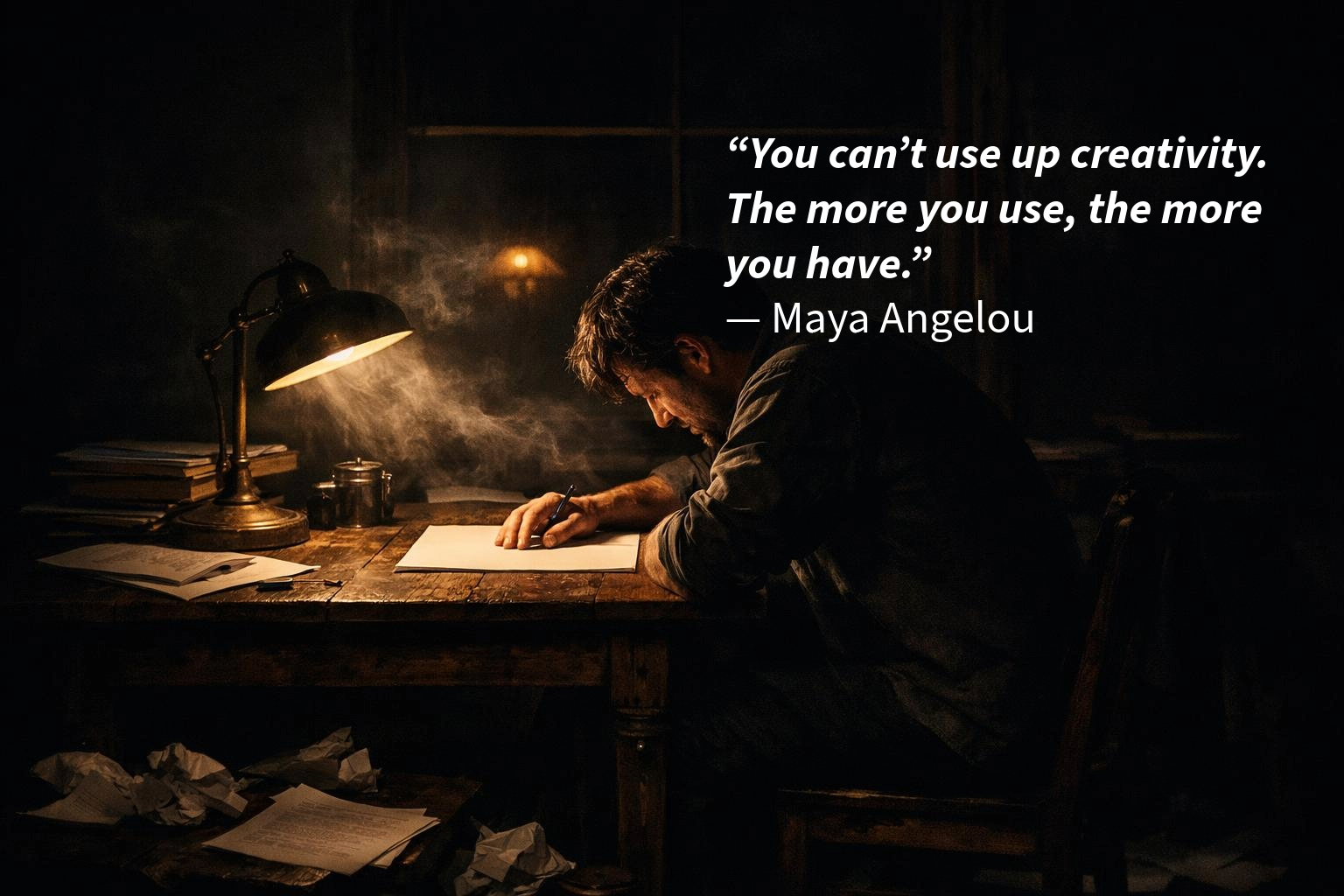
You sit down to write and nothing comes.
You stare at the page like it owes you something.
You wonder if maybe the well finally ran dry.
It’s a familiar fear.
That one day the thing that used to come naturally just… stops.
Part of the problem is how we think about creativity.
We treat it like a supply instead of a habit.
Like something you either have or don’t.
Like something that disappears if you use too much of it.
But most days aren’t inspired.
Most days are ordinary.
You show up tired.
You work anyway.
You write something bad.
You cross it out.
You try again.
And slowly, something moves.
Not because inspiration arrived.
Because you stayed long enough for it to find you.
Maybe the well doesn’t run dry.
Maybe it just waits to see if you’re coming back.
Reflective Prompt
When was the last time you stopped creating because you thought you had nothing left to give?


 Memoirs of Madness