Reblog: Black Soldiers in the Napoleonic Wars

I came across this piece earlier today, and it stopped me. We talk about the Napoleonic Wars like they were fought by one kind of soldier in one kind of uniform, but history is rarely that clean. This post digs into the lives of Black soldiers who served in that era — men like George Rose and Thomas James — whose stories sit in the margins instead of the main text.

I’m reblogging it because it reminds us how easily entire lives can disappear from the record, not by accident, but by habit. And sometimes the most important thing we can do is shine a light where the page went quiet.


The Price of Stolen Time

Daily writing prompt
What historical event fascinates you the most?

As a lifelong student of history, I’ve never been able to pull one event from the timeline and say, “This is my jam,” or “This right here—this is the shit.”

I’ve said it, of course. Probably said it too often. But none of them ever stick, because the truth is—it’s all the jam. Every revolution, every backroom betrayal, every random Tuesday that accidentally changed the world. History is the world’s longest mixtape, and it never skips a track.

I remember friends saying, “History’s boring.” Or worse, “So what?” I’d sit there thinking: You mean to tell me you can scroll for hours watching conspiracy podcasts and true-crime breakdowns, but a real story about an empire eating itself alive doesn’t do it for you?

History isn’t boring. It’s gossip that got serious—a mirror that never lies.

And sometimes, buried in the margins, there’s someone like Henrietta Wood.

Henrietta Wood wasn’t supposed to be remembered.

 Born enslaved in Kentucky around 1818. Freed in 1848. Kidnapped back into slavery in 1853 by a man named Zebulon Ward—an opportunist who saw her freedom as a clerical error he could correct for profit.

He sold her into slavery in Mississippi and Texas. Twelve years gone.

 Then emancipation came, and instead of fading quietly into “freedom,” she filed a lawsuit. Not a complaint. Not a plea. A bill.

In 1870, she sued Ward for $20,000 in federal court—a number so bold it had to make the room flinch. The trial dragged for eight years because that’s what the legal system does when it owes you something. In 1878, she won $2,500, the equivalent of about $65,000 today.

Ward paid.

 Henrietta used the money to send her son to law school.

 Tell me that’s not poetic symmetry.

She didn’t change the system. She cracked it—just enough to let the light in.

“Arthur H. Simms graduated law school in 1889, made his mark in Chicago—living proof that a mother’s lawsuit wasn’t just a story, but the starting gun for a lineage.”

Most people would’ve spent it fast, but Henrietta played a longer game.

 She had principles and foresight in a time when most folks were just trying to breathe through the next day. Survival back then wasn’t a metaphor—it was the whole assignment.

She was awarded her money just after the crash of 1877, when the country was bleeding out from economic collapse and labor riots. Chaos in the streets. Blood on the rails. And in the middle of all that noise, there she was—a newly wealthy Black woman in America. By any measure, that was nothing short of miraculous.

She didn’t just win a case; she won proof that the system could be forced, however briefly, to recognize her humanity—

 and the humanity we had fought for a hundred years earlier.

Just one year before her victory, Black people had officially become citizens under the Reconstruction Amendments. On paper, anyway. But the ink was still wet, and the promise hadn’t been delivered. Citizenship didn’t come with safety, or wealth, or power—it came with a target on your back.

It’s wild when you think about it: Lincoln said “four score and seven years ago” to define what America was supposed to mean, and here we were, a single score later, still trying to cash that promise. Henrietta Wood’s lawsuit was more than a demand for money—it was a demand for the score to finally be settled.

But history doesn’t balance its books that easily. Her win was a down payment, not a clean ledger.

Nearly five full scores—ninety-five years—passed between the ratification of the 14th Amendment in 1868, which declared Black people citizens, and the 24th in 1964, which finally said they could vote without paying for the privilege. Ninety-five years between being written into the Constitution and being let into the booth. That’s not progress; that’s a slow bleed dressed up as democracy.

And that’s what makes Henrietta Wood’s victory so damn profound. She didn’t wait for the Constitution to catch up. She didn’t wait for permission. In a time when her citizenship was still a technicality and her humanity was a debate; she walked into a courtroom and forced the system to do what the law had promised but hadn’t yet learned how to deliver—recognize her.

The same law they had fought and bled for before they were even citizens. Before the ink on the 14th Amendment, before the word freedom stopped needing quotation marks. Henrietta stood on that battlefield of paperwork and principle and made the country do what the statue in the bay only claimed to represent.

She settled her own score nearly a century before the nation even realized the debt existed.

That’s why I study history. That’s why I never found it boring. Because every century, every headline, every name carved into stone is part of the same damn argument about who gets to be human and who gets to send the bill.

Henrietta Wood didn’t just win money—she won meaning. She took the same law they fought and bled for before they were even citizens, and she made it do what the statue in the bay only pretends to: stand for liberty, not theater. She didn’t ask for mercy. She demanded math.

And that’s what history really is—math written in blood and ink. Every generation adds up what the last one promised, and we’re still carrying the remainder.

So when people tell me, “History’s over,” I just laugh. The score’s not settled. Somewhere between 1868 and now—between Henrietta’s courthouse and that statue still holding her torch over borrowed water—the light keeps flickering like a warning.

What did Led Zeppelin say? “The Song Remains the Same.”

That’s the jam. Every damn time.

Author’s Note

I love history. So much that I’m building an entire website for it—and for everything else that refuses to be forgotten.

 We make history in every breath we take. Every choice, every fight, every story that doesn’t get told.

How in the hell can that ever be boring?

Quote of the Day – 10052025


Personal Reflection:

Fear is persuasive because it sounds like reason. Because sometimes it is… but this isn’t what we’re going to talk about today.

Most days, fear wears the face of logic. It tells us not to risk too much, not to look foolish, not to try again. It dresses itself in memory—every failure, every misstep, every scar that whispers don’t you dare. And we listen, because falling is familiar. Pain has always been the more reliable teacher.

But Hanson’s words cut through that lie with something simple, almost childlike in its daring: what if you fly? It’s not optimism; it’s defiance. It’s a quiet middle finger to the voice that says “stay small.” Because fear isn’t the enemy—it’s the inertia that follows it. We let the fear calcify until even the idea of trying feels foreign.

Freedom doesn’t arrive as a grand revelation; it comes in tremors. In the moment you stop asking permission to exist. In the tiny decision to move anyway—shaking, doubting, breath caught in your throat—but moving.

Maybe the point isn’t to silence the fear. Maybe the point is to carry it to the edge with you, acknowledge its weight, and jump anyway. Because at some point, the ache of staying grounded becomes heavier than the risk of falling. And when that happens, when you finally step off the ledge—that’s not the sound of fear breaking.
That’s the sound of your wings remembering what they were built for.


Reflective Prompt for Readers:

What fear have you mistaken for reason?
When was the last time you stopped arguing with it long enough to hear what it was really saying?
And if you carried that fear with you to the edge—not to silence it, but to show it the view—what might happen if you jumped anyway?

A Journey into 1969

Daily writing prompt
Share what you know about the year you were born.

DAILY PROMPT RESPONSE

I’ve always been a fan of history. I can babble about various eras throughout at a moment’s notice. I once had a secretary tell me I could do things that happened 3000 years ago, but I can’t remember to check my email or voicemail. I laughed my butt off when she said it because it was entirely accurate. Despite all the things in history I researched, I never looked into the year I was born.

So, spent most of the day researching events of 1969 and discovered I did, in fact, know many of them. So, the excitement I was feeling sort of dwindled. Then I kept digging and found some cool stuff that requires further research so things are right in the universe again. I would have had this post out earlier, but I fell into the rabbit hole and started reading newspaper articles about the events I was researching. I also started following local events that were only important to the people involved. So deep, I became jittery from the lack of coffee. So, I had to stop and get my caffeine and nicotine levels back in tolerance.

I’m not even close to finishing my research in 1969, but I thought I had better stop and post the research outline I had composed. I fully expect several from the stoop and knucklehead reports to stem from my research.

Global Events

  • Apollo 11 Moon Landing (July 20, 1969) 
    • NASA astronauts Neil Armstrong and Buzz Aldrin became the first humans to land and walk on the Moon.
  • Vietnam War Escalation 
    • Ongoing conflict: U.S. troop levels peaked, and anti-war protests grew worldwide.
  • Sino-Soviet Border Conflict 
    • Armed clashes occurred between China and the Soviet Union along their shared border.
  • Stonewall Riots (June 28, 1969)
    • A pivotal moment in the LGBTQ+ rights movement started at the Stonewall Inn in New York City.
  • Charles Manson Arrested (December 1969) 
    • Manson and members of his cult were arrested for a series of murders in California, including that of actress Sharon Tate.
  • Coup in Libya (September 1, 1969)
    • Muammar Gaddafi led a bloodless coup to overthrow King Idris, beginning his long rule over Libya.
  • Brazil’s AI-5 Dictatorship
    • Institutional Act No. 5 tightened the military dictatorship’s control, suspending civil liberties and intensifying oppression.
  • The First Mont Blanc Tunnel Opened (July 16, 1969)
    • Connecting Italy and France, this tunnel improved European transportation networks.

Science and Technology

  • ARPANET Goes Online (October 29, 1969)
    • The precursor to the internet successfully transmitted its first message between UCLA and Stanford.
  • Concorde Makes Its Maiden Flight (March 2, 1969)  
    • The supersonic aircraft completed its first test flight in France.
  • Mariner 6 and Mariner 7 Missions  
    • NASA spacecraft sent back close-up images of Mars.
  • First Automatic Teller Machine (ATM) Installed in the U.S.
    • Chemical Bank in Rockville Centre, New York, installed the first U.S. ATM on September 2, 1969.
  • Creation of the Monty Python Comedy Troupe
    • Although their show debuted in 1969, the group formed earlier that year and shaped modern comedy.
  • First Transcontinental Boeing 747 Flight
    • While its commercial debut came in 1970, Boeing conducted its first long-range test flights in 1969, revolutionizing air travel.
  • First Manned Flight of the Lunar Module (March 3, 1969)
    • Apollo 9 tested the Lunar Module in Earth’s orbit, a critical step toward the Moon landing.
  • Soyuz 4 and Soyuz 5 Docking (January 1969)
    • The Soviet Union achieved the first successful docking of two manned spacecraft in orbit.
  • First Artificial Heart Implant in a Human
    • Dr. Denton Cooley implanted the first artificial heart into a patient as a bridge to transplantation.
  • Discovery of Reverse Transcriptase in Viruses
    • The enzyme reverse transcriptase was identified, laying the groundwork for advances in genetic engineering and virology.
  • Advances in Organ Transplantation
    • Immunosuppressive drugs were improved, increasing the success rate of organ transplants.
  • Introduction of UNIX
    • Developed at Bell Labs by Ken Thompson and Dennis Ritchie, UNIX became a foundational operating system for modern computing.
  • The Birth of Microprocessors
    • Developments in integrated circuits paved the way for the microprocessor, though commercial products were still a few years away.

Political Events

  • Richard Nixon Becomes U.S. President (January 20, 1969)
    • Nixon was inaugurated as the 37th President of the United States.
  • Yasser Arafat Becomes Chairman of the PLO  
    • Arafat was elected to lead the Palestine Liberation Organization.
  • The Troubles Begin in Northern Ireland
    •  A violent ethno-nationalist conflict erupted, lasting for decades.
  • Montreal Expos and Kansas City Royals Debut (1969) 
    • Major League Baseball expanded, introducing these teams.
  • The Voting Age Debate in the U.S.
    • Ongoing discussions began to lower the voting age from 21 to 18, eventually leading to the 26th Amendment in 1971.
  • The Cuyahoga River Fire (June 22, 1969)
    • The river in Cleveland, Ohio, caught fire due to severe pollution, sparking national outrage and leading to environmental reforms.
  • The Black Panther Party’s Free Breakfast for Children Program
    • The program expanded in 1969, providing meals to thousands of children and bringing attention to social inequities.
  • Swann v. Charlotte-Mecklenburg Board of Education
    • A U.S. Supreme Court case began challenging racial segregation in public schools through busing, influencing desegregation efforts.
  • The Chappaquiddick Incident (July 18, 1969)
    • Senator Ted Kennedy’s car accident on Chappaquiddick Island resulted in the death of Mary Jo Kopechne, raising questions about his political future.

Cultural Highlights

  • Sesame Street Premieres (November 10, 1969)
    • The educational children’s TV show debuted on PBS.
  • The Santa Barbara Channel Platform A Oil Spill
    • Though overshadowed by other environmental events, this spill marked one of the largest in U.S. history, leading to modern environmental activism.
  • First Issue of New York Magazine
    • The magazine debuted in 1969, influencing American journalism and pop culture.

Music 

Major Events

  • Woodstock Music Festival (August 15-18, 1969)
    • Held in Bethel, New York, Woodstock became an iconic event of the counterculture movement. It featured legendary performances by Jimi Hendrix, Janis Joplin, Santana, and more.
  • The Altamont Free Concert (December 6, 1969) 
    • Organized by the Rolling Stones, this concert turned violent, with the Hells Angels providing chaotic security, leading to the death of a concertgoer.
  • The Beatles’ Abbey Road Released (September 26, 1969)
    • Featuring hits like “Come Together” and “Here Comes the Sun,” *Abbey Road* became one of the band’s most iconic albums.
  • The Beatles Perform for the Last Time Together (January 30, 1969)
    • The famous rooftop concert at Apple Corps in London marked their final public performance as a band.
  • Led Zeppelin’s Rise to Fame
    • The band released their debut album, “Led Zeppelin” (January 12, 1969), and their second album, “Led Zeppelin II” (October 22, 1969), revolutionizing rock music.

Album Releases

  • The Rolling Stones – “Let It Bleed” (December 5, 1969)  
    • Featuring classics like “Gimme Shelter” and “You Can’t Always Get What You Want.”
  • David Bowie – “Space Oddity” (July 11, 1969) 
    • The album featured Bowie’s breakthrough single “Space Oddity,” inspired by the Apollo 11 moon landing.
  • Johnny Cash – “At San Quentin” (June 1969)
    • A live album recorded at San Quentin Prison featuring the hit “A Boy Named Sue.”
  • The Who – “Tommy” (May 23, 1969) 
    • A rock opera about a “deaf, dumb, and blind boy,” which became a milestone in progressive rock.
  • Crosby, Stills & Nash – “Crosby, Stills & Nash” (May 1969)
    • The trio’s debut album features hits like “Suite: Judy Blue Eyes.”
  • Grand Funk Railroad – “On Time” (August 1969) 
    • debut album, while initially dismissed by critics, provided a sonic roadmap for the success that followed

Genre Milestones

  • The Birth of Heavy Metal
    • Led Zeppelin, Black Sabbath (their self-titled album recorded in late 1969), and Deep Purple helped define the heavy metal genre.
  • Motown’s Continued Dominance
    • Stevie Wonder, Diana Ross & The Supremes, and Marvin Gaye released hits like “My Cherie Amour” and “Someday We’ll Be Together.”
  • Country Rock Emerges 
    • Albums like The Byrds’ *Dr. Byrds & Mr. Hyde* and The Flying Burrito Brothers’ *The Gilded Palace of Sin* popularized the genre.
  • Jazz Fusion Gains Traction
    • Miles Davis began working on *Bitches Brew* (released in 1970), blending jazz with rock elements.

Live Performances and Innovations

  • The Harlem Cultural Festival (Summer 1969)
    • Known as the “Black Woodstock,” this series of concerts in Harlem showcased artists like Nina Simone, Stevie Wonder, and Sly and the Family Stone.
  • Introduction of the Moog Synthesizer in Popular Music
    • The Moog synthesizer was prominently featured in albums like Wendy Carlos’s *Switched-On Bach,* helping to popularize electronic music.

Notable Singles

  • “Suspicious Minds” – Elvis Presley (1969)  
  • “Honky Tonk Women” – The Rolling Stones (1969) 
  • “Aquarius/Let the Sunshine In” – The 5th Dimension (1969)  
  • “Bad Moon Rising” – Creedence Clearwater Revival (April 1969) 
  • “Pinball Wizard” – The Who (March 1969)

Movies 

Box Office Leaders

  • Butch Cassidy and the Sundance Kid
  • The Love Bug
  • Midnight Cowboy 
  • Easy Rider 
  • Hello, Dolly!

Award-Winning Films:

  • “Midnight Cowboy”: Won Best Picture Oscar, first X-rated film to do so
  • “True Grit”: Earned John Wayne his only Academy Award for Best Actor
  • “Z”: Won Best Foreign Film Oscar
  • “The Prime of Miss Jean Brodie”: Earned Maggie Smith Best Actress
  • “Cactus Flower”: Brought Goldie Hawn Best Supporting Actress

Notable International Releases

  • Army of Shadows: French war drama directed by Jean-Pierre Melville
  • Pierrot le fou: French crime drama by Jean-Luc Godard
  • Simon of the Desert: Spanish historical drama by Luis Buñuel
  • On Her Majesty’s Secret Service: Sixth James Bond fi\47

Ask me a Real Question

Daily writing prompt
Who is your favorite historical figure?

DAILY PROMPT RESPONSE

When it comes to historical figures, there are too many people to name. That’s just the people we know all about. This doesn’t include the people who conveniently wrote out the annuals of history. I once met a man who worked as an engineer at NASA during the space race. I’ve never heard or read his name anywhere, but he was there. I saw the pictures and remembered the stories. Stories that were confirmed years later in books and motion pictures. But to ask someone about their favorite historical figure? Oh, come on, ask me a real question.

Who decided who is historic anyway? Who makes that determination? I don’t know them, do you know them? You pick up five different history books and have five different accounts of an event or person. Who knows the real truth. However, I love the journey of discovering more information about a person or a topic. There is nothing better for me. Well, until I incorporate that information into one of my stories and sit back, waiting for a local know-it-all to tell me I got my facts wrong. It’s always a pleasure to watch their forehead crinkle and their bunk. Then, they clear their throat to inform me of my error. Followed by this now historical line of conjecture.

“Hmm… this isn’t really historically accurate, but since it’s fiction, I’ll give it a pass.”

Like I give a flying f_ [beep]!


The history taught in schools makes me shudder. I remember asking one of my granddaughters about the history of the computer. Their response “Why does that matter?” I thought I was going to blow a gasket. Neither my children nor grandchildren understood my reaction. Which just increased my fury. They certainly didn’t have a problem. “Peepaw, I need a new laptop.”, “Peepaw, my laptop broke. Can you fix it?” How could something so instrumental to our existence not be taught in schools? They were still teaching Colonial America and the people who shaped it but weren’t teaching about the people who created the instrument they used to teach it.

Ada Lovelace isn’t taught in the history books. If it wasn’t for figuring out that computers could be used for more than calculations, we as a society wouldn’t be where we are now. Lovelace algorithm was built by countless inventors. So when I tell Alexa to play a playlist or ask Siri to set a reminder, perhaps they should have been Ada. Why not? I’m listening to a lecture on physics as I write this post on a pair of Bluetooth headphones. Thank god for Bluetooth; I could never find a pair of headphones with a long enough cord. Well, you can thank Hedy Lamarr for the algorithm. Yep, the beauty queen and movie star from back in the day.

Lamarr co-invented a frequency-hopping torpedo for the Allied forces during WWII, but it was never used. However, Lamarr’s frequency-hopping technology was later used throughout the U.S. military. I had used the tech for years before I knew Lamarr had a hand in its development. I was researching the Olympic games for a post and discovered something interesting. We have heard of Jesse Owens’s legendary exploits during the 1936 Olympics. He won four gold medals during the event and pissed off Hilter for good measure. So, he is always a cool person in history. However, have you heard of Cornelius Johnson?

Cornelius Johnson won the gold medal in the high jump, setting the record. Johnson was 23 years old when he accomplished this feat. Unfortunately, Johnson died in 1946, six months before his 33rd birthday. The United States did a podium sweep that day, meaning the gold, silver, and bronze were won by U.S. athletes. Dave Albritton, silver medalist, and Delos Thurber, bronze medalist, both outlived Johnson but were also left out of the history books.

We are who we are because of history, whether it be good, bad, or ugly. Each known or unknown event has helped you develop, no matter where you form. We need to appreciate what we can and learn from all of it.

Beryl Markham – Female Aviator

ARTICLE – MINI BIOGRAPHY

After being raised by a single mom, I’m fully aware of the capabilities of women. I watched my mother face the challenges of raising an oddball son and never seemed to miss a beat. Even as a child, I wondered why they weren’t listed in the annuals of history. Surely, there had to be tough women like my mother throughout history? Of course, there were. I’m glad we have access to the information about these feats done by these amazing women. Will we be able to list them all or discover all the things women had a hand in? Probably not. However, I will use my platform to celebrate the courage of these women.


Beryl Markham’s life reads like an adventure novel, filled with groundbreaking achievements, thrilling exploits, and a legacy that transcends time. As the first woman to fly solo across the Atlantic from east to west, Markham shattered the glass ceiling in aviation. Her memoir, “West with the Night,” offers a mesmerizing account of her experiences in early 20th-century Africa and her daring flights, showcasing her indomitable spirit. This blog post seeks to explore the remarkable journey of Beryl Markham, celebrating her contributions to aviation and literature.

Early Life in Kenya

Born in England in 1902, Beryl Clutterbuck moved to Kenya with her family at a young age, igniting her lifelong love affair with Africa. Growing up on her father’s horse farm, she developed an early passion for horses, which later translated into a pioneering career in horse training. Her fascination with flying began in Kenya, where she met Tom Campbell Black, a notable figure in her aviation journey, fostering her aspiration to take to the skies.

Pioneering Aviation Career

Markham’s aviation career was marked by a series of remarkable achievements. She became the first woman to obtain a commercial pilot’s license in Kenya. In 1936, she made history by flying solo across the Atlantic from east to west, facing harsh weather conditions and navigating by stars. This monumental flight secured her place in aviation history, showcasing her courage and skill as a pilot.

Adventures and Challenges

Markham’s life was replete with adventures that stretched beyond the cockpit. Her personal life, marked by several marriages and notable friendships with prominent figures like Denys Finch Hatton and Karen Blixen, added layers to her already complex character. Despite the challenges she faced, including financial struggles and societal constraints on women of her time, Markham’s resilience never waned, driving her to pursue her passions relentlessly.

Literary Contributions

Though primarily known for her aviation feats, Markham was also an accomplished author. Her memoir West with the Night, published in 1942, was praised for its lyrical prose and vivid descriptions of colonial Africa. Despite its initial lukewarm reception, the book was rediscovered and celebrated in the 1980s, heralded as a masterpiece of 20th-century literature and providing a nuanced perspective on Markham’s extraordinary life.

Legacy and Recognition

Beryl Markham’s legacy is multifaceted, influencing the aviation and literary worlds. Her daring spirit and groundbreaking achievements in aviation paved the way for future generations of female pilots. Meanwhile, her literary contributions offer a unique glimpse into a woman’s life who refused to be defined by the era she lived in. Today, Markham is remembered for her historical flights and as a symbol of courage, resilience, and the pursuit of one’s passions against all odds.

Embarking on this detailed exploration of Beryl Markham’s life will allow us to paint a comprehensive picture of her impact on aviation and literature. Starting with her early life in Kenya, we’ll weave through her many accomplishments, adventures, and the legacy she leaves behind.

The Right to Vote

Do you vote in political elections?

DAILY PROMPT RESPONSE

As child, I watched the elders of my community banned together and brave the elements for their chance to be heard. I remember the rumbling of the younger generations about elections being rigged and didn’t matter if they voted or not. The elders wouldn’t hear this foolishness. We have sacrificed so much for this right. How dare you belittle our efforts. This stance changed the minds of some, but others continued in protest. However, they did so silently, because no one wanted to incur the wrath of the elders. I listened to stories of separate bathrooms and drinking fountains. They were hard to believe because it was so different from the world I knew. Unfortunately, the injustice remained vigilant. The methods changed, but the theme remained the same. So, I couldn’t wait to do my part. For years, I waited for my chance to vote. I participated in the voting process in all the school elections. I felt it was civic duty to make a choice. Although I had pledged my devotion to the process, I didn’t really understand why the elders were so committed. So, I looked into it at my grandmother’s request. She never wanted us to do something just because everyone else did it. One of her frequent sayings “If someone jumped off a bridge, you gonna jump too?” “You have the right to do whatever you want, but understand what hell you’re doing. Don’t be a dumbass.” As my research continued, I quickly discovered that the level of injustice ran deeper than I initially thought. Now, I vote at most opportunities. I know this wouldn’t be good enough for the elders, but their legacy is intact. I provided a brief overview of the injustice concerning the right to vote.

The Right to Vote: A Cornerstone of Democracy

The right to vote is often hailed as one of the most fundamental aspects of a democratic society. It is the mechanism through which citizens exercise their sovereignty, choose leaders, and shape the laws that govern them. This right, however, has not always been universally accessible. Its evolution has been marked by struggle, activism, and significant legal reforms. Today, as we strive for more inclusive and fair electoral systems, it is crucial to reflect on the history, importance, and contemporary challenges associated with the right to vote.

Historical Evolution of the Right to Vote

The journey toward universal suffrage has been long and arduous. In the early days of democracy, voting rights were typically restricted to a privileged few. In ancient Athens, often cited as the cradle of democracy, only male citizens with property could vote. Women, slaves, and non-property owners were excluded. Similarly, in the early years of the United States, voting was predominantly a right reserved for white, land-owning men.

The first significant wave of expansion in voting rights came in the 19th century with the abolition of property requirements. This change was driven by a growing belief in the principle that all men, regardless of wealth, should have a say in governance. The 15th Amendment to the U.S. Constitution, ratified in 1870, marked another crucial milestone by prohibiting denying the right to vote based on race, color, or previous condition of servitude. Despite this amendment, African Americans, particularly in the Southern states, faced discriminatory practices like literacy tests, poll taxes, and violent intimidation aimed at disenfranchising them.

Women’s suffrage was another significant battle in the history of voting rights. The movement gained momentum in the late 19th and early 20th centuries, culminating in the ratification of the 19th Amendment to the U.S. Constitution in 1920, which granted women the right to vote. This victory was a pivotal moment in the fight for gender equality and marked the beginning of a broader struggle for women’s rights.

In the mid-20th century, the civil rights movement brought renewed focus to the disenfranchisement of African Americans. The Civil Rights Act of 1964 and the Voting Rights Act of 1965 were landmark pieces of legislation that sought to eliminate racial discrimination in voting. These laws prohibited practices like literacy tests and provided federal oversight of voter registration in areas with a history of discriminatory practices.

The Importance of Voting

Voting is more than just a right; it is a powerful tool for enacting change and holding governments accountable. Through the ballot, citizens can influence policy decisions on issues ranging from healthcare and education to climate change and social justice. It is a means of expressing consent and dissent, giving voice to diverse perspectives within a society.

Moreover, voting is a critical component of political legitimacy. Governments derive their authority from the consent of the governed, and regular, free, and fair elections are the primary mechanism through which this consent is gauged. When citizens participate in elections, they validate the democratic process and reinforce the principle that political power is derived from the will of the people.

Voting also plays a vital role in promoting social cohesion and civic engagement. It encourages individuals to become informed about political issues, candidates, and policies. This engagement fosters a more educated and active citizenry, which is essential for the health and vibrancy of a democracy.

Contemporary Challenges

Despite the progress made over the centuries, the right to vote faces numerous challenges in the contemporary era. Voter suppression, electoral fraud, gerrymandering, and disenfranchisement of marginalized groups are issues that continue to undermine the integrity of democratic systems.

  1. Voter Suppression:
    Voter suppression refers to tactics aimed at discouraging or preventing certain groups of people from voting. These tactics can include strict voter ID laws, purging of voter rolls, limited polling places in certain areas, and misinformation campaigns. Such practices disproportionately affect minority communities, the elderly, and low-income individuals, thereby perpetuating social inequalities.
  2. Electoral Fraud:
    While less common than voter suppression, electoral fraud poses a significant threat to the legitimacy of elections. This can take the form of tampering with ballot boxes, falsifying voter registration, or hacking electronic voting systems. Ensuring the security and transparency of the electoral process is essential to maintaining public trust in democratic institutions.
  3. Gerrymandering:
    Gerrymandering involves manipulating electoral district boundaries to favor a particular political party or group. This practice can distort electoral outcomes and undermine the principle of fair representation. Efforts to establish independent redistricting commissions and use algorithmic approaches to drawing district lines are steps toward addressing this issue.
  4. Disenfranchisement of Marginalized Groups:
    In many countries, certain groups of people, such as convicted felons or non-citizen residents, are disenfranchised. While there are arguments for restricting the voting rights of some groups, it is important to balance these considerations with the broader goal of inclusivity and ensuring that all members of society have a voice in the political process.

Strengthening the Right to Vote

To safeguard and strengthen the right to vote, several measures can be implemented:

  1. Voter Education and Outreach:
    Educating citizens about their voting rights and the importance of participating in elections is crucial. Outreach programs can help increase voter registration and turnout, particularly among marginalized communities.
  2. Electoral Reforms:
    Reforms aimed at making the voting process more accessible and secure are essential. This can include measures like automatic voter registration, expanded early voting, and the implementation of robust cybersecurity protocols for electronic voting systems.
  3. Legislative Protections:
    Strengthening legal protections against voter suppression and discrimination is vital. This includes enforcing existing laws and enacting new legislation to address emerging threats to voting rights.
  4. Civic Engagement:
    Encouraging civic engagement through community organizations, grassroots movements, and public forums can empower citizens to take an active role in the democratic process. Civic education should be integrated into school curricula to foster a culture of participation from an early age.

Conclusion

The right to vote is a cornerstone of democracy, embodying the principles of equality, representation, and political participation. While significant progress has been made in expanding and protecting this right, ongoing challenges necessitate continued vigilance and action. By promoting voter education, enacting electoral reforms, and fostering civic engagement, we can ensure that the right to vote remains a powerful and accessible tool for all citizens. As we navigate the complexities of contemporary democracy, the collective effort to uphold and strengthen this fundamental right will be crucial in shaping a just and equitable society.

Good Westerns are hard to Find

What movies or TV series have you watched more than 5 times?

DAILY PROMPT RESPONSE

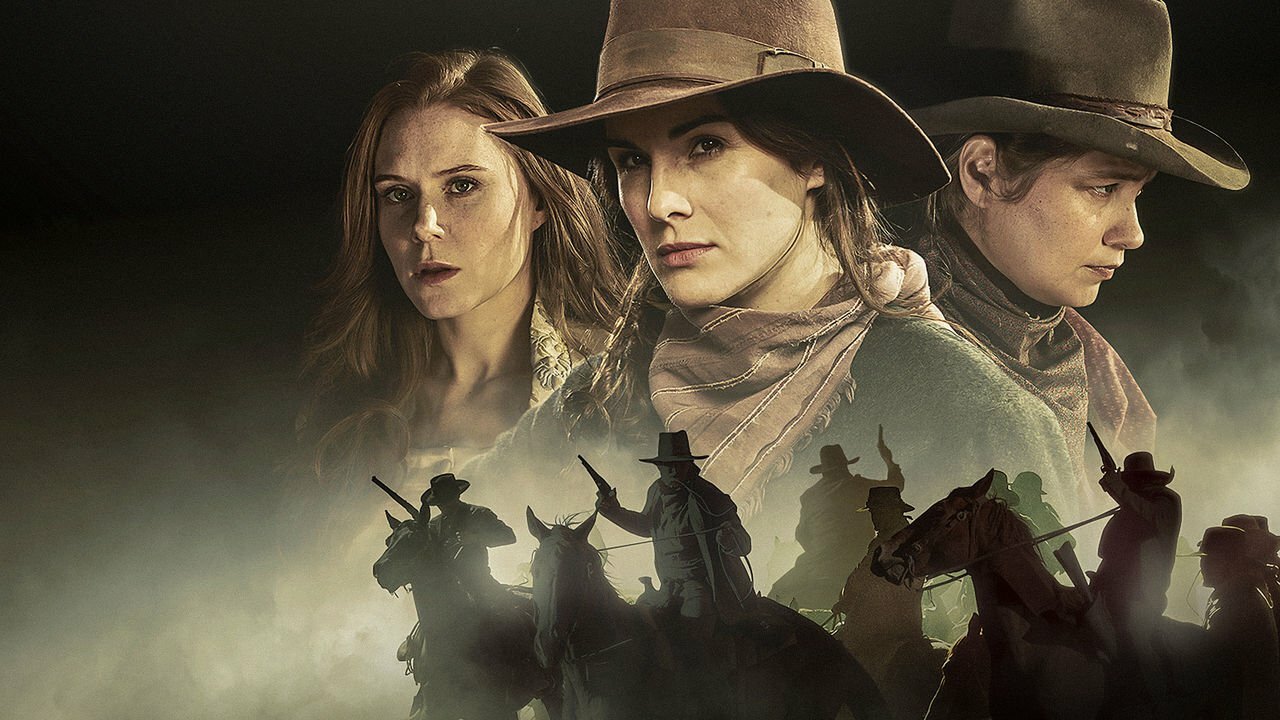
I suppose ever since childhood, I’ve been a fan of a good Western. The Magnificent Seven was my introduction to the world of justice. I suppose many others my age, I’ve been disappointed with the state of Western movies as of late. However, I’m glad to admit Hollywood must have heard me grumbling and put some decent Westerns. One of those such Westerns is the limited Netflix series entitled Godless.

“Godless” is a gripping Western drama series that debuted on Netflix in 2017. Set in the 1880s, it explores the story of La Belle, a small New Mexico town mysteriously inhabited almost entirely by women after a mining accident claims the lives of nearly all the town’s men. The series intensifies when a menacing outlaw, Frank Griffin, played by Jeff Daniels, and his gang of bandits set their sights on La Belle, seeking revenge on Roy Goode, a former protégé who betrayed him. The show weaves themes of redemption, betrayal, and survival against a backdrop of stunning landscapes and a town fighting to assert its independence. “Godless” offers a unique take on the Western genre, focusing on strong female characters, moral ambiguity, and complex human relationships. It received critical acclaim for its storytelling, performances, and visual style.

Cast of Characters:

  1. Frank Griffin – Played by Jeff Daniels, Frank Griffin is the menacing outlaw leader seeking vengeance on his former protégé.
  2. Roy Goode – Portrayed by Jack O’Connell, Roy is a young outlaw who finds refuge in La Belle while on the run from Griffin.
  3. Alice Fletcher – Michelle Dockery plays Alice, a tough widow and outsider who provides shelter to Roy.
  4. Bill McNue – Scoot McNairy takes on the role of the La Belle sheriff, grappling with his own vulnerabilities while trying to protect the town.
  5. Mary Agnes McNue – Merritt Wever portrays Mary Agnes, the widow of the town’s mayor, who becomes a leader in her community.
  6. Whitey Winn – Thomas Brodie-Sangster plays Whitey, the young and brave deputy of La Belle.
  7. Maggie McNue – Tantoo Cardinal is Maggie, the town’s wise medicine woman who provides guidance and support to its residents.
  8. Truckee – Samuel Marty plays Truckee, Alice Fletcher’s son, who is curious and spirited.
  9. A.T. Grigg – Jeremy Bobb portrays A.T. Grigg, a determined newspaper reporter following the story of Griffin’s gang.

The Tulsa Race Massacre: An In-depth Exploration of a Dark Chapter in American History.

ARTICLE – MINI BIOGRAPHY – HISTORY

The Tulsa Race Massacre, which occurred in 1921, remains one of the most horrific instances of racial violence in American history. This tragic event, often overshadowed in the annals of history, resulted in the destruction of a prosperous Black community, fondly known as the “Black Wall Street,” in Tulsa, Oklahoma. This essay aims to delve deeper into the formation of Black Wall Street, the heart-wrenching events of the massacre, and the enduring impacts it had on the community and American society at large.

The Emergence of Black Wall Street

In the first two decades of the 20th century, the Greenwood District in Tulsa, Oklahoma, became a sanctuary for African American business growth and wealth accumulation. This was an era marked by racial segregation and the oppressive Jim Crow laws. Yet, against these odds, a thriving and vibrant community emerged in Greenwood.

The district was home to a plethora of successful businesses, including grocery stores, banks, law offices, and medical services. Elegant homes dotted the landscape, and cultural institutions like churches and schools contributed to a rich social fabric. The area soon earned the moniker “Black Wall Street,” symbolizing the economic power and prosperity of the African American community in the face of racial adversity.

The Tulsa Race Massacre

On May 31, 1921, a series of unfortunate events sparked a violent racial conflagration. A young African American shoe shiner, falsely accused of assaulting a white woman, became the catalyst that ignited racial tensions. A white mob, bolstered by individuals deputized by local law enforcement, launched a brutal attack on the Greenwood District.

Over two harrowing days, the mob pillaged the district, burning down businesses, homes, and churches. The destruction was vast and comprehensive, resulting in the obliteration of 35 city blocks. The violence took the lives of an estimated 300 African Americans, leaving thousands homeless and the community in ruins.

The Aftermath and Legacy

The aftermath of the massacre was nothing short of devastating. The once-thriving Greenwood District was reduced to ashes; its prosperity was swept away in a tidal wave of violence and hatred. Residents who had once enjoyed relative wealth and stability were left impoverished, their dreams and aspirations shattered.

In a further blow to the community, the massacre was covered up for decades. No substantial reparatory actions were taken, and the event was not included in the state’s history curriculum until 2000. The victims and their descendants were left to grapple with the emotional and economic scars of the massacre, devoid of any formal recognition or justice.

However, the dawn of the 21st century brought a renewed push for recognition and reparations. The centennial of the massacre in 2021 brought national attention to the event, sparking calls for justice, racial healing, and reparations. Archaeological investigations have also been initiated, aiming to uncover mass graves and provide a more accurate account of the massacre’s horrific toll.

Conclusion

The Tulsa Race Massacre is a painful and crucial part of America’s racial history. Its legacy serves as a stark reminder of the systemic racism that African Americans have faced and continue to face. Today, as the nation grapples with racial injustices, the story of the massacre and the destruction of the “Black Wall Street” serves as a rallying cry for equality, justice, and reparations. We must remember and learn from this dark chapter to build a more equitable and inclusive future.

Robert Smalls

ARTICLE – MINI BIOGRAPHY – HISTORY

Robert Smalls (1839–1915) emerged from the crucible of slavery to become one of the most remarkable figures in American history, a testament to resilience, courage, and determination. His journey from enslavement to statesmanship reflects not only the indomitable spirit of one man but also the broader struggles for freedom and civil rights during a tumultuous period in the nation’s history.

Born in Beaufort, South Carolina, in 1839, Smalls spent his early years in bondage. However, evidence of his spark of resistance and an unyielding desire for freedom burned within him, accumulated with his daring escape from slavery in 1862, catapulted him into the annals of American heroism and set the stage for a remarkable career in public service.

Smalls’ defining moment occurred on May 13, 1862, when he, along with several enslaved crew members, commandeered the Confederate transport ship, the CSS Planter, in the harbor of Charleston, South Carolina. Under the cover of darkness, Smalls piloted the ship past Confederate checkpoints, even replicating the signals to avoid suspicion. The audacious escape resulted in Smalls delivering the ship, its valuable cargo, and a group of enslaved individuals to Union forces, securing freedom for himself and his fellow escapees.

Smalls’ daring act garnered national attention and earned him the admiration of abolitionists and leaders alike. His story became a symbol of resistance and a powerful narrative that challenged the prevailing racist ideologies of the time.

Following his escape, Robert Smalls dedicated himself to the cause of emancipation and civil rights. He played a pivotal role in recruiting Black soldiers for the Union Army and Navy, recognizing the potential of African-American military service as a catalyst for broader social change.

After the Civil War, Smalls entered the world of politics with the same passion and commitment that characterized his earlier endeavors. He became involved in the Reconstruction-era government of South Carolina, serving as a delegate to the state’s constitutional convention in 1868. Subsequently, he was elected to the South Carolina State Senate and later to the U.S. House of Representatives.

In Congress, Smalls continued his advocacy for civil rights and social justice. He championed legislation that sought to protect the rights of formerly enslaved individuals and worked towards building a more inclusive and equitable society. His efforts included promoting education for Black children and pushing back against the oppressive Black Codes that sought to limit the freedoms of African Americans in the post-war South.

Robert Smalls’ legacy extends far beyond his daring escape from slavery. His contributions to the political landscape of the Reconstruction era underscore the transformative power of resilience and courage. Smalls’ life serves as an enduring example of how one individual, against all odds, can transcend the shackles of oppression and contribute to the ongoing struggle for justice and equality.

As we reflect on Robert Smalls’s life, we are reminded that the fight for civil rights is built on the shoulders of those who dared defy the status quo. His journey from enslavement to statesmanship stands as a beacon of hope and a testament to the enduring spirit of those who strive for freedom and justice for all.

Percival Prattis: Breaking Barriers as the First Black Reporter in the U.S. Congressional Press Gallery

ARTICLE – MINI BIOGRAPHY – HISTORICAL EVENT

In the annals of American journalism, Percival Prattis stands as a trailblazer, a visionary journalist who shattered racial barriers and paved the way for greater diversity in the press. Born in Trinidad in 1895, Prattis would become a distinguished reporter and the first Black journalist to gain access to the prestigious U.S. Congressional Press Gallery, leaving an indelible mark on the history of American journalism.

Prattis’s journey into journalism began with his early career at the Pittsburgh Courier, a prominent African American newspaper. His exceptional investigative reporting talent and unwavering commitment to social justice quickly garnered attention. In 1925, Prattis made history when he became the first African American Associated Press member (AP) member.

His role at the AP was not just a personal triumph but a significant stride toward breaking down racial barriers in mainstream media. Prattis’s journalistic prowess and determination to challenge systemic racism and inequality positioned him as a pivotal figure in the African American press during a crucial period in American history.

The pinnacle of Prattis’s groundbreaking career occurred when he secured a coveted spot in the U.S. Congressional Press Gallery, making history as the first Black reporter to achieve this milestone. The Congressional Press Gallery, located in the United States Capitol, is a prestigious enclave for journalists covering Congress’s proceedings. Prattis’s presence in this historically exclusive space marked a profound moment in the ongoing struggle for racial equality.

His groundbreaking achievement took place on February 3, 1947, when the United States was grappling with the challenges of post-World War II reconstruction and the burgeoning civil rights movement. Prattis’s reporting from Capitol Hill provided insight into legislative affairs and served as a powerful testament to the capacity of African American journalists to excel in arenas traditionally dominated by their white counterparts.

Prattis’s work in the Congressional Press Gallery was characterized by a commitment to unbiased reporting and a dedication to shedding light on the issues affecting the African American community. He used his platform to advocate for civil rights, using the power of his pen to challenge discriminatory practices and contribute to the ongoing dialogue about racial justice in America.

Beyond his achievements in journalism, Prattis was actively involved in civil rights organizations, including the National Urban League. His multifaceted approach to advocacy exemplified a holistic understanding of the interconnectedness of media, legislation, and societal change.

Percival Prattis’s groundbreaking journey as the first Black reporter in the U.S. Congressional Press Gallery serves as an enduring inspiration for journalists today. His legacy underscores the importance of diverse voices in shaping a nation’s narrative and highlights the transformative power of journalism as a force for social progress. As we celebrate the achievements of pioneers like Prattis, we honor their personal triumphs and their enduring contributions to the evolution of a more inclusive and equitable media landscape.

Chinese Immigration Discrimination II: The Geary Act of 1892

ARTICLE – MINI BIOGRAPHY – HISTORY

The Geary Act, enacted in 1892, represents a significant chapter in the history of American immigration law. Serving as an extension and reinforcement of the Chinese Exclusion Act of 1882, the Geary Act prolonged the era of discriminatory policies targeting Chinese immigrants and added further restrictions, marking a troubling period in U.S. history.

The Geary Act’s origins can be traced back to the growing anti-Chinese sentiment in the late 19th century. Initially enacted as a ten-year measure, the Chinese Exclusion Act faced expiration in 1892. Concerns over the potential influx of Chinese immigrants led to the introduction and passage of the Geary Act by the U.S. Congress. The legislation extended the exclusion period and intensified the restrictions imposed on the Chinese community in the United States.

One of the key provisions of the Geary Act mandated that Chinese immigrants carry identification papers, commonly referred to as “Chinese Exclusion Certificates,” at all times. Failure to produce these certificates upon demand could result in deportation or other penalties. This requirement subjected Chinese individuals to constant scrutiny and harassment, further marginalizing an already vulnerable community.

The Geary Act extended the Chinese Exclusion Act indefinitely, solidifying anti-Chinese sentiments and institutionalizing discriminatory practices. The act also imposed harsher penalties on those who assisted Chinese immigrants in evading the restrictions, including fines and imprisonment. The Chinese community faced increased challenges as the legislation reinforced stereotypes, perpetuated prejudice, and limited opportunities for social and economic advancement.

The enforcement of the Geary Act led to widespread protests and resistance within the Chinese American community. Advocacy groups and individuals worked tirelessly to challenge the discriminatory provisions of the act, asserting that it violated principles of equality and justice. Despite these efforts, the Geary Act remained in force until its eventual repeal in 1943 with the passage of the Magnuson Act.

The Geary Act, like the Chinese Exclusion Act, stands as a testament to a regrettable period in American history when xenophobia and discriminatory attitudes shaped immigration policies. The legislation contributed to the marginalization of the Chinese community and hindered the pursuit of the American Dream for countless individuals. The eventual repeal of such laws reflected a gradual shift toward more inclusive and equitable immigration policies. Still, the scars of these discriminatory practices continue to resonate in the collective memory of Chinese Americans and serve as a reminder of the ongoing struggle for justice and equal treatment.


Discrimination has been a part of my vocabulary longer than I care to admit. Yet, I didn’t know it applies to people. I spent a good portion of my life fighting for freedom and all that it represents. I knew my country wasn’t perfect; I wasn’t that naive. How could I be as an African-American? I wish I had a better idea of the madness I was fighting against. Stay tuned for tomorrow when we conclude the series on Chinese Immigration Discrimination.

Illuminating Progress: The Birth of the First Electric Lamp Factory

ARTICLE – HISTORICAL EVENT

Photo by Skylar Kang on Pexels.com

The advent of electric lighting marked a transformative moment in human history, fundamentally altering how we live and work. At the heart of this revolutionary shift was the establishment of the first electric lamp factory, a pioneering endeavor that laid the foundation for widespread electrification and illuminated a path toward a brighter future.

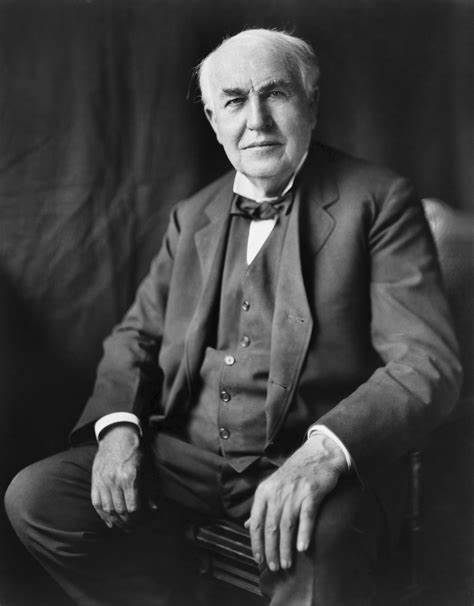
The inception of the first electric lamp factory is closely tied to the visionary work of Thomas Edison, often hailed as the “Wizard of Menlo Park.” Edison, known for his prolific inventions and entrepreneurial spirit, dedicated considerable effort to developing a practical and commercially viable electric light. In 1879, he unveiled the first successful incandescent light bulb, a breakthrough that paved the way for establishing the first electric lamp factory.

Edison’s Menlo Park laboratory in New Jersey served as the epicenter of innovation, where he and his team tirelessly worked to refine the design and production of incandescent light bulbs. The success of Edison’s invention sparked the need for mass production to meet the growing demand for electric lighting, leading to the establishment of the Pearl Street Station in New York City in 1882 – the world’s first central power plant designed to distribute electricity for lighting.

To support the electrification initiative, Edison founded the Edison Electric Light Company, a pioneering venture that incorporated the manufacturing of electric lamps and electricity generation. In 1882, the company established the first electric lamp factory on Goerck Street in Manhattan, New York. This factory was a groundbreaking facility dedicated to the large-scale production of incandescent light bulbs, a feat that had not been accomplished before.

The factory utilized innovative manufacturing processes, including the assembly line, to increase efficiency and output. Skilled workers meticulously crafted and assembled the various components of the incandescent light bulbs, transforming Edison’s invention from a scientific breakthrough into a commercially viable product. The successful operation of the first electric lamp factory marked a turning point in the history of lighting technology, accelerating the adoption of electric lighting in homes, businesses, and cities.

Beyond its immediate impact on lighting, establishing the first electric lamp factory had broader implications for industrialization and urban development. The electrification of cities transformed the nocturnal landscape, providing safer and more efficient illumination for streets and public spaces. The availability of electric light also extended working hours, fostering increased productivity and contributing to the modernization of society.

In the following decades, the electric lamp industry continued to evolve, with advancements in technology and design leading to more energy-efficient and durable lighting solutions. The legacy of the first electric lamp factory endures in the form of the widespread availability of electric lighting, shaping how we live, work, and interact with our surroundings.

As we bask in the glow of modern lighting, it’s important to reflect on the pioneering efforts of visionaries like Thomas Edison and the dedicated workers at the first electric lamp factory. Their collective ingenuity brightened our world and ignited a spark of progress that continues to illuminate our path into the future.

The Harlem Hellfighters

ARTICLE – MINI BIOGRAPHY – MILITARY HISTORY

While serving in the military, I never heard of these guys. Once I got out, I started researching military units during wartime. I came across this picture, and it just intrigued me. I have hours of data about this unit and others like it. I thought I would share a very quick overview of this amazing collection of men.

The Harlem Hellfighters, officially known as the 369th Infantry Regiment, were a remarkable group of African American soldiers who served with distinction during World War I. Despite facing racism and segregation in the United States, these courageous men showcased exceptional bravery and resilience on the battlefield, earning respect and admiration from both allies and enemies.

Formed in 1913, the 369th Infantry Regiment was originally a New York National Guard unit. When the United States entered World War I in 1917, the Harlem Hellfighters were among the first African American units to be sent to Europe. However, due to racial prejudices prevailing at the time, they were assigned to the French Army under the command of General Philippe Petain.

The Harlem Hellfighters served on the front lines for 191 days, more time in continuous combat than any other American unit during World War I. They faced intense fighting in the trenches, enduring not only the perils of war but also racism from their fellow citizens. Despite the challenges, they demonstrated exceptional courage in battles such as the Meuse-Argonne Offensive, where they fought tirelessly to overcome the enemy.

One of the most remarkable aspects of the Harlem Hellfighters’ legacy is their introduction of jazz music to Europe. The regiment’s band, led by Lieutenant James Reese Europe, played a significant role in popularizing this uniquely American art form abroad. Their performances entertained both troops and civilians, breaking down cultural barriers and contributing to the global recognition of jazz as a vibrant and influential genre.

The Harlem Hellfighters returned home as heroes, but their fight for equality did not end on the battlefield. Their experiences in World War I played a pivotal role in the broader struggle for civil rights in the United States. The recognition of their sacrifices and achievements contributed to the eventual desegregation of the military and laid the groundwork for the African American soldiers who would follow in their footsteps.

In 2019, a century after their heroic service, the Harlem Hellfighters were posthumously awarded the Congressional Gold Medal, further acknowledging their contributions and sacrifices. Their legacy remains an integral part of American history, serving as a testament to the strength, resilience, and courage of those who fought for justice and equality, both on and off the battlefield.

Origins of Black History Month

ARTICLE – MINI BIOGRAPHY

Black History Month, originally known as Negro History Week, has a profound origin rooted in the efforts of historian Carter G. Woodson. Born in 1875, Woodson dedicated his life to rectifying the historical omission of African Americans’ contributions to the United States.

In 1926, Woodson, along with the Association for the Study of Negro Life and History, established Negro History Week. This week was strategically chosen to coincide with the birthdays of Abraham Lincoln and Frederick Douglass, two individuals who significantly impacted African American history.

The primary objective of Negro History Week was to highlight the achievements, culture, and history of African Americans, which had long been overlooked or distorted in mainstream narratives. Woodson envisioned this observance as a means to foster a deeper understanding of African American heritage among both Black and non-Black communities.

Over time, the celebration gained traction, leading to an increasing recognition of the need for a more extended and dedicated period to explore Black history. In 1976, during the United States Bicentennial, President Gerald Ford officially expanded Negro History Week into Black History Month. This acknowledgment encouraged nationwide reflection on African Americans’ countless contributions throughout American history.

Black History Month has since evolved into a platform for recognizing the achievements and struggles of the Black community, highlighting figures like Martin Luther King Jr., Rosa Parks, Malcolm X, and many others. Educational institutions, community organizations, and cultural institutions across the country actively engage in commemorating Black History Month through various events, exhibits, and programs.

While Black History Month is a crucial time for celebrating and reflecting on African American achievements, it also serves as a reminder of the ongoing need to integrate diverse perspectives into everyday history education. The legacy of Carter G. Woodson’s vision lives on, inspiring continued efforts to ensure that the contributions of African Americans are recognized and appreciated throughout the year.

John Snow: Pioneer in Epidemiology and the Father of Modern Public Health

ARTICLE – MINI BIOGRAPHY

John Snow – (15 March 1813 – 16 June 1858)

Introduction:

In the annals of medical history, the name John Snow stands as a beacon of innovation and pioneering efforts in epidemiology. Often referred to as the “Father of Modern Public Health,” John Snow’s groundbreaking work during the 19th century laid the foundation for understanding infectious diseases and developing effective public health measures. This article explores the life, contributions, and enduring legacy of John Snow.

Early Life and Medical Career:

John Snow was born in York, England, on March 15, 1813. After studying medicine at the Hunterian School of Medicine in London, he earned his medical degree in 1844. Snow began his medical career as a general practitioner, but his insatiable curiosity and analytical mind soon led him to delve into the emerging field of epidemiology.

Cholera Outbreaks and the Broad Street Pump:

Snow’s seminal work emerged during cholera outbreaks that swept through London in the mid-19th century. In 1854, a particularly devastating attack struck the Soho district, claiming the lives of hundreds of residents. While prevailing theories suggested that “miasma” or foul air caused the spread of cholera, Snow was skeptical and believed in a different transmission mode.

Through meticulous mapping and analysis of cases, Snow identified a common factor: the Broad Street pump. He noticed that individuals who contracted cholera had access to water from this specific pump. Snow’s groundbreaking insight led him to propose that contaminated water, not foul air, was the source of the cholera outbreak.

In a bold move, Snow persuaded authorities to remove the pump handle, rendering it inoperable. Subsequently, cholera cases declined, providing compelling evidence for the disease’s waterborne transmission. This pivotal moment in the Broad Street cholera outbreak is often considered the birth of modern epidemiology.

Cholera and the Broad Street Pump: A Turning Point:

John Snow’s work challenged prevailing medical dogma and laid the groundwork for a paradigm shift in public health. His observations and conclusions about the role of contaminated water in spreading cholera were groundbreaking, and he pioneered the use of epidemiological methods in disease investigation.

Snow’s Legacy and Impact on Public Health:

1. Advancements in Epidemiology: John Snow’s use of maps to visualize disease patterns and his emphasis on meticulous data collection laid the foundation for modern epidemiological methods. His work has influenced countless researchers and epidemiologists, shaping the way we approach the study of disease transmission.

2. Water and Sanitation Improvements: The removal of the Broad Street pump handle was a symbolic act that underscored the importance of clean water in preventing infectious diseases. Snow’s advocacy for improved water and sanitation laid the groundwork for subsequent public health initiatives to provide safe drinking water and sanitation infrastructure.

3. Public Health Policies: Snow’s contributions were pivotal in shaping public health policies, emphasizing preventive measures and evidence-based interventions. His legacy continues to guide public health professionals in addressing infectious diseases and promoting community well-being.

4. Recognition and Commemoration: In recognition of his contributions, a blue plaque was installed at 18 Soho Square, London, commemorating John Snow’s residence and work. Additionally, the John Snow Society, established in 1993, celebrates his legacy and contributions to public health.

Conclusion:

John Snow’s remarkable achievements in epidemiology and public health continue to reverberate through time. His ability to challenge prevailing theories, use data to draw meaningful conclusions, and advocate for evidence-based interventions has left an indelible mark on the field of public health. As we navigate contemporary global health challenges, the principles and methodologies championed by John Snow remain relevant, reminding us of the enduring impact of one individual on the health and well-being of communities worldwide.

Garrett A. Morgan: Innovator and Advocate

ARTICLE – MINI BIOGRAPHY

Introduction:

Garrett Augustus Morgan, born on March 4, 1877, in Paris, Kentucky, was a visionary inventor, entrepreneur, and civil rights advocate whose contributions have left an indelible mark on American history. Despite facing racial prejudices and societal challenges, Morgan’s inventive spirit and determination led to the creation of life-changing innovations and pioneering work promoting safety and equality. Let’s dive into the remarkable life and legacy of Garrett A. Morgan.

Early Life and Entrepreneurship:

Garrett A. Morgan’s early years were marked by his relentless pursuit of knowledge and an entrepreneurial spirit. After moving to Cincinnati in the late 19th century, Morgan began working as a sewing machine repairman. His natural aptitude for machinery and mechanics laid the foundation for his future inventions.

In 1907, Morgan established the G.A. Morgan Hair Refining Company, a business focused on the manufacturing and marketing hair care products. This entrepreneurial endeavor showcased Morgan’s business acumen and provided him with the financial means to pursue his inventive interests.

Innovations in Safety:

One of Morgan’s most notable inventions was the development of the safety hood, a precursor to the modern gas mask. Inspired by a tragic tunnel explosion in 1916 that claimed workers’ lives, including rescue personnel, Morgan designed a device that could filter out harmful gases, allowing individuals to breathe safely in hazardous environments.

In 1914, Morgan patented his safety hood, featuring a hood-like apparatus with a breathing tube and two receptacles for inhaling fresh and exhaling air. This effectively prevented the inhalation of toxic fumes. His invention was widely adopted, particularly by fire departments and rescue teams, and played a crucial role in saving lives in various industries.

Traffic Signal Innovation:

Another groundbreaking invention by Garrett A. Morgan was the automatic traffic signal, patented in 1923. The inspiration for this invention came from Morgan’s observations of chaotic and dangerous intersections. The original traffic signal, the Morgan Traffic Signal, featured a T-shaped pole with three positions – Stop, Go, and an all-way stop, a precursor to the modern yellow caution signal.

Morgan’s traffic signal significantly improved road safety and traffic management, paving the way for developing more advanced and standardized traffic control systems. His invention was pivotal in shaping urban infrastructure and reducing traffic accidents.

Civil Rights Advocacy:

Beyond his significant contributions to technology and safety, Garrett A. Morgan also advocated for civil rights. Living in a time marked by racial segregation and discrimination, Morgan actively challenged societal norms. He co-founded the Cleveland Call, a Black newspaper that aimed to promote racial equality and provide a platform for African American voices.

Morgan’s commitment to social justice extended to his community involvement, where he supported initiatives to uplift African Americans and address racial inequalities. His legacy as a trailblazer in both invention and advocacy inspires future generations, emphasizing the importance of perseverance and innovation in the face of adversity.

Conclusion:

Garrett A. Morgan’s life exemplifies the power of innovation, determination, and social responsibility. His inventions in safety technology and traffic management have had a lasting impact on society, saving lives and shaping the infrastructure of modern urban environments. Additionally, Morgan’s advocacy for civil rights underscores his commitment to creating a more just and equitable world. As we celebrate the legacy of Garrett A. Morgan, we recognize him not only as an ingenious inventor but also as a pioneer who broke barriers and paved the way for progress in multiple facets of American society.

Time after Time: The Concept of Time

After looking at the RDP Friday prompt. I decided to dig in the subject a little further.

Nature of Time

Time, as we understand it, is a dimension. It’s a constant, flowing entity, moving from the past to the present and future. Physicists describe it as the fourth dimension of our universe, following the three spatial dimensions. Unlike the spatial dimensions, however, time has a direction – it is always moving forward, never backward. This unidirectionality of time, often called the ‘arrow of time,’ is a fundamental aspect of its nature.

But what does it mean for time to ‘flow’? This is a question that continues to perplex scientists and philosophers alike. The ‘flow’ of time is often associated with change – the ticking of a clock, the rising and setting of the Sun, the changing of seasons – all are manifestations of time’s ceaseless march forward.

Perception of Time

While the nature of time is constant, our perception of it is not. We, as humans, experience time in a highly subjective manner. The exact length of time can often feel different depending on various factors. Sometimes, an hour can feel like an eternity, while at other times, years seem to slip by in the blink of an eye.

Several factors influence this variability in our perception of time. Age, for instance, is often said to alter our perception of time. As we grow older, time passes more quickly. Our mental state – anxious, relaxed, focused, or distracted – can also dramatically affect how we perceive time. Additionally, the activities we engage in and the intensity of our experiences can modulate our sense of time.

Our Relationship with Time

Our relationship with time is complex and multifaceted. On the one hand, time is an essential part of our lives – it structures our days, determines the rhythm of our activities, and marks the milestones of our journey through life. On the other hand, time can also be a source of stress and anxiety – the pressure of deadlines, the fear of wasting time, and the relentless clock reminding us of our mortality.

Moreover, our relationship with time is not just individual but also collective. Societies, cultures, and civilizations have their ways of conceptualizing and measuring time – from the lunar calendars of ancient organizations to today’s atomic clocks.

Importance of Time

Time plays a pivotal role in our lives. It is a universal measure used to quantify everything from a mayfly’s lifespan to the universe’s age. It governs our daily routines, life events, and even our existence. Understanding and managing time is critical in today’s fast-paced world, where every second counts.

In this context, time management is about efficiency, productivity, balance, and well-being. It’s about making the most of our time, not by filling every moment with activity, but by using our time in a meaningful and fulfilling way.

The measurement of time is an essential aspect of human civilization. It provides structure, order, and predictability to our daily lives and is deeply ingrained in almost every aspect of our existence. This essay explores the historical development of timekeeping, the standard units of time measurement, the modern technologies employed in timekeeping, and the future implications of advancements in this field.

The Measurement of Time 

Historical Development of Timekeeping

The concept of measuring time has been integral to human societies throughout history. Ancient civilizations such as the Egyptians, Babylonians, and Greeks relied on primitive yet ingenious devices like sundials and water clocks. These devices marked the passage of time using the Sun’s position or water flow, providing these civilizations with a rudimentary but vital sense of temporal order and structure.

As societies progressed, so too did their timekeeping methods. The invention of the mechanical clock in the 14th century marked a significant milestone in the history of timekeeping. Powered by weights and gears, these clocks provided a more accurate and reliable means of measuring time than their predecessors.

The 20th century saw the advent of the atomic clock, a device that measures time-based on the vibrations of atoms. This marked a monumental leap in timekeeping technology, reflecting the immense technological advancements of the era.

Standard Units of Time Measurement

The standard units of time—seconds, minutes, hours, days, weeks, months, and years—are universally recognized and utilized. These units were primarily based on the movements of the celestial bodies. For instance, a day is determined by the rotation of the Earth on its axis, while a year is defined by the Earth’s orbit around the Sun.

The second, the base unit of time in the International System of Units, was redefined in 1967 regarding the oscillation period of a cesium-133 atom. This redefinition provided an exact time measurement unit, demonstrating humanity’s growing understanding of the natural world and our ability to harness it for our needs.

Modern Technologies in Timekeeping

In the present day, timekeeping has become more precise and accurate due to technological advances. Atomic clocks, which use the vibrations of atoms to measure time, are currently the most precise timekeeping devices known to man. These clocks are pivotal in various fields, including telecommunications, scientific research, and global navigation satellite systems such as GPS.

Other modern technologies have also revolutionized timekeeping. Digital clocks and watches have become commonplace, offering easy and convenient access to accurate timekeeping. These devices, often synchronized with atomic clocks, ensure high accuracy and reliability.

Concept of Time in Ancient Civilizations 

Egyptian Concept of Time

The ancient Egyptians had a unique and sophisticated understanding of time, deeply rooted in their cosmological and religious beliefs. They divided the day into 24 hours, with 12 hours dedicated to the daytime and another 12 hours for the nighttime. This division was not arbitrary but was based on the movement of the Sun god Ra across the sky, illustrating how their understanding of time was intertwined with their religious beliefs.

Additionally, the Egyptians used a lunar calendar, but they also developed a 365-day solar calendar. This solar calendar became the foundation for our modern calendars, a testament to the advanced nature of their civilization. The importance of time for the Egyptians was further evident in their elaborate burial rituals, which were based on the belief in eternal life after death. These rituals often involved extensive preparations and ceremonies, reflecting their faith in the continuity of time even after death.

Mayan Concept of Time

The Mayans, a civilization that thrived in Central America, had an intricate and complex understanding of time. They developed a detailed calendar system that included a 260-day sacred calendar (Tzolkin), a 365-day solar calendar (Haab), and a Long Count calendar that tracked longer periods. These calendars were not just a way to track days and years but also deeply connected to their religious and cultural practices.

Moreover, the Mayans viewed time as cyclical, with creation, destruction, and rebirth periods. This concept of time greatly influenced their architecture, agriculture, and religious practices. For instance, many of their architectural structures were built in alignment with celestial events, showing their understanding of time and its cyclical nature.

Greek Concept of Time

The ancient Greeks had a dual concept of time, represented by two gods: Chronos and Kairos. Chronos referred to sequential or quantitative time, while Kairos represented the right or opportune moment. This dichotomy reflected the Greek understanding of time as both measurable and qualitative, a complex interpretation unique to their civilization.

The Greeks also developed the concept of ‘Aion,’ representing eternity or infinite time. This concept was central to their philosophy and metaphysical thought, influencing the works of philosophers like Plato and Aristotle. Their understanding of time, therefore, was not just practical but also philosophical, shaping their worldview and understanding of existence.

Quote of the Day – 01162024


Vernon Johns, often overlooked in American civil rights history annals, made significant and impactful contributions to the movement. Known as Martin Luther King Jr.’s predecessor at the Dexter Avenue Baptist Church in Montgomery, Alabama, Johns was a fiery and fearless advocate for racial equality. This comprehensive essay delves into his early life, extensive civil rights activism, and enduring legacy.


Early Life
Vernon Johns was born in 1892 in Darlington Heights, Virginia. From an early age, he demonstrated a remarkable intellect and an insatiable appetite for learning. Despite the limited educational opportunities available to African Americans during this era, Johns pursued his studies relentlessly. He fully utilized the few resources available, eventually earning a divinity degree from Oberlin College.

His passion for education was not merely a personal pursuit; it became a central theme in his civil rights work. He fervently believed in the transformative power of knowledge. Johns saw education as the key to personal growth and societal change, a belief that would influence his approach to activism.


Civil Rights Activism
Vernon Johns began his pastoral work in various churches, but his tenure at the Dexter Avenue Baptist Church in the 1940s and early 1950s would define his civil rights activism. Unlike many of his contemporaries, Johns was unafraid to challenge the status quo. His sermons were not merely spiritual messages but powerful calls to action that highlighted the systemic injustices faced by the African American community.

His fearless approach made him a controversial figure, yet his messages resonated with many. Johns’s sermons were a source of inspiration and a catalyst for change for many, including a young Martin Luther King Jr., who would later lead the civil rights movement.


Lasting Legacy
Though less well-known than many of his contemporaries, the legacy of Vernon Johns is profoundly significant. His fearless advocacy for racial equality laid the groundwork for seminal events like the Montgomery Bus Boycott and the broader civil rights movement. His influence extended beyond these events, shaping the course of American history.

More than this, his teachings on the power of education continue to inspire generations of African American scholars and activists. Johns’s belief in the transformative power of knowledge endures, fostering a drive for education and personal growth within the African American community.

Conclusion
Vernon Johns may not be a household name, yet his contributions to the fight for racial equality in America are undeniable. His fearless activism and emphasis on education made him a pivotal figure in the civil rights movement. As we reflect on his life and legacy, let us remember Vernon Johns as a man who dared to speak truth to power, setting a path for future generations. Johns’s life serves as a testament to the power of conviction and the transformative potential of education.

The Transcontinental Railroad: Connecting a Nation

Photo by Pixabay on Pexels.com

Introduction

I’ve been a history buff my whole life. I can quite literally spend emerged in the annals of time. Who, what, and why, the unsolved mysteries, or trying to separate truth from legend. My first love affair started with the Old West: the hats, the six-shooters strapped to them, and the steadfast sense of justice. 

One can’t talk about the Old West without talking about the trains. I remember as a boy walking the tracks; my arms outstretched while I tried rather unsuccessfully to keep my balance on the track. When I got older, I would jump from car to car. I still have an extreme fascination with trains. Let’s take a few moments to discuss the creation of the railroad. 

The Transcontinental Railroad stands as a monumental achievement in American history, forever changing the landscape of transportation and communication. Completed in 1869, this groundbreaking project connected the eastern and western coasts of the United States, spanning nearly 2,000 miles. In this post, we will explore the significance of the Transcontinental Railroad and its impact on the nation’s development.

A Triumph of Engineering

The construction of the Transcontinental Railroad was no small feat. The task of laying tracks across vast terrains, including rugged mountains and scorching deserts, required incredible engineering skills and determination. Thousands of workers, including Chinese immigrants, Irish immigrants, and Civil War veterans, toiled under harsh conditions to make this vision a reality. They faced numerous challenges, from blasting through mountains to traversing treacherous landscapes. The railroad’s completion shortened travel time from coast to coast from several months to just a matter of days, revolutionizing trade and commerce.

Uniting a Divided Nation

One of the most remarkable aspects of the Transcontinental Railroad was its role in unifying a divided nation. At its completion, the United States was still recovering from the wounds of the Civil War. The railroad acted as a symbol of progress and reconciliation, connecting the once-disparate regions of the country. It fostered economic growth, encouraged migration, and strengthened ties between communities. People from different backgrounds and walks of life came together to work on the railroad, forging new connections and friendships. The Transcontinental Railroad became a powerful force in promoting a sense of national identity and solidarity among Americans.

Revolutionizing Trade and Commerce

The Transcontinental Railroad had a profound impact on the nation’s economy. It opened up new markets and facilitated the transportation of goods across the country faster and more efficiently. Farmers and manufacturers now had access to larger consumer bases, leading to increased production and prosperity. The railroad also played a crucial role in the growth of urban centers along its route, stimulating the development of industries and creating new job opportunities. The Transcontinental Railroad transformed the United States into a global economic powerhouse, with goods flowing seamlessly from coast to coast.

Cultural Exchange and Innovation

The construction of the Transcontinental Railroad brought together people from diverse backgrounds and cultures. Former Slaves and Chinese immigrants played a significant role in building the railroad, contributing their expertise and labor. Their presence and contributions had a lasting impact on American society, shaping its cultural landscape. The Transcontinental Railroad spurred innovation and technological advancements. Engineers and inventors developed new methods and technologies to overcome the challenges of building the railroad, leading to advances in engineering, communication, and transportation that had far-reaching effects beyond the railroad itself.

Legacy and Impact

The completion of the Transcontinental Railroad was a monumental achievement that forever changed the course of American history. It not only connected the nation physically but also symbolized unity and progress. The railroad revolutionized transportation, fostered economic growth, and played a crucial role in the nation’s development. The impact of this extraordinary engineering feat can still be felt today, reminding us of the power of human ingenuity and the boundless possibilities of collaboration. The Transcontinental Railroad is a testament to the vision, dedication, and hard work of countless individuals who came together to connect a nation.