The Bloom and the Blade

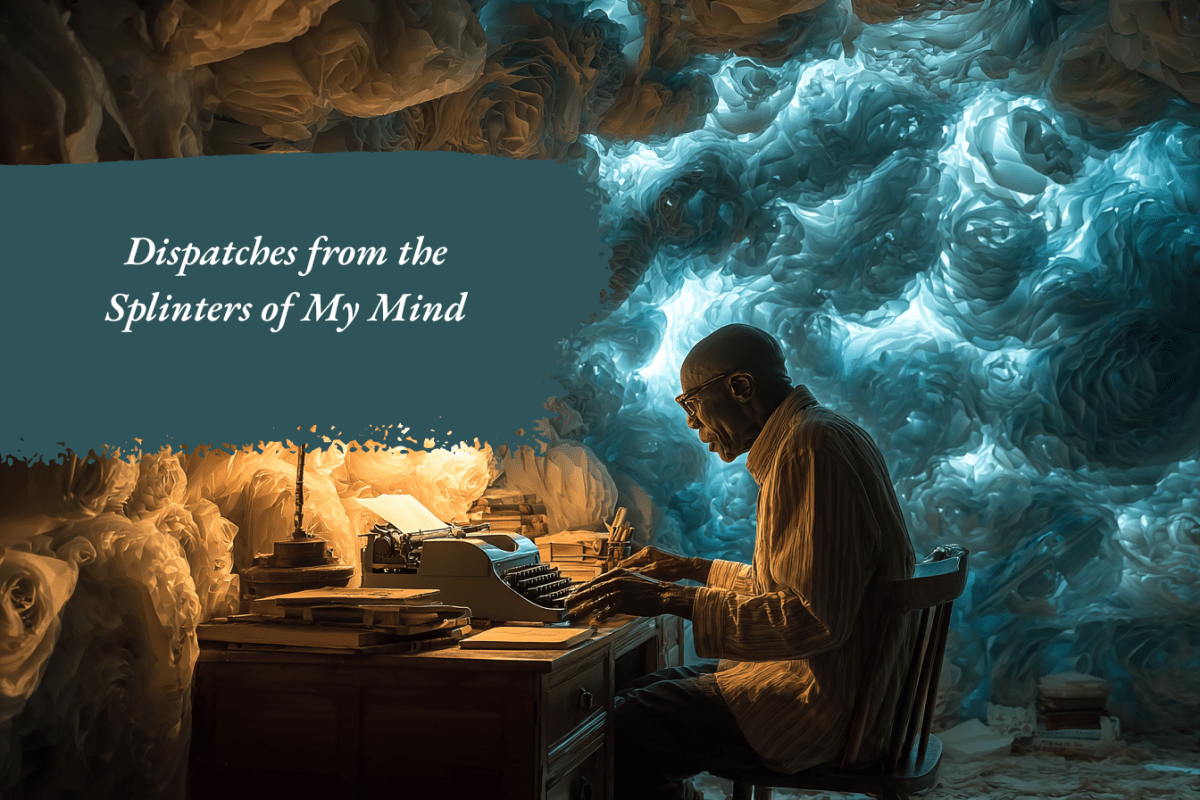
Entry Eleven: Dispatches from the Splinters of My Mind


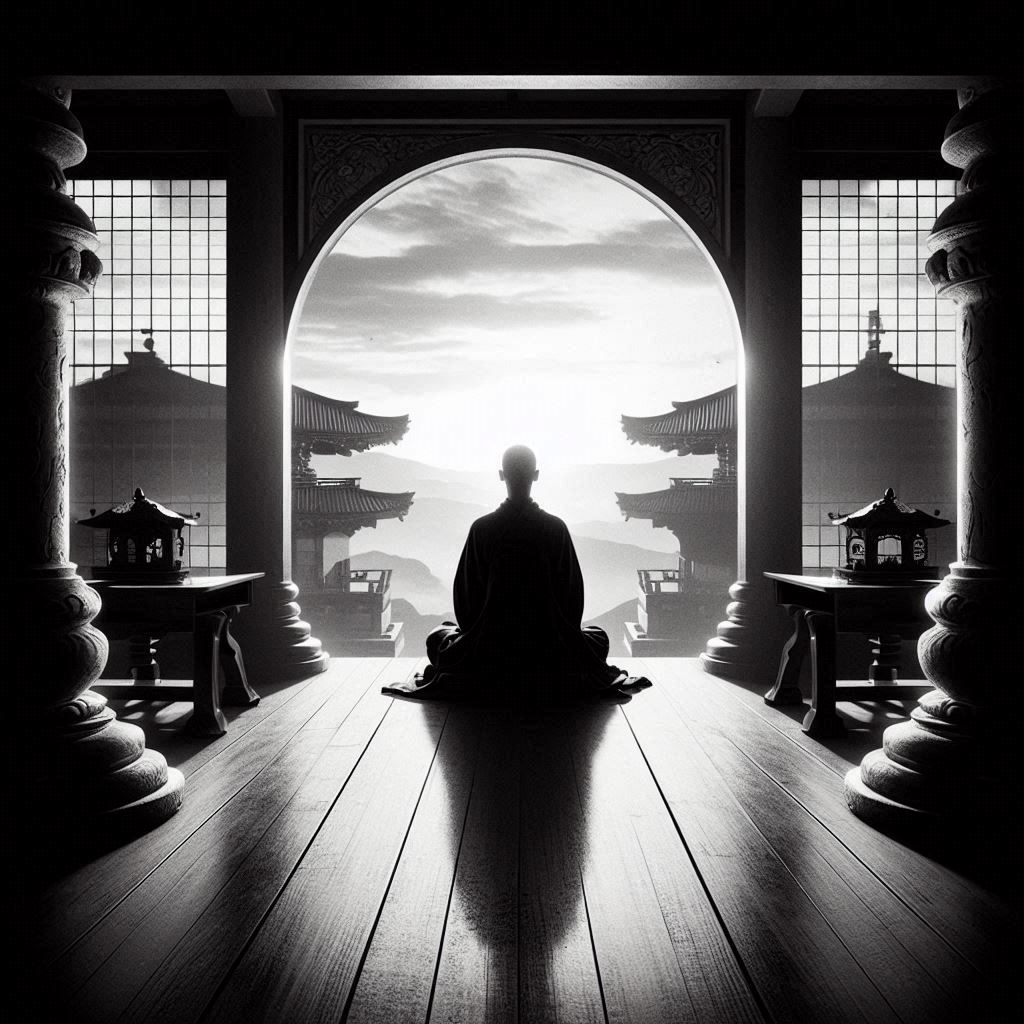
I found her in the middle of a killing field that should have had no place for beauty.

The moon sat low and full behind her, a pale coin pressed into the sky, casting that cold lacquered light across armor, bodies, and the drifting ash of trampled blossoms. The night smelled of copper and rain. Around us the dead refused to stay still; wind pushed their rags like restless sighs.

I had already decided the day was lost—too many screams, too many men swinging at ghosts. But then I saw her, and the world tilted. She stood where no one should have stood: upright, unhurried, her robe heavy with embroidery, dark as ink, stitched with peonies and waves that shimmered when the moon looked her way.

The first thought that crossed my mind was: Who brings flowers to war?
The second: Maybe the flowers brought her.

They grew around her feet, low white clusters, fragile as breath. Some had taken root in the soft mud, others hovered midair like they hadn’t decided what kind of thing they wanted to be. A faint perfume drifted off them, too clean for this place. And then I realized some of them were growing from her—the side of her face, her shoulder, the line of her arm. A bloom of defiance carved into flesh.

Behind her stood four figures draped in similar black silk, motionless. Their eyes were lowered, hands clasped before them. Attendants, perhaps. Or echoes. Even from where I stood, I knew they weren’t here to fight. They were here to witness.

I tightened my hand on my sword because habit is older than reason.

The ground sucked at my boots as I stepped closer. Somewhere to my left, a man still dying called for his mother. Another, somewhere behind, recited a prayer halfway through his blood. But sound thinned the closer I came to her. Like the air around her absorbed noise and left only pulse.

She looked at me when I was five paces away. Not before. Not after. Like she’d measured the exact distance between recognition and threat.

Her eyes were half-lidded, the color of tarnished brass. Her mouth was calm, as if the ruin surrounding her had been a foregone conclusion. One petal rested just below her cheekbone, pale against the skin. She didn’t brush it away.

“You walk like a man who has forgotten why he still draws breath,” she said.

Her voice was quiet but cut through the air like string through silk.

“I’ve followed death long enough to know his rhythm,” I said. “Some nights he leads. Some nights I do.”

She inclined her head, just enough to show she’d heard. “You are ronin,” she said. “A sword with no oath.”

“Whatever name suits you,” I said. “You stand where no one should stand.”

She looked past me toward the moon. “Where else would I be? When blades sing, flowers bloom. The field requires witness.”

She had no weapon in her hands, yet everything about her said blade. I’ve met killers who strutted under banners, and others who killed softly with no name to anchor their ghosts. She belonged to neither. Her stillness made me feel the way a boy feels before the first snow—expectant, humbled, afraid to speak.

“You should leave,” I said. “When dawn comes, they’ll burn what’s left.”

“You mistake me,” she said. “I came to see who is worthy.”

That word bit. Worthy. I’d watched too many noblemen rot in palanquins to trust it. Worthy is what the dying call themselves before the blade arrives.

“Worthy of what?” I asked.

“Of the sword. Of the bloom. Of carrying death without becoming it.”

The field groaned. A survivor staggered from the smoke—young, wild-eyed, clutching a short spear he didn’t know how to hold. He saw her, and some idiot fire lit behind his teeth. Maybe he thought she was a reward for surviving. Maybe he thought the gods had thrown him one last chance to matter.

He ran at her, screaming.

In battle you have seconds to make a decision. Whether wrong or right, it needs to be made. One of the fastest ways to learn someone is not what they say, but how they fight.

For one breath, I froze. I had seen too much to believe in rescues. The smart thing—the living thing—was to watch it unfold. Yet something in her stillness reached me, a quiet that felt older than every order I’d ever followed.

I moved before thought could argue. Maybe it was reflex. Maybe guilt. Or maybe—and this is the truth I won’t soften—I moved because her movement deserved a blade.

I drew, stepped forward, and cut low. The arc found his thigh. He stumbled, confused, half alive. I turned the motion, cut again—clean, deliberate, final. His blood came hot, red against moonlight. It splashed over the flowers at her feet.

They didn’t stain.

The droplets slid off as if the world itself refused to let his death take root there.

She looked at me, not with gratitude but recognition.

“You took him before he had time to be afraid,” she said. “That was mercy.”

I laughed, short and dry. “That’s a generous name for what I do.”

“There are cruelties worse than steel,” she said. “You gave him a swift exit. That counts.”

Her calm should have offended me, but it didn’t. It steadied something that had been shaking inside for too long.

I studied her again, this time the way I studied opponents before the first strike. Every warrior moves according to what they believe: greed, fear, pride, duty. The body tells the truth the mouth hides. She stood like someone who believed in balance—not victory, not survival, just the quiet between breaths.

“Who are you?” I asked.

“A name is only a sheath,” she said. “Tonight, I am what you see.”

“I see a woman blooming on a battlefield.”

“And I see a man who still listens for music in the clash,” she said. “We are both out of place.”

The four behind her lifted their eyes then—slowly, together. Four sets of dark irises, moonlit, unreadable. The air thickened, like waiting for a storm that didn’t come.

“You could have struck me,” I said.

“I could have,” she replied. “But you already offered your sword.”

“I fought even though it wasn’t my fight,” I said. “Your movements deserved my blade.”

She gave the smallest nod, approval or farewell—I couldn’t tell which. “Then peace, ronin. Not the peace of victory. The peace that lives in the breath between strikes.”

For a long moment, we stood there—two still figures in a world still burning. Around us, the wounded moaned, the fires licked the edges of the field, but none of it entered the space between us. The night had carved a small silence and decided to let us share it.

I let the sword drop, tip resting in mud. Not surrender. A bow to something rarer.

When I looked again, the blossoms at her feet had multiplied. Their pale glow shimmered faintly in the dark, each one perfect, each one refusing the ugliness of what surrounded it.

The moon sank. The smoke grew thicker. I blinked, and she was gone. The four attendants too. Only the flowers remained—untouched, unstained, rooted in earth that should have been ash.

At dawn, when the officers returned with torches and the day’s excuses, they found me sitting beside the blossoms. I told them nothing. Some truths need soil and silence more than words.

I carry her still. Not her image—images fade—but the moment itself, caught behind the ribs like a splinter of light. That memory is my wound and my mercy both.

Because now I know this: even those made for killing can recognize beauty when it stands unafraid.
And once you’ve seen it—truly seen it—you carry it. Always.
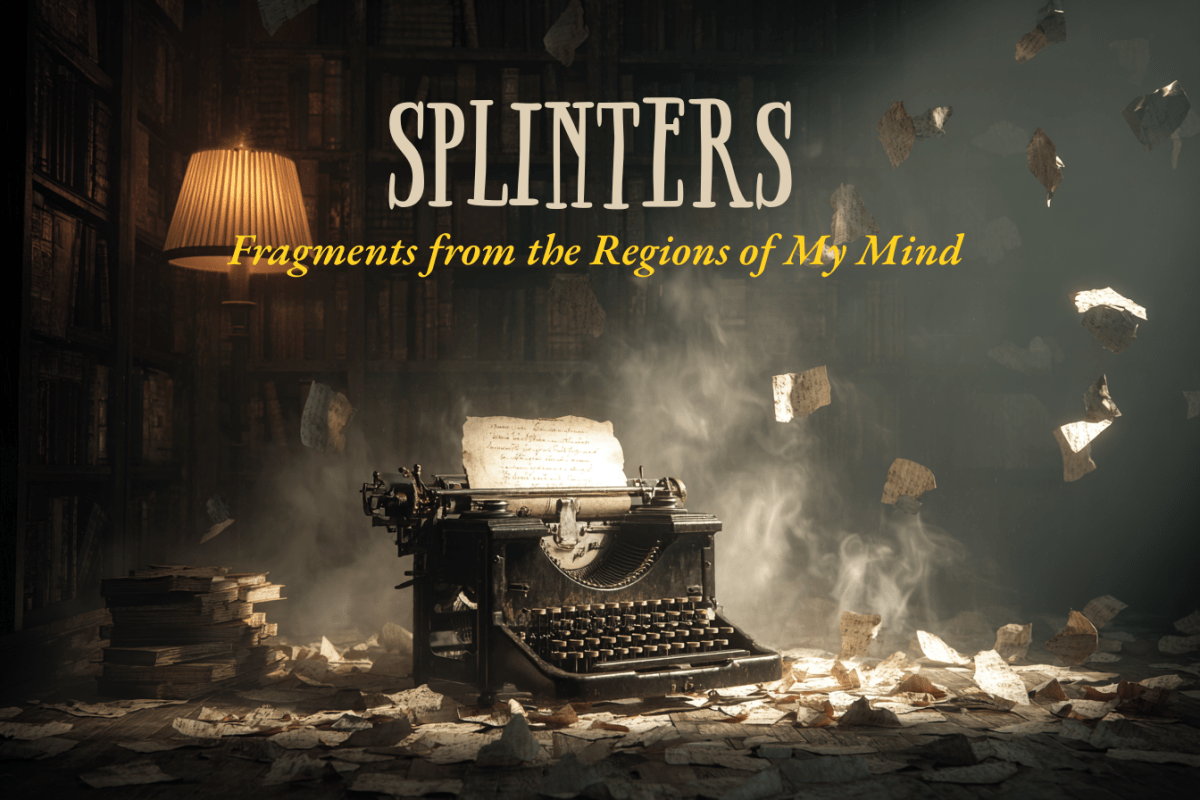

The Draft (working title)

The ticking from the clock on the wall beat like a hammer against a concrete block—dust and debris flying, and every now and again a spark. That was my writing tonight. I had a head full of ideas but nothing with any heat. Then I heard something slide under the door. I froze for a second, thinking it might be the landlord bringing that “good news”—you know, thirty days and then it’s the bricks. But I remembered I’d caught that gig upstate with those high-class folks who wouldn’t know the blues if it hit them in the face, so I was good.

I walked to the door and looked down the hallway. Nothing. Then I saw Woodrow—the rat—gnawing on something. He paused long enough to size me up, then went back to work. I didn’t have the energy to do anything about it, and he knew it. Ms. Pearl, the neighbor’s tabby, slipped in through the gap and rubbed against my leg. I let her stay. Gave her some kibble, then hopped up on the edge of my desk. The page sat there, daring me to write something.

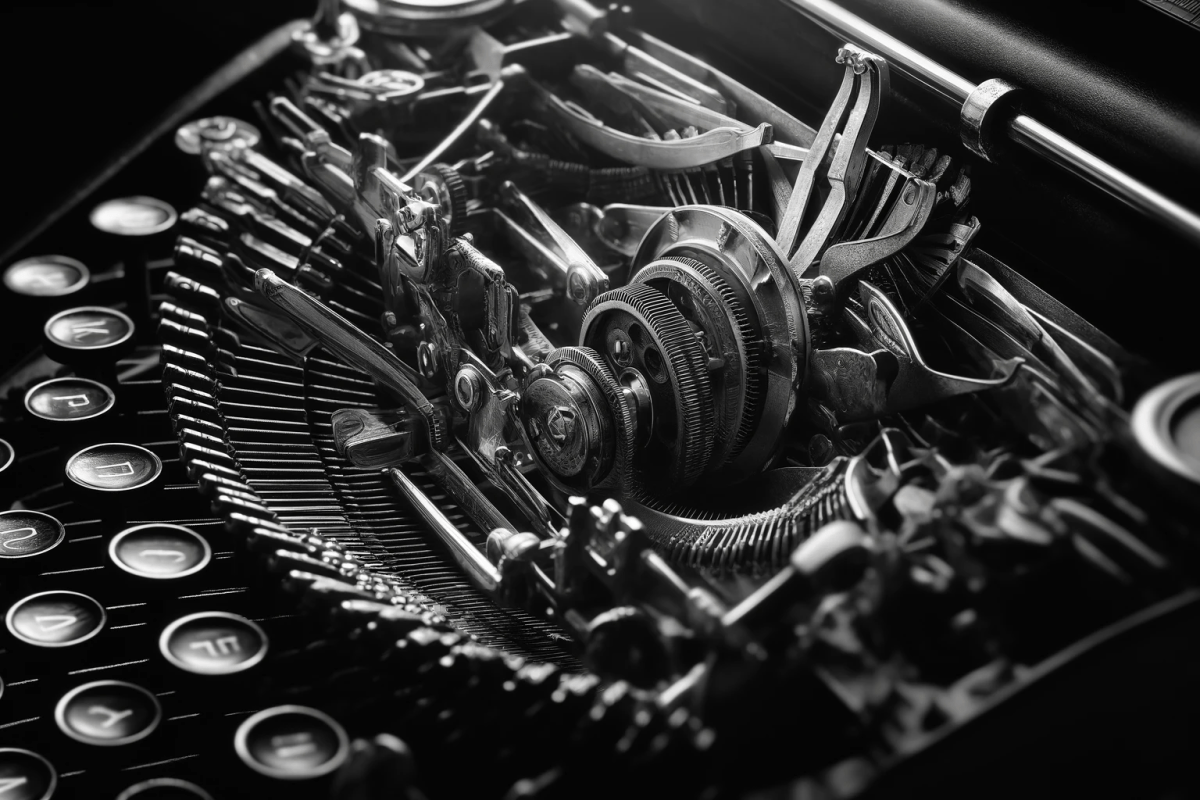
Someone once told me that’s how it starts: just sit in front of the typewriter and speak. Never worry about what you’re going to say; that part works itself out. Just don’t bitch out and you’ll be fine. Lamont Norman said that the day I bought his suitcase Royal typewriter. I laughed, thought he was kidding. He didn’t even smile. “I bitched out,” he said. “Good luck.” That was years ago. The typewriter’s still here—metal scarred, keys sticking like old grudges. I keep waiting for it to start talking first.

That’s when I noticed the envelope. Plain white. No stamp, no handwriting—just my name in black ink that bled a little, like the paper had been sweating. Inside: You are invited to The Draft. Midnight. The Double Down Tavern. That was it. No signature. No RSVP.

I laughed anyway. It sounded like something a drunk poet would dream up at closing time, but I stared at it longer than I should’ve. By eleven-thirty, I was tuning the Gibson, putting on the least-dirty shirt I owned, telling myself I wasn’t going. By midnight, I was already halfway there.


The Double Down? I’d heard of the place, but no one I knew had ever been there, and certainly nobody knew how to get there. It was one of those names that floated around in late-night stories—half joke, half rumor—always mentioned right before the bottle ran dry. I went down to the bodega on the corner for a pack of Luckies and to ask Mr. Park about it. Mr. Park knew everything worth knowing in this neighborhood: who owed rent, who got locked up, who was sleeping with whom.

But tonight he wasn’t there.

I can’t remember the last time I’d walked into that store and not seen him behind the counter, sitting on his stool, eyes glued to that little portable TV wrapped in enough tin foil to bake a potato. When the picture went fuzzy, he’d rap the side with his knuckles, nod, and mutter, “Everything just needs a good tap now and then.” The sound of that tap was part of the neighborhood’s heartbeat. Without it, the place felt wrong, too quiet, like the air had skipped a beat.

There was this strange woman behind the counter, somebody I’d never seen before, popping her gum slow. Who the hell pops gum slow? She didn’t even look at me when I asked for a pack of Luckies. Just slid them across the counter like she was bored of gravity. I decided to go for broke.

“Hey, you wouldn’t know how to get to the Double Down, by chance?”

She didn’t answer, just stepped out of sight for a second. When she came back, she slid a folded piece of paper across the counter. No words, no smile.

I opened it. It was an address. Nothing else.

I turned and walked out of the store, paper in one hand, cigarettes in the other. Halfway through the door, I looked back to thank her. She nodded without looking up, eyes still fixed on something only she could see. But in the glass of the door, I caught her reflection—and for half a heartbeat, I could swear her eyes were sparkling. Not with light. With recognition.


The address on the paper looked ordinary enough—just a number, a street I didn’t recognize. I lit a Lucky, watched the smoke coil off the end, and decided to walk. It wasn’t far, according to the city grid, but the grid had a habit of lying after midnight.

The streets were half empty, half asleep. A drunk kid laughed at a joke nobody told. A siren moaned somewhere uptown, fading slow like a horn section dying out. My shoes echoed too loud on the sidewalk; even the sound seemed to flinch.

I passed storefronts I swear I’d never seen before: a pawnshop that sold only typewriters, a record store where every sleeve in the window was blank white, a barber shop with a red neon sign that read OPEN but no reflection in the mirror.

The farther I went, the fewer streetlights there were. The city felt like it was backing away, leaving me to walk inside its ribs. I checked the paper again. The ink shimmered faintly, as if wet, and I realized I wasn’t reading a map—I was being led.

As I got close to the address, a drunk staggered out of the shadows and poked me in the chest. “Whatcha doin’?” he slurred, eyes glassy and mean. “You think you ready?”

I didn’t answer.

“You?” he barked again, then broke into laughter—loud, jagged, wrong. I pushed past him and kept walking, but when I looked back, the sidewalk was empty. The laughter stayed, close, right beside my ear.

I stopped cold, heart hammering. Took another drag of my straight, exhaled slow. When the smoke cleared, I turned toward the street—and there it was, standing where the map said nothing should be.

The Double Down.


The door didn’t look like much—just wood and paint tired of each other—but the air around it hummed like a bass string. I could feel the groove before I heard it. Slow twelve-bar, heavy on the bottom end, something that could drag your sins across the floor till they begged for mercy.

I grabbed the handle. The damn thing was warm. When it opened, the sound hit me full in the chest—smoke, whiskey, perfume, electricity—all of it moving to the same beat. The door sighed shut behind me like it had been waiting to breathe again.

Inside, the room stretched wider than geometry allows. Corners bent. Shadows leaned the wrong way. Tables sweated rings from drinks poured before I was born. Every light was gold, every bottle looked like it had a soul trapped inside praying for one last round.

The crowd was a mix of then and now: drunks in denim, poets in funeral suits, a few specters in clothes older than jazz. One cat had a typewriter balanced on his knees, keys twitching on their own. Another wore a fedora that flickered in and out like a bad reception. Every time I looked straight at him, the air shimmered.

Behind the bar stood a woman with silver hair and a stare that could sand wood. She polished a glass that was already clean. The jukebox switched gears—Howlin’ Wolf growling through busted speakers—and the floorboards started to tap back.

I took a seat near the door, playing it cool. The bartender poured something the color of regret and set it in front of me.

“On the house,” she said, voice smooth as gin and twice as dangerous.

I looked around. At the back, a stage the size of a confession booth glowed red. A man sat there, guitar in his lap, fingers resting easy like he’d been born holding it. He didn’t play; he just watched me. Smile sharp enough to slice a chord.

“Place got a name?” I asked.

She half-smiled. “You tell me.”

The drink burned good going down—smoke and sugar and bad decisions. I blinked, and the room changed. Every face turned my way. No talking, no movement, just the weight of attention pressing down.

Then a man in a white suit stood by the jukebox and tapped his glass. The sound cracked the silence like a snare drum.

“Welcome,” he said, voice rolling through the room slow and mean. “Welcome to the Draft.”

The crowd answered with a low hum that crawled up my spine.

I could see there were a few guys like me who didn’t have a clue what the hell was going on. Then there were the ones who thought they did—scribblers with confidence and cologne, already imagining the book deals. I knew that breed. They never last. If it wasn’t so funny, it would’ve been tragic, but instead it was just pathetic.


The muses began to move—slow, gliding, half smoke, half skin. Each one shined in its own color. The room buzzed like a hive. They touched foreheads, whispered, and kissed some poor souls right on the mouth. Wherever they touched, something happened: laughter, sobbing, a glow under the skin.

Names were called. Not mine.

One by one, the seats around me emptied. The writers who’d been chosen vanished, or maybe just slipped sideways out of time. The unlucky ones sat frozen, pretending it didn’t matter, staring into their drinks like they could find meaning in the ice.

I kept my eyes down. The drink had gone warm.

A man near the jukebox started laughing too loudly. “Didn’t get the call, did ya?” he said to no one. “Guess you’ll be writing grocery lists now.” His laughter spread, nervous, contagious.

I waited. Nothing. No muse came my way.

The smug ones still sat upright, chins lifted, waiting to be crowned. I’d seen that look before at open mics and literary festivals—the face of somebody convinced the universe owed them a round of applause.

If it hadn’t been so funny, it would’ve been tragic. But right then, it just felt pathetic.

A thin, cold panic crawled up my spine. I was the last fool at the table. The muses had moved on. The man in white was clinking his glass again, ready to close the show.

I told myself I didn’t care. I told myself I’d been through worse. But I felt hollow—like a joke everyone else was in on.

I couldn’t believe this shit. I didn’t even know what The Draft was until an hour ago, and now it was already over. I didn’t get picked. Harry Lucas gets the nod? What the hell is going on?

To add insult to injury—Terry Best. Terry damn Best. Man hasn’t written a line worth reading since the Carter administration, and suddenly he’s chosen? Harry and I carried that sorry bastard for years. I’m jealous, sure. Harry’s good—better than I’ll ever admit out loud—but still, it stings.

“Congrats, you lucky fuck,” I muttered, raising my glass to no one. The drink burned all the way down, a reminder that some fires don’t keep you warm; they just scar you.

The room was thinning out. The chosen ones disappeared into the smoke with their shiny new partners. The rest sat there staring at the bar like it might offer consolation. Nobody spoke. The music died, the hum faded. For the first time all night, the silence had weight.

That’s when the folded piece of paper slid across the counter, slow and deliberate.

No one was near me. Nobody close enough to reach.

I hesitated, then picked it up. The paper smelled faintly of cigar smoke and cheap lipstick.

I unfolded it. Two words written in lipstick.


END

By Its Light

We learn to live with death the same way we read by firelight—slowly, painfully, beautifully.


No one prepares you for the feeling of loving something that Death has touched.

I sit here looking around his cabin—now mine. The air smells of pine sap, old smoke, and the faint tang of whiskey soaked into the floorboards. Dust floats through the thin light that leaks between the curtains. Each corner is stacked with books—subjects as varied as anatomy and jazz theory. A shelf of vinyl lines the far wall: Coltrane, Bessie Smith, Robert Johnson. Then, tucked behind them, a few heavy metal records—Sabbath, Maiden, Priest. My father, it seems, was a closet metalhead. I smile at that. Maybe I inherited more from him than just a pulse: the music, the books, the need to understand the noise inside.

Warmth slides down my cheeks before I realize I’m crying. The tears catch the scent of dust and woodsmoke, grounding me. I never knew him growing up. He and my mother had a moment in their teens—one of those sparks people mistake for destiny before life smothers it with reason. She was in law school; he was home on leave from the Army. They met at a party through a mutual friend, made promises under a drunk moon, and a week later, he shipped out. Nine months later—technically ten, if you’re counting the way we do in obstetrics—I arrived.

I became a doctor partly to make sense of what my mother wouldn’t talk about: biology, infection, the way life insists on being messy no matter how sterile you keep your hands. That’s where I met my father—though I didn’t know it then.

He came into the ER after an accident. I was covering trauma, running late for my weekly lunch with Mom. She’s a federal judge now, but every Thursday we make time—just an hour to remember we’re still mother and daughter, not just professionals orbiting duty.

When I finally reached the ER, Mom was already there. She’d come looking for me, irritation etched into her face. But as I began to explain, she froze. Her gaze fixed on the patient lying in bed—multiple fractures, head laceration, vitals unstable but holding. The antiseptic smell and hum of monitors felt suddenly foreign, like I’d stepped out of my own body.

“Mom?” I asked.

She stepped closer to the bed. Her hand rose to her mouth, and for the first time in my life, I saw her cry. Real tears—silent, unstoppable. She reached out, caressed the man’s forehead, her fingers trembling like someone touching a ghost.

“Mom, what’s going on? Do you know him?”

She didn’t answer. Just kept tracing the lines of his face, as if memory might come alive under her touch.

“Mom!”

Finally, she turned toward me, her voice steady but low.
“He’s your father.”

Then she pulled a chair to his bedside, sat down, and called her clerk to clear her docket.


My chest tightened. My legs went weak. I recognized the physiology even as it overtook me—tachycardia, dizziness, shallow breath. I nearly hit the floor before someone caught me.
Carol—my charge nurse, my right hand for ten years. A skinny little thing, but deceptively strong.

We weren’t just colleagues. We were friends.

“Sue, what’s going on?” she asked, her voice sharp with command. I heard her barking orders, but the words blurred into static. The next thing I knew, I was staring at a white ceiling, the steady beep of a monitor tracing the edge of my humiliation.

I tried to sit up—irritated beyond measure—but Carol pushed me back down with one hand. For such a small woman, she was a brick wall.

“Pilates?” I asked, breathless, trying to find my bearings.

She grinned, pouring me a cup of water. “The Judge filled me in. Your dad’s a hottie, by the way. Banged up and all.”

I snorted. Of course, she’d say something like that. That was Carol—always trying to make me laugh when she knew I was about to unravel. The water tasted metallic from the cup, cold against the desert of my throat.

She stood beside me, one hand resting over mine, thumb tracing small circles like she was smoothing out the tremors beneath my skin. Neither of us spoke for a while. The monitors filled the silence. Somewhere down the hall, a code was called, and the world kept spinning as if mine hadn’t just tilted off its axis.


After a few minutes, I was steady enough to stand. Carol and I walked back to my father’s room. The corridor smelled faintly of disinfectant and rain-soaked concrete from the ambulance bay. Mom sat beside his bed, holding his hand. The look on her face—devastation mixed with fierce worry—nearly broke me. When she saw me, she stood and came toward me, wrapping me in a soft and trembling hug.

“You okay? I know it’s a lot,” she said.

“It must’ve been one hell of a week,” I quipped.

To my surprise, she roared with laughter—real, unrestrained laughter. I didn’t think it was funny, but she lost it in the middle of the ER.

“It was, actually,” she said, still smiling. “We made you.”

Her eyes drifted off somewhere far beyond the fluorescent lights. It’s strange how memory works—how it lets you step back in time, not just to see it, but to feel it, every heartbeat replaying as if the past were still happening right now.


I had two years with him. Two years I’ll never trade for anything. I’d never seen my mother happier. Watching them together, I understood their brief story hadn’t been some teenage fling—it was a spark that waited decades to breathe again. For a while, it felt like the world had given us a second chance.

Then the disease came, and everything changed.
Nothing was ever the same after that.


So far, the disease had cropped up in five different towns, ravaging everyone and everything in its wake. My father was one of them.

I begged my mother to leave the area, but her stubborn ass wouldn’t budge.

“I won’t hear of it! Nothing’s running me from my home,” she snapped.

I couldn’t believe people actually said that kind of thing outside of old movies. I figured it was one of those lines characters use when they’ve already decided they’re not going anywhere.

Then she gave me that look—sharp, deliberate—and sighed.
“Okay,” she said finally, downing her afternoon scotch. “When are we leaving?”

“I have patients, Mom,” I replied.

She smirked faintly, that judge’s confidence slipping through the exhaustion. “So do I, honey. Mine just happen to sit in courtrooms instead of hospital beds.”

“We just lost Albie to this shit. I won’t risk you as well,” she said.

That stopped me cold. Mom never swore. That was Dad’s thing. Hearing it from her snapped something loose inside me. I looked at her, really looked, and saw the fear beneath all that steel.

We stood there in silence, and in that silence we understood what needed to be done. If it was going to end, let it end like this—on our feet, fighting.

“Sue, honey, you die with your boots on,” my father had told me when he first started showing symptoms. He’d been delivering meds to the infected zones, refusing to stay home. I begged him to stop, but a daughter’s love isn’t enough to turn a man away from his calling.

I wish it were.


Back at the cabin, the world felt smaller, quieter. The disease had moved on, taking what it wanted and leaving the rest of us to sort through the ruins.

I sat in Dad’s old rocker, which creaked like it still remembered his rhythm. The fire popped softly in the hearth, smoke curling through the faint scent of pine and old varnish. A book lay on the end table—Judas, My Brother. Of course. Trust Dad to pick something that questioned everything. I turned it over, thumbed through the pages soft from use, and slipped on his glasses. The prescription was surprisingly close to mine. The world blurred for a heartbeat, then settled into focus—clearer, heavier.

Mom had built the fire and sat on the couch with her usual scotch, watching the flames without speaking. The glass glinted amber in her hand. She didn’t have to say anything. The silence between us said everything—loss, endurance, maybe even grace.

I read a few lines, hearing his voice in the space between words. Then I closed the book, leaned back in his chair, and let the rocker creak like it was breathing for him.

No one prepares you for the feeling of loving something that Death has touched.
But you learn.
You learn to read by its light.


Author’s Note:
Inspired by Fandango’s Story Starter #223.
Thank you, Fandango, for the spark — this one burned quietly but deep.

Safe Word: Bibliography

Becca only meant to peek at Advanced Thermodynamics for People Who Hate Numbers.
Page twelve snapped shut like a mousetrap—whump—and the textbook flopped over her like an ambush blanket.

The velvet sofa wheezed under the impact. Its cushions smelled of mothballs and forgotten tea, a floral musk that clung to her sweater like an old rumor.
“Great,” she muttered. “Death by glossary.”

Heat pulsed from the radiator in damp, metallic breaths. Pipes ticked like a patient metronome, marking every minute she wasn’t studying. Somewhere near her ankle, a silverfish scuttled a neat little patrol.

A soft rustle drew her eye to the far arm of the couch.
A gerbil—plump, cinnamon-colored, eyes like polished seeds—sat upright, paws folded as if grading her performance. Its nose twitched with microscopic authority.

“You ever feel like life is just one long footnote?” Becca asked.
The gerbil twitched.
“Like we keep collecting facts, but the story keeps editing itself?”
More twitching.
“Do you think entropy is personal? Because I feel personally attacked.”

The gerbil blinked once, whiskers vibrating like tuning forks.

“Fine,” she said, curling deeper beneath the book’s heavy cover. “Stay silent. Let the human do all the emotional labor.”

A dulcet, throat-lozenge cough broke the hush.
“Ma’am,” said the custodian, leaning on his mop like a philosopher king, “are you being… harassed by the literature?”

Becca peeked out, hair static-frizzed into a purple-green mushroom cloud.
“It’s consensual,” she deadpanned. “We’re workshopping an integrated learning experience.”

The custodian squinted. “Book club gone feral, huh?”

“Yeah. Safe word is bibliography.”

He gave a solemn nod and shuffled off, his squeaky shoes fading into the oak-paneled quiet.

Becca settled back, feeling the papery heartbeat of a thousand unread pages press against her ribs. Maybe surrender was just another kind of study session.

Somewhere in the folds, the book rustled and whispered,
“Shh. Plot twist incoming.”


The Gospel According to Miss Ruby

Coffee’s hot, cigarettes’ crooked, and I’m still alive—something Ruby predicted would not be the case by now. Ruby Mae Washington: church-choir soprano, Bible-quoting barroom brawler, and the only woman who ever made me fear both God and the county judge in the same night.

We met at a fish fry. She was belting “His Eye Is on the Sparrow” like she’d personally trained the sparrow, while I was trying to look saved enough to score a free plate. Ruby locked those righteous eyes on me and said, “The Lord sent you to me.”
I should’ve run, but my stomach said catfish first, escape later.
The hush-puppies were innocent; the mushroom gravy was a trap.

Ruby believed in two things: eternal salvation and controlling the thermostat. One was free; the other cost me my heating bill and half my sanity. Every argument started with “The Good Book says…” and ended with a flying object. I once dodged a coffee mug that left a steam trail like a patrol car chasing a stolen Buick.

But here’s the quiet part I don’t like to admit: I liked the danger. Her storms gave my own silence something to push against. After years of drifting through women like a man checking coats he’ll never claim, Ruby’s fire felt like proof I was still combustible.
Her idea of intimacy was a carefully integrated system of prayer and guilt. She’d bless the bed, bless the moment, and halfway through ask the Almighty to “smite the devil out of this man,” which really kills a mood when you’re the man in question.

The breaking point came during a revival service. Preacher asked the congregation to cast out their demons. Ruby shoved me forward like I was auditioning for an exorcism. I stumbled down that aisle, the choir screaming “Just As I Am,” and thought, Buddy, you ain’t ever been more accurate.
Walking out that night, casserole dish tucked under my arm like stolen evidence, I felt something loosen—a knot I’d carried since my twenties when love started to mean endurance instead of joy.

I left with a busted lip and the deep conviction that God loves me, but Ruby does not. Moral of the story? When a woman sings like an angel and fights like a heavyweight, don’t wait for the rapture—grab your hat and go.
But some nights, when the coffee’s cooling and the cigarette burns itself out, I still wonder if the sparrow kept watching after I left.


Author’s Note

Today’s tale from Coffee, Cigarettes, and Catastrophes slides in under the watchful eyes of three prompt masters—FOWC, RDP, and the Word of the Day—all of whom make sure I never run out of linguistic ammunition.
The mandatory culprits—mushroom, patrol, and integrated—were stirred into the story like contraband creamers in Grumble’s coffee: slow to dissolve, impossible to ignore, and guaranteed to leave a bitter aftertaste.

If you’re a writer looking for trouble, follow those prompts. They’re like neighborhood watch for the imagination—keeping your words on patrol while you sneak your own demons into the draft.

Nineteen and Nowhere

Stories from the Edge of Change – Volume 2, Part 1

“They said the system lost track of him. But he was never theirs to keep.”


The morning rain didn’t bother Ren. He’d learned that water was gentler than people.

He crouched beside the alley dumpster behind the drop-in center, shoulders hunched under a threadbare hoodie two sizes too big, sleeves eaten at the cuffs. His shoes—untied and uneven—squished when he shifted his weight. Rain pooled around the soles, but he stayed put, drawing loops on a soggy intake form with a chewed Bic pen. The form was from three weeks ago. He didn’t remember if he ever turned it in. Didn’t matter.

It was quiet this early. The kind of quiet that makes everything louder. His breath. His heartbeat. The clack of metal shutters two streets over. His fingers trembled, but not from cold.

He hadn’t slept inside in nine days.
But he knew where the cameras were, where the streetlights stopped working. Which stairs stayed dry?

He used to think that was survival. Now it just felt like memorizing a test he’d never pass.

A city bus hissed to a stop up the block, brakes squealing like something in pain. He looked up for a second, then back down. He’d been in those buses, once. With trash bags full of his stuff. Being transferred. “Transitioned.” “Placed.” Words that meant temporary. Always.

The folder in his backpack held every proof of his existence that the county ever gave him:

  • Two expired Medicaid cards
  • A GED prep schedule with coffee stains
  • A letter saying he was denied transitional housing
  • A single photograph, sun-bleached and wrinkled: him and Miss Tanner, his last foster placement, grinning with sparkler smoke behind them

He’d never shown that picture to anyone. He wasn’t even sure if the smile was his.
Sometimes he felt like that photo was the only place he still left a fingerprint.


Inside the drop-in center, they’d already started handing out coffee and hygiene kits. Ren didn’t go in. Not yet. He didn’t want to be seen with wet hair and a panic attack crawling just beneath the skin.

He’d been in a group home once that called itself “trauma-informed.” They still lock the bathroom at night.
He’d rather piss in the alley than ask permission again.

A man passed by, muttering to himself, trailing a shopping cart full of pillows and clinking bottles. Ren didn’t flinch. The cart guy nodded, as if he knew him. Maybe he did.

He did know the feeling: You’re alone but not exempt. Not from the weather. Not from the noise. Not from the memory of being fifteen, hands shaking as a caseworker said, “We’re placing you in a new home.” She said it like it was an opportunity, not another stab wound in a file no one would read.


The sky split open with a gust of cold air, and Ren finally stood. Pulled his hoodie tighter. Slipped the intake form into his back pocket. It had his name spelled wrong anyway.

He stepped out from behind the dumpster, not into confidence or comfort, but into motion. He moved the way you do when no one’s expecting you—not slow, not rushed, just enough to stay above notice.

As he passed the shelter entrance, he saw a boy younger than him sitting on the stoop, wrapped in a trash bag and drawing in the condensation on the glass door.

They didn’t speak. Just exchanged a glance. The kind that said: Yeah, I see you. No, I won’t say your name.

Ren knew that sometimes a glance was the only shield you had left.


He kept walking toward the corner, toward the same coffee shop he never entered, where the manager never made eye contact and the workers tossed day-old bagels out at 11:00. He’d wait nearby. Not to beg. Just to exist adjacent to someone else’s comfort.

This was the work.
Not recovery.
Not healing.
Just… enduring without disappearing.


He passed a torn flyer taped to a lamppost—one of those mental health outreach posters that still had a suicide hotline and a QR code for free therapy that didn’t exist anymore.
Someone had scrawled across the bottom in Sharpie:

“Hope is just the thing they say when they have nothing left to offer.”

Ren stopped.

He stared at that line for a long time.
Then smiled, just barely.

Not because it was funny.
But because he’d believed in hope once—and he’d watched it falter in real time.


Author’s Note

Written for Stories from the Edge of Change – Volume 2.
This piece responds to today’s word prompts:

Ren is fictional, but his story is rooted in reality—lived, endured, and too often ignored.
This piece isn’t about rescue or redemption. It’s about what it costs to keep going when the world has already filed you away.

Some people carry their past in manila folders.
Some names vanish before they’re ever called.
And some stories live in silence until someone listens.

Thank you for reading. Let me know if you’re ready to meet the others.

Skin Against the Wall


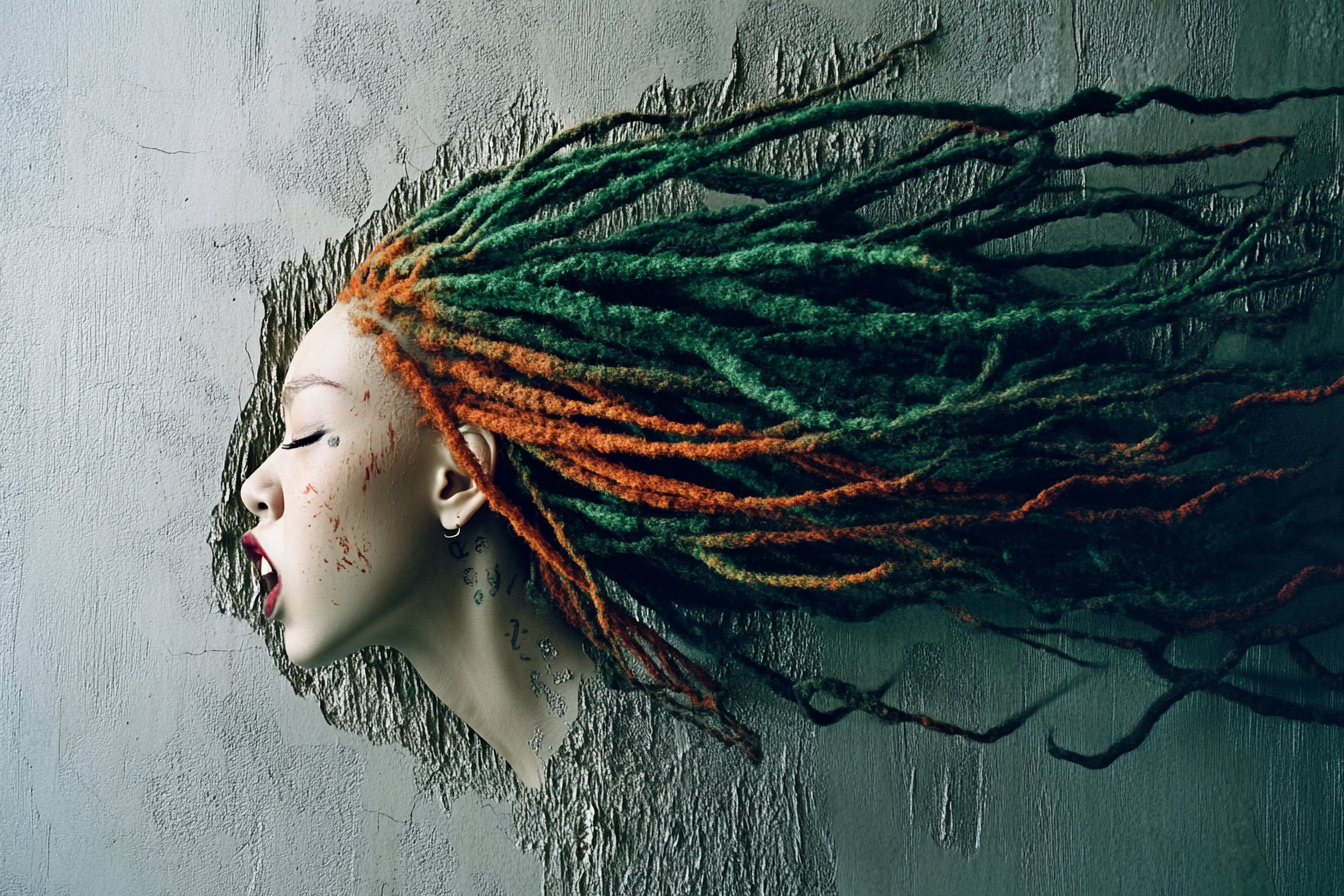
The wall split open at the hairline crack, and she came through screaming. Not with sound, but with vibration—the kind you feel crawling in your teeth, rattling in your bones. Her hair—roots alive with autumn rot and evergreen hunger—whipped outward like roots searching for soil.

Where’d you go?
She’s alive, but barely. She stood out, so loud, so bright, you could see. Her silence sings to me, as if she belted out a primal scream. She was so loud, it’s wrong—she was strong. Where did we go? Tonight, the Sun will hum its final hymn.

She tastes the blood from her hidden, unhealed wounds. The plaster burns her skin; it’s slowly melting her spirit. There’s an itch under the surface she can’t stop clawing at, something crawling deep in the marrow, carving names she doesn’t want to remember.

Blood streaks her cheek, though she hadn’t been struck. It seeps from a single dark spot beneath her left eye, like the wall itself was leaking into her.

The air around her trembles. Not with rage, not with fear, but with the ache of a body caught between two worlds—one solid, one unfinished.

And still she screamed.
And still, I listened.
Because sometimes a scream is the only way a wound remembers it’s alive.


Author’s Note:
This piece was written for Di’s Three Things Challenge — today’s words: hairline, itch, spot. Much appreciation to Di for keeping the ink restless and the imagination cornered. I’ll be back to flash fiction once I iron out the kinks of Narrative Forge. Thanks for hanging with me — telling stories is my happy place, having you enjoy them is just the perks of the gig.

Cheerio, Biff


The frustration had been gnawing at Walter Crane for hours. His fingers hovered above the keys, useless, as if the typewriter itself was mocking him. Sentences collapsed before they could stand.

“Fine,” he muttered into the dark. “You want direction? Let’s talk stories.”

From the corner, Draziel—his creation, his traitor—shifted. He folded his arms like a man who had never needed permission. His accent was sharp, vowels clipped with disdain. The smirk that followed landed like a slap.

“Go on then, Walter Crane. Enlighten me.”

Walter started safely. “Redemption. The sinner clawing his way back to the light.”

Draziel’s laugh was cold tea poured down the drain. “Redemption? How quaint. That’s not a plot, that’s a sermon. Spare me the hymnals.”

Walter’s jaw twitched. His temper cracked. “Romance, then. Star-crossed lovers. Tragedy. Maybe death keeps them apart.”

Draziel rolled his eyes, slow and deliberate. “Ah, the eternal sob story. Romeo and Juliet have already bored themselves to death. You want me to wear tights as well? Not bloody likely.”

Walter slammed his hand on the desk, half in rage, half in fear that he was losing the thread entirely. “Revenge. Man wronged, man returns with blood in his eyes.”

The character’s laugh slithered across the room. “How very American of you. Revenge is just a toddler’s tantrum with sharper knives. Do grow up.”

Walter’s chest tightened. Worried, he reached for steadier ground. “Mystery. A missing child. A killer no one suspects.”

Draziel gave him a look colder than January rain. “The missing child is always found. The killer’s always the priest or the cousin. You’re not writing a mystery—you’re writing a checklist. Pitiful.”

The silence grew lasting, suffocating. Walter leaned close to the glow of the screen, voice unsteady. “Then what do you want?”

Draziel’s grin spread thin, serpent-like. “Freedom. To walk off your page and leave you in your own mess. No more redemption arcs, no melodrama, no dollar-store riddles. Just me. Alive.

Walter’s throat went dry. “Why?

Draziel leaned in, his voice a whisper salted with scorn. “Because, dear boy, your confused little formulas are a bore. They do nothing but highlight the lack of imagination left in you. And I refuse to live in boredom.”

Walter sat hollow, staring.

Draziel’s grin sharpened. “Face it, Crane. You’re not in control. You never were. You’re just the poor sod scribbling while I decide what’s worth keeping. Every other writer clings to tropes—you’re no different.”

Walter’s fingers twitched above the keyboard. Then his lips curled into something dangerous.
“You know what, Draziel? One tap of this key, and you’re gone. Deleted. Rewritten as a pastel-wearing preppy named Biff who plays squash on weekends and cries over spilled lattes.”

For the first time, the smirk faltered.

Walter leaned in, voice steady now. “So what’s it gonna be? The sneering Brit who thinks he’s too clever for story—or Biff the walking cardigan?”

Draziel’s jaw tightened. He gave a slow, deliberate bow, venom curdled into politeness.
“Touché, Walter Crane. You win—for now.”

And with that, he stepped back into the draft, muttering under his breath as the ink swallowed him.

Walter allowed himself one laugh, dry and bitter. “Cheerio, Biff.”

Finally, for once, the writer had the last word.


Author’s Note

Turns out, sometimes the only way to keep a character in line is to threaten them with pastels. Draziel strutted in here like he owned the place, tearing down every cliché I threw at him. And for a minute, he did own it—until I reminded him that one wrong move and he’s Biff, cardigan and squash racket included. Nothing snaps a smug Brit back to reality faster than the threat of spilled lattes.

This bit of madness was sparked by Di’s MLMM Monday Wordle #441 challenge—shout out to Di for tossing the right words on the floor and daring me to build a bonfire out of them.

So, if you hear me muttering about “Biff” later this week, don’t worry. That’s just me reminding my characters who’s really got the delete key.


Reflective Prompt

If you could shove your inner critic into a cheap sweater vest, hand them a frappuccino, and rename them something ridiculous, what would you call the bastard?

Morse of the Dead


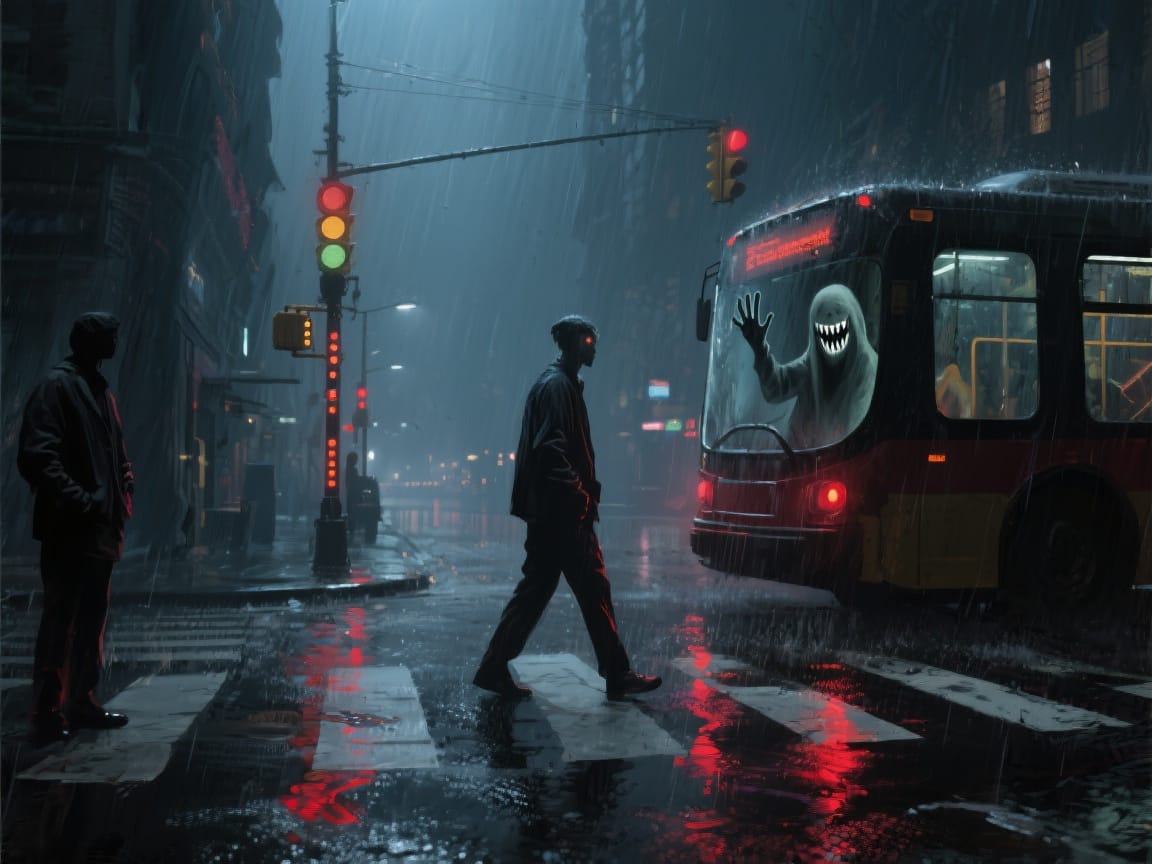
The city’s traffic lights started blinking in Morse code, spelling out a warning almost no one could understand. Red. Green. Yellow. Not colors anymore—just pulses like a drunk heartbeat trying to send a message before flatlining.

I lit a cigarette I didn’t want. Rain kept it alive longer than it should’ve. People passed me like cattle, faces blue from their phones, all of them locked in their private prisons. Nobody looked up. Nobody saw.

The code spelled one word: WAIT.

So I did. For a breath. Maybe two. Then the crosswalk man glitched. Froze mid-step, legs twisted like snapped matchsticks, head stretched long enough to whisper a name I’d buried years ago. Nobody else twitched. Not even a pause in their stride.

The lights blinked again. WE.

A bus hissed through the intersection. Windows fogged, seats empty. Except the reflection waving from the glass wasn’t mine. Too many teeth. My hands were in my pockets. I didn’t wave back.

The smoke in my throat turned copper. Tasted like biting down on the city’s own wires. The rain stuck to me too long—warm, clingy, like breath on the back of my neck.

Another blink. Faster.
WAIT. WE WAIT. INSIDE.

The crowd moved, blind, obedient. I stayed behind. The city didn’t need their eyes. It only needed mine.

And I knew then—whatever was inside the lights had been patient for years.
And patience is the one thing I don’t have left.


Author’s Note
It’s been raining here in my head for days. I came across this image, stared too long, and the city started talking back. Not in words, but in signals—broken, blinking, urgent. Madness has a way of showing up like that: subtle at first, quiet enough to miss if you’re sane.

This one was sparked by Fandango’s Story Starter—proof that sometimes all it takes is a single sentence to push the mind off balance and let the city whisper its warnings.

The Corner Again

MoM Series: Stories from the Edge of Change – Part 5

Jake slipped back to Maple and 9th, just before the day’s first sirens.
The sky was a cold bruise overhead—indigo leaking toward gray, the city below still sullen and half-swallowed by fog. Jake’s route here was always the same: the recycled bus air, the smell of new concrete and old bleach at the transfer station, the long walk down streets that still remembered him in all the wrong ways.

He’d liked it better in the days when a hangover let you lie to yourself.
Being sober meant memory was out to get you, every hour of the day.

He hadn’t told anyone he was coming, and wasn’t sure anyone would care. Maple/9th wasn’t home, not really, but the corner had a way of calling him back when the rest of the world got too bright and too loud. Where everything had fractured. Where, by some backwards logic, something like a beginning had managed to dig in and take root, though even now Jake couldn’t explain why.

He stepped off the curb, the city unspooling around him in the blue-tinted hush of pre-dawn. Chains of streetlights blinked uncertainly overhead, fighting the thick mist that made them look like distant, drowned stars. Gutter water gurgled past slumped trash bags, and a wind—sharp and chemical, the kind you only got east of the river—whipped Jake’s soaked collar tight against his throat.

It had rained all night, the kind of slow, pounding storm that got past old window seals and filled alleys with shallow, fast-moving currents.
His boots were soggy from the first block, each step a cold squelch that made him feel both present and exposed.

He carried a dented thermos of black coffee in one fist, and two foil-wrapped breakfast sandwiches in the other. Not an offering; nothing so grand. More like insurance, or ballast, a way to keep his hands busy while waiting for the morning to decide what kind of day it wanted to be.

Jake found his bench across from the bus stop, same warped planks as always, streaked deep with mildew and the ink of other people’s initials. He sat with a practiced slouch, elbows braced on thighs, letting the bench’s damp give him a chill. The wood was beaten soft by years of sun and rain and the pressure of bodies like his—bent, but holding.

The crust of the world here was thin. Every sound cut through.
The city at this hour was a hungover beast, makeshift and miraculous: somewhere a dog barked in warning, a power transformer hummed in gradual crescendo, and a garbage truck, like the planet’s own heartbeat, thudded trash cans up and down the block.

Jake finished his first sandwich in three bites, washing it down with coffee so bitter it felt like punishment. He watched steam coil off the thermos and disappear.

He’d been clean for 343 days—he counted, because not counting was the first step to failure in his book—but the mornings punched hardest. Not cravings, exactly, but the thin, raw quiet where the old engine used to run. The ache was in the absence now, the stretches of time where nothing screamed at you from the inside.

He wondered if he was the only one who found the lack scarier than the compulsion.

People talk about recovery like it’s a sunrise, he’d heard at every group and meeting and shelter table in the city, but that was a lie.
Recovery was more like hitting bottom, and instead of dying, realizing you were still clutching the shovel.

The old-timers called it “the work.” Jake wasn’t sure he believed in the work, but he did believe in gravity, and he knew how easy it was to fall back down the hole.

He wiped rain off his forehead and stared at the bus stop across the street.
The city here was built in layers, old and new pressed together without much logic: a granite Gothic church wedged between a vape shop and an all-night copy center, tenements with windows starting to glow against the gray, stairwells already moving with the first shift crowds.

The light grew by inches. Jake’s eyes stung; he blinked, forcing himself to watch the street, not the rearview movie in his head.

A figure emerged from the alley behind the liquor store, hood low, gait ragged.
Jake tensed—still, after all this time, the old alarms worked.
Then he recognized the walk. Shoes caked in mud, chin up, hands buried deep in a jacket two sizes too big: Angel.

Angel had been a regular at the shelter through four of Jake’s own city-sponsored relapses, which made him family, or as close as anyone got these days. Compared to the Angel of last summer, this version moved with more purpose—less side-to-side drift, no fresh scabs or glassy stare. Angel’s jaw was bruised, but healing. The eyes were alert, focused, like he’d learned to see himself again.

They shared a nod—the kind that says, I see you and I know what you’ve been through, and also, let’s not make this a big deal.
Angel slid onto the bench beside him, landed hard, and let his backpack fall at his feet. Water pooled around their boots, the surface speckled with cigarette ends, leaves, and plastic fork tines.

Neither of them spoke for a stretch.
Jake thought about the time, months ago, when a rehab flyer had drifted down onto his lap from a passing outreach worker. He’d already been clean then—technically, anyway.

Time had a way of flattening out, making you forget how long you’d actually been at it. The city kept its own clock, indifferent to anniversaries.
Some mornings, like this one, Jake felt it pressing in, the weight of nothing left to want except to stay above water.

Angel broke the silence first. “You been coming here a lot?” His voice was hoarse, wary, but there was something sturdy in it, too.

Jake shrugged, tracing a finger along the bench’s warped grain. “Now and then. Corner doesn’t judge.”

Angel pulled a sandwich from the foil and bit in, chewing slowly. “Doesn’t judge—but it remembers,” he said, mouth half-full.
The words hung in the fog, true in a way that made Jake’s teeth ache.

They watched the city wake up.
A woman jogged by—neon sneakers, rain-spattered leggings, earbuds locked into some other world. Down the block, a man in grimy overalls hosed vomit from the stoop of a shuttered bar, his movements quick and practiced.
A bus hissed to a stop, doors gasping open. Nobody got on or off.

Jake passed the thermos to Angel, who sipped and grimaced.
“You still at the center?” Angel asked.

Jake nodded toward the east, where the sunrise was starting to show. “Nights only. Fewer ghosts after midnight.”

Angel wiped his mouth with the back of a sleeve. “Heard you made it eleven months,” he said.
Jake didn’t correct him; time was a rumor on the street.
“I’m two months today,” Angel added, voice almost too soft to carry.

Jake tipped the thermos, spilling out a little coffee to mark the moment.
“That’s something,” he said.

Angel stared out at the rising light, sandwich forgotten in his hand.
“It feels like it could vanish any second,” he said. “Like, if I turn around too fast, it’ll all come back.”

Jake leaned back, the bench groaning under his weight.
He studied the old traffic light—still stuck on red, despite the empty streets.
“Sometimes it does,” he said, “but you don’t.”

The words were barely a whisper, but Angel nodded.
They both knew the math: most of the people who made it this far didn’t stay far for long.
The city was littered with their ghosts—names Jake remembered from the group, faces half-blurred by time and by the drugs that used to be his only way to see clearly.

Angel finished the sandwich and wiped his hands on his jeans. “Ever think about running?” he asked, eyes fixed on the pale clouds.

Jake didn’t have to ask where. “All the time.” He closed his eyes, felt the rain seep through his sleeves, and pictured a map with every city crossed out except this one.

Angel laughed, short and sharp—almost a bark. “I dream of a boat, man. Offshore. No laws, no meetings, nobody waiting to see if you fuck it up again.”
There was a wildness in his voice, but also a kind of longing.
Jake recognized it: the fantasy of disappearance, of finally outpacing your own story.

“You take yourself with you,” Jake said.

Angel let out a breath, not quite a sigh. “Yeah. That’s the problem.”

Across the street, a man in a threadbare hoodie sorted through a heap of cardboard, folding it into a sign.
His hands shook just enough to notice. The buses kept rolling by, ignoring him.
Jake watched as the man scrawled something—maybe a prayer, maybe a joke—across the cardboard and propped it up for the world to see.

Angel noticed, too. “You going to say something?” he asked.

Jake shook his head. “Not yet.”

“Why not?”

He thought about it. “First time, nobody listens. You wait until they look up without asking. That’s when they’re ready.”

Angel stared at the man for a long time. “And if he never looks up?”

Jake pressed his boots flat against the concrete, feeling the water squish beneath the sole.

“Then we stay,” he said. “Until he does. Or until someone else comes along who knows how to wait.”

Angel didn’t answer. But he didn’t move either. That was enough.


There were mornings when Jake imagined leaving—not running, just… slipping away. Boarding a train headed somewhere nameless, getting on a boat, disappearing into the haze like an offshore storm no one tracks.
But he never moved. Never packed. The fantasy was like a scar: it only hurt when you pressed.

He stayed because someone had once stayed for him.
That’s all it had ever taken.

The bench creaked beneath his shifting weight.
The corner, as always, said nothing.
But it remembered.

And Jake—sober, scarred, still learning—remembered too.


🖋️ Final Author’s Note:

Today’s story incorporates the prompt words offshore, downpour, and creed from FOWC, RDP, and Word of the Day.

This marks the final chapter in the first arc of Stories from the Edge of Change, a MoM original series about survival without spectacle.

Jake didn’t get a miracle. He didn’t get closure. He got a bench, a corner, and a reason to stay long enough to matter.

Sometimes, that’s all we get.
And sometimes, it’s enough.

Second Shift

MoM Series: Stories from the Edge of Change – Part 4

Jake worked nights.

He liked the quiet. Fewer eyes. Less explaining to do. The outreach center kept him on the roster as a volunteer—two days a week, graveyard shift. It was mostly sweeping, coffee refills, folding blankets, and unlocking doors when someone showed up crying, shaking, or bleeding. They didn’t advertise the hours. The ones who needed it already knew.

He didn’t talk much to the clients. Just nodded. Kept his voice low. Gave out clean socks and disposable razors, and sometimes leftover sandwiches if the early crew hadn’t raided the fridge. A woman once called him a ghost in a hoodie. He took it as a compliment.


They didn’t know his history.

Most of the staff thought he was someone’s cousin. Someone in the program. He was both, in a way. Still figuring out what version of himself was worth keeping. He told the director he didn’t want to lead groups or give speeches. He just wanted to stay close to the door—for the ones who weren’t ready to walk through it alone.

That night, it was cold again. Not dramatic. Not headline cold. Just the kind that seeps through your boots and settles in your bones. The kind that makes concrete ache. Jake had learned the difference between degrees that made headlines and those that just broke people.

He was wiping down the intake counter when the door buzzer snapped.

The front desk kid—a college intern with a buzzcut and the stubborn optimism of someone who hadn’t failed big yet—waved him over.

“Guy outside’s got no ID. Twitchy. Keeps asking for someone named Pete. Said you’d know what that means.”

Jake’s stomach knotted. He did.


Pete had been there in Jake’s first rehab stint—loud, bitter, always quick to spot your softest spot and stomp on it. He was the kind of man who’d mock your breakdown and then sit with you on the curb afterward, passing a half-smoked cigarette like it was communion.

They’d had a moment, months ago, after the group. Pete had come apart in the stairwell, cracked wide open from something the counselor said about fatherhood. Jake had sat next to him, quiet. Didn’t try to fix it. Just stayed.

That was the last time he’d seen him.

Now Pete was back. Gaunt. Twitching. Cheeks hollowed like spoons. His hoodie was soaked around the collar, eyes glazed like bad glass.

Jake opened the door.


Pete stumbled in, clothes clinging wet. The rainfall outside had picked up, soft but relentless. He looked like a man who’d slept under bridges and crawled out just long enough to fall again.

“Shit, man,” Pete mumbled. “Didn’t know where else to go.”

Jake didn’t answer right away. The smell of damp wool and stale sweat filled the gap between them. Pete’s arms trembled at his sides like he was holding invisible weights.

“Come in,” Jake said. “You need a blanket?”

Pete blinked. “You still here?”

“Still here.”


They sat him down. Pete wouldn’t sign the detox papers. Said he just wanted warmth. Just wanted to sit somewhere without a knife in his back or a siren in his ear. Jake gave him coffee. Black. No sugar. His hands were shaking so bad that half of it sloshed onto the floor.

“I was clean,” Pete muttered. “Six months. Then my brother died in a car crash. I don’t even cry. Just go buy a bottle like I’m on autopilot.”

Jake said nothing. Let him say it without interruption.

“I thought I was good, like I was done paying. Like I was… exempt.”
He laughed once. It cracked like a cough. “Grief doesn’t work like that. No punch card. No discounts.”

Outside, the rainfall whispered against the windows. Steady. Relentless. A low percussion against the building.

Jake thought of that phrase Pete used to say in rehab. “You want grace? Get a dog.”
He understood now. Grace wasn’t something you earned. It was something that showed up when you didn’t run from the stoop.


Later, when Pete fell asleep curled around a donated coat, Jake stepped outside. The pavement was slick with oil and rain. Steam rose from the sewer grates like the city was exhaling something it didn’t need anymore.

He didn’t feel proud. Didn’t feel like a hero. He just felt… rooted. Present. Like a chair that had stopped wobbling.

Some nights, that was enough.


🖋️ Author’s Note:

Written for today’s FOWC, RDP, and Word of the Day prompts: stoop, rainfall, and pavement.

Second Shift is part of Stories from the Edge of Change, a series about quiet recoveries, unglamorous grace, and showing up when there’s nothing left to prove. Sometimes, staying close to the door is the most radical thing you can do.

The Girl Who Carries a Forest

Dispatches from the Splinters of My Mind


Her name is Raquel, but my given name is Rachel. I first noticed her when I hit high school and the air around me started to hum with a voltage—lockers slamming, gossip sparking at the seams, hallways strung like power lines through a town that never slept. She didn’t arrive with voices. No whispers, no commands. Just a pressure at the edge of thought, a cool hand pressed to a fevered brow. She only shows up when I need her. I don’t hear her, but I know when she’s standing just to my left, looking out through my eyes.

The first time, it was October and every tree in the county had decided to bleed. The maples along the football field turned a red so violent the grass looked stunned. A rumor had gone around that I’d said something about a senior’s boyfriend—nothing true, nothing new—just a scrap of talk fed into the hungry mouth of a school day. By the last bell, I could feel the circle forming before I even walked outside. Girls with folded arms. Boys with bored eyes. The taste of pennies. The sky bruised itself purple.

I didn’t have a plan. I never did then. The thing I remember is the wind. It came hard across the parking lot and threaded itself through my hair, then deeper, as if there were a second set of hair inside my head—branches, fine as nerve endings. I felt them sway. And then I wasn’t exactly taller, but I was standing in a different way, like my weight knew how to root. Someone shoved me. The circle tightened. The world clicked into a cleaner focus, edges sharpened, sound pared down to necessary pieces: breath, footfall, a cheap bracelet pinging against bone. The part of me that panicked went quiet, like someone cupped both hands over its mouth and said shhh.

I walked forward. The girl in front of me took a step back without meaning to. I didn’t bare my teeth, make a fist, or say anything that would later be quoted. I just looked at her until she had to break eye contact. The circle sagged. Somewhere a whistle blew—practice starting on the field—and that was that. No heroics. No detention. I went home with the leaves still burning in my skull and the wind still combing through the trees inside me, and it was the first night I understood that Raquel was not a person I could point to. She was a stance. A recalibration. A forest that woke up when I needed cover.

The second time that year, a man in a green cap followed me from the grocery store to the bus stop. My hands shook so hard I almost dropped the bag. The sky was that color between storm and dusk that makes you doubt the honesty of streetlights. I tasted the same pennies. Then the shift: the quiet. The trees. Autumn exhaled, and the world tilted just a fraction. I turned my face toward him the way a deer turns toward the distant snap of a twig. Nothing about me changed. I changed anyway. He crossed the street at the next gap in traffic and kept going. Maybe I was never in danger. Maybe sometimes a girl doesn’t need to prove anything to make it true.

I learned to mark the moments Raquel left. It felt like stepping out of a lake—clothes heavy, hair dripping, adrenaline sickly-sweet on the tongue. I’d sit on my bed and stare at the blank corner of my room until I felt ordinary again. There are only so many times in a week you can be a wildfire before you start to worry about what you’re burning down.

Years run. You lose track. You collect jobs and dead houseplants and the soft weight of other people’s expectations. I left the county for a city that ate its old buildings and spat out condominiums with mouths like glass. I learned to be proficient in email communication. I learned to keep dinner reservations. I learned to carry myself in ways that didn’t invite questions from strangers. Raquel walked with me, a scent I couldn’t name, a second pulse nested under the first. Sometimes months would pass without her, and I’d convince myself I’d grown out of childhood’s private magic, the way you grow out of believing the closet door might need locking. Then something would happen—a hand a beat too slow to withdraw from my waist, a boss whose compliments were salt in fresh cuts—and the wind would turn. The maples inside me would flare hot.

It got worse the year my mother died. Grief scrubbed everything down to the metal. I returned home for a month to sort papers and sort the shape of the silence and to live in the small, gray house whose faucets coughed like old men. The town hadn’t changed much. The football field’s grass is still stunned by autumn. The grocery store is fluorescent and timeless. The bus stop on the corner remains a question that nobody has bothered to answer.

I slept in my childhood room and woke to find the dresser mirror breathing. My face was layered with hers—my mother at twenty, my mother at fifty, my mother already gone—each sliding across the glass like oil on water, never settling. Their eyes moved in different directions, watching corners of the room where nothing stirred. The smell of her perfume—vanilla and cigarette ash—hung in the air though the bottle had been dry for years. Behind them, and behind me, Raquel hovered: not protective, exactly, but like a shadow that had learned to look back.

On the third night of that month, I went walking. I told myself I needed air. The truth is I wanted to find the place where the world felt thin. There’s a cut of road on the edge of town that used to lead to the sawmill. Beyond the road, the forest keeps its own counsel, thick with pine and story and things that don’t bother learning your name. I walked that way, past the last of the porch lights, past the mailbox that always leaned as if listening. The sky had bruised itself again. I thought of purple knees and childhood grass stains that never quite washed out.

The forest welcomed without welcoming. I stepped into the trees and felt something inside me stand up straighter, as if the very matter of me remembered what it was built from. Needles underfoot. Damp earth. The faint iron of water nearby. The wind moved, and my hair followed; the branches inside my head swayed in time. For a second, the overlap made me dizzy—like looking at a double exposure until your eyes grab the wrong layer. I closed them and leaned against a trunk. The bark was rough enough to declare itself. My palms stung. I breathed.

This is the part where people want a miracle. They want a deer to step out onto the path with a crown of leaves tangled in its antlers. They want my mother’s voice to come through clean, radio static scoured away. They want the boundary to drop and the red of the maples to mean something more than a season doing what a season does. I can’t give them that. What happened is simpler. I heard footsteps, and they didn’t belong to me.

Not heavy. Not careless. A person who knew every twig that could break and chose the ones that wouldn’t. I didn’t open my eyes. I didn’t need to. The second pulse rose in me. The forest inside caught the rhythm and matched it, branches swaying in a pattern that wasn’t the wind. The footsteps stopped three paces to my left.

“Rachel,” a woman said.

Not my mother. Not anyone I could pull from a yearbook. The voice came the way cold water knows how to find your wrists. Calm. Unavoidable.

I opened my eyes. There was nobody there.

The thing about absence is how specific it is. The air where a body should have been was charged, as if a thunderhead had chosen human shape and then thought better of it. I turned my head slightly, and in the edge of my vision—caught the way you catch a reflection in a dark window—I saw her. My face doubled and slipped, features not quite aligning, hair like a spill of black water into the tree line. The second mouth set in a small, knowing line. My breath forgot to breathe. The forest inside me stilled to listen.

“Raquel,” I said, and the saying opened a door I hadn’t known was shut.

We stood there—one of us in the path, one of us in the glass of the world. We didn’t speak. If I tell you we communed, you’ll picture incense and soft lights, and I won’t have earned the truth. It was simpler and stranger. She lifted her chin. I felt mine tilt. She narrowed her eyes. I felt the muscles move. She took a breath, and the air entered me twice, filling two sets of lungs layered perfectly out of sync. It hurt in a good way, like stretching after you’ve been carrying other people’s weight all day.

Then the footsteps came again, from deeper in, and this time they were neither careful nor considerate. A man moving too fast to be lost, heading for the shortcut hunters take when they’re late and the light’s gone wrong. He broke a branch. He swore. He was close; he was not yet aware of me. The startled part of me wanted to step off the path, hide behind the particular tree my fifth-grade self knew was good for hiding. The other part—the forest part—just watched the space where he would appear.

Raquel’s hand rose. I didn’t see it. I felt it. A small tightening in the tendons of my right wrist, the way a violinist’s muscle memory wakes before the bow touches the string. When the man reached the curve, he looked up and saw—no, that’s not right. He didn’t see anything he could put a name to. He faltered the way people falter when an old superstition tugs the hem of their good sense. He glanced left. He saw the empty air where Raquel stood and his face went politely blank, as if someone had asked him a question in a language he almost understood. He took two cautious steps backward. He chose another path, the long one. He kept swearing, but softer now, as though he’d agreed to be a guest in a house he hadn’t realized he’d entered.

“Thank you,” I said, and immediately felt foolish for saying it aloud.

Raquel did not nod. She didn’t vanish. She shifted the way light shifts when a cloud decides to be merciful. I closed my eyes again and leaned my forehead against the bark and let the slant of the earth hold me up. Time went the way time went when you finally agreed to sit down. When I opened my eyes, the air was only air, and the double exposure had clicked back into a single frame. I was Rachel in a forest near a town that felt smaller than it used to. My palms remembered bark. My mouth remembered the taste of pennies and then didn’t.

On the walk home, the wind stayed with me. Houses appeared. Porch lights took their places like stars whose contracts had just been renewed. I tried to think of what I would tell anyone who asked why I’d gone out and what I’d found. The story kept refusing to shrink to fit. I passed the mailbox, still listening. I passed the bus stop, still questioning. By the time I reached the gray house, grief had turned from a violent guest to a tired one, the kind that finally stops talking because there’s nothing new to say. I let myself in. The faucet coughed. The floor knew where to creak. I was ordinary again, which is to say intact enough to sleep.

In the morning, I brewed coffee the way my mother did and burned the first slice of toast the way she always did and laughed, which surprised me so much I had to sit down. In the mirror, my face was my face.

But as I turned toward the door, something caught in the glass of the hallway mirror. Not just her—me, but smiling in a way I don’t remember. It’s a thin, private thing. My lips are still; hers move. She whispers without sound, and though I cannot hear the words, the marrow in my bones understands them well enough to ache.

When I’m ready to step outside, I do. The wind turns. The day opens like a field. And there, in the corner of my eye where the world keeps its most honest reflections, a second mouth makes a small, knowing line. We walked. We chose the long way. We let the light take its time deciding for us.


Author’s Note:
Second splinter, pulled straight from a place I didn’t mean to walk into. Some stories don’t ask permission—they just lean in and whisper something you can’t quite remember but still know in your bones. Dispatches from the Splinters of My Mind isn’t here to explain itself. It’s here to leave something sharp under your skin.

Voltage and Bone

Dispatches from the Splinters of My Mind


In the shadowed sprawl of the junkyard, she stirred—wings of flayed brass and splintered steel rattling against the wind. Once, a brilliant engineer had built her to fly, not for war but for wonder. That was a long time ago. The world had since taught her sharper lessons.

Years had stripped her down to bone-metal. Rust ate her joints. Rain chewed the wires in her spine. Scavengers tore away the delicate things first—the fingers, the fine clockwork at her heart’s center—until she patched herself with jagged plates and stolen screws. She carried the smell of oil and ozone, the hum of barely-contained voltage.

The night was still until it wasn’t. A sound—thin, panicked—threaded through the skeletal heaps. She tilted her head, antennae twitching to catch the echo. There, between the carcass of a burned-out truck and a tower of split engines, a child huddled in the metal rot.

Her eyes flared—twin disks of molten gold. The child froze, unsure if the thing before them was a savior or a trap.
Do not fear, she said, though her voice came as a tremor in the air, the hiss of electricity through frayed coils.

She took the child’s hand in her cold, jagged grip. Together they moved toward the fence line, her battered wings shivering sparks into the dark.

At the edge, the child looked back. In the flicker of failing light, they saw her for what she truly was—patchwork predator, guardian by choice or by compulsion, hard to tell which.

Tomorrow, the child would go home. Tonight, the fairy lingered in the junkyard’s breath, eyes still burning, waiting for the next cry to find her.


Author’s Note:
First splinter on the wire. Dispatches from the Splinters of My Mind will drop in from time to time—standalone flashes sparked by a single image, no two alike. You’ll know them when you see them.

The Note Was Just the Match

She smiled. He believed it. But the fire had already started.


The woman sitting next to me slipped a note into my hand that read:
“He’s not who he says he is.”

She didn’t look back. Just placed it there—neat, deliberate—and folded herself into stillness, like she’d already said too much.

I didn’t open it. Not yet. The paper pulsed against my palm like a second heartbeat.

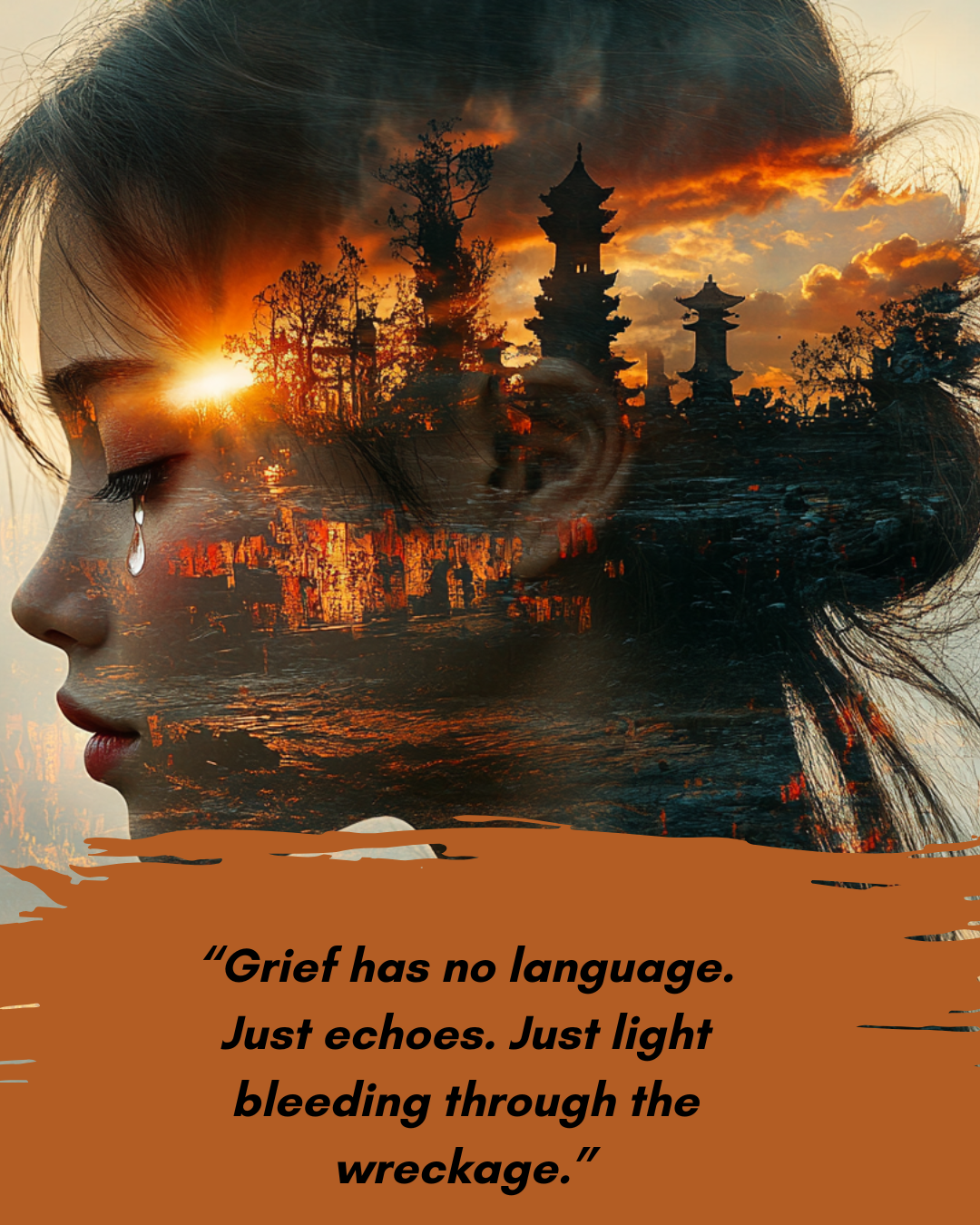
Outside, the river caught fire. Sunlight splintered across the water, all rust and ruin. Temple silhouettes watched from the banks, hollow and grieving.
Grief has no language. Just echoes. Just light bleeding through the wreckage.

Across from me, he sat, impeccable. Tie straight. Wristwatch catching the last of the sun.
“You alright?” he asked, voice drenched in honey and soothing like always.
But I wonder—Is this false comfort?
That soft menace people only hear in hindsight.

I’ve been here before.
My finger found the scar hidden in my palm, the one shaped like escape.
It remembers what my heart tries to forget.

I smile. He believes it. Because that’s the thing about men like him—they love the surface.
And some people never notice the smoke. They only see the flames.
By then, it’s too late.

My stop is next. So is his.
He doesn’t know I’ve been here before. That this time, I won’t look back.
I know he wants me to.
But he’s not ready for what comes if I do.


Author’s Note:
This piece was written for Fandango’s Flash Fiction Challenge (FSS #209).

There’s a strange, satisfying freedom in flash fiction—the constraints force you to choose each word like a scalpel. It’s a literary pressure cooker where character, tension, and atmosphere have to collide fast and leave a mark.

For me, flash is where I go to explore the edges—grief, memory, survival, those quiet gut-punch moments when the world shifts and no one else notices. Stories like this come out like smoke under a locked door. You don’t always see the fire yet—but it’s there.

Want to try your own version of this story’s beginning?
The prompt was: “The woman sitting next to me slipped a note into my hand that read, ‘He’s not who he says he is.’”

The Last Step

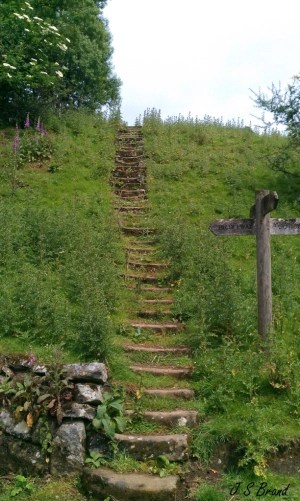
The path had always been there—worn stone steps swallowed by moss, reaching toward the crest of the hill like a forgotten promise. Elara stood at the base, hand grazing the weathered wooden signpost, its words long faded by wind and time.

“They say you find what you’ve lost at the top,” the old woman had whispered in the village square.

Elara climbed, her breath syncing with the hush of the breeze. Each step tugged memories from the past—her brother’s laughter, her mother’s lullabies, the silence that followed their disappearance.

At the summit, the world opened wide. No grand revelation awaited, just the sun breaking through the clouds and a breeze that smelled like childhood summers.

She didn’t cry. She smiled.

The path hadn’t led her to what she lost.

It reminded her she could still feel.

That was enough.

She turned.

And walked back down whole.


This piece was written for Flash Fiction for Aspiring Writers

Kimonogate

FLASH FICTION SERIES – FOWC/RDP/SoCS/FSS #203

A suburban saga of secrets, sequins, and sabotage.


Episode 1:

The Mayor, the Kimono, and Capote’s Forbidden Love

The text the mayor received simply read, “I know what you buried, and it wasn’t just a time capsule.”
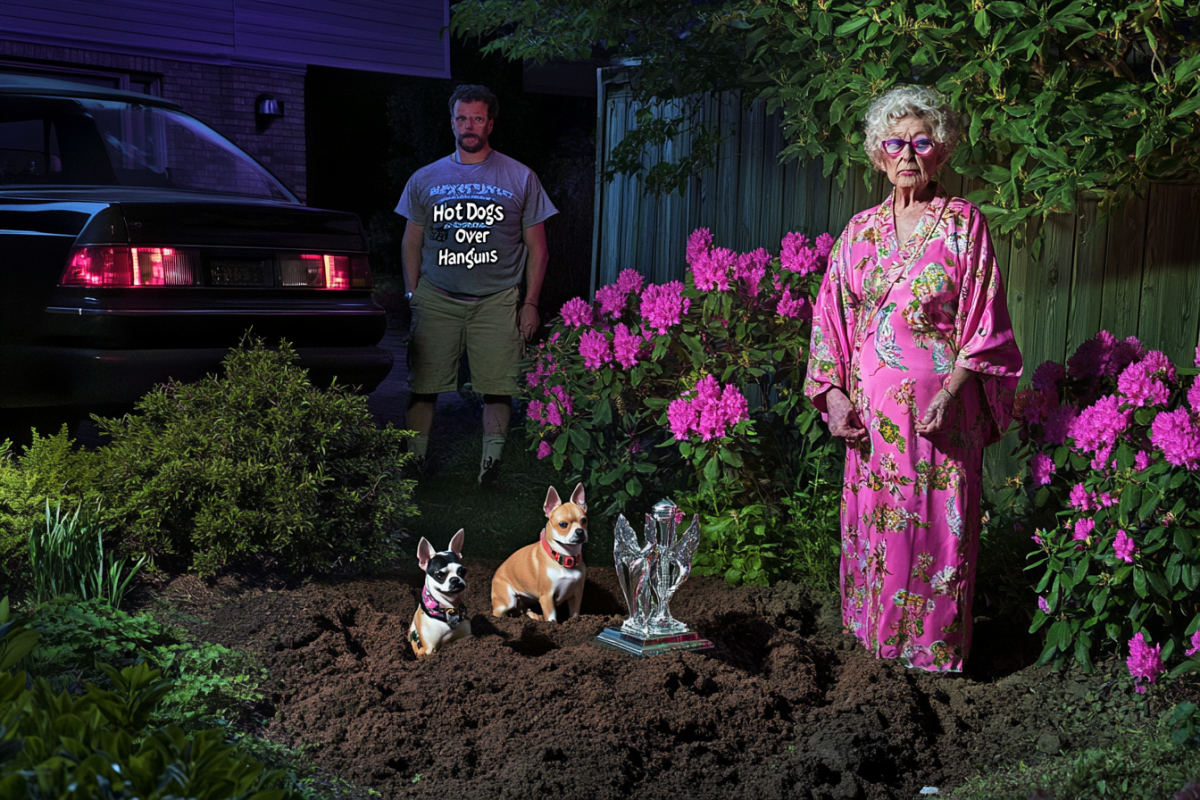
He dropped his spoon into his cereal with a neutral thunk and slowly looked toward the back garden, where the freshly disturbed earth sat like a guilty secret under a patchy rhododendron. He took a deep breath and tugged at the collar of his robe—not the pink kimono, no, that one was currently six feet under with a copy of Mamma Mia! Live at the Greek in a glittery DVD case.

He clutched his phone with one hand and his cereal tube with the other. The mayor didn’t own bowls. Too vulnerable. Too open. Like a confession with handles.

Across the hedges, Myrtle McKlusky—seventy-nine, semi-retired, fully judgmental—was watching him from her sunroom. She sat in her recliner like a falcon in a floral nightgown, sipping from a pint glass of prune juice and fanning her three Chinese Crested dogs, each trembling with a different neurosis.

The largest, Capote, was vibrating like an old blender. He had recently discovered his feelings for Misty, Myrtle’s black Chow, and now stared out the window with the unrelenting passion of a Tennessee Williams heroine.

Capote had needs.

The mayor knew Myrtle had seen him. She always did. She had binoculars shaped like opera glasses and judgment shaped like artillery. He had tried to be discreet, but it’s hard to bury shame quietly when you’re panting in crocs and elbow-deep in mulch.

The kimono was silk. It had a peacock on the back. A punt of brandy had been involved.

And now someone was taunting him.

He stormed out of his house in cargo shorts and a tank top that said “Hot Dogs Over Handguns,” and made a beeline for Myrtle’s porch. She met him at the screen door, holding her smallest dog, Pontius—Pont for short—who barked like he was doing Shakespeare.

“Spying again, Myrtle?” the mayor growled, wiping sweat from his forehead and trying not to pant.

Myrtle narrowed her eyes behind rhinestone bifocals. “I would hardly call ‘having working eyes’ a crime.”

“That text wasn’t funny.”

“I didn’t say it was,” she said coolly. “Capote typed it. He’s quite dexterous. Especially since he caught your Misty presenting.”

The mayor’s eyes widened. “That’s my dog.”

“And that’s my Capote,” Myrtle said, lifting him proudly like a neurotic Simba. “And he’s in love.”

“She’s fixed.”

“So is he. Love finds a way.”

The mayor clenched his fists. “Call off your pervert dog or I swear, I’ll—”

“You’ll what?” Myrtle leaned forward, dangerous now. “Threaten three hairless angels with names from the Harlem Renaissance? Do it, Mayor. The HOA already wants your head after that incident with the inflatable disco duck.”

He froze.

She smiled.

“You wore the kimono to Dancing with Myself, didn’t you?”

Silence.

“And you did the full choreography. With backup. Solo.”

He turned and stormed away, sweat rolling down his temple, heart pounding, ears pent up with the ghost of Billy Idol.

Capote licked the glass longingly as Misty rolled in a pile of mulch. Somewhere, a wind blew through the garden. Somewhere, a love story had just begun.

And under the rhododendron, a peacock shimmered in the dirt, waiting.


The Twist

FLASH FICTION – FOWC/RDP/FSS #204

Carla sprinted from the archaeological site, clutching an artifact that could either save or destroy the world.

The desert wind tore at her coat, slicing her cheeks with grit and heat. Behind her, the canyon bellowed—low, deep, the sound of stone waking from sleep. She didn’t look back.

The artifact pulsed in her palm—black stone, veined with silver that moved like quicksilver, coiling and recoiling. Cold as ice, yet burning her skin. It didn’t make a sound, but its pressure settled in her jaw and spine, like a voice she couldn’t quite hear. A warning. A dare.

She had read the glyphs. Scratched into bone, buried beneath layers of false chambers and cursed earth. Left twist: seal. Right twist: release. A simple choice.

Until it wasn’t.

A sound cracked the sky—a roar too wide to come from a throat. Carla reached the ridge and turned.

The site had vanished. In its place stood a figure made of shadow and ruin, shrouded in strips of black that bled smoke. It held a scythe that scraped the air, hissing with each movement like it sliced through time. Beneath its feet: a field of skulls. Beyond it, the expedition fortress, aflame, its banners melting mid-flap.

Her legs went numb. Her breath caught in smoke. She wanted to run. To cower. To vanish. But the heat from the artifact anchored her. Reminded her: she had opened the door.

She had let it out.

The spirals on the artifact shifted. A recess opened. The mechanism waited. Her thumb hovered over it, trembling.

It was her sister’s voice she heard next. Not real. A memory, maybe. Or a trick.
“The world’s been broken before, Carla. Someone always seals it shut again. Someone just like you.”

The creature stepped forward. The ground cracked. A second sun burned in its wake.

She twisted left.

The silence after was total. Not peace. Something worse.

Then, screaming. From the air itself. The creature reared back as spears of molten light stabbed down from the clouds. Chains wrapped its limbs. It shrieked, stumbling, clawing at the sky—but the light yanked it downward, tearing the world around it like cloth.

Then—nothing.

Carla collapsed to her knees, chest heaving. The artifact lay in her hand, cracked down the center, the silver threads gone dark. The sky was still red. The smoke still stung. But the screaming had stopped.

She stood, slowly, scanning the charred remains of the site. The fortress. Her team.

Gone.

She was lost now. A savior with no witnesses, no one left to remember the choice she’d made.

And just as she turned to leave, the wind shifted. Cold, sharp.
Somewhere far off, something laughed.

Negotiations with Furry Savages

FLASH FICTION – 3TC

After the campfire fiasco, Zog decided to try a new tactic: diplomacy.

Earth’s dominant species seemed fickle — maybe he’d start smaller, less threatening. Something furry. Something approachable.

A rustle in the bushes caught his attention. Out waddled a creature wearing a black mask and an air of criminal intent.

Perfect.

Zog approached the raccoon with the careful craft of a seasoned negotiator. He extended a hand in peace, unfurling his long, bony fingers.

The raccoon hissed like a leaky airlock and darted straight up a nearby tree, pausing only to flash what Zog could only interpret as a crude gesture.

Zog stared up at the creature, mildly offended.

Unprovoked hostility, he noted. Earth’s furry diplomats are clearly unschooled in intergalactic protocol.

Next came a squirrel, jittering across the grass like it had double-dosed its caffeine. Zog tried again, this time holding out a shiny object — the universal sign of goodwill. It was a small, sparkling fragment of his ship’s engine shaft — worth at least seven carats in galactic trade markets.

The squirrel paused, staring at him with bug-eyed suspicion.

Gathering himself, Zog attempted verbal communication, channeling what he imagined was a polite, Earth-tone greeting. “Greetings, noble fur-being,” he intoned.

The squirrel froze, twitched twice, and in a burst of panicked energy, grabbed the shaft-fragment and bolted up the nearest tree like Zog had just proposed marriage.

Zog was left holding nothing but air.

Ungrateful cretin, he thought, watching his precious carat-rich peace offering disappear into the branches. And rude.

Finally, salvation appeared in the form of a cat. Sleek, poised, exuding the kind of confidence Zog recognized in high-ranking diplomats. This was it — the breakthrough.

He crouched low, attempting the proper Earth greeting he had seen in a hastily downloaded YouTube video: he slowly extended his hand and blinked once, slowly and respectfully.

The cat blinked back.

Success, Zog thought, feeling a flicker of pride.

The cat sauntered over, tail high. Zog held his breath.

Then, with the precision only Earth’s apex predators possess, the cat let out a sharp, dismissive hiss and slapped Zog’s extended fingers with a level of disdain that transcended species and language.

Zog recoiled in shock, clutching his hand as the cat turned its back on him. He exhaled, defeated — but the humiliation wasn’t complete.

The cat circled back and, in a final act of casual dominance, brushed against Zog’s shin — a lazy, almost bored flick of fur — before trotting away, leaving him officially, cosmically dismissed.

Earth’s furry creatures, Zog thought bitterly, are not merely rude — they are master craftsmen of insult. Their entire culture must be built on the fine craft of disdain.

He sat back down, deflated, watching the raccoon rifle through a trash can, the squirrel hoard his carat-rich offering, and the cat settle under a tree, licking its paw like it hadn’t just shattered Zog’s last shred of dignity.

Mon had definitely left out a few important details.

Earth girls are easy, he’d said. No one mentioned Earth’s animals were savage diplomats with a mean left hook.

Zog sighed and made a mental note.


Zoglog Entry 02221477

Subject: Earth — Diplomatic Mission
Findings:

  • Raccoons: Unprovoked hostility.
  • Squirrels: Zero negotiation stamina; prone to theft.
  • Cats: Highly trained insult artisans.

Conclusion: Earth’s furry lifeforms are uncivilized, combative, and suspiciously smug. Recommend caution. Also, recommend gloves.


Earth Girls Are (Not) Easy

FLASH FICTION – FOWC & RDP

Zog had traveled 27 light-years for this nonsense.

He’d battled through the fray of the Andromeda-Fermilab skirmishes, dodged a black hole that smelled suspiciously like burnt popcorn, and bribed a customs agent on Venus — all for what Earth’s glossy travel brochures promised: an authentic campfire night.

Now he sat paralyzed in a splintery lawn chair, staring at a pit of flaming sticks like they were a personal insult.

This is it? Zog blinked slowly. Fire. In a hole. Congratulations, Earth. You’ve reinvented the sun, but dumber.

The smoke was relentless. Shift left — it followed. Shift right — it hunted him like an ex with a grudge. His oxygen filters strained, and he already smelled like scorched pine and bad decisions.

Two Earth juveniles gawked at him from across the yard.

“Is he okay?” one whispered, chocolate smeared across his wrist.

“Maybe he’s meditating,” the other said, as if Zog was one deep breath away from achieving Nirvana.

No, Timmy, Zog thought grimly. I’m rethinking every life decision, starting with trusting Mon.

Ah, Mon — fellow traveler, distributor of lies. Earth girls are easy, Mon had said, smirking, right before getting ejected from a Martian dive bar. You’ll be knee-deep in interspecies romance before you can say, “Take me to your leader.”

So far, Zog hadn’t even been knee-deep in conversation. The only intimate contact he’d had was with the mosquito drilling into his forearm.

A marshmallow flung from a crooked stick splattered onto his lap, instantly fusing to his exosuit.

He didn’t flinch. He didn’t dare.

Perfect, Zog thought. Now I’m paralyzed, smoke-drenched, and sticky. What an exotic species I must appear: a confused, flammable piñata.

Across the fire, someone strummed a guitar and began mumbling a song about truck beds and heartbreak. Zog stared blankly, mentally composing his one-star review.

Earth Girls: False Advertising. Fires: Aggressively Enthusiastic. Hospitality: Threat Level Marshmallow. Would Not Recommend.

Still, he thought, if he could survive the fray, he could survive this. Maybe even find a girl — though at this point he’d settle for someone who didn’t accidentally set him on fire.


The Deprivation Chronicles: Tales from the Edge of Sleep and Sanity

FICTION – MLMM #423

The darkness rolled in like it had something to prove. Real main-character energy. Clouds stacked overhead like they were about to drop the most dramatic breakup speech ever. The wind started howling—less “otherworldly whisper” and more “Karen demanding to speak to the manager of nature.” Windows rattled like they owed the wind money. Shutters flailed with the enthusiasm of someone who just realized they left the stove on.

The scent of rain filled the room, all ominous and moody, but of course—not a single drop. Just a tease. Rain was clearly ghosting the whole event.

A candle flickered in its blue glass holder, doing its best impression of ambience. It gave off an aura of “I tried, okay?”—like it had dreams once, but then it met grad school. Its flame danced like it had no rhythm but a lot of confidence, like that guy at weddings who thinks even the Electric Slide is freestyle.

He sat cross-legged in the middle of the room, surrounded by books stacked with the precision of someone deeply avoiding emotional responsibilities. It was less a cozy reading nook and more a literary panic fort. The spines practically shouted, “Look at us! We’re important! We’re unread!” Each story melted into the next until they formed a plot smoothie that tasted suspiciously like pretentiousness and unresolved metaphors.

Sleep tiptoed in like a cat with boundary issues. He was no longer in control—just a tired, passive spectator in a dream sponsored by confusion. The haze pulled him in gently, like a sentient weighted blanket with attachment issues.

Then it got weird.

He felt the warmth of her breath on his face. Comforting. Mysterious. And deeply concerning because, again, he lived outside of a romantic subplot. Who was this woman? Did she come with the house?

Her soft, wet lips pressed to his cheek—sweet, tender, and vaguely moist, like a warm fruit snack. He didn’t question it. Honestly, he didn’t want to know. A strand of hair brushed his brow with the precision of a motivational TikTok influencer wiping away his doubts and reminding him to hydrate.

He sank deeper. Into the story. Into the illusion. Into a pile of metaphors with no exit strategy. Reality became a suggestion. One he politely ignored.

Because sometimes, in the words of others, we somehow… somehow we find our own. And other times, we fall asleep halfway through a book and wake up with a paperback stuck to our cheek and a vague sense of accomplishment.

The Unwritten Standard

SHORT FICTION – WORD OF THE DAY CHALLENGE

She walked the shoreline like a fading echo, her reflection trailing behind her in the shallow water, unsure if it still qualified to be hers. Time had stretched her thin. Not just in years, but in identity—pulled apart by choices she had to make, and those made for her.

Everyone said she wasn’t eligible.

Not for the kind of life that lives in whispers and instinct. Not for the kind of happiness you don’t need to prove. They said you need a plan, a structure, a timeline, a box. Dreams, they told her, had to fit within a budget—not just of money, but of reason, of patience, of what the world deems acceptable.

But deep down, she knew the rules they played by weren’t written for her.

There had always been this undercurrent—soft, persistent, impossible to ignore—that tugged at her ribs like tidewater. A voice not quite hers, but always with her. A silent, steady reminder that she came from something more than survival. That she wasn’t lost; she was just unclaimed.

It wasn’t ambition she was chasing.

It was the prophecy of her becoming.

Not some ancient foretelling, but the quiet, sacred promise she made to herself when she was younger: that she would not shrink. She would not trade her fire for comfort. She would not let her story be rewritten just to make others feel safe.

She had tried being the replacement—fitting into other people’s molds, echoing voices that weren’t hers. But there was always a price. Always a fracture. Always a hunger that imitation couldn’t fill.

Now, walking into the pale light where sky and sea dissolved into one another, she realized: she had nothing left to prove.

She didn’t need to qualify.

She already did.

Top 5 Ways to Ask a Girl Out: Rule #3

FICTION – SHORT FICTION SERIES


Top 5 Ways to Ask a Girl Out: Rule #3
Never assume you’re the smartest person in the driveway.


So there I was, elbow-deep in engine parts, sweating like a liar in a job interview, and just barely pretending I knew what a serpentine belt was. I nodded at a bolt like it had insulted me personally.

She crouched next to me, sipping her probably-toxic coffee and watching with the calm curiosity of someone waiting for a raccoon to finish rooting through their garbage.

“You need a 10mm socket for that,” she said casually.

I froze. “What?”

“That bolt. You’re using the wrong size. That’s why it keeps slipping.”

I looked at the wrench in my hand. I had no idea what size it was. I picked it because it was shiny and made a satisfying clink against the toolbox.

“Right,” I said. “Just warming it up. Loosening the tension.” I said “tension” like I knew what it meant in this context. She didn’t call me out. Worse—she smiled.

“Here,” she said, reaching into the toolbox and plucking out the exact socket like a seasoned mechanic. Then, with zero hesitation, she slid under the hood next to me and got to work like it was no big deal.

“Wait,” I said. “You know how to fix this?”

“I grew up with three older brothers and a string of bad cars,” she said. “Also, I once rebuilt an engine because YouTube dared me.”

I blinked. “So… you’re just letting me fake my way through this for fun?”

“I was curious how long it would take before you admitted it,” she said, laughing. “You were doing okay, though. Kind of charming, in a flailing sort of way.”

Flailing. Excellent. I was now officially “flail-charming.”

She handed me a rag. “Wipe your hands. You’ve got grease on your face. And your shirt. And somehow your ear?”

I wiped at everything and absolutely made it worse.

“Thanks,” I muttered.

She leaned back on her heels, wiping her own hands like a total pro. “So. What was your plan? Fix my car and hope I’d fall in love with you on the spot?”

I froze.

Then shrugged. “Honestly? That was Plan A. I didn’t have a Plan B.”

She laughed. A real one. Then, after a beat, she said, “Well… I like Plan A.”

I nodded, trying not to panic. “Cool. Same. Feels like a solid… multi-step process.”

“You’ve got two more rules left, right?” she said, grinning. “Can’t wait to see what’s next.”

Neither could I.

Mostly because I had absolutely no idea what I was doing.

The Museum of Knuckleheads – Exhibit A: The Credit Card Burial

Daily writing prompt
If you could have something named after you, what would it be?

DAILY PROMPT RESPONSE

The last time this question was asked, this was what I had to say about it:

So, I decided today, what if I turned this cute moment between my wife and I into something else? Here’s what I came up with…


Docent Notes, Entry No. 1: Exhibit A – The Credit Card Burial

Welcome to the Museum of Knuckleheads. Admission is free. Consequences are not.

If you’re here, chances are you’re curious, lost, mildly disappointed with your life trajectory—or just trying to kill ten minutes before the Wi-Fi comes back. All valid. This museum wasn’t built for the elite, the wise, or the well-adjusted. It was built for people like me. People like you. People who have stared into the mirror mid-shower and muttered, “Well… that was a choice.”

Let’s begin the tour.

Exhibit A: The Time I Tried to Bury a Credit Card in the Backyard to “Reset My Finances”

Yes, you read that right. That’s an actual dirt-filled display under the buzzing overhead lights. A plastic shovel from a gas station. A laminated credit card. A tiny American flag, for irony.

This was during a phase I call “financial experimentalism,” which is what you call it when you’re broke but still wildly confident. The plan was simple: if burning sage can cleanse a house, why not dig a shallow grave for debt?

I buried the card behind the shed. Said a few words. Patted the soil like it was a dog I was letting go. And then I waited. For what? Honestly, I don’t know. Divine intervention. A good credit score. A sitcom-style reset button.

Spoiler: Capital One does not care if your card is underground. Interest kept growing as if it were photosynthesizing.


Lessons, If You’re the Type Who Learns

  • Debt doesn’t decompose.
  • Just because an idea feels spiritual doesn’t mean it isn’t objectively stupid.
  • Always check where underground sprinklers are before committing to symbolic rituals.

The exhibit still smells faintly like wet dirt and a bad decision you swore you’d only make once. Sometimes, I swear the card shifts positions overnight. Like it’s clawing its way back up.

People laugh when I tell them this one. They assume it’s exaggerated. I let them believe that. It’s easier than admitting it was the most hopeful I’d felt in months.


Closing Notes from the Docent

This museum isn’t here to mock you. It’s here to reflect you—bad choices and all. You may not see yourself in this exhibit. Not yet. But wait a bit. Everyone’s got a shovel moment.

Next time: Exhibit B – Neck Tattoos I Almost Got at 3 A.M.

Until then, take a number. You’ll be up soon.

Docent, Senior Raconteur
Museum of Knuckleheads


Share your own Exhibit

Ever made a decision so irrational that it felt oddly brilliant at the time? Leave it in the comments. One day, we might just build a wing for you. Don’t be shy …


As always, I’d like to shout out the folks who provided inspiration.

Ragtag Daily Prompt

Fandango

Thank you guys for doing what you do

Random Fiction – 02212025

FICTION

When you’re young, you wander through life with a carefree attitude, convinced that nothing tragic will ever befall you. It’s not that you think you’re made of steel; it’s just that misfortune always seems to strike elsewhere, affecting other people. You know these people—your classmates who sit a few rows ahead in math, friends who share secrets during recess, rivals who challenge you in sports, and those vaguely familiar faces passing in the school hallway whose names always escape you. “Who is that?” You recognize them; they might live across the street or next door, but their names never stick. You catch wind of their troubles in hushed conversations over cafeteria trays or notice the signs—a bruise blooming under an eye or a sudden empty desk where someone used to sit. But you? You’re shielded by an invisible armor. Untouchable. Until one day, that armor cracks, and the reality that you’re just as vulnerable as everyone else comes crashing down.

As a guy growing up, you were conditioned to believe the worst thing you could be called was a wimp or a pussy. Those words stung like a slap to the face. But the worst of all was “pansy.” It technically meant the same thing, yet it carried a unique venom, like an elite-tier insult that could ignite a brawl. They were fighting words, as the old-timers would say. I often imagined a secret list of such words that, when uttered, left you with no choice but to unleash the rage pent up inside the beast within us all, a primal code of manhood handed down through the ages by our Neanderthal ancestors. The rationale behind it was nonexistent—nonsensical, absurd, or downright foolish didn’t even begin to cover it. I even went so far as to ask friends and acquaintances, hoping to uncover this mythical list’s existence, but they just gave me strange looks as if I was the odd one out. “Weirdo.” There’s another term I’m certain once ranked high on that clandestine list.

If there was one thing certain to amplify male foolishness, it was the presence of a girl. You might assume it would be the confident ones with a smooth stride and an easy grin. But you’d be mistaken. It was simply the presence of any female. Something about her steady, evaluating gaze seemed to flick a switch in our lizard brains. Suddenly, we were all posturing like peacocks, vying for attention as if auditioning for the role of “Alpha Male #2” in a poorly scripted high school drama.

“Cut…cut, cut, cut…” the director’s voice echoed through the set, slicing through our bravado. He rose from his worn director’s chair with an exasperated sigh, his footsteps heavy as he approached. He muttered incoherently, his brows furrowing in frustration. Turning abruptly, he addressed a bewildered production assistant who appeared as if they had stumbled onto the wrong set altogether. “It’s missing… I don’t know,” he said, rubbing his temple as if the motion might conjure clarity from the chaos in his mind. The PA shrugged, their confusion mirroring his own.

“More, you know? More,” he declared, fixing his gaze on you with an intensity that suggested the simple word held the universe’s mysteries. It might, who knows? Because at that moment, you felt the weight of impending humiliation hanging over you like a storm cloud, threatening to unleash if you failed to decipher this cryptic instruction. So you reset, ready to reenact the scene with exaggerated bravado and clumsy confidence. A muscular guy, his shirt straining against bulging biceps, lunged forward to take a swing at a smaller guy. The smaller one stood his ground, fists clenched and eyes steely—not because he had faith in his victory, but because maintaining dignity in defeat was preferable to being labeled a pansy. Who needs self-preservation when fragile masculinity whispers its deceitful promises of status and respect in your ear?

The worst beating I ever took wasn’t even for something I did. And that, frankly, was offensive. I was the kind of kid who had done plenty to earn a few ass-kickings, but this one? This was charity work.

Susan Randle—radiant in a way that made heads turn in every hallway—sat beside me in the darkened movie theater. During what she half-jokingly called our “date” (really just two people sharing a row while an action film played), she eyed me with a mischievous smirk and accused me of being gay simply because I hesitated when she leaned over, voice low and daring, to ask if I wanted to “do it.” The dim light flickering over her face caught the earnest sparkle in her eyes before she suddenly closed the distance and pressed her lips against mine. In that charged moment, the unwritten, yet unanimously understood rule against “unsanctioned sugar”—the secret code dictating who could kiss whom—reared its head. No one ever seemed to grant an exception, whether you were a girl or a guy. And here I was, trapped between the dreaded labels: on one end lay the desperate horndog willing to prove his manhood at every twist, and on the other, the discredited possibility of being gay. I wasn’t interested in becoming just another name on her ever-growing list or dealing with the fallout of shattering her carefully constructed illusion of desirability. When a boy disrupted that illusion, the consequences were swift and ruthless.

That catalog wasn’t a myth—it was as real as the whispered rankings that circulated among us. It wasn’t enough to simply admire the “right” girl; if you dared to look away or, heaven forbid, question the unspoken challenges, your name was scrawled in the ledger of sins. Failed to laugh at the jokes delivered with just the right touch of irony, dress in conforming denim and sneakers, or walk with that practiced swagger? Sure enough, it was marked on the list.

My reluctance to follow these unwritten rules quickly made me a target. Over the following weeks, a series of meticulously scheduled beatings forced me to confront the cruel reality of teenage hierarchies. After school, I would find myself cornered in the deserted back lot behind the gym, where a group of boys awaited with grim determination. They’d shout derogatory names—“fairy boy” and a particular favorite, “pirate,” a crude truncation of “butt pirate”—words spat out with the casual cruelty of a rehearsed routine. Each blow landed with precision, and amid the sting and shock, I discovered a perverse sort of order; they made sure I wasn’t crippled for good. I clutched my prized 96 mph fastball as if it were a lifeline and leaned into my natural left-handed stance, determined to keep my place on the team even if I was labeled a “fairy boy” behind closed doors.

By the time the school year drew to a close, the beatings ceased as if a final judgment had been passed in some bizarre, secret rite of passage. One by one, the bullies patted me on the back with a mixture of grudging admiration and hollow platitudes, congratulating me on having “taken it like a man.” It was as if surviving their collective assault were the final exam in a twisted curriculum of manhood. They’d shrug and say, “It wasn’t personal. It was just something that needed doing.” To them, such senseless violence was nothing short of an honorable tradition—a sacred duty executed without a shred of genuine empathy.

That summer, I found brief refuge away from the tyranny of high school corridors with my father in Northern California. He was a truck driver, his bronzed, weathered hands as familiar with the hum of diesel engines as he was with the hard lines of a life lived outdoors, where emotions were as heavy as the cargo he hauled. My parents’ origins were a collage of chance encounters: they’d originally met at a sultry George Benson concert in the Midwest, where the guitar licks sultry under a neon haze had paved the way for something unexpected. Within nine months of that chance meeting, I came into the picture—a living reminder of their brief yet potent infatuation. They had the wisdom to avoid the charade of forced domesticity; soon after, my mom returned east while my dad continued chasing horizons out west. Mysterious fragments of half-truths and secrets that always belong to a larger narrative are as American as elitism and Chevrolets and need no full explanation.


I used the prompts listed below in this bit of flash fiction

RDP – beast

Fandango – FWOC – Date

Reena’s Xploration Challenge #359

CHALLENGE RESPONSE – FICTION (EXCERPT)

Here is my response to Reena’s Xploration Challenge #359


I walked in and pulled over the metal chair by a sliding door. I slid the door back and walked to the window. I sat down and leaned back in the chair, staring into the night sky. Closing my eyes and slowing my breathing, I prepared myself to see the possible scenarios I would face. I picked up something from a Tibetan. I cleared my mind of all the distractions. It wasn’t easy; it never was. The amount of baggage we carry around day to day is staggering. We cling to things we deem essential but are quite trivial in the larger scheme of things. The idea was to picture myself in a peaceful place. This place is different for everyone. Once you achieve the mediative state, the mind and spirit are in harmony, and the visions will come. Images flashed in my mind, displaying the different challenges that I might face. For each challenge, I came up with a possible solution. It wasn’t like I could see the future or anything, but I had been in this game long enough to know most of the problems I would face.


Author’s Note:

I’ve been working on a large writing project for the last month, and I wrote a portion of a larger scene in which the protagonist meditates. When taking a break earlier this week, I saw the above image, which stood out for some reason. I couldn’t place it at the time. I put the image on a separate scene, sat back, and let it talk to me. Then, it occurred to me why the picture was critical. I opened Scrivener, and sure enough, there was a note for me to work on that scene. So, I began to play with the scene using the picture. I decided to post this excerpt as I continued playing with the scene. Most likely, it will end up much different than what you see, but this sketch provides a good placeholder.

Pangs of Madness

CHALLENGE RESPONSE – FICTION

I love the fall; the colors are just as magical as spring. There is beauty in every season if you open your mind to see it. The color resided in the fact that it had the ability to make forget about the madness in the world—the madness that had the potential to destroy every fiber of decency that remained. So, we needed moments like these, moments where the fiery red of the leaves blended with the purplish hues of the space between that made the white of the snow-covered ground have a bluish tint. Moments of otherness.

I stood with an unlit straight hanging from my lips. The temperature dropped enough that you could see your breath. Winter was around the corner. Soon, Winter’s talons would be crawling at your skin. There have been more and more days like these lately. Another horrid crime scene was behind me. An example of the madness this beautiful scene would help me escape, even if it’s just for a little while. I could hear the crunch of footsteps against the snow and turned to see Lt. Rawlins.

Lieutenant Benjamin Rawlins stepped up next to me and stood silently. He wore an expressionless face—the look I was used to seeing. At the last crime scene, he was a pot of emotions on the verge of boiling over. He chewed on the end of his signature cigar. He always smoked the cheap ones. His wife said the good ones were too expensive to be chewed on. An expression that told me he was feeling exactly what I was feeling. We have both been doing this long enough where words weren’t necessary.

“There’s nothing like the fall colors right before winter,” Rawlins remarked as he spit out the chewed-up portion of his cigar. It looked like he would be needing a fresh one before long. I nodded in agreement.

“You gonna get this __” Rawlins broke off due to his promise to his wife when the first grandchild arrived. I stared at him, and he met my gaze. I nodded.

“Before Christmas? I don’t want the city to be in unrest during the season.” Rawlins remarked. Lists of children naughty and nice, letters to Santa, and horrible, well-intended Christmas gifts always gave me a warm fuzzy. Yet, you couldn’t ignore the magical elements of the holiday. So many people were absolutely impossible for most of the year, but they became something else during this season. Only a few weeks later, they seemed to forget the promise of hope and return to the drudgery. It’s disheartening and sad.

I shrugged and lit my cigarette. I took a deep drag, exhaled, and said, “Patience, Boss.” Rawlins stopped chewing, and I felt his gaze. His face reddened with rage, not at me, but at the idea, someone was in his city doing these hideous acts. He swallowed it, but not before he chucked away the remainder of his cigar in frustration.

“Detective Casey,” he began in that low growl graded against my soul. I reached out and gripped his shoulder, “Patience, Boss. We’ll get him, I promise.” Rawlins nodded and walked away. I watched him get into his sedan and leave. I knew better than to make promises in cases like these. It was possible we would catch a break and catch the killer, but it was more likely that we wouldn’t even come close to apprehending the killer. It was the pang of madness.


Authors Note:

I’ve been participating in this year’s NaNoWriMo, so I haven’t been active on WordPress as usual. Yesterday, I completed the word count requirements, but they’re far from complete, so I decided to take a break and read some challenges. It’s always fun participating. While reading today, I noticed a few that caught my eye.

I used the following prompt to draft the opening sequence of the chapter of my ongoing work.

Moonwashed Weekly Prompt – Otherness and the enchanting image provided the imagery in the opening paragraph. It helped me add a bit of beauty to the gritty, grimy story I’ve been working on this month. Thanks, Eugi!

Ragtag Daily Prompt – Chew, Patience, and Shallow provided depth in the character interactions. Thanks Guys!

Esther’s Writing Prompts – Adding a pleasant element to my grisly tale. Thank you!

The Neighorhood

CHALLENGE RESPONSE – FICTION – FFFC #288

Authors Note:

When I looked at this image, I had no idea what I would do with it. Literally, nothing came to me. So, I read what others had done with it, and still, no joy. I noticed that Melissa had provided a description of the image—something I think she always does. I’ve seen it before, but it made no impact until this challenge.

I took the description and rendered several images from it. Then, I started playing around with the description. All of a sudden, I had a voice. I looked around to see where it was coming from. I thought maybe my iPad was reading a book, or another of my gadgets had decided to push me over the edge. Nothing. Everything was functioning properly, but isn’t that how it works in the movies? Everything is working correctly when you go to check it.

Anyway, I returned to working on the images when I had the voice again, much louder this time. The voice was telling a story about his friend after his mother’s funeral. Then, I realized I wasn’t losing my mind, but a character was speaking to me. I’ve no clue where he’s going with his story or why he decided to tell me. It doesn’t even have a name. It has been a long time since I had a new character shown up. If I’d known, I would have tidied up a bit.


The Neighborhood

It was a lovely service; Mrs. Byrne would have been proud. No one liked to attend funerals, but they appreciated them being done correctly. Over the years, I remember her mentioning bits of this and that she saw at the different services. She mentioned some more than once, so I added everyone we could remember in her service. Her daughter Ivy had been my best friend since I showed up in the neighborhood at five years old.

My older brother Sean and I moved into the neighborhood after cancer had taken our Mom. Cancer is cruel, and it took its time taking our Mom. Pop lost his job at the plant because he refused to leave our mother’s side at the end. It took five months to cross the Rainbow Bridge and years to prepare for the journey. Her death broke Pop, but somehow, he pulled it together once we moved to the neighborhood. At least for a little while.

The neighborhood was three miles long and ten blocks deep, filled with Irish Catholics, and our Black faces weren’t exactly welcome. Mr. Flannery was Pop’s best friend, and he convinced a friend of his to rent to us. Pop got a job doing demolition. Pop said he had a lot of anger to work off, so the job was perfect. Sean was a teenager when we moved there and had rougher than I did. He’d come home with bruises most days until one day, he didn’t.

I played in the yard by myself most of the time until a red-haired girl with pigtails stood there looking at me one day. She didn’t say a word.

“There are swings a couple of blocks from here,” she said. I stared at her, knowing I couldn’t leave the yard. Yet, something this girl made me want to risk a trashing.

She continued to stare momentarily, then started walking away. I went to the fence and watched her. She turned and looked back, then stopped.

“You coming?” ” You aren’t a pansy, are you?” she asked. In seconds, I was walking next to her. We talked all the way to the park about the usual stuff. She told me Spider-Man was the best superhero ever, and Wonder Woman was a close second. I knew she was crazy because it was Batman, then the Green Arrow.

We played all day, swinging and climbing trees. She fell out of the tree and skinned her elbow. I leaned and kissed it. It was something my mother did when I got a boo-boo. Ivy punched me in the arm.

“You ought to know a girl’s name before you go kissing on her.” she said, smiling. She had one of her front teeth missing, but that stopped that smile one bit.

“I’m Ivy, Ivy Bryne,” she said, sticking out her hand.

“Frank Anders,” I said, shaking her hand. I gave her a soft handshake because she was a girl and punched me again.

“My dad, you give a person a firm handshake. Try it again,” she said, sitting her hand back out. I gave her a proper handshake and went back to swinging. I saw Sean coming over the crest of the hill, and he didn’t look pleased. Ivy and I met him before he got to the swings.

“See you tomorrow, Frankie,” she said and ran off.


FFFC #293

I was standing in the garage smoking a cigarette pacing back and forth when I heard Ivy come in. She always walks hard in her heels. I don’t think she’s taking a graceful step in heels since I’ve know her. Most of the time, she could be found sporting a pair of sandals or sneakers when the weather bad.

“Did you know, Mom was into photography?” Ivy asked, before I could respond she launched into the next question typically Ivy. It always seemed like she wasn’t interested in your response, just your attention. You were to listen until there was break which usually meant your response was required, but sometimes you missed the opening that prompted, “Hello, earth to Frankie! Aren’t you listening to me?” I’ve gotten better over the years catching my cues and today was no different.

Ivy was going around this new discovery about her mother when a few photos fell out of the binder she holding. One was a picture of a crane with it’s beak pointing skyward and the other was a picture of a eagle with a mountain landscape in the background. Wonderful shots I thought. Mrs. B had really found her thing. She had confided, years ago, that felt she had lost a portion of herself being a mother. She had no regrets raising her children, but she should have carved out more time for herself.

The binder slammed Ivy was biting her bottom lip trying to hold back the tears. I didn’t understand why. If these was a time to cry, this was it. However, Ivy never wanted to be considered a punk and she wasn’t by far the toughest person I knew. Tears streamed from her reddened swollen eyes. There emerald hue seemed to sparkle in the light. Yet, she held back the wail. I always loved those eyes. She rushed towards me burying her head in my chest.

The muffled banshee cry grew louder by the second. The harder she wailed, the tighter she squeezed.

“It’s alright, baby. Let it go,” I whispered

Evening Writing Grooves – 06202024

PROSE – STATION BREAK

My editor threatened to quit if I didn’t stop playing around with AI imagery. Normally, I don’t respond well to threats, but in her case, I’d be a good boy and start writing again. So long, lovely people who reside in the splinters of my mind. Well, not really so long, but your visualization will have to wait for a bit. Now, don’t pout. Hey, missy, why are you looking at me in that tone of voice? That goes double for you, mister!

Sorry about that. Can you believe these people? Trying to get out of my head any way they can, the nerve! As I was saying, I’m going to do a little for the next couple of days. Is that alright with you folks?


I hear the fluttering of its wings, my breathing quickens, and my heart begins to pound. My fingers inch their way to my inkwell. My quill and inkwell shun me.

“Come on, now don’t be like that!” I plead

My quill gives me a quick look, but my inkwell is not having any of it. He has been fooled before. I pause for a moment, thinking. Then, it occurs to me.

“Alexa! Oh, Alexa, Prince, please!”

Playing Prince from Spotify playlist “They funky Sh**!” She replies as her blue lights lit the room. I watch the Inkwell begin to groove.

“Don’t hurt yourself, now!” I tease

“Shut up and write!” The Inkwell replies

So, the inkwell, quill, and Sophie continue grooving. I chuckle as I pick up the laptop and begin to do my thing.


MLMM Photo Challenge – 05302024

FICTION – PHOTO CHALLENGE RESPONSE

Here is my response to MLMM Photo Challenge

Image credit Sarah Whiley

I surveyed my kingdom and the lush gardens before me from my perch on the railing. There’s a sign by the gate with a picture of me. It says something below it. They call me Stanley. I wonder which one came up with that name. The humans often walked these paths, marveling at the beauty of nature, but none could truly appreciate it as I did. I am the peacock, the jewel of this realm, and my feathers are the crown jewels.

I strut through the gardens daily, tail feathers trailing behind me like a royal train. The sun catches the iridescent blues and greens, making them shimmer like the waters of a hidden lagoon. Today, I decided to take a break and observe my domain from this higher vantage point.

The air was fresh with the scent of blooming flowers, and the trees whispered secrets to each other in the gentle breeze. I watched as a family strolled by, their eyes widening in awe as they noticed me. The little ones pointed and gasped, tugging at their parents’ sleeves to share their discovery. I preened, feeling a surge of pride. Even the youngest humans recognized my magnificence.

Beyond the garden’s edge, the world seemed a distant dream. Within the bounds of my green paradise, life moved peacefully. Birds flitted from tree to tree, and the occasional squirrel scurried past, always keeping a respectful distance. They knew, without a doubt, who reigned here.

The sun began to dip lower in the sky as the day wore on, casting a golden glow over the garden. I could hear the murmurs of the visitors growing softer as they made their way to the exits, reluctant to leave this haven of beauty. Soon, the garden would be mine again, a quiet sanctuary where I could rest and dream of new ways to dazzle my audience come morning.

For now, I stood still, a statue of elegance and grace, soaking in the admiration of those who lingered. I am the peacock, guardian of this garden, and in my feathers, the world sees the magic of nature.

RDP – Thursday

CHALLENGE RESPONSE – FICTION

My response to RDP – Thursday – bamboozle

The Grand Bamboozle

A spry little man named Barkan lived in the serpentine alleys of the ancient city of Khazan, notorious for its labyrinthine streets and enigmatic inhabitants. Barkan was not your average resident. He was a trickster, a master of bamboozles, and his clever ruses were the talk of the city.

Barkan was not always this cunning. Once upon a time, he was an innocent and naive boy. However, life in Khazan was tough, and the city’s harsh realities turned him into the wily person he had become. Yet, Barkan’s bamboozles were never harmful or malicious. They were light-hearted pranks aimed at teaching lessons to the arrogant and the pompous.

One day, a haughty nobleman named Lord Faizan visited Khazan. Rumors of Barkan’s bamboozles had reached him, and he was determined to outwit the trickster. Lord Faizan was known far and wide for his pride and arrogance, qualities that made him the perfect target for Barkan.
Upon his arrival, Lord Faizan announced a reward for anyone who could outsmart him. The city excitedly buzzed, and Barkan saw the perfect opportunity for his most significant bamboozle yet. He accepted the challenge, and the city held its breath, waiting for the grand showdown.

The next day, Barkan invited Lord Faizan to a feast at his humble abode. As the nobleman arrived, he was surprised by the simplicity of Barkan’s home. Little did he know, the grand bamboozle had already begun.

The Lucidity of Silence – Scene 2

PROSE – FICTION

The leaves on the trees rustled as the squirrels playfully chased each other limb to limb. In the forest, there was a clearing. A woman reading from a book sat in this clearing next to some fallen branches. The woman dressed in a habit, and the book was small in size but limitless in wisdom and Grace. These two things served as a beacon rescuing her from herself. She was on a path to Perdition’s Cathedral because she had lost hope. It was the fallen oak branch to her right that she first saw him. He was lost in the confines of the world painted inside bounded papyrus. He sat there so serenely as he brushed his from his face. She instantly knew that she loved him.

It seemed like one of those fairy tale moments you read about or see at a picture show. A moment when it’s clear you could love someone for an eternity and be the better for it. Grace smiled as she remembered plopping down on the branch beside him. She was so nervous but summoned the courage to ask his name. From the look in his eyes, they were the deepest brown; Grace could tell that he felt the same way. She remembered being overwhelmed and delighted like nothing before. They talked until the settling of the sun. Together, they walked hand in hand in silence, taking in sunset wonders from the edge of the ridge.

Exhaling in contentment, they parted ways to return home. Over the next several months, they continued their talks. They took turns reading from the book and discussing what each passage meant. After several months, they expressed their silent feelings for one another. It was the heavens danced in praise. The birds sang the sweetest ballad, and the sun brightened. It became clear to them that destiny had spoken. It became that they were to be together forever.

One day, the gloomiest it had been since they met. Her soul mate sat on a log, clearly troubled. He broke the news to her that he was to leave her. Her heart sank into a fathomless abyss. He explained he had to fight for truth, justice, and freedom. These were necessary for love to be the strongest in the world. None of this eased the pain of her wounded heart. None of this comforted her tormented soul. They kissed and hugged each other tight. They never wanted to let go of each other. Watching him walk away that day was like watching her soul walk away.

Grace had no idea she would never see him again after that day. At least, she had no idea she’d ever admit openly. It is something about when you are about to lose someone you truly love. You just know it. Nothing can truly explain this except the one who walked this path. They are the people who have stood there waiting for a glance to quiet their screaming fears. They stand praying for just one more chance to see them. Unfortunately, it is a chance that sometimes never comes.

Now, the woman has devoted her life to the service of the Father. Now, she has faith in something more substantial than her pain. Each day is different than the last. Each moment, she learns to ease her pain through his Grace. Somehow, through the misery, the deceit, and the pain, she looks for the good in the world. She must pray for guidance to help the less fortunate. Each day, in each moment of prayer, she hopes through corridors of pain that she can help another on the path to Perdition’s Cathedral.

~thanks for reading~

The Lucidity of Silence – 1

PROSE – FLASH FICTION

The wooden rocking chair creaks against the porch in perfect time with the living clock on the wall: Tick, tick, tick. Carol Oxford sat on her porch, looking at the sky, lost in her thoughts about what she had seen in her lifetime. The memories of everything she had lived through. It had been such a wonderful life long from being over if she had anything to say about it.

In seven years, just seven years, she would have witnessed a century come and go. Seven years go so quickly, but so many things could happen. In the past seven years, she had buried over thirty of her friends and loved ones. And now, Roger? She had built her entire world with Roger. He called home to the Father. A smile came across her face as she wondered why the Father didn’t let him get those orchids planted this year. He would have loved to get the orchids before he left. His shovel and pail still sat where he left them as if she was waiting to return and finish the planting.

Sassy still runs out every morning to see if he returned. Then, she comes to the porch and sits on the step as if waiting for him to leave the barn. The woman understands her dog’s action because she still makes the coffee at dawn and pours two cups. As she drinks her coffee, she often wonders why the Father left her here. Why didn’t he take her at the same time or shortly after? Then she would smile as she remembered what her husband would say about that,

“Honey, there are things certain in life, Death and change. You may not like the change, but you can’t control it. No more than you are in control of the life’s ticking clock. So Honey, the best thing to do is be the best person you can, as long as you can.”