


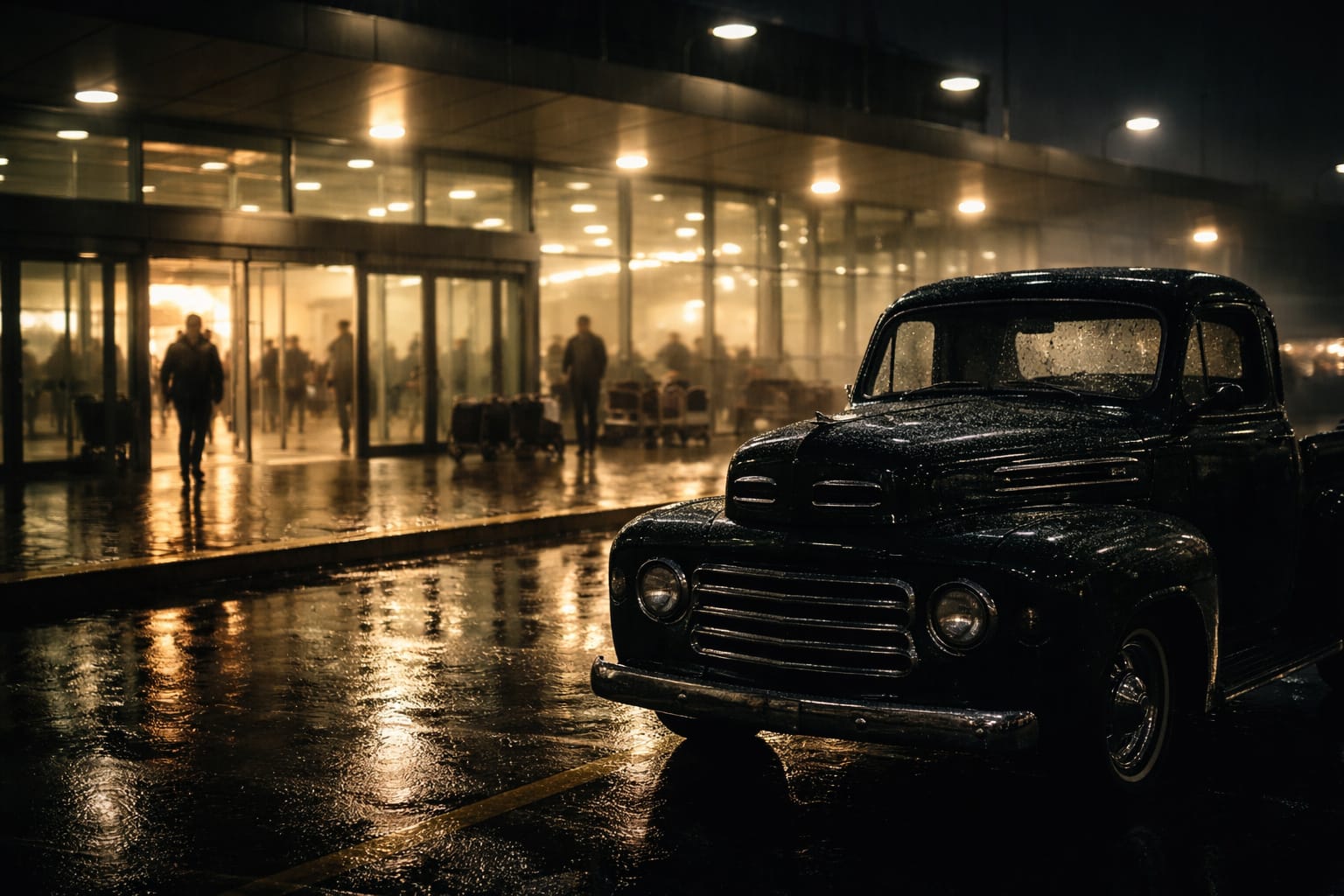
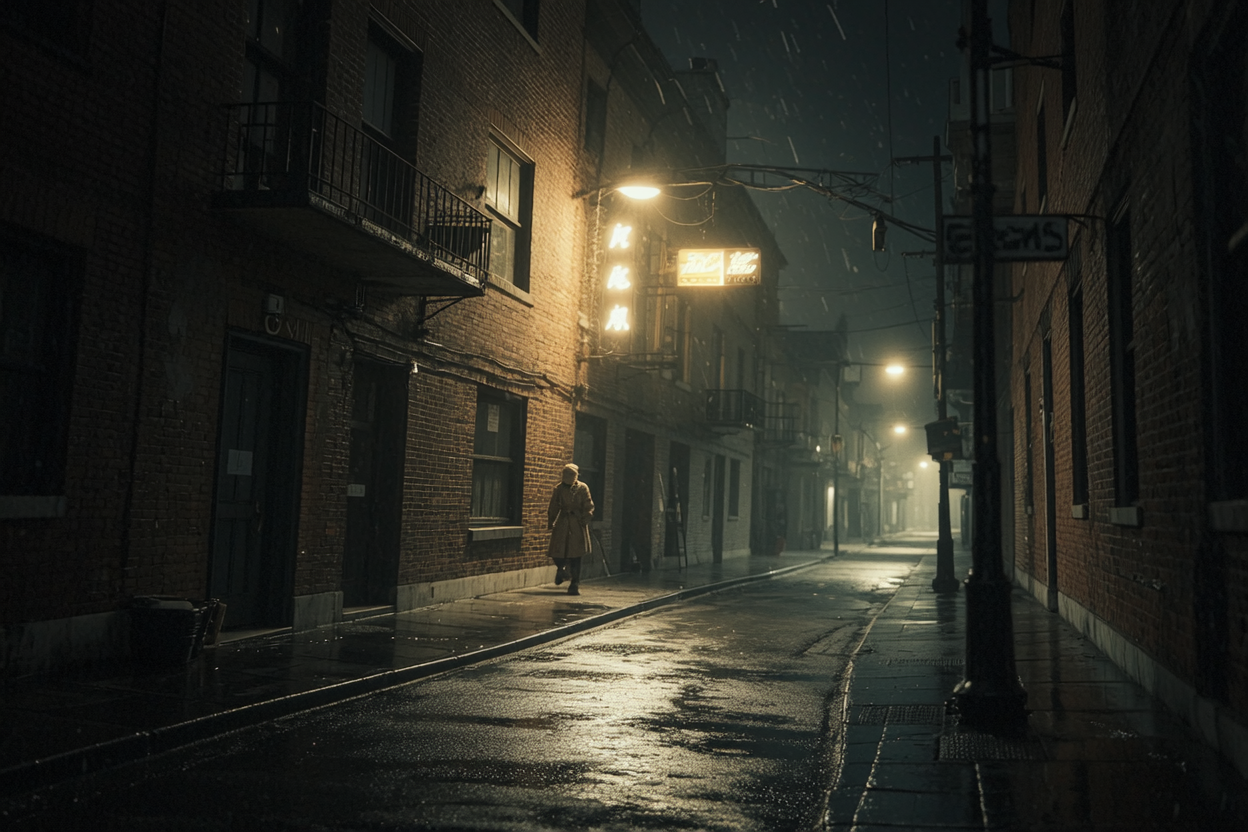
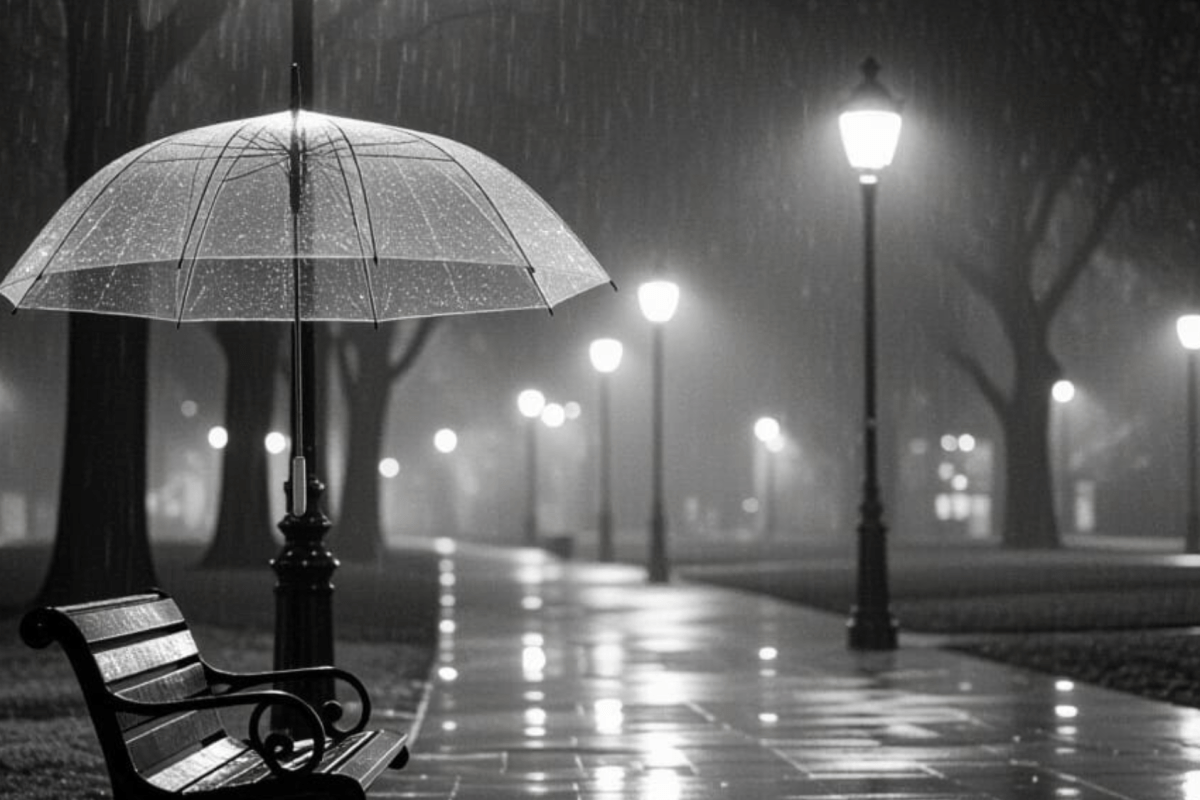
The rain didn’t fall. It hovered—like it had somewhere better to be but couldn’t quite commit. Hung there in the air, thinking things through. I respected that. Commitment’s a tricky thing. People talk a good game until it’s time to actually land somewhere.
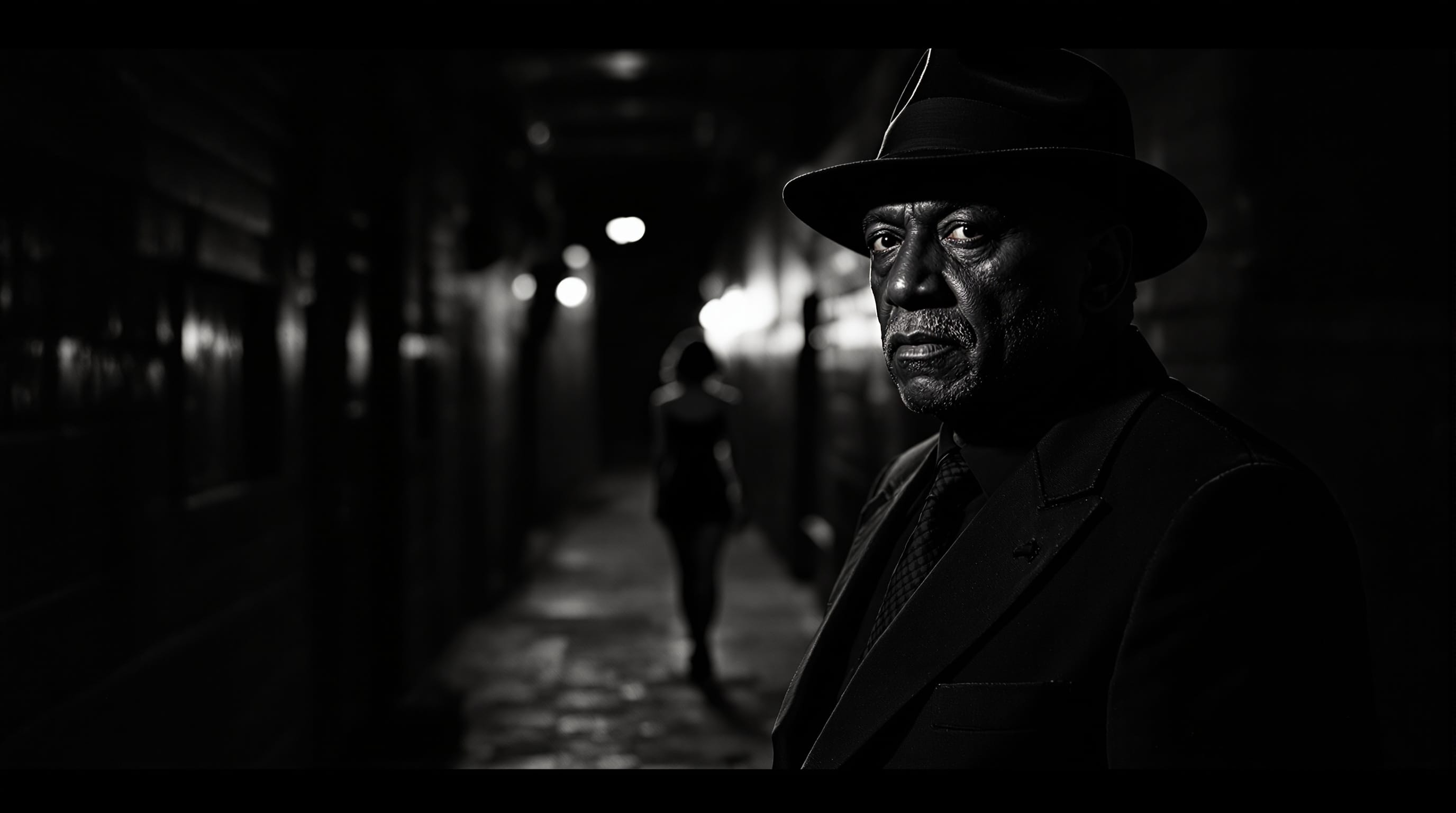
My name is Tailfeather Jenkins. Private Investigator. I locate disappointments, misplace truths, and send invoices that rarely get the respect they deserve. The fan above my desk turned slow and uneven, like it owed somebody money and was hoping they forgot.
That’s when she walked in.
She didn’t enter the room so much as dim it. Like someone turned the brightness down without asking.
Widow Jones wore darkness like it had been tailored specifically for her—fitted, measured, deliberate. The hat did most of the talking. Wide brim, cutting her face in half, keeping her eyes in shadow and leaving those red lips out front like a warning sign nobody reads until after the accident. Not painted for beauty. Painted with intent.
Her skin caught the light reluctantly, like it didn’t trust it. Smooth. Pale. Unhurried. The kind of stillness you only get after you’ve either finished grieving… or decided it wasn’t worth the effort in the first place.
You couldn’t see her eyes right away. That wasn’t an accident. Eyes give things away. Widow Jones didn’t strike me as the charitable type.
Her hair fell in controlled waves over her shoulders, not a strand out of place. That told me two things immediately—she plans ahead, and she doesn’t panic. People who don’t panic are either very smart… or very dangerous. Sometimes both. Those are the ones you don’t rush unless you’ve got a death wish or a backup plan. I didn’t have either that morning.
The dress didn’t ask for attention. It knew it had it. Black on black, fabric moving just enough to remind you it wasn’t decoration—it was intention. No noise. No desperation. Just control.
There was a scent, but it didn’t introduce itself properly. Not floral. Not sweet. Something quieter. Like memory after it’s had time to settle and doesn’t need your permission anymore.
She didn’t fidget. Didn’t scan the room. Didn’t need to.
Women like that don’t go looking for trouble.
They wait for it to recognize them.
“I’m looking for Tailfeather Jenkins,” she said. “You him?”
“That’s the rumor.”
She didn’t smile. That was promising.
She moved toward the chair like it already belonged to her.
Then the room reminded her it didn’t.
Her heel caught the leg just enough to betray her. Not a fall—nothing dramatic. Just a brief hitch in the rhythm. A break in the illusion. She steadied herself without grabbing anything, adjusted without looking down, without looking at me, like the moment had been negotiated and quietly dismissed.
But it happened.
And I wrote it down anyway. Not in the notebook. Somewhere more useful.
Women like that don’t make mistakes.
Which means when they do… it’s not the mistake that matters. It’s what it reveals about the rest of the act.
She sat, crossed her legs, and took the room back like nothing had happened.
“My husband is dead.”
“I’m sorry,” I said. It came out clean, practiced. Like something I kept in a drawer and pulled out when required. Sympathy has a script. Authenticity usually shows up late, if at all.
“I believe he was murdered.”
That shifted the air. Not enough for anyone else to notice. Just enough for me.
“He left the house three nights ago. No note. No call. No nothing.”
“Nothing’s expensive these days,” I said. “Except honesty. That’ll cost you everything if you’re not careful.”
Still no smile. Discipline like that usually comes with a history.
I’ve trusted my instincts about women before. That’s how I met a psychopath. Beautiful. The kind of beautiful that makes bad decisions feel like destiny. Didn’t notice the eyes until it was too late. By then, I was already part of the lesson.
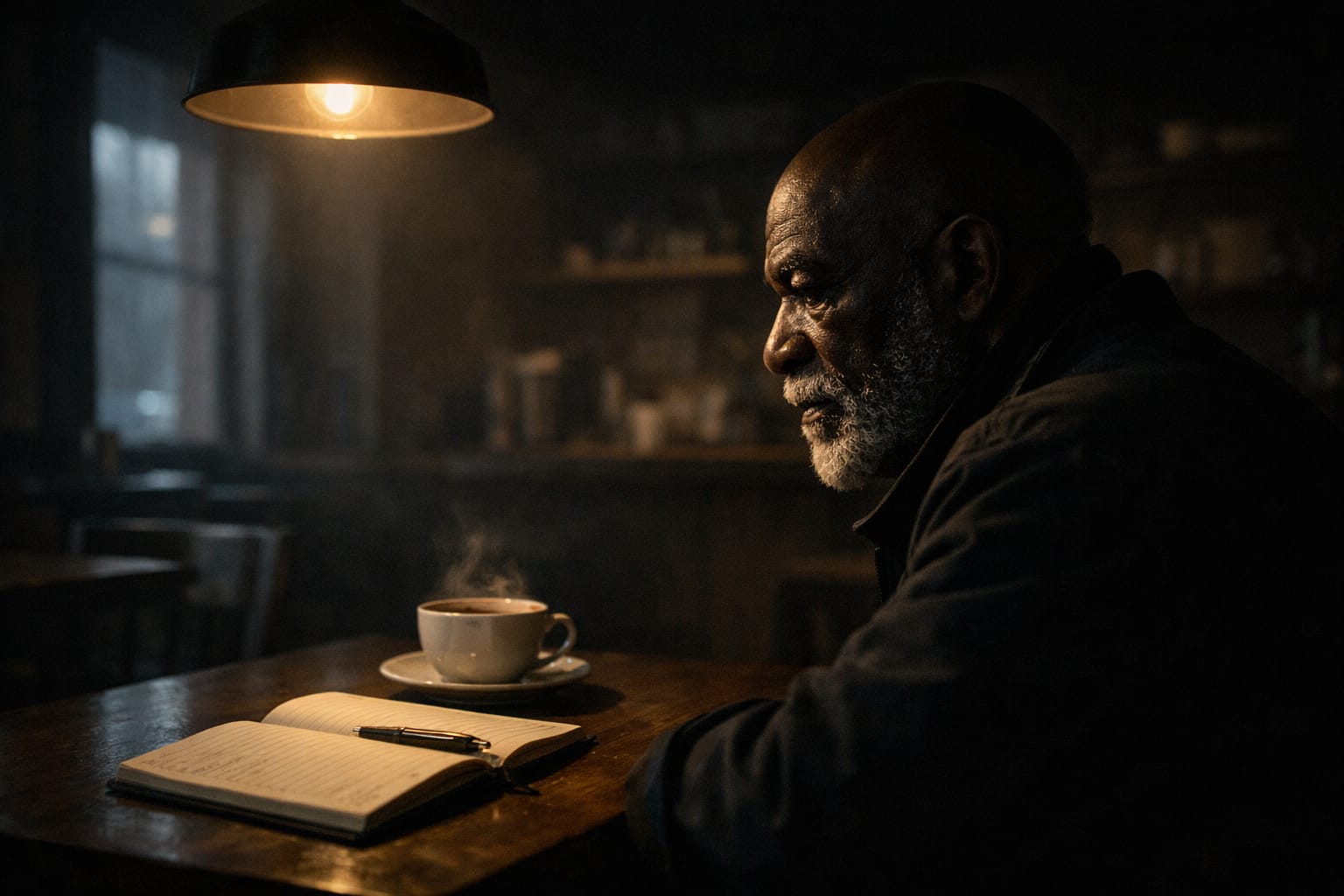
I opened my notebook. Blank pages. Full confidence. It’s a system that hasn’t failed me yet, mostly because I don’t trust either one completely.
“Name?”
“Earl Jones.”
“Occupation?”
She paused.
That pause told me more than anything she could’ve said. People hesitate around lies, truths, and things they don’t want to categorize. I didn’t push it. No need to chase something that’s already circling you.
The house sat at the end of a quiet street that looked like it minded its business a little too well. Lawns trimmed, windows clean, everything in its place. The kind of neighborhood that doesn’t ask questions because it already decided it doesn’t want the answers.
Inside didn’t smell like anything.
That’s not normal.
Every place smells like something—coffee, dust, old arguments, decisions that didn’t age well. This place smelled like nothing had ever happened there. Like someone had erased the evidence of living and left the structure behind.
The counters weren’t tidy.
They were cleared.
There’s a difference. Tidy is effort. Cleared is intention.
The sink was dry. Not recently cleaned—unused. A man lives somewhere, there’s always something left behind. A glass, a plate, something that says, “I was here, and I’ll deal with it later.” Later never comes, but the evidence sticks around.
Earl Jones didn’t leave anything.
Cabinets were organized. Plates stacked like they were waiting for inspection. Then the spices.
Alphabetized.
That stopped me.
Men don’t alphabetize spices. Not unless they’re performing for someone who might be watching. Or trying to convince themselves they’re a different kind of man than they actually are.
The living room was arranged like a photograph. Furniture positioned, not lived in. No imprint on the cushions. No remote abandoned in the middle of a decision. No blanket draped over the arm like it lost an argument.
Just a room pretending to be a life.
The bedroom followed the same script. Bed tight. Closet half full. Not too much, not too little. Measured. Controlled. Like someone had calculated what absence should look like.
The only thing missing…
was a person.
Happy’s Diner smelled like burnt coffee and things people avoided saying out loud. Neon sign buzzing like it was hanging on out of spite more than purpose.
They made a good pastrami.
That told me Earl had been trying. Men don’t chase good sandwiches unless they’re chasing something else too—routine, comfort, a version of themselves they haven’t fully earned yet.
I didn’t stay long.
Didn’t need to.
A photograph told me everything I needed to know.
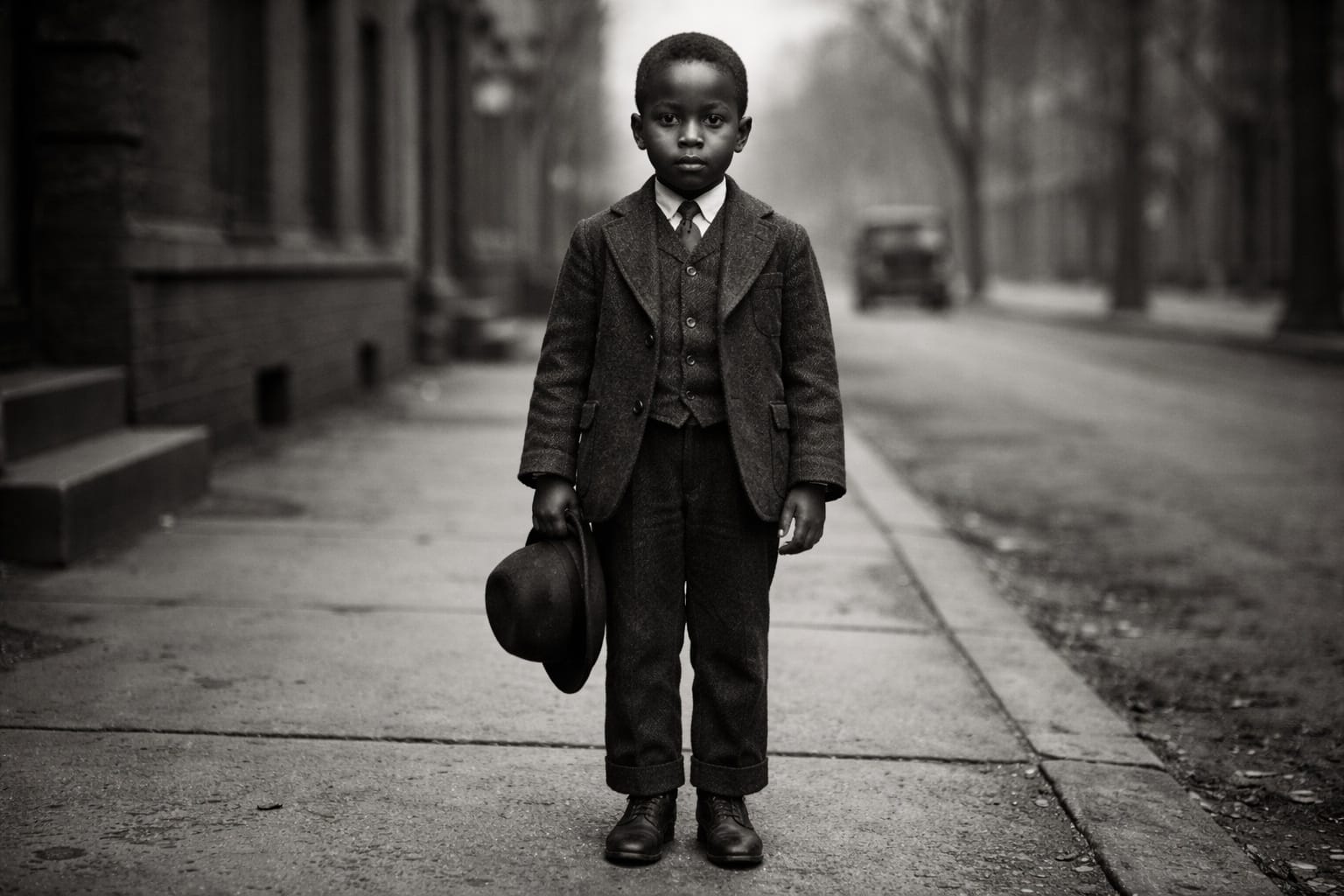
A girl. Young. Eyes too sharp for her age. The kind of eyes that don’t belong to childhood anymore. His eyes. Not the smile from the photo on my desk—that one felt borrowed. This was the original version.
That didn’t fit the man I’d been shown.
But it fit everything else.
Outside, the air had that quiet weight that comes before something decides to happen.
That’s when I saw it.
Black sedan. Across the street.
Parked wrong.
Not careless.
Intentional.
You can tell the difference. One says “I forgot.” The other says “I’m waiting.”
I didn’t turn my head. Didn’t need to. You feel that kind of attention before you see it.
Widow Jones stepped up beside me. Closer than she’d been before. Close enough to suggest this wasn’t coincidence anymore.
“You see it?” she asked.
“Yeah.”
“They’ve been following me.”
No tremor. No panic. Just confirmation. Like she’d finally said something out loud she’d been carrying for a while.
I nodded.
“They’re not looking for him anymore,” I said.
She didn’t ask how I knew.
That told me she already did.
The girl stepped out behind us, quiet, observant. Not afraid. Not yet. That worried me more than fear would’ve.
Three of us standing there.
One past.
One present.
One problem none of us had control over.
Earl Jones didn’t disappear.
He split.
One life he built carefully, piece by piece.
One life he didn’t know he had until it showed up and demanded space.
And somewhere in between—
something found him.
I watched the car. Still. Patient. Like it had all the time in the world and knew it.
I thought about the house. Too clean. Too careful. A place designed to remove fingerprints, not collect them.
Thought about the way she caught herself on that chair. The smallest crack in a performance built on control.
Thought about the girl.
The only thing in this whole situation that felt real. Unmanaged. Unpolished. Unfinished.
And that’s when it happened.
I laughed.
Not out loud. Not long. Just enough to feel it move through me and settle somewhere it didn’t quite belong.
Because none of it was funny.
But for the first time—
after all the pieces stopped pretending to be something else—
it fit.



















































 Memoirs of Madness